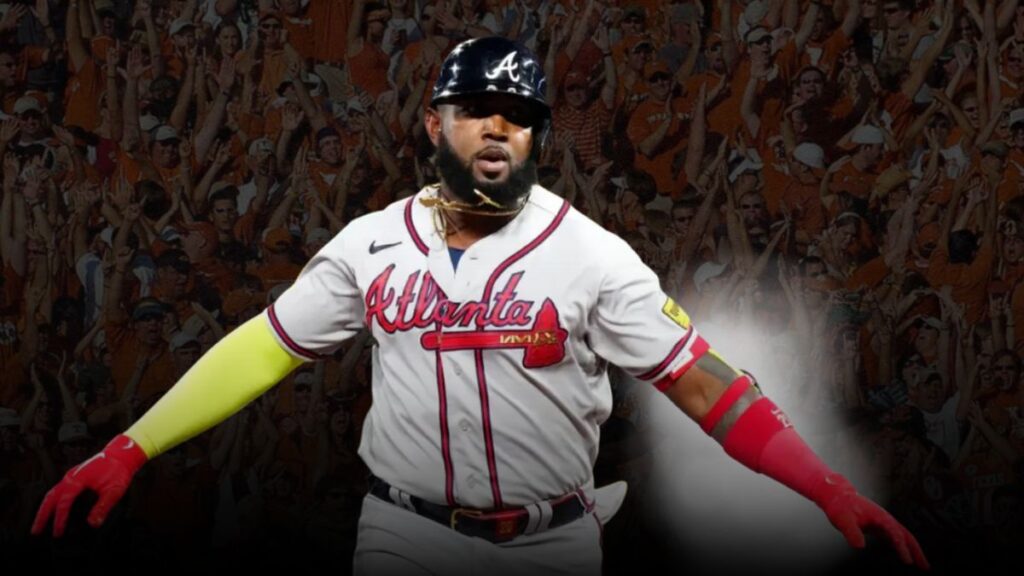
The 2025 MLB season was a challenging one for Marcell Ozuna and the Atlanta Braves. Once a consistent contributor in the Braves’ lineup, Ozuna faced significant struggles that limited his impact on the field. A lingering hip injury played a major role in his performance decline, leading to lower batting numbers and fewer home runs than fans had grown accustomed to. By the later stages of the season, whispers began circulating among analysts and baseball insiders suggesting that Ozuna could become a waiver candidate. The speculation centered on whether the Braves, out of playoff contention, might place him on waivers to give a contender the chance to claim him.
While the waiver talk drew attention, it never resulted in a move before the end of his contract. Now, with the 2025 season behind him, Ozuna has embarked on a new chapter in his career. In February 2026, he signed a one-year deal with the Pittsburgh Pirates, marking a fresh start after an unpredictable season with Atlanta. Understanding the story behind Ozuna’s waiver candidate status provides insight not only into his career trajectory but also into how MLB teams navigate roster management during challenging seasons.
The 2025 Season That Sparked Waiver Talk
Marcell Ozuna’s 2025 season with the Braves was marked by inconsistency and injury. A hip injury that lingered for much of the year significantly affected his swing and mobility, leaving him unable to perform at the level fans and the team expected. As the season progressed, Ozuna struggled to find rhythm at the plate, resulting in a noticeable decline in his overall production.
Statistically, the dip was clear. Ozuna finished the season with a .232 batting average, a drop from his previous seasons, along with 21 home runs. While these numbers are respectable for many players, they were below expectations for a hitter of his caliber and in comparison to his previous contributions to Atlanta. The production slump coincided with the Braves’ struggles on the team level, as the club fell out of playoff contention by midseason. With the Braves no longer in the hunt, attention turned to roster decisions and the potential for veteran players like Ozuna to be moved via waivers.
The combination of injury, reduced production, and the team’s status fueled speculation in the media. Analysts and fans debated whether placing Ozuna on waivers could help the Braves open opportunities for younger players while allowing a playoff contender to claim a proven bat for the final stretch of the season.
Understanding Waiver Candidates in MLB
In Major League Baseball, the term “waiver candidate” refers to a player who could be placed on waivers, allowing other teams the opportunity to claim him before a contract is either traded or outrighted. Waiver rules are complex, but the general principle is straightforward: if a team no longer considers a player a central part of its plans, placing him on waivers allows other teams to take over the contract, often giving the original team some roster flexibility in return.
For Ozuna, the label of waiver candidate gained traction because of his situation. Analysts suggested that a healthy contender could benefit from adding an experienced outfielder capable of contributing offensively. For the Braves, who were not in playoff contention, waiving Ozuna could have offered both roster flexibility and the potential for financial adjustments.
Being discussed as a waiver candidate can influence both a team’s and a player’s perception. For teams, it’s a tool to manage the roster strategically. For players, it can impact morale, public perception, and career trajectory. While Ozuna’s case did not result in a waiver claim, it exemplifies how teams weigh performance, injury history, and playoff positioning when making midseason decisions.
Braves’ Decision to Keep Ozuna Through 2025
Despite the speculation, the Braves chose not to place Marcell Ozuna on waivers during the 2025 season. The front office’s decision reflected a strategic choice to retain a veteran player until the end of his contract. From a management perspective, keeping Ozuna allowed the Braves to maintain stability in the lineup and provide the player with the opportunity to finish the season with the team that had been his home for several years.
Fans and analysts reacted in various ways. Some understood the rationale, recognizing that waiving a seasoned player midseason could have disrupted clubhouse dynamics. Others believed that the Braves missed an opportunity to help a playoff contender strengthen its roster while potentially saving money or creating space for younger players. Regardless of opinion, the decision highlighted the balancing act MLB teams face between short-term performance, player loyalty, and long-term planning.
The implications for roster management were clear. By keeping Ozuna, the Braves signaled confidence in his ability to contribute, even at a reduced level, while preparing for postseason roster decisions. It also reinforced the principle that waiver speculation, while widely discussed, does not always lead to actual roster moves, particularly when a team values stability over midseason transactions.
Marcell Ozuna’s Move to the Pittsburgh Pirates
Following the conclusion of his contract with Atlanta, Marcell Ozuna entered free agency, and the 2026 season brought a fresh opportunity. On February 16, 2026, Ozuna signed a one-year contract with the Pittsburgh Pirates worth $12 million, signaling a new chapter in his career. The deal also includes a $16 million mutual option for the 2027 season, providing both the player and the team flexibility depending on performance.
The Pirates plan to utilize Ozuna as a veteran presence in their outfield while adding a proven offensive contributor to the lineup. His experience and ability to handle pressure situations will be valuable for a team looking to blend younger talent with seasoned players. While his 2025 performance with the Braves was below his peak, the new contract reflects confidence in his potential to rebound and contribute meaningfully to Pittsburgh’s roster.
This move also offers insight into the dynamics of free agency and player valuation. Teams weigh recent performance, injury history, and potential upside when signing veteran players, and the Pirates’ deal with Ozuna shows a willingness to invest in experience while maintaining financial flexibility through the mutual option for the following season.
Lessons From Ozuna’s Waiver Speculation
Marcell Ozuna’s experience as a potential waiver candidate offers several lessons for fans and observers of MLB. First, player movement is often shaped by a combination of performance, health, and team context. Even well-established players can face waiver speculation if circumstances align unfavorably. Second, the discussion around waiver candidates can affect perception. Media coverage and fan debates can sometimes exaggerate the likelihood of a move, making it important to view speculation with perspective.
For veteran players, Ozuna’s situation illustrates how late-career transitions are navigated. Injuries or temporary performance dips do not automatically define a player’s value, as evidenced by his subsequent signing with the Pirates. Other players in similar situations can look to Ozuna’s path as a reminder that new opportunities often arise, even after a season of setbacks or uncertainty.
Finally, the case highlights how teams balance strategy with human factors. Waiver discussions are not purely transactional; they involve considerations about team culture, player relationships, and long-term planning. For fans, understanding this context provides a more complete view of why certain roster decisions unfold the way they do.
Conclusion
Marcell Ozuna’s 2025 season with the Atlanta Braves remains a notable example of how performance struggles, injury, and team context can lead to waiver speculation. While the Braves considered his situation within their broader roster strategy, they ultimately kept him through the end of his contract. The discussions around Ozuna as a waiver candidate offered fans insight into MLB roster management and the difficult decisions teams face during challenging seasons.
Now, as Ozuna embarks on his new tenure with the Pittsburgh Pirates, he has the chance to redefine his trajectory and contribute to a team eager to integrate his experience and skill. His journey underscores the unpredictable nature of professional baseball, where waiver talks, injuries, and team decisions intersect with career opportunities. For fans and observers, the story of the Braves Marcell Ozuna waiver candidate remains a reminder of how fluid and dynamic player movement can be in Major League Baseball.
FAQs
What does it mean that Marcell Ozuna was a Braves waiver candidate?
It means there was speculation in 2025 that the Braves might place him on waivers due to injury and performance struggles, allowing other teams to claim him.
Did the Braves actually put Ozuna on waivers?
No, Atlanta kept Ozuna on their roster through the end of his 2025 contract.
Why was Ozuna’s performance in 2025 considered a decline?
He struggled with a hip injury, finishing the season with a .232 batting average and 21 home runs, below his usual standards.
Where did Marcell Ozuna go after leaving the Braves?
In February 2026, he signed a one-year, $12 million deal with the Pittsburgh Pirates, with a $16 million mutual option for 2027.
Q5: How do waiver discussions affect a player’s career?
Waiver talks can impact public perception and morale, but they don’t always result in a move, as seen with Ozuna’s new opportunity in Pittsburgh.