
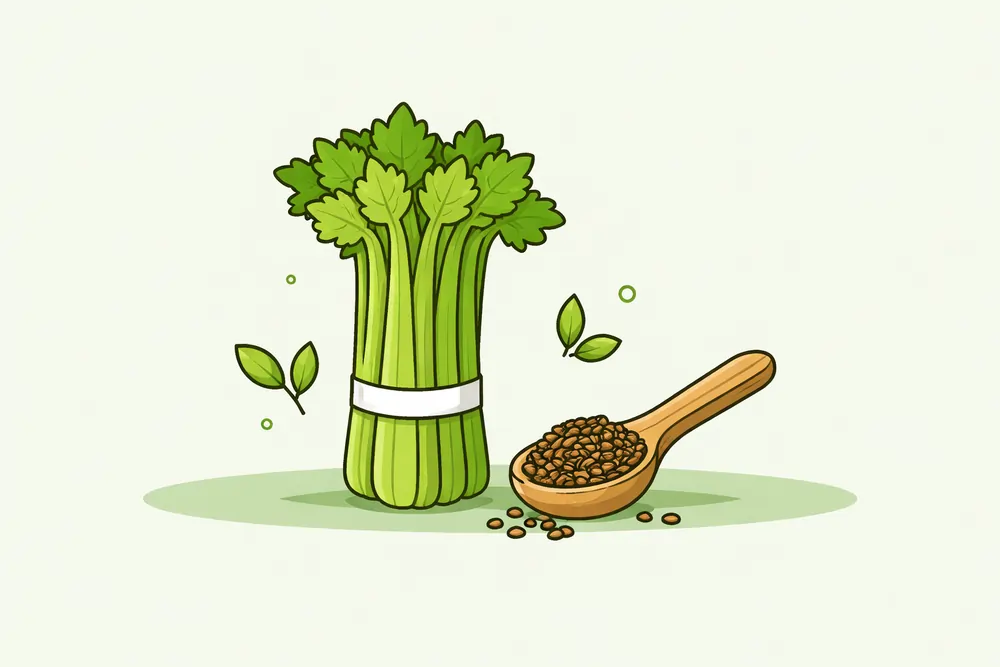
Celery Seed vs Celery Stalk is a useful comparison because these two ingredients come from the same plant family but behave very differently in the kitchen and in nutrition. One is a crunchy, water-rich vegetable. The other is a concentrated spice. If you want to know which one gives more fiber, which one tastes stronger, and when each one makes more sense in real cooking, this guide gives you the answer fast.
At first glance, the names make them sound interchangeable. They are not. Celery stalk is mostly water, mild in flavor, and usually eaten in larger portions. Celery seed is tiny, potent, aromatic, and used in very small amounts. That single difference changes calories, mineral density, taste, texture, storage, and practical use.
What is the main difference between celery seed and celery stalk?
The main difference is concentration. Celery stalk is a fresh vegetable. Celery seed is a dried spice. Because the seed contains far less water and is used in much smaller amounts, it delivers a stronger flavor and a denser nutrient profile by weight.
How they differ in plain terms
Celery stalk is crisp, juicy, and mild. People eat it raw, sauté it, simmer it in soups, or blend it into juices. It adds bulk, texture, and moisture.
Celery seed is dry, bitter, earthy, and intensely aromatic. It is often used in pickling blends, spice rubs, coleslaw dressing, potato salad, and savory seasoning mixes. It adds flavor, not volume.
This is why comparing them gram for gram can mislead readers. Almost nobody eats 100 grams of celery seed in normal cooking. But people can easily eat 80 to 150 grams of celery stalk in one sitting.
Which one is more nutrient-dense?
Per 100 grams, celery seed is far more nutrient-dense. Celery stalk is much lighter because it is mostly water. Raw celery contains about 16 calories per 100 grams, while celery seed contains about 392 calories per 100 grams. The seed also provides much higher amounts of fiber, protein, fat, calcium, iron, and other minerals by weight.
Why the numbers look so different
Water drives most of the gap. Celery stalk is around 95% water. That makes it low in calories and refreshing, but it also dilutes nutrients on a per-gram basis. Celery seed has very little water, so nutrients are more concentrated.
What matters more than per-100-gram data
Serving size matters more in real life. A stalk or a cup of chopped celery can be a real food portion. A teaspoon of celery seed is already a strong seasoning. So celery seed wins on nutrient density, but celery stalk often contributes more food volume, hydration, and satiety in an actual meal.
Celery Seed vs Celery Stalk: how do the nutrition profiles compare?
| Feature | Celery Stalk | Celery Seed |
|---|---|---|
| Form | Fresh vegetable | Dried spice |
| Typical use | Eaten in large portions | Used in small pinches or teaspoons |
| Water content | Very high | Very low |
| Calories per 100 g | Low | High |
| Flavor strength | Mild and fresh | Strong and concentrated |
| Fiber per 100 g | Low to moderate | High |
| Mineral density | Lower | Much higher |
| Hydration value | High | Minimal |
Calories, fiber, and minerals
Raw celery stalk is a low-calorie food with modest fiber and useful amounts of potassium and vitamin K. Celery seed is much richer in calories, fiber, calcium, iron, manganese, and other minerals when measured by weight.
That does not make celery seed automatically “better.” It makes it different. A teaspoon of celery seed may add flavor and some minerals. A bowl of chopped celery adds crunch, water, chewing volume, and meal structure.
Which one is better for hydration and fullness?
Celery stalk is clearly better for hydration and fullness. Its high water content and physical bulk make it a practical snack ingredient. It works well in salads, lunch boxes, soups, and vegetable trays.
Why celery stalk feels more filling
Celery stalk takes up space on the plate. It also takes longer to chew than powdered or whole spice. That can help make a meal feel bigger without adding many calories.
Celery seed does not do that. Even when it adds measurable nutrients, it is still a seasoning. It changes flavor more than fullness.
Which one has the stronger flavor?
Celery seed has the stronger flavor by far. It tastes warm, earthy, slightly bitter, and concentrated. Celery stalk tastes fresher, greener, and more watery.
How the flavor changes in cooking
Celery stalk softens as it cooks. Its flavor becomes sweeter and less sharp in soups, braises, and stocks. Celery seed stays assertive. Even a small amount can dominate a dressing or pickling liquid.
When chefs choose one over the other
Use celery stalk when you want body, texture, or aromatic vegetable base notes. Use celery seed when you want a fast burst of celery-like flavor without adding moisture or bulk.
Can celery seed replace celery stalk?
Usually not. Celery seed can mimic part of the flavor, but it cannot replace the texture, moisture, and volume of celery stalk.
Best substitution logic
If a soup, stuffing, mirepoix, or salad recipe calls for celery stalk, celery seed is not a full substitute. The dish may lose crunch, bulk, and cooking structure.
If a dressing, brine, rub, or spice blend needs celery character, celery seed can work very well. In those cases, celery stalk may add too much water and too little flavor intensity.
| Cooking Goal | Better Choice | Reason |
|---|---|---|
| Snack tray | Celery stalk | Crunch and hydration |
| Soup base | Celery stalk | Bulk and aromatic structure |
| Pickling spice | Celery seed | Strong flavor in small amount |
| Dry rub | Celery seed | No extra moisture |
| Potato salad dressing | Celery seed | Classic sharp seasoning note |
| Juicing | Celery stalk | High water content |
What about sodium, potassium, and vitamin K?
Celery stalk is often associated with potassium and vitamin K. It also contains natural sodium, though not in extreme amounts in normal fresh-food portions. Celery seed contains minerals too, but the real intake depends heavily on how much you use.
Why this matters practically
If you are choosing between the two for everyday eating, celery stalk is the more realistic source of water-rich vegetable intake. If you are building flavor with tiny amounts, celery seed offers concentration but not much serving volume.
For readers who track nutrients closely, potassium is an essential mineral involved in normal nerve and muscle function, and vitamin K contributes to normal blood clotting. Still, foods should be viewed in the context of the whole diet, not as magic items.
Is celery seed used differently from celery stalk in supplements and wellness products?
Yes. Celery stalk is usually sold as a food. Celery seed also appears in spice jars, extracts, capsules, and herbal products. That creates a practical safety gap.
Why supplement context changes the conversation
Once celery seed is concentrated into extracts or capsules, the comparison stops being just food versus food. It becomes food versus supplement-style product. That means dose, interactions, and individual health context matter more.
Herbal supplement sources note that celery seed products may not be appropriate for everyone, especially during pregnancy, and people who take medications should be cautious. This is one reason fresh celery stalk and celery seed seasoning are not automatically equivalent to celery seed extract products.
Checklist: how to choose between celery seed and celery stalk
- Choose celery stalk if you want crunch, moisture, or a low-calorie snack.
- Choose celery stalk if the recipe needs volume, texture, or soup base structure.
- Choose celery seed if you want strong celery flavor in a dry seasoning.
- Choose celery seed for pickling, slaws, dressings, and spice blends.
- Do not expect celery seed to replace the texture of chopped celery.
- Do not judge the two only by per-100-gram numbers.
- Be extra careful with celery seed extracts or supplement products.
Are there any safety differences?
Yes. Celery stalk used as food is usually straightforward for most people, aside from allergy concerns or individual diet restrictions. Celery seed as a spice is also common in cooking, but celery seed in medicinal or supplemental amounts deserves more caution.
Practical safety points
People with celery allergy should avoid both forms. People using herbal products should also remember that “natural” does not always mean low-risk. Concentrated celery seed products may interact with medications or may be unsuitable in pregnancy.
If the product is a capsule, extract, or concentrated blend, that is not the same as using a pinch of celery seed in coleslaw.
What does this comparison mean for daily eating?
For daily meals, celery stalk is the more practical whole-food choice. It supports vegetable intake, adds chewing volume, and works in many cuisines. Celery seed is more of a precision tool. It gives concentrated flavor in tiny amounts and can make bland food taste more complete.
A simple rule
Think of celery stalk as an ingredient. Think of celery seed as a seasoning.
That one distinction explains most of the nutritional and practical differences.
Glossary
Nutrient-dense
A food that provides a relatively high amount of nutrients for its weight or calories.
Potassium
An essential mineral involved in normal muscle, nerve, and fluid balance functions.
Vitamin K
A vitamin that contributes to normal blood clotting and bone-related processes.
Mineral density
The concentration of minerals in a food, often measured per 100 grams.
Mirepoix
A classic cooking base made from chopped aromatic vegetables, often onion, carrot, and celery.
Pickling
A preservation method that uses brine or vinegar, often with spices.
Aromatic
An ingredient added mainly for fragrance and flavor during cooking.
Serving size
The amount of food typically eaten at one time.
FAQ about Celery Seed vs Celery Stalk
Is celery seed healthier than celery stalk?
Not automatically. Celery seed is more concentrated by weight, but celery stalk is more practical as a whole food.
Can I use celery seed instead of celery in soup?
Only for flavor support. It will not replace the texture, moisture, or bulk of chopped celery.
Does celery seed have more minerals than celery stalk?
Yes, per 100 grams it is much more mineral-dense. But normal serving sizes are much smaller.
Which one is better for hydration?
Celery stalk. It is mostly water and works well as a fresh vegetable snack.
Which one tastes stronger?
Celery seed. Its flavor is much more concentrated and slightly bitter.
Are celery seed supplements the same as celery stalk?
No. A supplement or extract is a different product category and may need extra safety attention.
Is celery seed the actual seed of the celery stalk I eat?
They come from related celery plant material, but in cooking they are treated as different ingredients with different uses.
Conclusion
In the Celery Seed vs Celery Stalk comparison, the stalk wins for hydration, crunch, and everyday whole-food use, while the seed wins for concentrated flavor and nutrient density by weight. They are not substitutes in most recipes, and the smarter choice depends on whether you need volume or intensity.