
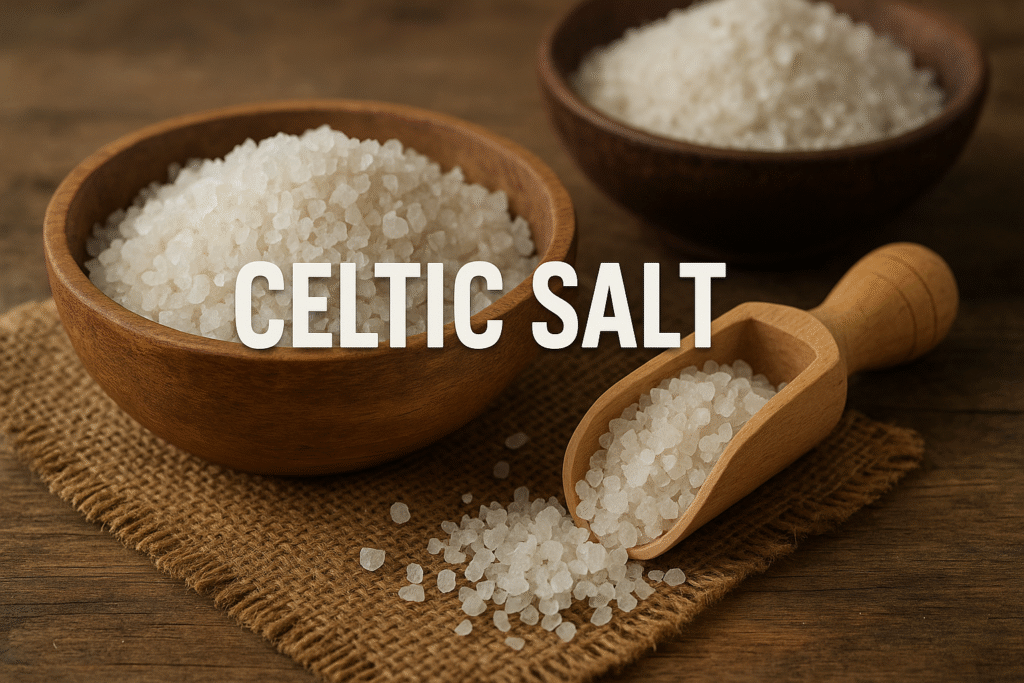
In recent years, Celtic salt has made a strong comeback in kitchens and wellness routines around the world. Known for its light gray color and slightly moist texture, this natural sea salt stands out for its purity and mineral-rich profile. Harvested from the coastal regions of France, Celtic salt is celebrated for retaining its natural minerals — something that’s often lost in regular refined table salt. Unlike common table salt, which undergoes heavy processing and bleaching, Celtic salt remains in its natural form, offering a unique flavor and potential health benefits that many people are rediscovering.
Understanding What Celtic Salt Really Is
Celtic salt, often called “Sel Gris” (gray salt), originates from the coastal marshes of Brittany in northwestern France. Local artisans use traditional hand-harvesting techniques passed down for centuries. The process involves collecting seawater in shallow clay ponds, where the sun and wind slowly evaporate the water, leaving behind mineral-dense salt crystals. This gentle drying method helps the salt maintain its natural moisture and mineral content.
The gray tint of Celtic salt comes from the clay found in the salt beds, which adds trace minerals like magnesium and calcium. Its slightly damp texture is a result of the salt’s ability to hold moisture from the ocean — a sign of its natural purity. The name “Celtic” honors the ancient Celtic people who originally settled in this region and developed the art of harvesting salt sustainably from the sea. These time-tested methods are still used today, preserving not just flavor, but also the cultural and natural essence of this remarkable salt.
How Celtic Salt Differs from Regular Table Salt?
The biggest difference between Celtic salt and regular table salt lies in how they are processed. Table salt is typically mined from underground deposits and then heavily refined. During this refining process, most natural minerals are stripped away, and additives such as anti-caking agents or iodine are added to prevent clumping and promote shelf stability.
Celtic salt, on the other hand, is left unrefined and unprocessed. It contains more than 80 trace minerals that occur naturally in seawater. This makes it richer in flavor and slightly less salty on the tongue, allowing cooks to use less while still enhancing taste. Because it retains its minerals, Celtic salt may support hydration and balance electrolytes better than refined salt. It’s a natural reminder that not all salts are created equal — and the closer we stay to nature, the more we benefit from what it offers.
The Mineral Profile and Nutritional Benefits of Celtic Salt
Celtic salt is loaded with trace minerals such as magnesium, calcium, potassium, zinc, and iron. Though present in small amounts, these minerals play important roles in maintaining body balance and overall wellness. For instance, magnesium supports nerve and muscle function, while potassium helps regulate hydration and blood pressure.
Unlike refined salt, which is primarily sodium chloride, Celtic salt offers a more complex mineral structure. The moisture within Celtic salt helps the body absorb these minerals more efficiently, supporting proper hydration and electrolyte levels. Many people who switch to Celtic salt notice a milder, more natural taste, which can make it easier to control overall sodium intake without feeling deprived of flavor.
Common Myths and Misconceptions About Celtic Salt
Like many natural products gaining attention, Celtic salt has inspired both curiosity and confusion. A common myth is that it’s just “fancy salt” with a higher price tag. In reality, the cost reflects the artisanal harvesting methods and limited regional production — not unnecessary marketing. The gray hue and dampness often mistaken for impurities are actually signs of mineral richness and authenticity.
Another misconception is that Celtic salt contains less sodium than table salt. While it has slightly lower sodium content due to its moisture, it is still salt and should be used mindfully. Some believe it can dramatically lower blood pressure or “detox” the body, but these claims are not strongly backed by scientific research. What Celtic salt truly offers is a more natural, mineral-balanced alternative to refined options — not a cure-all solution.
Finally, there’s a debate about its “alkaline” effect on the body. While Celtic salt can support electrolyte balance, the body’s pH is tightly regulated by other systems. The real value of this salt lies in its purity, mineral content, and the mindful connection it brings to what we eat.
Every Day Uses of Celtic Salt in Cooking and Wellness
Celtic salt shines in everyday cooking because of its rich, slightly briny taste. Chefs love it for finishing dishes — sprinkling it over grilled vegetables, roasted meats, or even desserts like chocolate to bring out flavor depth. Its moisture allows it to blend naturally into foods, enhancing taste without overwhelming the palate.
You can also use Celtic salt in seasoning blends or as a brine for meats, helping lock in moisture and tenderness. Outside the kitchen, it’s valued for wellness uses like mineral baths, body scrubs, or salt soaks that help relax muscles and replenish the skin. The natural minerals make it ideal for people seeking more traditional, chemical-free approaches to self-care.
These small, daily uses reconnect us to the simplicity of nature — using what the sea offers in its purest form.
Celtic Salt vs. Himalayan Salt — Which Is Better?
Both Celtic salt and Himalayan salt are natural, unrefined, and rich in minerals, but they differ in origin and composition. Celtic salt comes from the Atlantic coast of France, while Himalayan salt is mined from ancient sea beds in Pakistan. Celtic salt’s gray hue contrasts with the pinkish tone of Himalayan salt, which gets its color from iron oxide.
In terms of mineral content, both contain trace elements beneficial to the body, though Celtic salt tends to have slightly higher moisture and magnesium levels, while Himalayan salt may have more iron. The texture and flavor are also distinct — Celtic salt has a moist, briny taste that pairs beautifully with seafood and vegetables, while Himalayan salt offers a drier, milder flavor suitable for everyday use.
Neither is strictly “better.” Choosing between them depends on personal preference, intended use, and flavor. Some prefer Celtic salt’s moisture and rich taste, while others enjoy Himalayan salt’s versatility and crystal appearance.
Comparison Table: Celtic Salt vs. Himalayan Salt
| Feature | Celtic Salt | Himalayan Salt |
| Origin | Harvested from coastal regions of Brittany, France | Mined from ancient sea beds in the Himalayan mountains, Pakistan |
| Color | Light gray due to clay minerals from salt beds | Pink to reddish because of natural iron oxide content |
| Texture & Moisture | Slightly moist with coarse grains | Dry and crystalline with a fine or coarse grind |
| Mineral Content | Rich in magnesium, calcium, potassium, and trace minerals | Contains over 80 minerals including iron, calcium, and potassium |
| Flavor | Briny, bold, and oceanic taste | Milder and slightly sweet |
| Processing Method | Hand-harvested using traditional Celtic techniques | Mined, washed, and sun-dried |
| Culinary Uses | Best for finishing dishes, seafood, and salads | Great for general cooking, grilling, and decorative salt lamps |
| Moisture Retention | Naturally retains sea moisture | Naturally dry, less prone to clumping |
| Sodium Content | Slightly lower due to higher mineral and moisture content | Slightly higher due to drier texture |
| Environmental Impact | Sustainable and eco-friendly harvesting methods | Mined with moderate environmental footprint |
| Overall Impression | Ideal for those seeking a moist, mineral-rich natural sea salt | Preferred by those who enjoy dry, visually appealing pink salt |
How to Choose and Store High-Quality Celtic Salt?
When buying Celtic salt, authenticity matters. Look for labels indicating that the salt is harvested from Brittany, France, or other certified coastal regions using traditional methods. Genuine Celtic salt will have a light gray tone, a slightly moist texture, and no additives.
To store it properly, keep it in a non-metal container in a cool, dry area. Its natural moisture can cause clumping if exposed to air for too long, so using a ceramic or glass jar with a tight lid is ideal. Avoid salts that appear overly dry, bleached, or uniform in texture — these are signs of over-processing.
Storing and using it carefully helps preserve its flavor and mineral quality, ensuring you get the full natural experience each time.
Environmental and Ethical Aspects of Celtic Salt Production
One of the most appealing aspects of Celtic salt is its sustainable production. Harvesters use centuries-old, eco-friendly methods that rely on wind and sun rather than industrial machinery. This process not only maintains the salt’s natural mineral content but also reduces environmental impact.
The production of Celtic salt supports small coastal communities, providing livelihoods for local families and preserving ancient cultural traditions. The salt marshes where it’s produced also serve as important habitats for birds and marine life, adding ecological value beyond human use.
In an age where mass production often comes at the cost of the environment, choosing naturally harvested salt represents a conscious, ethical decision — one that aligns with both health and sustainability.
Conclusion
Celtic salt stands as more than just a kitchen ingredient — it’s a link to history, culture, and the sea. Its natural minerals, distinct flavor, and sustainable harvesting make it a meaningful alternative to refined table salt. While it’s not a miracle health product, its balanced composition and minimal processing reflect a deeper respect for nature’s simplicity.
By choosing Celtic salt, we reconnect with a tradition that values purity over perfection. Whether sprinkled on food or used in a relaxing bath, this ancient salt continues to remind us that true wellness often begins with the most natural things. A pinch of Celtic salt is not just seasoning — it’s a return to authenticity, one grain at a time.