A lot of people look into veneers because they want a noticeable change without going through more complex dental work. They can fix chips, stains, and uneven teeth in a way that looks natural, which is why they are so popular. But beyond the initial results, one question tends to come up pretty quickly, and that is how long they actually last once they are in place.
What Veneers Actually Are?
Veneers are thin shells that are bonded to the front of the teeth to improve their appearance, and they are often used to correct issues like discolouration, small cracks, gaps, or uneven shapes. They are custom made to match the size, shape, and colour of natural teeth, which helps them blend in seamlessly with the rest of the smile.
The process usually involves preparing the surface of the tooth by removing a very small amount of enamel, allowing the veneer to sit properly and look natural once it is in place. Once bonded, veneers become a fixed part of the tooth, which is why they are often considered a long term cosmetic solution rather than something temporary.
How Long Veneers Typically Last?
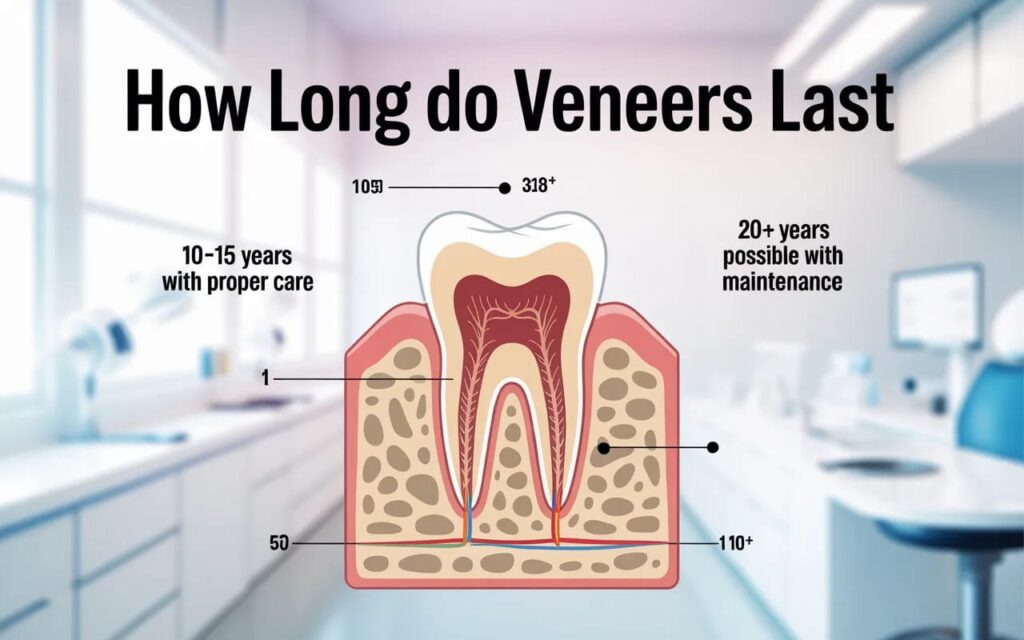
Veneers are not designed to last forever, but they are built to hold up well over time when looked after properly. The exact lifespan can vary depending on the type of material used and how well they are maintained day to day.
Porcelain veneers are known for their strength and durability, and they can often last around 10 years or more, with some lasting even longer in the right conditions. Composite veneers, on the other hand, tend to have a shorter lifespan, usually somewhere between 5 and 7 years, as they are made from a softer material.
What Affects How Long Veneers Last
There are a few key factors that can influence how long veneers stay in good condition, and a lot of it comes down to everyday habits. Things like grinding teeth, biting into hard foods, or using teeth to open packaging can all put unnecessary pressure on veneers and increase the risk of damage.
Diet can also play a role, especially when it comes to staining. Drinks like coffee and red wine, along with certain foods, can affect the appearance of veneers over time, even though porcelain options are more resistant than natural teeth.
Types Of Veneers And Their Lifespan
Porcelain Veneers
Porcelain veneers are the most commonly chosen option, mainly because of how natural they look and how well they hold up over time. They are more resistant to staining and tend to last longer than other types, making them a popular choice for people looking for a more durable result.
Composite Veneers
Composite veneers are made from a resin material and are often chosen as a more affordable alternative. They can usually be applied more quickly, sometimes in a single visit, but they do not last as long as porcelain and are more prone to staining or chipping over time.
No Prep Veneers
No prep veneers require little to no enamel removal before placement, which makes the process less invasive. They can be a good option in certain cases, although they are not suitable for everyone, and their lifespan can vary depending on the material used and how they are maintained.
How To Make Veneers Last Longer?
Looking after veneers properly can go a long way in extending their lifespan, and most of it comes down to simple, consistent habits. Brushing twice a day and flossing regularly helps keep the teeth and gums healthy, which supports the veneers as well.
Avoiding very hard foods can help reduce the risk of chips or cracks, and for people who grind their teeth at night, wearing a mouthguard can offer added protection. Regular dental visits are also important, as they allow any early signs of wear or damage to be picked up before they turn into bigger issues.
Are Veneers Worth It Long Term?
For many people, veneers are a worthwhile option for improving the appearance of their smile, especially when dealing with cosmetic concerns that are difficult to fix with other treatments. Gorgeous Smiles can help you understand the cost of dental veneers, what your options are, and how they compare, making it easier to weigh up the long term value against the upfront investment. While they do need to be replaced eventually, the improvement in confidence and overall appearance is often what makes them feel like a good decision for those who choose them.
Final Thoughts
Veneers offer a reliable and long lasting way to improve the look of a smile, even though they are not permanent. How long they last depends on the type chosen and how well they are cared for over time. With the right habits and regular dental care, veneers can stay in good condition for many years. For anyone considering them, having a clear understanding of both the benefits and the upkeep involved can make the decision feel much more straightforward.