
Introduction
If you’ve ever wondered how many keys on a piano make up the instrument’s range, you’re not alone. Piano keys are the foundation of this beloved instrument, defining the notes a player can reach and the music they can create. For most modern pianos, the standard number of keys is 88, providing a wide range of notes that cover over seven octaves. Knowing the number of keys and their layout is important not just for beginners, but for musicians, composers, and piano enthusiasts who want to understand the capabilities of different instruments.
In this article, we’ll explore the standard piano layout, variations in key counts, the history behind the development of piano keys, and why the range matters for musicians. We’ll also discuss how to choose the right piano depending on your needs. By the end, you’ll have a clear understanding of how many keys on a piano define its sound and versatility.
Understanding the Standard Piano Layout
The most common piano you’ll encounter today is the 88-key piano. This layout includes 52 white keys and 36 black keys. The white keys represent the natural notes — A through G — while the black keys are used for sharps and flats, providing the chromatic steps between the white notes.
The range of a standard piano spans from A0, the lowest note, to C8, the highest. This wide span gives musicians access to deep, resonant bass notes and sparkling high tones, allowing for a rich variety of music to be played. This range is often referred to as the “sweet spot” for the human ear because notes beyond this range are either very difficult to hear clearly or rarely needed in most compositions.
Having a full 88-key range allows pianists to perform nearly all classical, jazz, and contemporary pieces without compromise. It also gives composers the flexibility to experiment with a wide range of octaves and harmonics. The layout has become so standard that it’s the expected setup for concert pianos, making it essential knowledge for anyone serious about playing or studying the instrument.
Variations in Piano Key Counts
While 88 keys are standard, not every piano follows this layout. Smaller acoustic pianos, especially those made before the late 1800s or designed for compact spaces, may have 85 keys or slightly fewer. These instruments can still play most music, but they might limit some advanced pieces that require the extreme low or high notes.
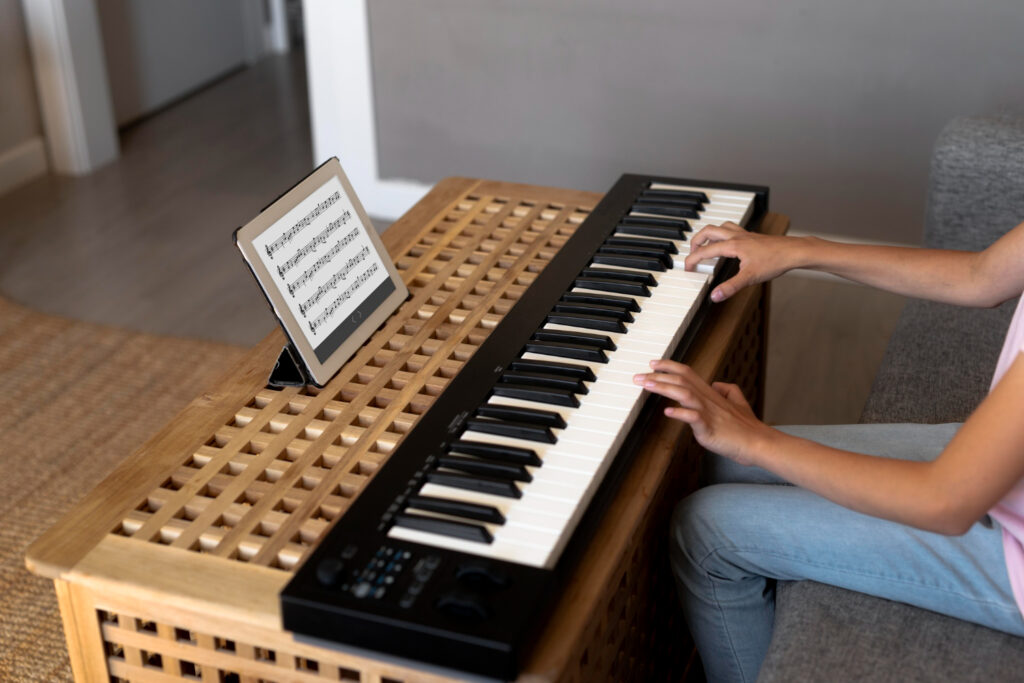
Digital keyboards, designed for portability and beginner use, often come with even fewer keys. Common sizes include 49, 61, or 76 keys. These instruments are lightweight and easy to move, making them ideal for students, hobbyists, or musicians who need a travel-friendly option. Despite having fewer keys, digital keyboards often include features such as octave shifting to access a wider range of notes.
On the other end of the spectrum are extended-range pianos, created by boutique manufacturers like Bösendorfer and Stuart & Sons. Some Bösendorfer models have 92 or 97 keys, while Stuart & Sons has developed pianos with as many as 102 or even 108 keys. These extended instruments give composers and performers extra octaves to explore, offering unique possibilities for modern compositions and recordings. While not common, they showcase the flexibility and innovation in piano design beyond the traditional 88-key standard.
A Brief History of Piano Keys
Understanding how many keys on a piano exist today requires a look at history. The first pianos, invented by Bartolomeo Cristofori around 1700, had just 49 keys, covering four octaves. This limited range was suitable for the music of the time but lacked the expressive depth that later compositions demanded.
By the late 1700s, during Mozart’s era, pianos typically had 61 keys, giving performers access to five octaves. This expansion allowed for more complex pieces and richer harmonies, matching the growing sophistication of classical music.
The 19th century brought the standardization of 88 keys, largely influenced by makers like Steinway & Sons. Romantic-era composers such as Chopin and Liszt required pianos with extended ranges to support their expressive compositions. This led to the modern layout we know today, which has remained largely unchanged for over a century. Knowing this historical progression helps musicians appreciate the instrument’s development and why the standard 88-key piano became the universal benchmark.
Why Piano Key Range Matters for Musicians?
The number of keys on a piano is not just a technical detail; it directly impacts how music is performed and composed. A full 88-key piano allows musicians to explore the entire spectrum of notes, from deep bass tones that provide rhythm and foundation to sparkling treble notes that add melody and brightness.
For beginners, smaller keyboards with fewer keys may be sufficient to learn fundamentals, practice scales, and play simple pieces. However, professional pianists often need the full 88-key range to perform classical, jazz, and contemporary works accurately. Composers, too, consider key range when writing music, as certain notes or octaves may be unavailable on smaller keyboards.
Even for home pianists, the key range can affect enjoyment and learning. A full keyboard encourages practice across octaves and helps build versatility, while smaller keyboards may require workarounds for pieces with extended ranges. Understanding how many keys on a piano are available helps musicians choose the right instrument for their goals.
Choosing the Right Piano Based on Key Count
Selecting a piano involves more than just knowing how many keys it has. Space, skill level, and musical goals all play a role in choosing the right instrument. For someone with limited space or who primarily plays simple pieces, a digital keyboard with 61 or 76 keys may be the most practical choice.
For serious students and performers, an 88-key piano offers the full range needed to develop technique, learn advanced pieces, and enjoy the instrument to its fullest. Extended-range pianos are a niche choice, usually suited for composers or performers seeking unique tonal possibilities beyond the standard range.
Smaller pianos are lighter, more portable, and often more affordable, making them ideal for beginners or casual use. Full 88-key instruments, while larger and more expensive, provide unmatched versatility and are standard in concert settings. Choosing the right piano ultimately comes down to balancing practical needs with musical ambitions.
Conclusion
Knowing how many keys on a piano exist and how they are arranged provides essential insight for anyone interested in the instrument. The standard 88-key layout, ranging from A0 to C8, offers a rich spectrum for playing nearly any piece of music. However, variations exist, from compact acoustic models and digital keyboards to extended-range boutique pianos, each serving different purposes.
Understanding the key count helps musicians, composers, and enthusiasts make informed choices, whether selecting an instrument for practice, performance, or composition. While the 88-key piano remains the universal standard, the variety of available instruments ensures that every player can find a piano that fits their style, space, and musical goals.
FAQs
How many keys does a standard piano have?
A standard modern piano has 88 keys: 52 white keys (naturals) and 36 black keys (sharps/flats).
Can a piano have fewer or more than 88 keys?
Yes. Smaller pianos may have 49, 61, 76, or 85 keys, while boutique extended-range pianos can have up to 108 keys.
Why is 88 keys considered the standard?
88 keys cover a wide range from A0 to C8, allowing most music to be played accurately and offering balanced sound for performers.
Do digital keyboards follow the 88-key standard?
Not always. Digital keyboards often have 49, 61, or 76 keys for portability, but many offer octave-shifting to access a wider range.
How does the number of keys affect a musician?
Key count impacts repertoire, style, and versatility. Beginners may manage with fewer keys, while advanced players and composers benefit from the full 88-key range or more.