
Introduction
Mobility is very key in preserving independence, dignity and quality of life in old age. In the elderly, movement on an everyday basis can be difficult due to their loss of balance, joint stiffness, muscle weakness, or chronic ailments. The changes may impact confidence and predispose them to falls that are a major cause of injuries among the elderly. The positive thing is that the issues of mobility do not necessarily imply the renouncement of independence. Under the influence of appropriate supporting tools, considerate home adaptations, and safety-oriented habits, elderly people will be able to move freely, engage in everyday activities.
The article will target both the elderly and their caregivers, providing them with practical and educational information about mobility aids, safe home environments and daily approaches to promote independence without injury to safety.
Understanding Mobility Changes in Aging
Old age is a natural process that is associated with physical alterations that may influence movement. Decreased muscle mass, delayed reflexes, wear and tear in joints, and loss of balance are features of the normal elderly. Mobility can also be affected by medical conditions like arthritis, osteoporosis, Parkinson disease or post-surgery recovery.
It is important to realize these changes in advance. To avoid becoming tired, unsteady or in pain when walking, many individuals attempt to push through instead of adjusting. This may be a factor to contribute to falls and injuries. The application of supportive mobility aids, including a cane, walker, or even the best rollator walker with seat when a person requires to take a rest, can actually increase independence instead of restricting it.
These products assist in energy saving, posture and stability to enable the elderly to remain active in a safer manner. Caregivers are expected to observe some minor symptoms such as shuffling, frequent pauses, and support on furniture during walking. These indications are usually precursors to the fact that additional assistance might help to make daily movement safer and more comfortable.
Choosing the Right Mobility Support
Choosing a mobility aid is not to call a person frail, it is to provide an individual with the support. The correct aid would be based on balance, strength, endurance and the environments in which the aid would be applied.
- Canes provide support to the light level and can be used in case of slightly weak balance or a rough surface.
- Standard walkers offer a generous base of support and are usually prescribed in case of rehabilitation or in cases where the balance is highly impaired.
- Rollators have wheels, hand brakes and in some cases, a seat as they provide support as well as convenience in walking long distances.
It may be invaluable especially after having professional assistance from a physical therapist or any other medical professional. They are able to evaluate gait, prescribe suitable equipment as well as provide proper height adjustment.
Whether using a walker or a cane, it must fit properly; otherwise, the wrongly sized cane or walker may strain wrists, shoulders, or back. Education is also significant. Knowing to turn, to stop and to maneuver around with a mobility aid will make the seniors feel confident, and the risk of accidents will be minimized.
Safe Use of Walkers and Rollators
The most effective mobility aid is still to be worn properly in order to ensure that it offers the maximum safety. Technique should take precedence over equipment choice in the caregivers and seniors. Posture can be important when one is using a walker or rollator. Straight back instead of bending forward also prevents instability and the strain on the arms.
The hands must be relaxed on the grips, and the elbow bends a little. Hand brakes in case they are in place should be checked frequently to see that they work smoothly. Another important thing is environmental awareness. Uneven flooring, cords and rugs may pose hazards to the walker users. Slips may be avoided by encouraging slow, deliberate movements; particularly during a turn or in moving out of sitting to standing.
Caregivers may facilitate safe use by maintaining walking habits and provide mild reminders. The idea of training in a known and controlled environment also assists the seniors to be given confidence and then they proceed to outdoor or to other crowded places.
Four-Wheel Walkers and Stability Support
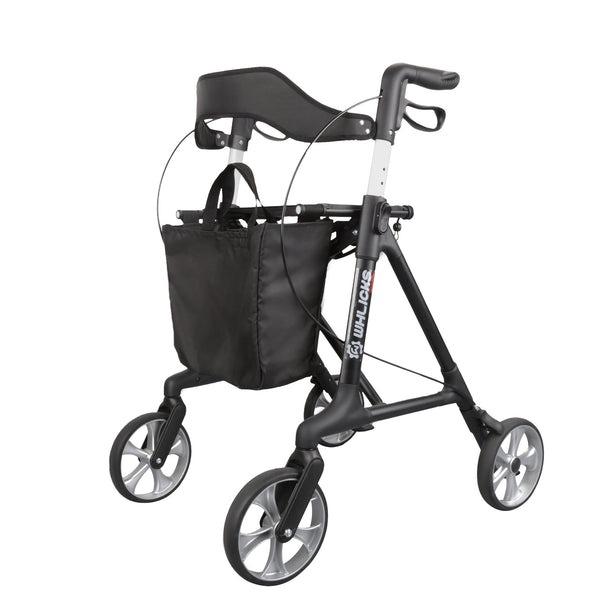
A 4 wheel walker with seat may be a good solution to the seniors who require constant support but would also like to be flexible. The walkers are generally equipped with hand brakes, wider frame, and internal seat where one can seat down when he or she needs to. Safety wise, four-wheel walkers are constructed for people who are capable of operating hand brakes and have a controlled walking speed.
They come in handy especially in longer indoor corridors, walking around communities or outings where frequent stops are useful. The availability of a seat promotes the use of pacing that alleviates fatigue and minimizes the chances of falling due to excessive effort. Brakes used by caregivers ought to be trained to lock before the users sit and stand.
With proper training this kind of walker is turned into a mobility ally as opposed to a possible danger. Properly employed, it may contribute to confidence and urge the seniors to remain active within a safe range.
Creating a Safer Home Environment
Mobility aids are optimal to be used with a secure home arrangement. Minor modifications can largely lessen the fall risks and simplify everyday movement. Start by clearing pathways. Take off loose carpets, tie up power cords and make the floors dry and level. Lighting is needed to a great extent, particularly in corridors, stairs, and washrooms.
Nightlights can also be used to avoid getting lost during trips made at late hours. The specific attention should be paid to bathrooms. Grab bars can be installed around toilets and in the shower, non slips used, and a shower chair should be considered to enhance safety.
In residential places, the armrest and firm cushioned chairs allow one to rise up with ease. Caregivers are able to tour the house with the seniors, pointing to places that they would feel unsafe or hard to move around. This shared work style gives respect to autonomy and the importance of safety.
Supporting Independence Through Daily Habits
In addition to equipment and home design, there are the daily practices that are significant in mobility and independence. Moderate exercise as walking, stretching, or balance-training programs can be used to keep muscles strong and coordinated. A significant portion of seniors enjoy guided lessons by physical therapists or the community centers.
Nutrition and hydration are also important. Fuel is also known to have proper effects on muscle functioning and energy levels and to alleviate fatigue in the course of movement. Supportive shoes with soles that do not slip add more stability.
No less significant is emotional support. Flexibility to changes in mobility may be difficult, and support on the part of the family and a caregiver may count. Appreciating autonomy -enabling the elderly to move at their own pace and make decisions generates confidence and motivation.
Conclusion
The difficulties associated with mobility are inherent in the aging process, though they do not necessarily restrict independence and quality of life. When they are well informed, given the right mobility aids, and have a well-planned home setting, the seniors will be able to proceed with their mobility at a safe pace and with confidence. To the caregiver, observation and education are important. Injuries and well-being can be prevented with the support of correct walker usage, the encouragement of safe habits, and minor changes in the environment.
In the case of the elderly, accommodating assistive devices and routines is a positive initiative to continue enjoying liberty and humanity. Finally, mobility goes beyond movement and it is all about maintaining connection, independence, and the capacity to participate fully in normal day activities.