Introduction
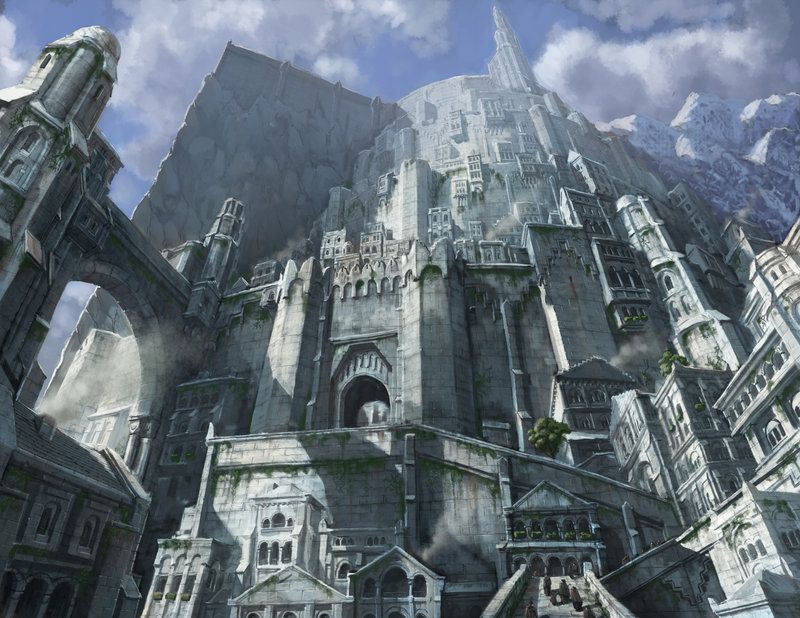
Minas Tirith is one of the most famous cities in fantasy literature. It is the grand capital of Gondor in The Lord of the Rings by J. R. R. Tolkien. Built into the side of Mount Mindolluin, this white stone city rises in seven levels, each protected by strong walls and gates. At the very top stands the Tower of Ecthelion, shining above the land like a symbol of hope.
In The Lord of the Rings, Minas Tirith plays a central role in the fight against the dark lord Sauron. It becomes the last great stronghold of Men in the West during the War of the Ring. The city is not just a setting for battle; it represents history, tradition, courage, and the fading glory of an ancient kingdom.
Minas Tirith remains one of the most iconic cities in fantasy because it feels real. Tolkien gave it a detailed history, a clear design, and a strong emotional meaning. Readers can picture its streets, towers, and people. In this article, we will explore the origins of Minas Tirith, its unique structure, daily life inside its walls, its role in the Battle of the Pelennor Fields, its real-world inspirations, and its lasting impact in modern culture.
The Origins of Minas Tirith in Tolkien’s Legendarium
The story of Minas Tirith begins long before the events of The Lord of the Rings. In the Second Age of Middle-earth, the city was founded as Minas Anor, which means “Tower of the Sun.” It was established by Anárion, the son of Elendil, after the fall of Númenor. Anárion and his brother Isildur founded the kingdom of Gondor in exile, creating strong cities to defend their new land.
Minas Anor stood on the western side of the great river Anduin, while its sister city, Minas Ithil, stood to the east. Together, they guarded Gondor from the growing threat of Mordor. Over time, however, darkness returned to Middle-earth. Minas Ithil was captured by the Nazgûl and became a place of fear and shadow.
After the fall of Minas Ithil in the Third Age, Minas Anor was renamed Minas Tirith, meaning “Tower of Guard.” The new name reflected its role as the main defense against Mordor. From that point on, Minas Tirith became the chief city of Gondor and the seat of its rulers.
Its location was carefully chosen. Built against the White Mountains and facing the plains of Pelennor, Minas Tirith was designed to resist attack. It stood as a shield between Mordor and the rest of the western lands. This strategic importance made it the heart of Gondor’s strength and survival.
The Seven-Tiered Design and Architectural Layout
One of the most striking features of Minas Tirith is its seven-tiered structure. The city is built in seven concentric levels, each surrounded by its own wall. Each level rises higher than the one below it, forming a strong defensive system. The gates of each tier do not line up directly, which makes it harder for enemies to advance quickly.
A large rock outcrop, shaped like the hull of a ship, divides the city and supports its upper levels. This natural rock formation adds to the strength of the city and gives it a unique shape. The streets wind upward from gate to gate, leading visitors step by step toward the summit.
At the very top stands the Tower of Ecthelion. From here, the rulers of Gondor watched over their land. A white banner with the emblem of the White Tree would later fly again when the true king returned. The tower is both a military lookout and a powerful symbol of leadership.
Nearby is the Court of the Fountain, where the White Tree of Gondor stands. Even when the tree is barren, it represents the royal line and the deep history of the kingdom. The design of Minas Tirith is not only practical but also symbolic. Every wall and tower reflects the strength, pride, and memory of Gondor.
Life Inside the White City
Although Minas Tirith is often remembered for war, it was also a living city. People from different walks of life lived within its walls. Craftsmen, soldiers, healers, scholars, and families all called the White City home. Each level of the city had its own purpose, with the highest levels reserved for the nobility and the rulers.
After the line of kings ended, Gondor was ruled by Stewards. These leaders governed in the name of the absent king. By the time of the War of the Ring, Denethor II served as the Steward of Gondor. He carried the heavy burden of protecting the realm during a time of growing darkness.
The White Tree in the Court of the Fountain held deep meaning for the people. It symbolized hope and the promise that the king would one day return. Even when the tree stood leafless, it reminded the people of their proud past and their connection to Númenor.
Daily life in Minas Tirith would have included markets, training grounds, homes built of white stone, and quiet courtyards. Despite the looming threat of Mordor, the city remained a place of culture and tradition. It was a reminder that Gondor was more than just a fortress; it was a civilization.
Minas Tirith and the Battle of the Pelennor Fields
Minas Tirith reaches the center of the story during the War of the Ring. As Sauron prepares his final assault, the city becomes the main target. The Battle of the Pelennor Fields, one of the largest conflicts in The Lord of the Rings, takes place before its walls.
The forces of Mordor lay siege to Minas Tirith with massive armies, siege towers, and the terrifying Lord of the Nazgûl. The lower levels of the city come under heavy attack. The great gates are broken, and the defenders struggle to hold their ground.
At the darkest moment, help arrives from the kingdom of Rohan. The riders charge onto the Pelennor Fields, turning the tide of battle. Later, Aragorn arrives with reinforcements from the south. Together, they defeat the armies of Mordor and save the city from destruction.
This battle is a turning point in Middle-earth history. It shows the courage of Men and the power of unity. Minas Tirith survives not just because of its walls, but because of the bravery of those who defend it.
Real-World Inspirations Behind Minas Tirith
Tolkien once described Minas Tirith as having a “Byzantine” character. Many readers see similarities between the White City and the historic city of Constantinople, with its strong walls and layered defenses. Like that ancient city, Minas Tirith stands as a final stronghold against invading forces.
In modern interpretations, the design of Minas Tirith has often been compared to Mont-Saint-Michel in France. This island commune rises dramatically from the sea, with buildings climbing upward toward a central abbey. Its shape closely matches how many artists imagine the White City.
These real-world connections help explain why Minas Tirith feels believable. Tolkien combined history, imagination, and careful detail to create a city that feels both magical and grounded in reality.
Minas Tirith in Film, Art, and Popular Culture
Minas Tirith became even more famous through the film adaptation of The Lord of the Rings directed by Peter Jackson. In the movie version, the city is shown as a vast white fortress carved into the mountainside. Detailed models and digital effects brought Tolkien’s vision to life in a powerful way.
The films introduced Minas Tirith to a new generation of fans. Its tall walls, narrow streets, and shining towers became some of the most memorable images in modern fantasy cinema. The visual design influenced later movies, video games, and fantasy artwork.
Artists, illustrators, and game designers continue to draw inspiration from Minas Tirith. It has become a model for how to design a fantasy capital city with depth, history, and emotional meaning.
Merchandise and Modern Legacy
Over the years, Minas Tirith has appeared in many forms of merchandise. Collectors can find detailed statues, artwork, and scale models of the White City. These items allow fans to bring a piece of Middle-earth into their homes.
There are also reports of a large LEGO Icons set based on Minas Tirith rumored for release in 2026. If confirmed, such a set would likely include thousands of pieces and recreate the city’s famous tiers and towers. This shows that interest in Minas Tirith remains strong even decades after the books were first published.
The lasting appeal of Minas Tirith lies in its powerful image. It represents courage in the face of darkness, the strength of tradition, and the hope of renewal.
Conclusion
Minas Tirith stands at the heart of Tolkien’s world. From its origins as Minas Anor to its role as the last great defense against Mordor, the city carries deep historical and emotional weight. Its seven walls, the Tower of Ecthelion, and the White Tree all reflect the long story of Gondor.
Through The Lord of the Rings, Minas Tirith became one of the most unforgettable cities in fantasy literature. Film adaptations, artwork, and modern merchandise have only strengthened its legacy.
What makes Minas Tirith truly special is not just its design, but what it represents. It is a symbol of endurance, unity, and hope. For readers and viewers alike, the White City remains a shining reminder that even in the darkest times, light can still rise from the mountains.
FAQs
What does Minas Tirith mean?
Minas Tirith means “Tower of Guard” in Sindarin, the Elvish language created by Tolkien.
Why is Minas Tirith important in The Lord of the Rings?
Minas Tirith is the capital of Gondor and the main battlefield during the War of the Ring. It represents the last major defense against Mordor.
How many levels does Minas Tirith have?
The city has seven levels, each protected by its own wall and gate, rising up toward the Tower of Ecthelion.
Was Minas Tirith inspired by a real place?
Yes. Its design in the films was inspired by Mont-Saint-Michel, and Tolkien described it as having a Byzantine style.
Is there a Minas Tirith LEGO set coming in 2026?
There are rumors about a large LEGO Icons Minas Tirith set planned for 2026, but official confirmation is still awaited.