Introduction
The Roberto Clemente Bridge is one of Pittsburgh’s most recognizable landmarks, gracefully spanning the Allegheny River and connecting downtown with the North Shore. With its bright yellow steel arches, it is not just a functional piece of infrastructure but also a symbol of the city’s spirit and history. The bridge is named after Roberto Clemente, the legendary Pittsburgh Pirates baseball player, who left a lasting mark on both the city and the world. For locals and visitors alike, the Roberto Clemente Bridge is more than just a crossing—it represents Pittsburgh’s pride, culture, and connection to one of its most beloved sports heroes.
History and Origins of the Roberto Clemente Bridge
The Roberto Clemente Bridge was originally constructed as part of Pittsburgh’s efforts to improve transportation across its rivers. Completed in 1928, the bridge was initially known as the Sixth Street Bridge. Its creation was motivated by the need to connect the bustling downtown area with the North Shore, which was becoming an increasingly important hub for commerce and recreation.
In 1998, the city honored Roberto Clemente by renaming the bridge after him. Clemente, a Hall of Fame baseball player and humanitarian, spent his career with the Pittsburgh Pirates and was widely admired not only for his athletic talent but also for his dedication to helping others. Renaming the bridge was a fitting tribute to someone who embodied the city’s values and spirit.
Architecturally, the Roberto Clemente Bridge is a classic example of a self-anchored suspension bridge, a design that was innovative at the time of its construction. The bridge was designed by renowned engineers and architects who ensured it combined both functionality and elegance, making it a standout feature of Pittsburgh’s skyline.
Architectural Features and Design Highlights
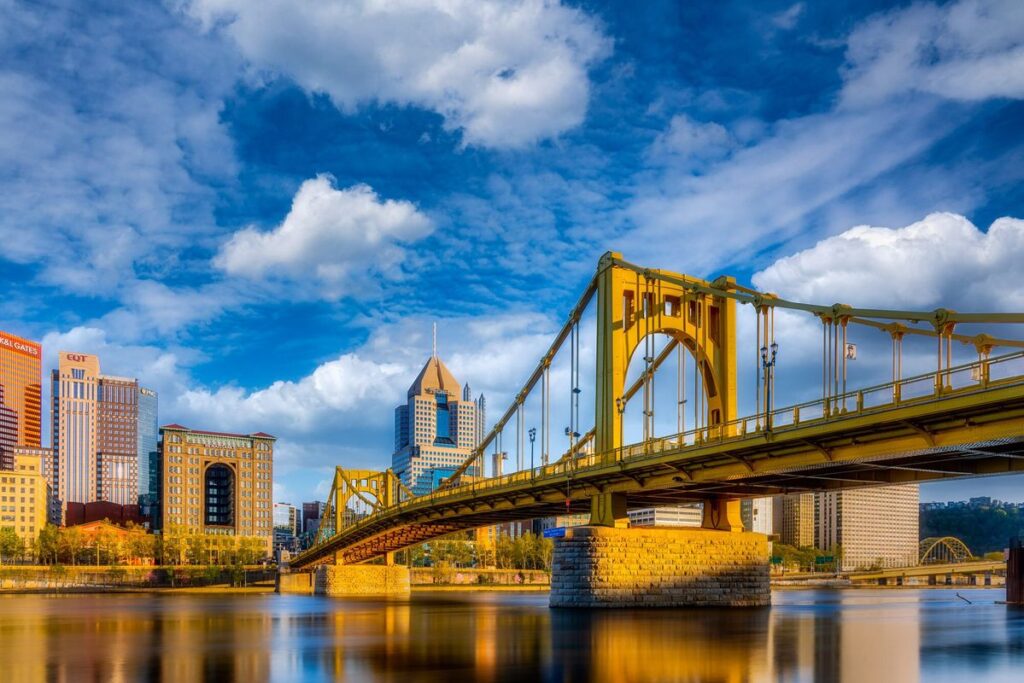
The Roberto Clemente Bridge is celebrated for its striking structural design. Its bright yellow arches rise boldly over the Allegheny River, creating a visual focal point that draws the eye from both the downtown area and the riverfront. The bridge’s steel framework is not only sturdy but also aesthetically pleasing, with a graceful curve that balances engineering precision with artistic flair.
One of the unique aspects of the bridge is its self-anchored suspension design. Unlike traditional suspension bridges, which rely on massive anchorages in the ground, the Roberto Clemente Bridge’s structure supports itself, allowing for a more streamlined and elegant appearance. This design choice contributes to its visual charm and distinguishes it from other bridges in the region.
Beyond its engineering features, the bridge has become an iconic part of Pittsburgh’s landscape. Its bold color and distinctive shape make it a favorite subject for photographers, artists, and visitors who want to capture the essence of the city. Whether viewed during the day or illuminated at night, the Roberto Clemente Bridge is a testament to the city’s commitment to blending function with beauty.
Role in Pittsburgh’s Community and Culture
The Roberto Clemente Bridge plays a central role in Pittsburgh’s community life. Perhaps most famously, it serves as a pedestrian route connecting downtown to PNC Park, home of the Pittsburgh Pirates. On game days, thousands of fans cross the bridge to cheer on their team, creating a vibrant and festive atmosphere. The bridge has become synonymous with the city’s baseball culture, and for many, walking across it is a cherished tradition.
Beyond sports, the bridge is a hub for cultural events and community celebrations. Festivals, parades, and public gatherings often take place on or near the bridge, highlighting its importance as a communal space. Its location provides easy access to restaurants, parks, and entertainment venues, making it a natural gathering spot for both residents and tourists.
For locals, the Roberto Clemente Bridge is more than just a way to get from one side of the river to the other—it is a landmark that represents Pittsburgh’s history, resilience, and sense of pride. For visitors, it offers a first-hand glimpse of the city’s character and charm.
Visiting the Roberto Clemente Bridge
Visiting the Roberto Clemente Bridge is a must for anyone exploring Pittsburgh. The bridge is pedestrian-friendly, allowing for leisurely walks with stunning views of the city skyline and river. Early mornings and evenings offer the best light for photography, highlighting the bridge’s vibrant yellow arches against the sky and water.
Biking across the bridge is another popular option, as the smooth pathways and scenic surroundings make for an enjoyable ride. While on the bridge, visitors can take in nearby attractions such as PNC Park, Heinz Field, and the North Shore’s museums and parks. The combination of urban energy and riverfront serenity makes a visit to the Roberto Clemente Bridge a well-rounded experience.
For those interested in history and culture, guided tours are occasionally available, providing deeper insights into the bridge’s construction, design, and connection to Roberto Clemente. These experiences enhance the visit by blending visual enjoyment with storytelling.
Fun Facts and Lesser-Known Stories
The Roberto Clemente Bridge has its share of interesting stories and little-known facts. For instance, during its early years as the Sixth Street Bridge, it served as a critical route for industrial traffic, helping Pittsburgh grow into the thriving city it is today. Its renaming in 1998 was part of a broader effort to honor Clemente’s humanitarian efforts, particularly his tragic death while delivering aid to earthquake victims in Nicaragua.
Another intriguing fact is that the bridge’s color was chosen to match Pittsburgh’s official colors, reinforcing its symbolic connection to the city. On game days, the bridge is closed to vehicles, allowing fans to flood its span in a festive display of team spirit—a tradition that has continued for decades.
The bridge also holds sentimental value for many Pittsburgh residents, who recall crossing it for family outings, cultural events, or simply to enjoy the view. Stories of proposals, celebrations, and personal milestones add to its rich tapestry of memories.
Preservation and Future Plans
Maintaining the Roberto Clemente Bridge is a priority for the city of Pittsburgh. Regular inspections and restoration projects ensure that the bridge remains safe and visually appealing. Its steel structure requires periodic upkeep, including repainting and reinforcement, to preserve its iconic appearance for future generations.
City planners and community organizations have expressed interest in enhancing the bridge’s accessibility and cultural significance. Initiatives include improved pedestrian pathways, better lighting, and informational displays that highlight the bridge’s history and connection to Roberto Clemente. Preserving the bridge is about more than infrastructure—it is about protecting a symbol of Pittsburgh’s identity and pride.
Efforts to maintain and enhance the bridge reflect the city’s commitment to honoring its past while accommodating modern needs. By investing in preservation, Pittsburgh ensures that the Roberto Clemente Bridge continues to inspire and connect the community for years to come.
Conclusion
The Roberto Clemente Bridge is more than just a crossing over the Allegheny River. It is a symbol of Pittsburgh’s history, culture, and connection to one of its most celebrated figures. From its unique architectural design to its role in community life and sports culture, the bridge embodies the spirit of the city.
Exploring the Roberto Clemente Bridge offers a chance to experience Pittsburgh in a meaningful way, whether through a stroll, a bike ride, or simply taking in the views. Its stories, both famous and lesser-known, highlight the bridge’s importance as a landmark and a gathering place.
Ultimately, the bridge stands as a lasting tribute to Roberto Clemente’s legacy—a reminder of his dedication, humanity, and the impact one individual can have on a community. For visitors and locals alike, crossing the Roberto Clemente Bridge is more than a physical journey; it is a connection to the heart and history of Pittsburgh.
FAQs
Why is it called the Roberto Clemente Bridge?
It was renamed in 1998 to honor Roberto Clemente, the Pittsburgh Pirates Hall of Famer and humanitarian, recognizing his impact on the city and beyond.
When was the Roberto Clemente Bridge built?
The bridge was completed in 1928 and was originally called the Sixth Street Bridge.
What type of bridge is the Roberto Clemente Bridge?
It’s a self-anchored suspension bridge, which means it supports itself without massive ground anchors.
Can visitors walk or bike across the bridge?
Yes! The bridge is pedestrian-friendly and popular for walking, biking, and photography.
What makes the Roberto Clemente Bridge special in Pittsburgh?
Its bright yellow design, connection to PNC Park, and cultural significance make it a central symbol of Pittsburgh’s history and pride.