
Introduction
An RV sun shade is one of those simple additions that can make a big difference in daily RV life. Whether you travel full-time or take occasional road trips, spending time outdoors is a major part of the RV experience. However, strong sunlight, heat, and glare can quickly turn a relaxing campsite into an uncomfortable space. That is where an RV sun shade comes in.
At its core, an RV sun shade is designed to block direct sunlight while still allowing airflow and visibility. It helps keep the inside of your RV cooler, protects windows and interiors from sun damage, and creates a shaded outdoor area where you can sit, cook, or relax. Instead of hiding indoors during the hottest parts of the day, RV owners can enjoy more usable space around their vehicle.
Beyond comfort, RV sun shades also help with protection. Prolonged sun exposure can fade upholstery, crack dashboards, and raise interior temperatures to unsafe levels. A properly chosen sun shade reduces these risks while improving overall comfort. For many RV owners, it becomes an essential part of setting up camp, just as important as leveling the RV or connecting utilities.
What an RV Sun Shade Is and How It Works
An RV sun shade is a fabric-based shading solution that attaches to or works alongside an RV’s existing structure. Most commonly, it connects to an awning, window, windshield, or slide-out area. The shade acts as a barrier between the sun and the RV, filtering sunlight rather than completely blocking it.
The fabric used in an RV sun shade is usually breathable, allowing air to pass through while reducing heat and glare. This balance is what makes sun shades effective. Instead of trapping heat like solid covers, they help keep shaded areas cooler. When installed correctly, the shade extends the shaded zone beyond the RV itself, making the area outside more comfortable.
In everyday use, RV sun shades are simple to deploy and retract. Some are permanent or semi-permanent, while others are portable and only used when needed. No matter the style, the goal is the same: to improve comfort and usability without adding complexity to RV setup.
Key Benefits of Using an RV Sun Shade
One of the most noticeable benefits of an RV sun shade is improved comfort. Shaded areas stay cooler, making it easier to relax outside even on hot days. This is especially valuable in sunny regions where direct exposure can become overwhelming within minutes.
Temperature control is another important advantage. By blocking sunlight before it hits windows and walls, RV sun shades help reduce interior heat buildup. This can lower the need for air conditioning, which saves energy and reduces strain on electrical systems, especially when camping without full hookups.
Protection from ultraviolet rays is also a major benefit. UV exposure can damage furniture, flooring, and window coverings over time. An RV sun shade helps limit this damage, preserving the condition of the RV’s interior. At the same time, it protects people by reducing direct sun exposure during outdoor activities.
Finally, RV sun shades expand usable living space. The shaded area outside the RV often becomes an outdoor room where people eat meals, socialize, or simply enjoy the view. This added space enhances the overall camping experience and makes longer stays more comfortable.
Different Types of RV Sun Shades
Awning Sun Shades
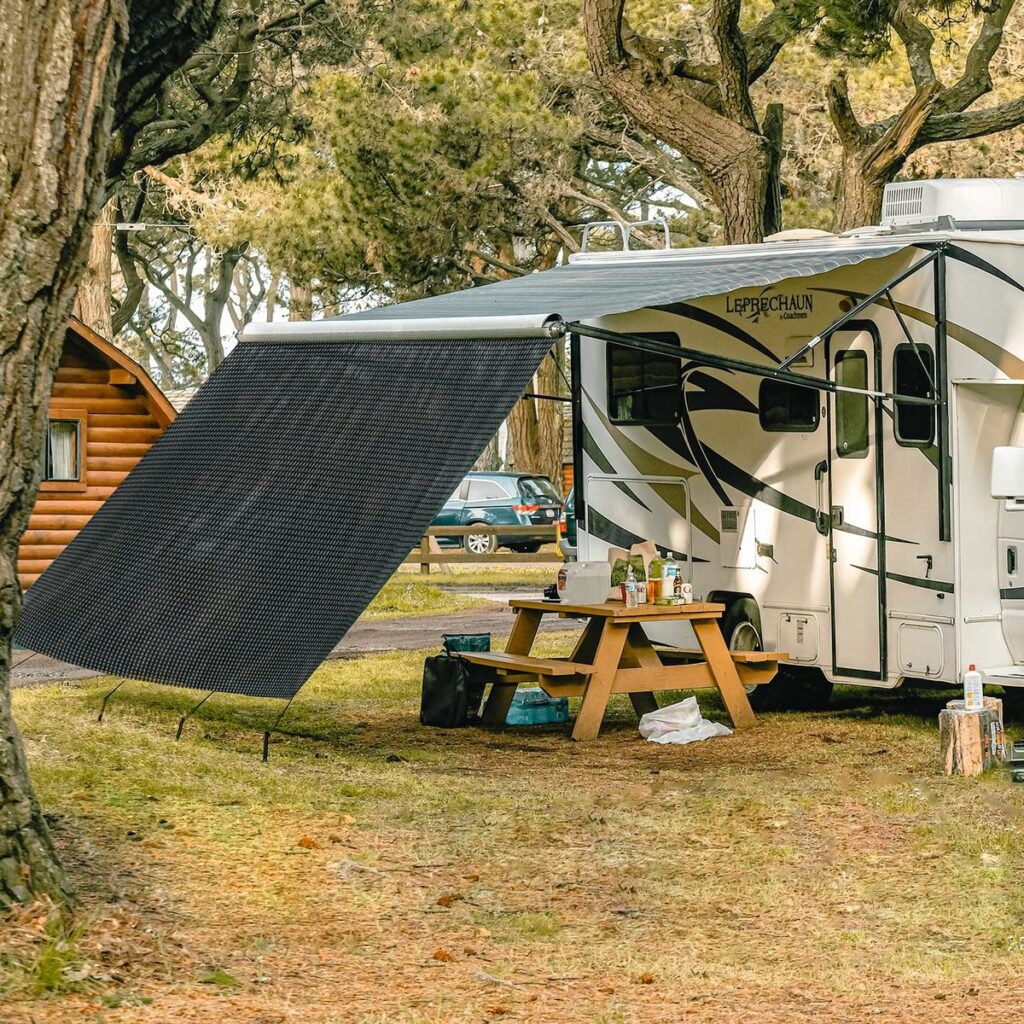
Awning sun shades are among the most popular options for RV owners. These shades attach directly to the RV’s awning and extend downward, creating a larger shaded area. They are especially useful when the sun is low in the sky and shines under the awning, which is when heat and glare are often at their worst.
Because they integrate with existing awnings, awning sun shades feel like a natural extension of the RV setup. They provide shade without blocking airflow and still allow campers to enjoy views of their surroundings. Many RV owners appreciate how these shades add privacy while maintaining an open feel.
Windshield RV Sun Shades
Windshield RV sun shades are designed to fit inside or outside the front windshield. Their main purpose is to reduce heat buildup inside the RV when it is parked. The windshield is one of the largest glass surfaces on an RV, making it a major source of heat gain.
By reflecting or blocking sunlight, a windshield RV sun shade helps keep the driver’s area and living space cooler. It also protects dashboards, steering wheels, and electronics from fading or cracking due to sun exposure. For RVs parked in open areas with little natural shade, windshield shades are especially valuable.
Side Window Sun Shades
Side window sun shades focus on individual windows along the sides of the RV. These shades are useful for targeting specific areas where sunlight enters throughout the day. Since the sun moves across the sky, side windows often become direct heat sources at different times.
Using side window RV sun shades allows owners to control light and heat without closing curtains or blinds inside the RV. This helps maintain natural light while reducing glare and temperature. Many RV owners use them in sleeping areas or living spaces where comfort is a priority.
Slide-Out Sun Shades
Slide-out sun shades are designed specifically for RVs with slide-outs. Slide-outs add valuable interior space, but they also create flat roof sections that absorb direct sunlight. This can increase heat inside the RV and stress the slide-out structure over time.
A slide-out RV sun shade covers the top of the slide-out, reducing heat buildup and helping prevent debris from collecting on the roof. While they are less visible than other types, they play an important role in protecting both comfort and the RV’s components.
Portable or Standalone RV Sun Shades
Portable or standalone RV sun shades are flexible options that are not permanently attached to the RV. These shades can be set up using poles, tie-downs, or nearby structures. They are useful for creating shade away from the RV or in campsites where fixed shades are not practical.
Because they are portable, these RV sun shades can be adjusted based on the sun’s position or moved to different locations. They offer versatility and are often favored by RV owners who enjoy customizing their outdoor space depending on the campsite layout.
Materials and Fabric Options in RV Sun Shades
The effectiveness of an RV sun shade largely depends on the materials used. Most sun shades are made from woven mesh fabrics that balance shade and airflow. This type of fabric blocks a significant portion of sunlight while allowing heat to escape, which helps prevent trapped warmth.
Durability is an important factor when choosing materials. RV sun shades are exposed to wind, sun, and occasional rain, so fabrics are often treated to resist fading and wear. Strong stitching and reinforced edges also contribute to longer lifespan, especially in windy conditions.
Weather resistance is another consideration. While most RV sun shades are designed for sun protection rather than heavy rain, quality materials can handle light moisture and dry quickly. Choosing the right fabric helps ensure the shade performs well in different climates without becoming heavy or damaged.
Choosing the Right RV Sun Shade for Your Setup
Selecting the right RV sun shade starts with understanding your RV’s size and layout. Different RVs have different awning lengths, window shapes, and slide-out configurations. A shade that fits properly will be easier to install and more effective at blocking sunlight.
Mounting location is also important. Some RV owners prioritize shading the main living area, while others focus on the windshield or sleeping spaces. Considering how sunlight hits your RV throughout the day can help determine which type of sun shade will provide the most benefit.
Climate and travel style also play a role. RV owners who spend time in hot, sunny regions may need more coverage than those who travel in cooler or shaded areas. Full-time RVers may prefer durable, long-term solutions, while occasional travelers might choose simpler, removable options.
Installation and Setup Considerations
Most RV sun shades are designed with ease of use in mind. Installation methods vary depending on the type, but many attach using tracks, straps, or hooks that work with existing RV features. Clear instructions and proper fit make setup straightforward, even for beginners.
Adjustability is another important factor. Being able to raise, lower, or angle the shade allows RV owners to respond to changing sun positions and weather conditions. Proper tension helps keep the shade secure while preventing damage from wind.
Taking time to set up the RV sun shade correctly improves both performance and safety. A well-installed shade stays in place, provides consistent coverage, and reduces wear on attachment points.
Maintenance, Storage, and Longevity Tips
Regular care helps an RV sun shade last longer and continue performing well. Cleaning the fabric occasionally removes dust, pollen, and debris that can weaken fibers over time. Most shades can be cleaned with mild soap and water and allowed to air dry.
Proper storage is equally important. When not in use, the shade should be completely dry before being folded or rolled up. Storing it in a protective bag or compartment helps prevent mold and fabric damage.
Inspecting attachment points and stitching from time to time can catch small issues before they become larger problems. With basic maintenance, an RV sun shade can remain reliable for many seasons.
Common Mistakes RV Owners Make with Sun Shades
One common mistake is choosing the wrong size. A shade that is too small will not provide enough coverage, while one that is too large may be difficult to secure. Measuring carefully before selecting an RV sun shade helps avoid frustration.
Another issue is improper installation. Loose or poorly attached shades can flap in the wind, causing noise or damage. Taking the time to secure the shade correctly improves both comfort and durability.
Some RV owners also forget to retract or remove sun shades during strong winds or storms. While many shades are durable, extreme conditions can shorten their lifespan. Being mindful of weather helps protect the shade and the RV itself.
When an RV Sun Shade Makes the Biggest Difference?
An RV sun shade is especially valuable during extended stays in sunny campgrounds. When parked for several days or weeks, consistent shade can significantly improve comfort and reduce interior heat.
It also makes a noticeable difference during summer travel or in desert and coastal regions where shade is limited. In these environments, even a small reduction in heat can improve sleep quality and outdoor enjoyment.
For RV owners who enjoy spending time outside, cooking, reading, or socializing, an RV sun shade turns the area next to the RV into a comfortable living space rather than a hot, unused zone.
Conclusion
An RV sun shade is a practical and effective way to improve comfort, protect your RV, and make better use of outdoor space. By reducing heat, blocking harmful sunlight, and creating shaded areas, it enhances both indoor and outdoor living.
With different types available for awnings, windows, windshields, and slide-outs, RV owners can choose options that match their travel style and environment. When selected carefully and maintained properly, an RV sun shade becomes a reliable companion on the road.
Ultimately, adding an RV sun shade is about making RV life more enjoyable. It helps turn campsites into comfortable spaces where you can relax, stay protected, and fully enjoy the journey.
FAQs
What is an RV sun shade used for?
An RV sun shade blocks sunlight, reduces heat, protects RV interiors, and creates a comfortable shaded outdoor area.
Do RV sun shades really keep the RV cooler?
Yes, they reduce direct sun exposure, which helps lower interior temperatures and reduces air conditioner use.
Can I use an RV sun shade while camping?
Yes, RV sun shades are made for campsite use and are commonly set up with awnings, windows, or as portable shades.
Are RV sun shades easy to install?
Most RV sun shades are simple to install and adjust, especially awning and window shades designed for RV use.
Do RV sun shades work in windy areas?
They work well in light wind, but should be secured properly and taken down during strong winds or storms.