Introduction
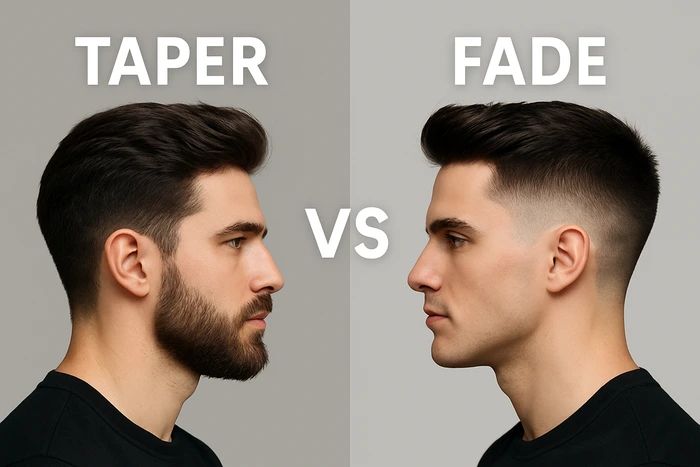
When it comes to modern men’s haircuts, the debate around taper vs fade is more common than ever. Many people use these terms as if they mean the same thing. In reality, they describe two different cutting techniques that create very different results.
The confusion exists because both styles involve hair gradually getting shorter toward the bottom. At first glance, they may look similar. Barbers also sometimes use the terms loosely, and social media trends have made the lines even blurrier. As a result, many clients walk into a barbershop asking for one style while actually picturing the other.
Understanding the difference between taper vs fade matters more than you might think. The choice affects how sharp your haircut looks, how often you need touch-ups, and whether your style feels professional, bold, or somewhere in between. Picking the right one can save you time, money, and frustration.
In this guide, you’ll learn exactly what a taper is, what a fade is, how they differ, how they grow out, and which one may suit your face shape, hair type, and lifestyle best.
The Taper Haircut
A taper is a haircut technique where the hair gradually shortens as it moves down toward the neckline and sideburns. The key word here is gradual. The change in length is smooth and subtle, not dramatic.
In a classic taper, the shortening happens only in specific areas. The barber focuses mainly on the sideburns and the back of the neck. The hair on the top and most of the sides usually stays longer and blends naturally into the shorter areas near the bottom.
Unlike a fade, a taper does not normally go down to bare skin. The hair gets shorter, but some length is always left at the very bottom. This creates a clean finish without exposing the scalp.
The overall appearance of a taper is neat, polished, and balanced. It looks natural rather than bold. Because the transition is soft, it works well with many hairstyles on top, including side parts, comb-overs, textured crops, and even longer styles.
A taper typically suits men who prefer a classic or professional look. It is especially popular among those who work in corporate or formal environments. It is also a good option for someone who wants a clean haircut but does not want to visit the barber too often.
The Fade Haircut
A fade is a more dramatic version of gradual shortening. In the taper vs fade comparison, the fade stands out for its stronger contrast and wider blending area.
With a fade, the hair blends much higher up on the head. Instead of focusing only on the neckline and sideburns, the barber blends the hair all the way around the sides and back. The transition can start low near the ears or higher near the temples and crown, depending on the style chosen.
One defining feature of many fades is that they often go down to the skin. This is called a skin fade or bald fade. In this version, the hair at the very bottom is shaved completely, creating a sharp and clean finish. There is also a softer option known as a shadow fade, where the hair is cut very short but not fully shaved.
The visual effect of a fade is bold and eye-catching. The contrast between the longer hair on top and the very short or shaved sides creates a sharp outline. This gives the haircut a modern and trendy feel.
Fades are popular among men who like a stylish and high-impact look. They work well with contemporary hairstyles such as textured tops, curly crops, pompadours, and even buzz cuts. Many athletes, celebrities, and influencers have helped make fades one of the most requested haircuts in recent years.
The Core Differences Between Taper and Fade
When comparing taper vs fade, the main differences come down to placement, contrast, skin exposure, growth pattern, and overall vibe.
Placement is the first big difference. A taper is limited to the neckline and sideburns. A fade blends across the entire back and sides of the head.
The level of contrast is another major factor. A taper offers a subtle shift in length. A fade creates a more noticeable change, especially if it goes down to the skin.
Skin exposure also separates the two styles. In most tapers, the hair at the bottom remains short but visible. In many fades, especially skin fades, the scalp is clearly exposed at the lowest point.
Growth pattern over time is important as well. Because a taper is softer and more natural, it grows out smoothly. A fade, particularly a skin fade, can lose its sharp appearance more quickly as the hair starts to grow back.
The overall aesthetic vibe completes the comparison. A taper feels conservative, classic, and understated. A fade feels modern, edgy, and bold. Neither is better than the other; the right choice depends on personal preference and lifestyle.
Taper vs Fade: Maintenance and Upkeep
Maintenance is a key part of the taper vs fade decision.
A taper is generally lower maintenance. Since it does not rely on exposed skin or extreme contrast, it continues to look neat even as it grows out. Many people can go three to four weeks before needing another trim.
A fade usually requires more frequent visits. If you choose a skin fade, the clean-shaven look at the bottom can start to disappear within a couple of weeks. To keep the style sharp, many men schedule touch-ups every two to three weeks.
As the hair grows, a taper blends naturally into the rest of the hairstyle. A fade may start to look less defined, especially around the edges and lower sections.
Daily styling differences are not huge, since both styles focus on the sides and back. However, because fades create stronger contrast, they often pair with more styled or structured looks on top. A taper can feel more relaxed and flexible for everyday wear.
If you prefer fewer barber visits and a cut that ages gracefully, a taper may be the better option. If you enjoy a crisp and freshly cut look at all times, a fade may suit you more.
Which One Looks More Professional?
Many people ask which style wins in the taper vs fade debate when it comes to professionalism.
In traditional office settings, a taper is often seen as the safer choice. Its subtle blending and natural appearance make it suitable for formal meetings and conservative workplaces. It looks clean without drawing too much attention.
A fade can also look professional, especially if it is a low or mid fade rather than an extreme high skin fade. However, very bold fades may feel too trendy or sharp for certain formal environments.
The perception of conservative versus modern style plays a role. A taper leans toward timeless grooming standards. A fade leans toward current fashion trends.
The right choice depends on your work environment and personal image. If you want a haircut that blends easily into any setting, a taper offers flexibility. If your workplace allows more style freedom, a fade can still look polished when done well.
Face Shape and Hair Type Considerations
Haircuts should always complement your face shape and hair type. The taper vs fade choice is no exception.
A taper works well for most hair types, including straight, wavy, and slightly curly hair. Because it keeps some length at the sides, it can help balance wider faces and soften sharp angles.
A fade is especially effective for thick hair, curly textures, and dense growth. Removing more hair from the sides can reduce bulk and highlight natural texture on top. For men with very thick hair, a fade can feel lighter and easier to manage.
Face shape also matters. For round faces, a fade with more height on top can create a longer appearance. For longer faces, a subtle taper may help maintain balance without adding too much vertical emphasis.
Thickness, texture, and density all influence the final look. Thinner hair may benefit from a taper, since keeping some length at the sides can create a fuller appearance. Very thick or coarse hair often pairs well with a fade for a cleaner shape.
Common Variations You Should Know
Within the taper vs fade conversation, there are several variations worth understanding.
A low taper keeps the shortening very close to the neckline and sideburns. A high taper shortens slightly higher but still does not extend fully around the head.
A low fade starts just above the ears and curves around the head. A mid fade begins higher, roughly around the temple area. A high fade starts near the top of the sides, creating strong contrast between the top and the sides.
The skin fade, also known as a bald fade, blends all the way down to shaved skin. This creates the sharpest and cleanest finish. A shadow fade keeps a small amount of stubble at the bottom instead of going fully bare.
The term “taper fade” is often used by clients, but it can cause confusion. In many cases, it refers to a fade that is blended carefully around the neckline and sideburns. It combines elements of both techniques, but the overall result is usually closer to a fade than a classic taper.
Understanding these variations helps you communicate more clearly and avoid misunderstandings at the barbershop.
How to Ask Your Barber for the Right Cut?
Clear communication is essential when choosing between taper vs fade.
Start by using the correct terms. If you want a subtle clean-up around the edges only, ask for a taper. If you want the sides and back fully blended, ask for a fade and specify whether you prefer low, mid, or high.
To avoid miscommunication, describe how short you want the bottom to be. If you do not want skin to show, mention that clearly. If you prefer a sharp, shaved finish, ask for a skin fade.
Reference details such as how often you plan to get a haircut and how you usually style your hair. Bringing a photo can also help, as it gives your barber a visual guide.
The more specific you are, the more likely you are to leave the chair satisfied.
Taper vs Fade: Side-by-Side Comparison
Looking at taper vs fade side by side makes the difference clearer.
A taper offers subtle contrast, limited placement near the neckline and sideburns, minimal or no skin exposure, and lower maintenance. Its style impact is classic and professional.
A fade delivers bold contrast, full blending around the sides and back, frequent skin exposure in many versions, and higher maintenance. Its style impact is modern and sharp.
If you want something understated and easy to manage, a taper is a strong choice. If you want a haircut that stands out and highlights structure, a fade may be the better option.
Final Thoughts on Choosing Between a Taper and a Fade
The taper vs fade debate is not about which haircut is better. It is about which one fits you.
A taper is subtle, classic, and easier to maintain. A fade is bold, modern, and requires more frequent touch-ups. The difference lies in placement, contrast, skin exposure, and overall vibe.
Your personal style, job environment, hair type, and lifestyle all play a role in the decision. Think about how often you want to visit the barber and how much contrast you are comfortable with.
Instead of choosing based on trends alone, focus on what makes you feel confident and comfortable. When you understand the true difference between taper vs fade, you can walk into your next haircut appointment knowing exactly what to ask for.
FAQs
Is a taper the same as a fade?
No. A taper shortens hair only at the neckline and sideburns, while a fade blends the entire sides and back, often down to the skin.
Which lasts longer, taper or fade?
A taper usually lasts longer because it grows out more naturally. Fades, especially skin fades, need touch-ups sooner to stay sharp.
Is a fade more modern than a taper?
Generally, yes. Fades are seen as trendier and more bold, while tapers are considered classic and professional.
Can I ask for a taper fade?
Yes, but be clear with your barber. The term often means a fade that is carefully blended near the neckline, combining elements of both styles.
Which is better for thick hair?
A fade often works well for thick hair because it removes bulk from the sides. However, both styles can be adjusted to suit different hair types.