
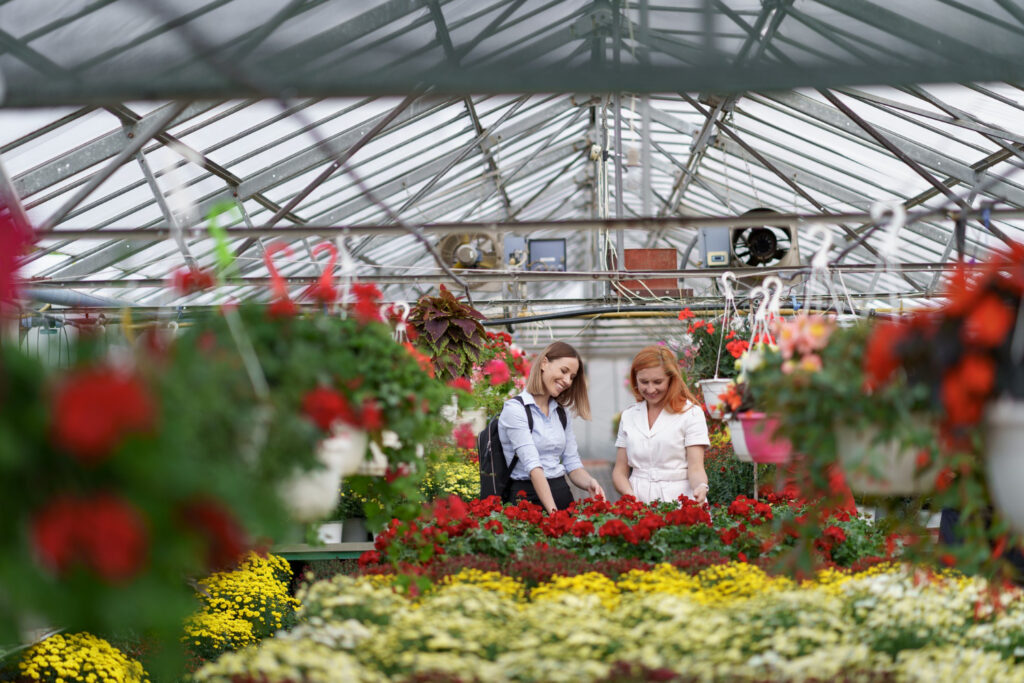
I grew up in a family where the vegetable garden went to sleep in October and woke up again in April, and for a long time I assumed this was simply how kitchen gardening worked. The productive season started when the last frost passed and ended when the first hard frost arrived, and in between you grew what you could and were grateful for it. Then I inherited a small Victorian lean-to greenhouse attached to a cottage wall, and everything I thought I understood about growing food changed completely.
That lean-to, a modest structure barely four metres long, opened my eyes to a reality I have never since been able to ignore: with a greenhouse, the growing year does not have to follow the outdoor calendar. It can be stretched, compressed, redirected, and ultimately — with a little heat and a lot of enthusiasm — extended to cover every single month.
Why a Greenhouse Changes Everything?
The fundamental thing a greenhouse does is decouple your growing from the weather. The British climate is not hostile to food growing — we have decent rainfall, manageable summers, and soils that respond well to cultivation — but the growing window is short and the margins are narrow. Last frosts in April or even May mean that tender crops cannot go out until June in many parts of the country, which leaves only three or four months of productive outdoor growing.
A greenhouse extends this window at both ends. In late winter, you can sow tomatoes, cucumbers, aubergines, chillies, and peppers under glass, giving them the long growing season they need to be genuinely productive by midsummer. In autumn, crops that would be finished outdoors by September can continue producing under glass well into November. And in the depths of winter, a frost-free or lightly heated greenhouse can be genuinely productive with winter salads and Oriental leaves growing slowly but steadily.
Planning the Greenhouse Year
The key to getting the most from a greenhouse is thinking about the space as a rotating system rather than a static one. Late winter — from January onwards in a heated house, February in an unheated one — is the time for starting the season’s main tender crops. Spring transforms the greenhouse into a propagation powerhouse. Midsummer sees the main food crops reach peak productivity. Autumn is the critical moment for making late sowings that will extend the season into winter.
Tomatoes: The Greenhouse’s Greatest Gift
No discussion of greenhouse food growing can ignore tomatoes for long. Homegrown tomatoes under glass are categorically different from shop-bought ones: sweeter, more complex, often more fragrant, and available in colours, sizes, and flavour profiles entirely absent from any supermarket shelf.
For greenhouse growing, cordon varieties are the standard choice, trained as a single upright stem with all side-shoots removed. A 6x8ft greenhouse can comfortably accommodate six to eight cordon tomato plants — enough to supply a household with fresh tomatoes through summer and early autumn. ‘Sungold’ remains perhaps the most reliably delicious cherry tomato; ‘Tigerella’ produces distinctive striped fruits with a slightly acidic flavour; ‘Black Krim’ delivers complex, richly flavoured dark fruits that attract universal admiration.
Beyond Tomatoes: The Full Greenhouse Harvest
Cucumbers are an excellent second crop, producing prolifically under glass. All-female varieties — those that do not require pollination — are the best choice for greenhouse use. Train them up strings and they will produce fruit continuously from July through to September with very little intervention beyond regular watering and feeding.
Chillies are among the most rewarding greenhouse crops for the patient grower: slow to start but ultimately extraordinarily productive, with a single large plant capable of producing hundreds of fruits over a season. Aubergines are perhaps the most satisfying of all greenhouse crops for the simple reason that they are so difficult to grow well outdoors in most of the UK.
Winter Salads: The Overlooked Harvest
In a frost-free or lightly heated house, a surprising range of crops will grow slowly but steadily through even the darkest months: lamb’s lettuce, winter purslane, land cress, mizuna, mustard leaves, spinach, and various Oriental greens all tolerate cold conditions and low light far better than most gardeners expect. Sow from late August to early October for established plants before the days become very short.
The National Allotment and Leisure Gardeners Society has a wealth of practical growing advice for vegetable gardeners that covers seasonal planting plans, crop rotation, and the management of productive growing spaces — much of which translates directly to greenhouse growing, and particularly relevant if your greenhouse sits within a wider productive garden.
Making the Investment Work
A greenhouse represents a real financial commitment, but for serious growers of tomatoes, cucumbers, and chillies, a well-used greenhouse can offset its cost within a few seasons. The pleasure of stepping into a warm greenhouse on a cold January morning to tend young seedlings is not really reducible to a financial equation, either.
If you are considering the investment and want to compare current options, you can browse the full range at Dobbies to see what is available across different sizes and structures — from compact growhouses ideal for getting started to full-sized production greenhouses for more ambitious growers.
Use every inch of it, in every month of the year. The potential is enormous. The only limit is your ambition and your seed catalogue.