Introduction
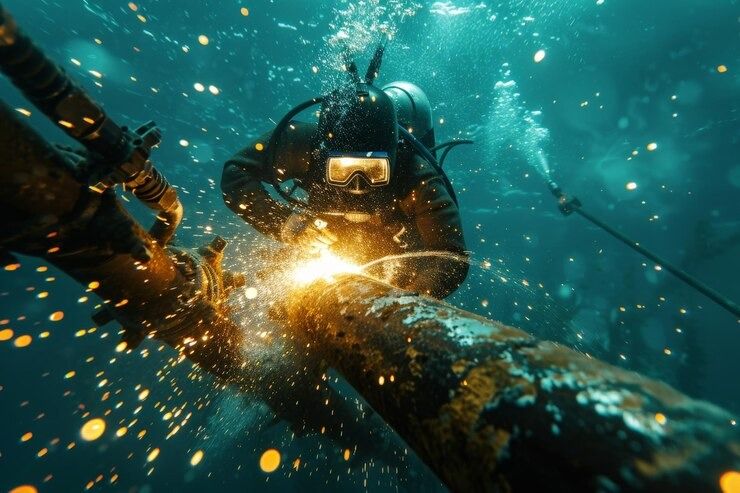
An underwater diver welder is a trained professional who combines two very different skills: welding and commercial diving. Simply put, this person repairs, builds, or inspects metal structures while working underwater. These structures can include ships, oil platforms, bridges, pipelines, and ports. The job exists because many important structures are built in or near water, and removing them for repairs is often impossible or extremely expensive.
Underwater diver welders play a quiet but essential role in modern life. They help keep offshore oil and gas platforms running, ensure ships remain safe to operate, and support marine construction projects around the world. Without this profession, many underwater structures would deteriorate faster, creating safety risks and costly damage. Although the job is demanding, it remains a critical part of marine, offshore, and industrial work.
Understanding the Role of an Underwater Diver Welder
The role of an underwater diver welder goes far beyond simply joining metal pieces together. On a typical workday, a diver welder may inspect damaged steel, clean surfaces, perform welding or cutting tasks, and report structural conditions to engineers above the surface. Much of this work happens in challenging environments where visibility is low and movement is limited.
One key difference between underwater welding and surface welding is the environment itself. On land, welders work in controlled conditions with stable footing and clear visibility. Underwater diver welders, however, must deal with water pressure, currents, cold temperatures, and limited light. Every movement requires more effort, and simple tasks take longer. This makes underwater welding slower, more complex, and far more physically demanding than surface welding.
Types of Underwater Diver Welding Work
Underwater diver welders work across several industries, each with its own demands. Offshore and marine construction is one of the most common areas. In these projects, diver welders help build or expand oil rigs, wind farms, and underwater foundations. Their work supports energy production and large-scale infrastructure.
Maintenance and repair work is another major part of the job. Ships, docks, and pipelines are constantly exposed to water, salt, and movement, which leads to wear and damage over time. An underwater diver welder may be called in to fix cracks, replace damaged sections, or reinforce weak points before they become serious problems. Inspection tasks are also common, as many structures must be checked regularly for safety reasons.
The depth of the work also varies. Shallow water operations usually take place near shorelines, harbors, or rivers. Deep water operations, on the other hand, can involve offshore platforms and pipelines far below the surface. Deeper work requires more training, more complex equipment, and stricter safety planning.
Skills Required to Become an Underwater Diver Welder
To succeed as an underwater diver welder, a person must master several important skills. Welding ability is the foundation. This includes understanding how metals behave, how to control heat, and how to create strong, reliable welds. These skills must be adapted for underwater conditions, where water affects visibility and heat control.
Professional diving skills are equally important. Diver welders must know how to manage breathing equipment, control buoyancy, and move safely underwater. They also need to understand how pressure affects the body and how to ascend and descend properly.
Physical endurance plays a major role in this career. The work is tiring, and tasks often require holding awkward positions for long periods. Mental focus is just as important. Underwater diver welders must remain calm, alert, and disciplined, even in stressful or uncomfortable conditions.
Training and Certifications for Underwater Diver Welders
Becoming an underwater diver welder requires formal training. Most professionals begin by learning welding on land and earning recognized welding certifications. This builds the technical foundation needed for later underwater work.
After welding training, aspiring diver welders must complete commercial diving school. These programs teach diving physics, underwater safety, equipment handling, and emergency procedures. Graduates earn licenses that allow them to work professionally underwater.
Training does not stop once someone enters the field. Ongoing skill development and safety refreshers are common. New tools, updated safety standards, and changing industry needs make continuous learning an important part of this profession.
Tools and Equipment Used in Underwater Diver Welding
Underwater diver welding relies on specialized tools designed to function safely in water. Welding equipment must be sealed and adapted to prevent electrical hazards. Cutting tools are also used to remove damaged metal or prepare surfaces for repair.
Diving gear is another critical part of the job. This includes helmets, suits, breathing systems, and hoses that supply air from the surface. Life-support systems are carefully monitored to ensure the diver’s safety at all times.
Communication equipment allows the underwater diver welder to stay in contact with the surface team. Clear communication is essential for coordinating tasks, managing risks, and responding quickly to unexpected situations.
Working Conditions Below the Surface
Working conditions for an underwater diver welder can vary widely. Some jobs take place in calm, shallow waters with decent visibility. Others happen in dark, cold, or fast-moving environments where visibility is extremely limited.
Depth affects everything. As depth increases, pressure builds, and the body must adjust carefully. Temperature can also be a challenge, as deeper water is often much colder. These factors influence how long a diver can work and how quickly fatigue sets in.
All of these conditions affect performance and safety. Tasks must be planned carefully, and breaks are scheduled to prevent exhaustion or health risks. Underwater diver welders rely heavily on preparation and teamwork to manage these challenges.
Safety Risks and Challenges in Underwater Diver Welding
Safety is a constant concern in underwater diver welding. Common hazards include strong currents, poor visibility, falling objects, and equipment failure. Electrical risks are also present, which is why strict procedures are followed when using welding tools underwater.
Pressure-related issues can affect the body if proper procedures are not followed. Ascending too quickly or working beyond safe limits can lead to serious health problems. This makes discipline and training essential.
Managing these risks requires clear planning, reliable equipment, and strong communication between the diver and the surface team. Safety rules are not optional in this profession; they are a core part of daily work.
Career Path and Job Opportunities for Underwater Diver Welders
Many underwater diver welders begin their careers in entry-level roles, assisting experienced divers and learning on the job. With time and experience, they take on more complex tasks and greater responsibility.
Job opportunities exist in several industries, including offshore energy, shipping, construction, and government projects. Some diver welders work for specialized diving companies, while others are hired directly by large industrial firms.
Long-term career progression can include supervisory roles, inspection work, or training positions. Some professionals eventually move into project management or safety consulting, using their experience to guide others.
Earnings and Lifestyle Considerations
Earnings for an underwater diver welder can vary widely. Factors such as experience, depth of work, location, and industry all play a role. Deep water and offshore projects often pay more due to the higher risks and skill requirements.
The lifestyle can be challenging. Work schedules may involve long hours, extended time away from home, and unpredictable assignments. Some projects require living on-site or offshore for weeks at a time.
Physical demands and long-term health considerations are also part of the trade-off. While the career can be rewarding, it is not suitable for everyone. Many professionals choose this path knowing it may be intense but relatively short compared to other careers.
The Future of the Underwater Diver Welder Profession
The future of the underwater diver welder profession remains closely tied to global infrastructure needs. Offshore energy, shipping, and marine construction continue to rely on skilled underwater workers to maintain and expand critical systems.
Technology is changing the field, with more advanced tools and improved safety equipment becoming available. While automation and remotely operated vehicles are increasing, they cannot replace human skill in many complex tasks.
Skills such as problem-solving, adaptability, and hands-on expertise are likely to remain valuable for years to come. The role of the underwater diver welder may evolve, but its importance is unlikely to disappear.
Conclusion
An underwater diver welder is more than just a welder or a diver. This profession combines technical skill, physical strength, and mental discipline to support essential underwater structures around the world. From offshore platforms to ship repairs, these professionals work in environments that few people ever experience.
The challenges are real, including safety risks, demanding conditions, and a demanding lifestyle. At the same time, the role offers unique opportunities, strong earning potential, and the satisfaction of doing work that truly matters. For those with the right skills, mindset, and curiosity, becoming an underwater diver welder can be a challenging but meaningful career path.
FAQs
Is underwater diver welding dangerous?
Yes, it is considered a high-risk job due to water pressure, low visibility, electrical equipment, and harsh conditions. Proper training and safety rules reduce risks.
How long does it take to become an underwater diver welder?
Usually 2 to 4 years, including welding training, commercial diving school, and hands-on experience.
Do underwater diver welders make good money?
Yes, earnings can be high, especially for offshore and deep-water work, but pay depends on experience, location, and project type.
Can beginners become underwater diver welders?
Yes, but beginners must first learn welding and diving separately before combining both skills professionally.
Is underwater diver welding a long-term career?
For many people, it is a short to mid-term career due to physical demands, but it can lead to inspection, training, or supervisory roles.