
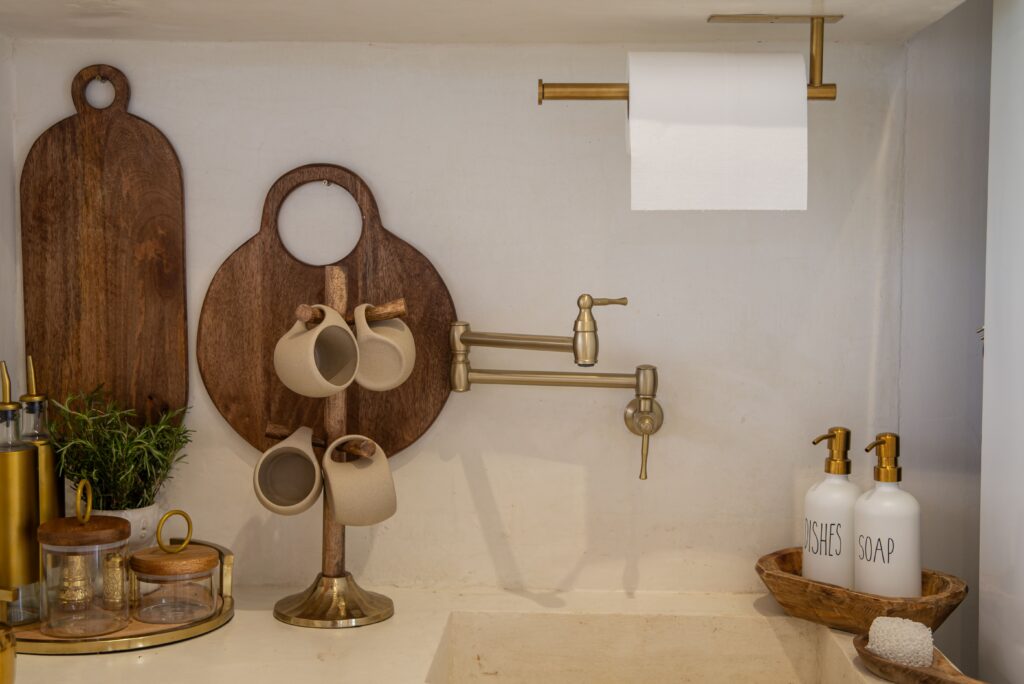
To accessorize a kitchen well is to add the small, useful details that make cooking easier and the room more pleasant to be in. It is not about filling every surface. A good kitchen has clear worktops, tools close to hand, a few well-chosen decorative touches, and storage that keeps everyday items easy to reach without looking cluttered. When the balance is right, the kitchen feels finished, but still works hard every day.
This guide explains how to accessorize a kitchen step by step. It covers worktops, walls, storage, textiles, lighting, plants, and colour, with ideas for small kitchens and rented homes too. The aim is simple: choose accessories that earn their place, either because you use them often or because they genuinely improve how the room looks and feels.
Start With How You Use The Kitchen
Before buying anything, think about how your kitchen is actually used. Do you cook most evenings, or mainly make tea and toast? Is there one cook, or several? Do children do homework at the table? Does the kitchen also serve as a place to eat, work, or welcome guests? The answers change which accessories matter most.
Watch where you walk and reach during a normal week. The items you use daily should live near where you use them: knives and chopping boards near the preparation area, mugs near the kettle, and cooking oils near the hob. Accessories placed for looks alone, far from where they are needed, soon become obstacles. Good kitchen accessories reduce steps, not add them.
Worktops: Useful First, Decorative Second
Worktops are for working, so they should stay mostly clear. A few well-chosen items can still make them look warm and organised. A utensil holder near the hob, a knife block or magnetic strip, and a chopping board that can stay out are practical starting points. They save cupboard space and keep cooking tools within reach.
A tray can help group smaller items, such as oils, salt, and pepper, into one tidy area. It is easier to wipe underneath a tray than to move many bottles one by one, and it stops the worktop looking scattered. Choose a tray that fits the space, rather than one that spreads across a whole run of units.
For decoration, one larger item usually works better than many small ones. A bowl of fruit, a small plant, or a vase with fresh stems can soften a kitchen without blocking preparation space. Avoid placing decorations near the hob or sink, where heat, steam, and splashes will damage them and make cleaning harder.
Walls And Vertical Space
Walls are often the most underused part of a kitchen. Open shelves, hooks, and rails can add both storage and character, as long as they are kept tidy. A rail with hooks for pans, ladles, or mugs can free a cupboard and make everyday tools easy to grab. It works best when the items are ones you actually use, rather than a full set bought for display.
Open shelves suit attractive, everyday items such as bowls, glasses, and jars. They do not suit everything: items that are rarely used will gather dust and grease in a kitchen. If you choose open shelves, keep them to one or two short runs and leave some empty space, so they look calm rather than crowded.
Storage That Looks Good Too
Storage is one of the most important kitchen accessories, because it decides whether the room feels calm or chaotic. Matching jars for tea, coffee, rice, pasta, and flour can make cupboards easier to use and look neat when placed on a shelf. Clear jars help you see when supplies are running low, while labelled jars help everyone in the household find what they need.
Baskets are useful for grouping items such as onions, potatoes, bread, or cleaning supplies. They are easy to pull out, clean, and replace, and they hide a mix of packaging behind a tidy front. Choose baskets that fit the cupboard or shelf exactly, and avoid baskets so large that items get lost at the bottom.
Inside cupboards, small accessories make a big difference. Drawer dividers keep cutlery and utensils from sliding into a jumble, while shelf risers can double the usable space for mugs or plates. These are not decorative, but they are among the most useful ways to accessorize a kitchen, because they make daily routines smoother.
Textiles: Tea Towels, Aprons And Rugs
Textiles add colour and softness to a kitchen, which often has many hard surfaces. Tea towels, oven gloves, aprons, and a washable rug can all be part of the look, as long as they are practical. Choose tea towels that actually dry dishes well, and keep a separate set for display if you like a coordinated look.
Colour is an easy way to change the feel of a kitchen without redecorating. A set of towels in one accent colour, a patterned apron, or a simple runner can tie the room together. In a small kitchen, keep textiles to one or two colours that already appear in the room, such as the colour of a blind, a picture, or a set of mugs.
Safety matters with textiles. Keep tea towels and oven gloves away from the hob, and choose a rug with a non-slip backing if it will sit near the sink or cooker. A rug that slides is a hazard, however good it looks. Washable fabrics are usually the best choice for a room where spills are common.
Lighting As An Accessory
Lighting changes how a kitchen feels more than almost any other accessory. Bright, even light is needed for safe preparation, while softer light makes the room pleasant in the evening. If your kitchen has only one ceiling light, a few additions can improve both.
Under-cabinet lights, whether fitted or battery-powered, make worktops easier to use and show off the room at night. A pendant light over a table or island can create a focal point and mark an eating area. Keep pendant lights high enough that they do not block sightlines or get in the way when people stand up.
Plants And Natural Touches
Plants are one of the easiest ways to accessorize a kitchen. Herbs such as basil, mint, and parsley are useful as well as decorative, and a small pot on a windowsill can be picked from while cooking. Choose herbs you actually cook with, and place them where they get light but are not knocked over during busy moments.
If you do not cook with herbs often, a hardy houseplant can still soften the room. Trailing plants on top of a cabinet, or a small plant on a shelf, add life without taking worktop space. Avoid plants that drop many leaves near food preparation areas, and check that pots have saucers to protect surfaces from water marks.
Colour, Pattern And Personal Style
Accessories are a low-cost way to test colour in a kitchen. If the units and worktops are neutral, accessories can add warmth or personality without a full redecoration. A common approach is to choose one main accent colour and repeat it in two or three places, such as towels, a kettle, and a picture, rather than using a different colour for every item.
Pattern needs the same restraint. One patterned item, such as a blind, a set of plates, or a rug, can be the star of the room. If everything is patterned, the eye has nowhere to rest and the kitchen can feel busy. Plain items in the same colour family help balance a bold pattern.
Accessorizing A Small Kitchen
Small kitchens benefit most from careful accessories, because every item must earn its space. Use walls and the insides of cupboard doors for hooks, racks, and small shelves. Choose items that do two jobs, such as a chopping board that can also serve food, or a stool that provides both seating and a step for high shelves.
Keep the colour palette light and simple, and avoid large decorations that block light or movement. A single mirror or a light-coloured picture can make a small kitchen feel larger, while clear jars and open shelving can make it feel more open if they are kept tidy. If open storage starts to look cluttered, closed storage is usually the calmer choice.
A Simple Kitchen Accessories Checklist
If you want a starting point, the list below covers the accessories most kitchens use well. Adapt it to your space, rather than treating it as a shopping list.
- A utensil holder, knife storage, and chopping boards near the preparation area.
- Matching, labelled jars for everyday dry goods.
- A tray to group oils, salt, and pepper on the worktop.
- Hooks, a rail, or a small shelf for tools used daily.
- Good tea towels, oven gloves, and a washable rug.
- One plant or vase, placed away from heat and splashes.
- Task lighting for worktops and softer light for eating areas.
Once these basics are in place, add decorative pieces slowly, one at a time. Live with each addition for a few days before adding another, so you can see whether it helps or simply takes up space.
Common Mistakes To Avoid
One common mistake is buying accessories before measuring. A shelf, rail, or tray that is slightly too large can block a cupboard door or a walkway, while one that is too small can look lost. Measure the space, check door and drawer clearances, and think about how the item will be cleaned.
Another mistake is filling every surface at once. A kitchen that looks styled in a photograph may be hard to cook in, because every worktop is covered. Leave at least one clear area for preparation, even if it looks empty at first. That empty space is what makes the rest of the room usable.
Finally, avoid accessories that are hard to clean. Kitchens gather grease, steam, and food splashes, so intricate ornaments, fabric that cannot be washed, and items with many small parts soon look tired. Choose smooth, wipeable surfaces where possible, and keep delicate items in a dining area rather than next to the cooker.
Conclusion
To accessorize a kitchen well, start with how you cook and live in the room, keep worktops mostly clear, and choose accessories that are useful, easy to clean, and pleasant to look at. Use walls and storage wisely, add colour and plants in small amounts, and leave room to move and work. For more home ideas, see FM Magazine’s cushion covers guide, browse the House section, or visit the FM Magazine homepage. For kitchen inspiration and storage ideas, see IKEA UK. A kitchen does not need many accessories to feel finished. It needs the right ones, in the right places, for the people who use it every day.
Frequently Asked Questions
How Do I Accessorize A Kitchen Without Clutter?
Keep worktops mostly clear, group small items on a tray, and use walls and cupboards for storage. Add one decorative piece at a time, and remove anything that is not used or does not improve the room.
What Are The Most Useful Kitchen Accessories?
The most useful accessories are usually a utensil holder, good knife storage, chopping boards, labelled jars, drawer dividers, and task lighting. These make cooking and cleaning easier, rather than simply changing how the room looks.
How Can I Accessorize A Rented Kitchen?
Choose items that do not need drilling, such as freestanding shelves, suction hooks where suitable, trays, jars, textiles, and plants. Keep original fixtures unchanged, and choose accessories you can take with you when you move.
Should Kitchen Accessories Match?
They do not need to match exactly, but they should share a colour or material link. A mix of wood, ceramic, and metal can look good if the colours are calm and the shapes are simple. Too many unrelated styles can make the room feel untidy.
Leave a Reply