
Bath is one of the easiest cities in Britain to enjoy in a short break, and one of the most beautiful. The whole city centre is a UNESCO World Heritage Site, recognised in 1987 for its Roman remains and its remarkably complete Georgian architecture, and almost everything worth seeing sits within a short walk of the Abbey. If you are wondering what to do in Bath, start with the Roman Baths and Bath Abbey, walk across Pulteney Bridge, admire the Royal Crescent, and, if you want to bathe in the warm mineral water that gave the city its name, book a session at Thermae Bath Spa. One full day covers the main sights, while two days let you add museums, a river walk, and a proper afternoon tea without rushing. Bath is about 90 minutes by train from London, and staying overnight is worth it for the early morning and evening light.
Explore The Roman Baths
The Roman Baths are the reason Bath exists, and they should be your first stop. The site is one of the best-preserved Roman bathing complexes in Northern Europe, built around a natural hot spring where mineral-rich water still rises at 46 degrees Celsius, around 1.17 million litres of it every day. The Great Bath is the centrepiece, a wide pool lined with lead and edged with Roman stonework, but allow time for the museum as well. It holds finds from the site, including the gilded bronze head of the goddess Minerva, and explains how the Romans used the baths for bathing, healing, and worship. One thing surprises many first-time visitors: you cannot swim in the Roman Baths. The water is untreated and is not safe to bathe in, and the site is preserved as a museum. If you want to bathe in the thermal water, Thermae Bath Spa elsewhere in the city is the place to go. The Roman Baths are busy, especially in summer and at weekends, so booking ahead online is sensible. Allow one and a half to two hours for a proper visit.

Step Inside Bath Abbey
Bath Abbey stands beside the Roman Baths in the heart of the city, and the two make a natural pair. The present church was built from 1499 on the site of an earlier Norman cathedral, and its fan-vaulted ceiling is one of the finest in England. Look up at the ceiling, then walk the nave and look at the memorials and the angels climbing the west front. The Abbey is a working church, so opening times for sightseeing can change around services, and it is worth checking the day’s schedule when you arrive. The tower tour is a separate experience and a highlight for anyone comfortable with heights. It involves climbing 212 steps, and it rewards you with views over the rooftops and the surrounding hills that you cannot get anywhere else in the city.

Bathe At Thermae Bath Spa
Thermae Bath Spa is the modern answer to the Roman Baths, and it is the only place in Britain where you can bathe in natural hot-spring water. The spa draws on the same thermal springs that fed the Roman complex, but the water is treated so that it is safe to bathe in. The highlight is the open-air rooftop pool, where warm water steams gently against a backdrop of Georgian rooftops, and it is especially atmospheric in the evening. Book well in advance, because popular times, particularly weekends and evenings, sell out weeks ahead. There are two age rules worth knowing before you book: the main spa is for visitors aged 16 and over, and spa treatments are for adults aged 18 and over. If you are travelling with younger children, plan a different activity for them while the adults visit the spa.
Admire The Royal Crescent And The Circus
No visit to Bath is complete without seeing the Royal Crescent, the city’s most famous piece of Georgian architecture. It is a sweeping arc of 30 terraced houses designed by John Wood the Younger and completed in 1775, and it is best seen from the lawn in front, where the curve of the buildings and the open green make a perfect photograph. A short walk away is The Circus, a circle of 33 terraced houses designed by John Wood the Elder and built around 1768, with a green in the middle and plane trees that make it feel like a quiet village square. Together, the Crescent and the Circus show why Bath’s Georgian architecture is so admired: the houses are grand without being showy, and the streets were planned as a whole, not built house by house.
Walk Across Pulteney Bridge
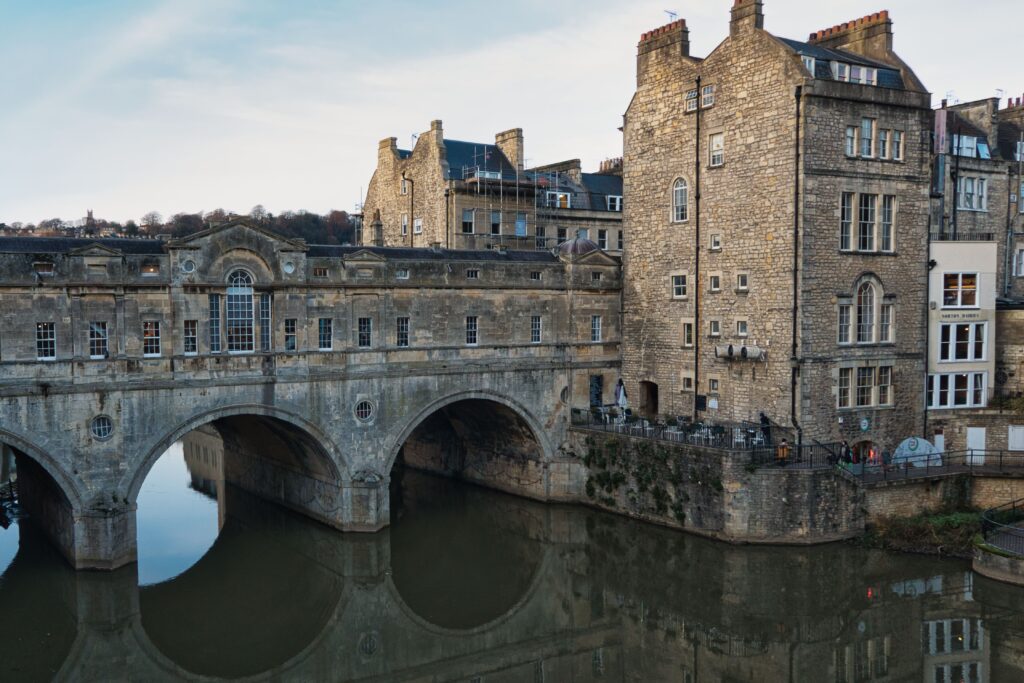
Pulteney Bridge is one of Bath’s most photographed sights, and it is easy to miss if you do not know what to look for. The bridge crosses the River Avon just a short walk from the Abbey, and it is lined with small shops on both sides, so it feels more like a street than a bridge. It is one of only four bridges in the world with shops built across its full span on both sides, which is why it draws so many photographers. Pulteney Weir, with its curved stone steps and rushing water, is one of the prettiest views in the city. If you are short on time, the bridge, the weir, and the Abbey can be seen together in a single relaxed hour.
Visit The Jane Austen Centre
Bath was Jane Austen’s home for five years, from 1801 to 1806, and the city runs through her novels, particularly Northanger Abbey and Persuasion. The Jane Austen Centre, on Gay Street, is a small museum that explains her life in Bath, her family, and the social world of the city in the early 19th century. Costumed guides and short talks bring the period to life, and the museum is a good stop for readers as well as for anyone curious about the city’s literary history. It is not a large museum, so allow under an hour, and consider combining it with a walk to the Royal Crescent, which is only a few minutes away. Note that the Fashion Museum is closed while it prepares a new home, so do not plan a visit to its old displays at the Assembly Rooms.
More Museums Worth Your Time
Bath has several smaller museums that reward a slower visit. Number 1 Royal Crescent shows a Georgian townhouse in detail, from the kitchen to the drawing room. The Holburne Museum, at the end of Great Pulteney Street, holds a collection of fine and decorative arts in a grand building with a garden cafe. The Herschel Museum of Astronomy, in the house where the astronomer William Herschel lived, tells the story of his work and of the telescopes he built in Bath. None of these museums needs a whole morning, which makes them good choices for a second day or a rainy afternoon. If you have limited time, pick one that matches your interests rather than trying to see them all. Check opening days before you go, because some of the smaller museums close on certain weekdays.
Walks, The River, And The Parks
Bath is a walking city, and some of its best moments cost nothing. The Bath Skyline walk, a waymarked route through woodland and meadows above the city, gives wide views over the rooftops and the surrounding hills, and it can be walked in sections if you do not want the full route. Along the River Avon, the towpath of the Kennet and Avon Canal offers a flat, gentle walk away from the traffic, with narrowboats, locks, and waterside pubs. Wear comfortable shoes, because the city is hilly in places, especially around the Royal Crescent and the streets above the centre.

Where To Eat And Drink In Bath
Bath has a strong food scene for a city of its size, from afternoon tea to simple cafes and pubs. Sally Lunn’s Historic Eating House, near the Abbey, is famous for its Sally Lunn buns, a soft, light bun that has been made in Bath for centuries, served with sweet or savoury toppings. It is popular, so expect a queue at busy times. For afternoon tea, several hotels and tea rooms in the centre offer a traditional service, and booking ahead is wise at weekends. The streets around the Abbey and along George Street have plenty of cafes and restaurants, and the area near the river is good for a relaxed lunch.
How To Plan One Day Or Two Days In Bath
If you have only one day, keep the plan simple. Start at the Roman Baths when they open, step into Bath Abbey next door, then walk across Pulteney Bridge and along the river. After lunch, walk to the Royal Crescent and The Circus, and finish with a late-afternoon session at Thermae Bath Spa if you have booked one. That route covers the essential sights without rushing and leaves room for coffee and browsing along the way. If you have two days, add the Jane Austen Centre and one or two smaller museums on the second morning, then take a longer walk, such as the Bath Skyline route or the canal towpath, in the afternoon. Bath works well in any season, but spring and early autumn offer the best balance of mild weather and smaller crowds. Summer is the busiest time, so book the Roman Baths and the spa well ahead. However long you stay, most of the centre is compact and walkable, so you do not need a car, and the train station is only a few minutes’ walk from the Abbey. For opening times, events, and the latest visitor information, see Visit Bath, the city’s official tourism site.
More Travel Ideas From FM Magazine
Bath is a good reminder that the best city breaks mix history with time to wander, and the same approach works in other places we cover. If you enjoy historic cities with an old town to explore on foot, our guide to Mostar in Bosnia follows the same pattern of landmark, river, and local food. For mountain scenery and a slower pace, read our travel guide to Theth in Albania, and for a relaxed coastal trip, our Rodanthe travel guide covers beaches and wildlife watching on the North Carolina coast.
Frequently Asked Questions About What To Do In Bath
How Many Days Do You Need In Bath?
One full day is enough for the main sights: the Roman Baths, Bath Abbey, Pulteney Bridge, and the Royal Crescent. Two days are better, because they let you add a spa session, museums, and a walk without rushing.
Can You Swim In The Roman Baths?
No. The water in the Roman Baths is untreated and is not safe to bathe in, and the site is a museum. To bathe in Bath’s natural thermal water, book a session at Thermae Bath Spa, which treats the water so it is safe to use.
Is Thermae Bath Spa Suitable For Children?
The main spa is for visitors aged 16 and over, and spa treatments are for adults aged 18 and over. Families with younger children should plan a different activity, such as the Roman Baths or a museum, while adults visit the spa.
Is Bath A UNESCO World Heritage Site?
Yes. The city centre of Bath was inscribed as a UNESCO World Heritage Site in 1987, recognised for its Roman archaeology and its exceptionally complete Georgian architecture.
What Is The Best Time To Visit Bath?
Spring and early autumn usually offer the mildest weather and smaller crowds than summer. Summer is the busiest season, so book the Roman Baths and Thermae Bath Spa well ahead.
Can You Visit Bath As A Day Trip From London?
Yes. Bath is about 90 minutes by train from London, and the station is a short walk from the main sights, so a day trip is practical. Staying overnight is worth it if you can.
Leave a Reply