
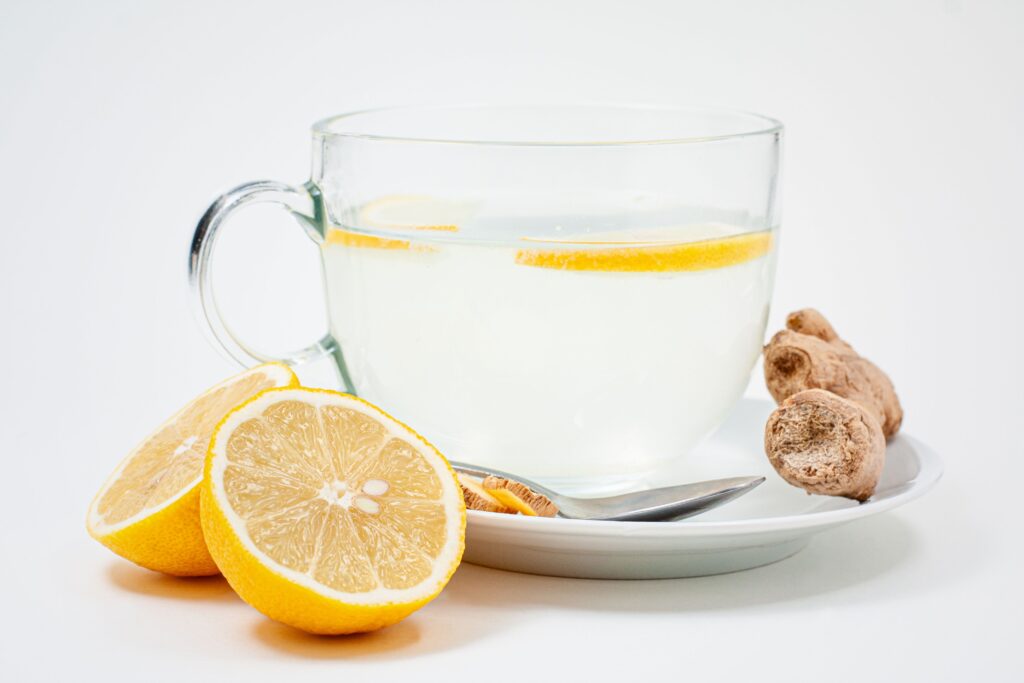
Ginger root tea with lemon is warm, caffeine-free, cheap to make, and has been used for centuries as a home remedy for upset stomachs and colds. But what does the evidence actually say? This drink has one genuinely well-supported benefit, a few promising ones, and several claims that run ahead of the research. This guide separates what is proven from what is merely popular, and explains who should be careful with it.
Key Takeaways
- Ginger’s best-supported benefit is easing nausea, especially in pregnancy, and the NHS lists ginger-containing foods and drinks among the self-care options that may help morning sickness.
- Lemon adds vitamin C and flavour, but there is no strong evidence it turns ginger tea into an immune-boosting or detox drink.
- Most studies tested ginger capsules or powder, not a mug of tea, so a home-brewed cup contains a variable amount of ginger.
- Ginger is generally safe in food amounts, but people taking blood thinners, those with gallstones, and anyone close to surgery should ask a clinician first.
- In pregnancy, keep ginger to around 1 gram a day and speak to your midwife or GP before using it regularly.
What Is Ginger Root Tea With Lemon?
Ginger root tea with lemon is a simple infusion made by steeping slices of fresh ginger root in hot water and adding fresh lemon juice, usually with a little honey. Ginger is the rhizome, or underground stem, of the plant Zingiber officinale, a relative of turmeric and cardamom. Its warming, spicy flavour comes mainly from compounds called gingerols.
Unlike black or green tea, ginger tea contains no caffeine, so it can be drunk at any time of day. Most tea bags contain only a modest amount of ginger, while simmering fresh root for ten minutes delivers considerably more. Almost all clinical research used standardised powder or capsules rather than a brewed cup, so a homemade mug is a gentler version of the trial dose.
Lemon’s role is mostly flavour and vitamin C, which supports normal immune function as part of a balanced diet, but one squeeze in a mug provides only a small amount. Lemon adds no proven medicinal power of its own, and claims that lemon water “detoxes” the liver or “alkalises” the body are not supported by evidence.
What Are The Benefits Of Ginger Root Tea With Lemon?
The benefits of ginger root tea with lemon depend heavily on which benefit you mean. Some are backed by proper trials, others rest on small or early studies, and a few are mostly tradition.
Easing Nausea
Nausea relief is ginger’s best-evidenced use. A 2014 systematic review and meta-analysis pooled 12 randomised trials involving 1,278 pregnant women and found that ginger reduced nausea better than a placebo, with results similar to vitamin B6. The trials mostly used around 1 gram of ginger powder a day for about four days, and the authors rated the overall evidence as low quality because many trials were small. The NHS also says there is some evidence that foods or drinks containing ginger may help morning sickness, which usually settles by weeks 16 to 20. Ginger is not a treatment for severe vomiting: if you cannot keep food or fluids down for 24 hours, contact your midwife, GP or NHS 111. The US National Center for Complementary and Integrative Health says ginger may help with nausea in pregnancy, while for most other uses the picture is mixed or unclear.
Soothing Digestion
Many people reach for ginger tea after a heavy meal, and small studies suggest it may help the stomach empty a little faster. But the research on general digestion, bloating and wind is thin, because most trials focused on nausea. If you have persistent indigestion, frequent heartburn, or stomach pain that keeps coming back, ginger tea is not a substitute for finding the cause, so see a GP if indigestion is severe or happens often.
Easing Period Pain
Ginger may help with period pain. A systematic review and meta-analysis of trials on primary dysmenorrhoea, period pain without an underlying medical cause, found that ginger reduced pain scores compared with a placebo, and some trials found effects comparable to common over-the-counter pain relief such as ibuprofen when ginger was taken from the start of bleeding. The trials were small, and ginger tea is not a replacement for proven pain relief. If period pain is severe, suddenly worse, or interferes with daily life, speak to a GP, because it can sometimes signal a condition such as endometriosis.
Colds And Immunity: What The Evidence Really Says
Ginger and lemon tea is a classic cold remedy: a hot drink soothes a sore throat, steam can ease a blocked nose, and staying hydrated matters when you are unwell. But there is no good evidence from human trials that ginger tea prevents colds, shortens them, or “boosts” the immune system in any measurable way. Enjoy it as comfort care, but do not expect it to fight off infection. Rest and fluids remain the practical approach.
Blood Sugar And Inflammation: Early Evidence Only
Claims that ginger tea lowers blood sugar, fights inflammation, or helps with weight loss rest on early, unsettled evidence. Some small trials found improvements in blood sugar and metabolic markers with ginger supplements, and laboratory studies show anti-inflammatory activity. But most of this work used concentrated extracts in small groups over short periods. Ginger tea should not be treated as a treatment for diabetes, arthritis, or any inflammatory condition, and it should never replace prescribed medicine.
How To Make Ginger Root Tea With Lemon
Making ginger root tea with lemon at home takes about fifteen minutes. Fresh root gives a stronger flavour and more ginger compounds than a tea bag.
- Peel a thumb-sized piece of fresh ginger, roughly 15 to 20 grams, and slice it thinly or grate it.
- Add the ginger to a small pan with about 350 millilitres of water, roughly one large mug, and bring it to a gentle simmer.
- Simmer for 10 minutes for a strong brew, or 5 minutes for a milder cup.
- Strain into a mug and leave it for a minute so it is hot but not scalding.
- Squeeze in the juice of half a fresh lemon, and stir in a teaspoon of honey if you like.
A pinch of turmeric adds colour and an earthy taste, while cinnamon adds warmth. For a cold drink, let the tea cool and pour it over ice with lemon and mint. Store leftover root in the fridge, where it keeps for two to three weeks.
How Much Ginger Tea Can You Drink Each Day?
There is no official daily limit for ginger tea itself, because the amount of ginger in a brewed cup varies so much. Research suggests most adults can safely consume up to around 3 to 4 grams of ginger a day in food, and side effects such as heartburn, diarrhoea and mouth irritation become more likely above that level. Most nausea studies used 1 to 1.5 grams a day, roughly two to four cups of strong fresh ginger tea. A sensible approach for most healthy adults is one to three cups a day. Heartburn is the most common complaint, and it is more likely on an empty stomach or with a very strong brew. In pregnancy, studies typically used no more than 1 gram a day.
Who Should Be Cautious With Ginger Tea?
Ginger is one of the safest kitchen ingredients, but caution is sensible in a few situations, almost all linked to one property: ginger can slow blood clotting slightly, and it can stimulate bile flow and affect blood sugar.
If You Are Pregnant
Ginger in food amounts is generally considered safe in pregnancy and is one of the best-studied options for morning sickness; the 2014 meta-analysis found no increased risk of miscarriage. Keep amounts modest, at around 1 gram a day, and speak to your midwife or doctor before using ginger regularly or in supplement form. Avoid high-dose supplements unless a clinician has advised them.
If You Take Blood Thinners
This is the most important caution. Ginger compounds can slow platelet aggregation, the process by which blood clots. At normal food doses the effect is weak, but combined with medicines such as warfarin, aspirin, clopidogrel, apixaban or rivaroxaban it could in theory increase the risk of bruising or bleeding, although a systematic review found the evidence inconclusive. If you take a blood thinner, tell your GP or pharmacist before drinking ginger tea daily or taking ginger supplements, and watch for unusual bruising, nosebleeds, bleeding gums, or blood in the stool or urine.
If You Take Diabetes Or Blood Pressure Medicine
Some trials suggest ginger may modestly lower blood sugar and blood pressure. Culinary amounts in tea are unlikely to cause problems, but if you take insulin, metformin, or blood pressure medicine, mention daily strong ginger tea to your clinician.
If You Have Gallstones, Are About To Have Surgery, Or Get Heartburn
Ginger stimulates bile flow, so people with gallstone disease are advised to avoid ginger, particularly in supplement form. Concentrated ginger supplements are often stopped about two weeks before surgery or a tooth extraction, so tell your surgeon or anaesthetist about any supplements you take. Finally, ginger in larger amounts can cause the very heartburn it is meant to soothe, and lemon juice is acidic, so the combination can worsen reflux. If you notice burning, try a weaker brew, drink it with food, or leave out the lemon.
Please note: this article is for general information only and is not medical advice. If you are pregnant, take regular medication, or have a health condition, speak to your GP, midwife or pharmacist before using ginger regularly or in supplement form.
The Bottom Line
Ginger root tea with lemon is a warming, caffeine-free drink with one genuinely well-supported use: easing nausea, including morning sickness. It may also help with digestion and period pain, and it is comforting when you have a cold, even though it will not cure one. Claims about immunity, detoxing, blood sugar and weight loss run ahead of the evidence. For most healthy adults, one to three cups a day made from fresh root is sensible. If you take blood thinners, have gallstones, or are pregnant, check with a clinician first.
Frequently Asked Questions
Is Ginger Root Tea With Lemon Good For You?
Yes, for most healthy adults. It is caffeine-free, low in calories without sugar, and ginger has genuine evidence behind it for easing nausea. Lemon adds vitamin C and flavour. It is not a cure for illness, but it is a wholesome drink.
Can I Drink Ginger Tea Every Day?
Most healthy adults can drink one to three cups a day without problems. Keep the brew moderate and watch for heartburn. If you take blood thinners or other regular medication, ask your GP or pharmacist first.
Is Ginger Tea Safe In Pregnancy?
Ginger in food amounts is generally considered safe in pregnancy, and the NHS lists ginger-containing foods and drinks among the options that may help morning sickness. Trials typically used no more than 1 gram a day. Speak to your midwife or GP before using it regularly, and avoid high doses, especially late in pregnancy.
Does Ginger Tea Help With A Cold?
It can help you feel more comfortable, because a hot drink soothes a sore throat and helps you stay hydrated. There is no good evidence that it prevents colds or boosts the immune system.
Can Ginger Tea Cause Side Effects?
In food amounts it is usually well tolerated. Larger amounts can cause heartburn, diarrhoea, or mouth irritation. Ginger can slow blood clotting slightly, so people taking blood thinners should be cautious, and people with gallstones should ask their GP first.
Does Lemon In Ginger Tea Add Any Benefits?
Lemon adds vitamin C and a fresh flavour, but it does not detox the liver or change the body’s acidity. Its main contribution is taste.
Leave a Reply