
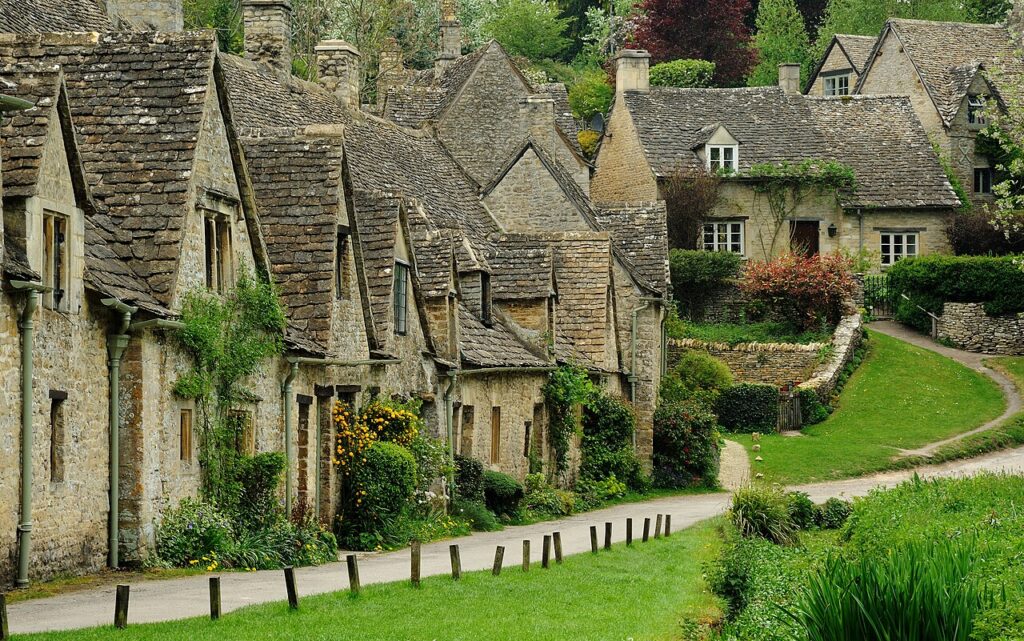
The best villages in the Cotswolds combine honey-coloured stone cottages, quiet lanes and a strong sense of place, and the ones most worth your time are Bibury, Bourton-on-the-Water, Castle Combe, Lower and Upper Slaughter, and Broadway. Each has its own character, from Bibury’s famous Arlington Row to Bourton’s river running through the village green. This guide explains what makes each village special, how to reach them with or without a car, and how to time your visit so you see them at their calmest.
Why The Cotswolds Villages Look The Way They Do
The Cotswolds is a protected landscape of rolling limestone hills spread across parts of Gloucestershire, Oxfordshire, Worcestershire, Wiltshire and Warwickshire. The villages were built from the local honey-coloured stone, and many grew wealthy centuries ago on the wool trade, which paid for the fine cottages, churches and market squares you see today. That shared stone and shared history give the villages a family resemblance, but each one still feels distinct when you walk its streets.
Because the villages are small and much loved, they can get busy, especially on sunny weekends. The single best tip in this guide is simple: arrive early in the morning or later in the afternoon, and you will often have the lanes almost to yourself.
Bibury: Arlington Row And The River Coln
Bibury is the village most people picture when they think of the Cotswolds. Its famous sight is Arlington Row, a terrace of stone cottages built in 1380 as a monastic wool store and converted into weavers’ cottages in the 17th century. The row sits beside the River Coln and a small water meadow, and it is one of the most photographed scenes in England.
Beyond the famous row, Bibury rewards a slow wander. The village has a historic church, a working trout farm that has been raising fish for well over a century, and lanes that lead out into open countryside. Bibury is small, so an hour or two is enough for the village itself, but it pairs well with a riverside walk. Parking in the village is limited, so use the designated parking areas and avoid blocking narrow lanes or residents’ driveways.
Bourton-On-The-Water: The River Village
Bourton-on-the-Water is the liveliest of the villages in this guide. The shallow River Windrush runs through the centre of the village, crossed by a series of low stone footbridges, with grassy banks on either side where visitors sit with ice creams in summer. It is often called the Venice of the Cotswolds, although the comparison says more about the bridges than the scale.
Bourton has more to do than most Cotswolds villages, which makes it a good choice for families. Highlights include the Model Village, a miniature recreation of Bourton itself, and Birdland Park and Gardens by the river. There are also plenty of cafes, bakeries and small shops along the main street.
Bourton is also the easiest village to reach without a car. The official Cotswolds car-free travel guide explains that you can take a train to Moreton-in-Marsh and then the Pulhams 801 bus from outside the station, a journey of about 30 minutes, with buses running hourly Monday to Saturday and every two hours on Sundays. A combined rail-and-bus ticket is available for this route. From Bourton, buses also run to Bibury, Stow-on-the-Wold and other villages, which makes Bourton a practical base for a car-free trip.
Lower And Upper Slaughter: Quiet River Villages
The two Slaughters are the calm counterpoint to Bourton. Lower Slaughter sits along the River Eye, crossed by simple stone footbridges, with a red-brick old mill and its water wheel at the top of the street. Upper Slaughter, a short walk away, is smaller still, gathered around its church and village green.
Neither village has a bus service of its own, and that is part of their charm. The usual way to visit is to walk from Bourton-on-the-Water along field paths, a gentle route of a little over a mile to Lower Slaughter. The walk itself is part of the pleasure, crossing open fields beside the stream. Wear suitable shoes after rain, because riverside paths can be muddy. If you want the Cotswolds at their most peaceful, come here on a weekday morning.
Castle Combe: The Perfectly Preserved Village
Castle Combe in Wiltshire is often described as one of the prettiest villages in England, and it is easy to see why. A single street of stone cottages descends through a small valley to a packhorse bridge over the Bybrook river, with the church and market cross at its heart. There are no obvious modern intrusions, which is why the village has been used as a film location more than once.
Castle Combe is in the southern Cotswolds, so it pairs naturally with a visit to Bath or Lacock rather than with the northern villages. Parking is at the top of the hill, with a walk down into the village, which helps keep the centre quiet. Visit early or late in the day for the best light and the fewest crowds, and allow time simply to walk the street slowly rather than rushing from photo to photo.
Broadway: The Village With The Wide High Street
Broadway in Worcestershire is larger than the other villages here, and it feels more like a small town. Its wide main street is lined with stone buildings, antique shops, galleries and places to eat, all beneath the Cotswold escarpment. Broadway is a good base if you want village charm with more choice of accommodation and restaurants.
The village is also a walking hub. A popular route climbs from Broadway to Broadway Tower, a folly on the hilltop with wide views across the countryside, following part of the Cotswold Way long-distance path. The climb is steady rather than steep, and the views from the top are the reward. Broadway links well with Chipping Campden, another handsome village a short drive or bus ride away, and the two together make a satisfying day.
How To Plan Your Village Visits
The villages fall into natural groups, and grouping them saves hours of driving:
- Northern group: Bourton-on-the-Water, Lower and Upper Slaughter, and Stow-on-the-Wold, all close together and reachable by bus from Moreton-in-Marsh station.
- Central group: Bibury and nearby villages along the River Coln, reachable by bus from Bourton or Cirencester.
- Northern edge: Broadway and Chipping Campden, good for walking and for bases with more facilities.
- Southern group: Castle Combe and Lacock, best combined with Bath.
Trying to see every village in one day is a mistake. Two or three villages, visited slowly with time for a walk and a pub lunch, make a far better day than six rushed stops. If you are building a longer break, our guide to UK weekend breaks puts the Cotswolds alongside other short-trip ideas, and couples may enjoy our weekend breaks for couples round-up. Drivers planning a wider route can also look at our best UK road trips guide.
Parking And Timing Tips
A few habits make village visits smoother for everyone:
- Arrive before 10 in the morning or after 4 in the afternoon at the famous villages, when coach groups and day-trippers have thinned out.
- Use signed village car parks rather than parking on verges or in passing places, which blocks lanes for residents and farm vehicles.
- Keep to footpaths through fields and close gates behind you, especially where livestock are grazing.
- Book lunch ahead on weekends in the popular villages, because the best pubs and tearooms fill quickly.
- Visit on a weekday if you can. The same village that feels crowded on a Saturday can feel serene on a Tuesday.
For more local insight, the official Cotswolds site shares a guide’s view of the region, including how to enjoy the famous villages and the quieter corners between them.
Two More Places Worth Knowing
Stow-on-the-Wold and Chipping Campden are market towns rather than villages, but they belong in any Cotswolds plan because they make such good bases. Stow sits on the same bus route as Bourton and Moreton-in-Marsh, and its large market square, antique shops and coaching inns give it a lively, practical feel. It is a sensible place to stay if you want evening restaurants and easy transport. Chipping Campden, further north, has one of the finest high streets in the Cotswolds, lined with stone houses built by wealthy wool merchants, and it marks the start of the Cotswold Way walking route to Bath. Both towns have more parking, more places to eat and more accommodation than the small villages, so many visitors sleep in a town and visit the villages by day.
Frequently Asked Questions
Which Cotswolds Village Is The Prettiest?
Bibury and Castle Combe are the two most often called the prettiest, thanks to Arlington Row and Castle Combe’s preserved main street. Lower Slaughter is the quietest of the famous villages and many visitors prefer its calm.
Can You Visit The Cotswolds Without A Car?
Yes. Trains serve Moreton-in-Marsh, Kingham, Charlbury and other stations, and local buses link the main villages. Bourton-on-the-Water, Stow-on-the-Wold and the Slaughters make the easiest car-free group, while Bibury and Castle Combe need more careful bus planning.
How Many Villages Can You See In One Day?
Two or three villages make a relaxed day. Bourton-on-the-Water with a walk to the Slaughters is a classic single-day combination, while Bibury pairs well with other Coln valley villages.
When Is The Best Time To Visit The Cotswolds Villages?
Spring and early autumn give mild weather and smaller crowds than the summer peak. Weekday mornings are the quietest times in the famous villages at any time of year.
Is Parking Easy In Cotswolds Villages?
Parking is limited in the smallest villages, especially Bibury and Castle Combe. Arriving early, using signed car parks and visiting outside peak weekends makes parking much easier.
Final Thoughts
The best villages in the Cotswolds each offer something different: Bibury for the famous view, Bourton for riverside life and family attractions, the Slaughters for peace, Castle Combe for perfection, and Broadway for a base with walks on the doorstep. Choose two or three, arrive early, walk between them where you can, and the Cotswolds will show you exactly why these villages are so loved.


Leave a Reply