
Liverpool is one of the best-value city breaks in the United Kingdom, and a surprising amount of it costs nothing at all. The city has more museums and galleries than any other English city outside London, and most of them are free to enter. Add two cathedrals, a world-famous waterfront, grand Victorian parks, a beach covered in sculpture and streets steeped in Beatles history, and you can fill a whole weekend without paying a penny in admission. This guide brings together the best free things to do in Liverpool, including what has changed in 2026 and how to fit it all into a single no-cost day.
Free Museums And Galleries In The City Centre
Liverpool’s free museum cluster is the strongest reason to visit on a budget. National Museums Liverpool runs several major venues across the city, and general admission to its open sites is free, with no ticket needed — you simply walk in. Donations are welcome, and some special exhibitions are ticketed, but the permanent collections cost nothing.
Museum Of Liverpool
Standing on the Pier Head between the Three Graces and the Royal Albert Dock, the Museum of Liverpool is the largest museum dedicated to a single city in the United Kingdom. Its galleries cover the city’s story from its days as a small settlement to its rise as a great port, with sections on the people’s history, sport, music and popular culture. It is the best first stop if you want context for everything else you will see.
World Museum
Directly opposite the Walker Art Gallery on William Brown Street, the World Museum packs an extraordinary range into one free building: Egyptian mummies and ancient artefacts, dinosaur casts, natural history galleries, an aquarium, a bug house and a planetarium. It is one of the easiest free visits in Liverpool with children, because there is something different on every floor, but adults will find plenty to linger over too.
Walker Art Gallery
Often called the National Gallery of the North, the Walker Art Gallery holds one of the most significant art collections in the United Kingdom outside London. Works by Rembrandt, Turner, Hockney, Lucian Freud and Stubbs hang alongside one of the country’s strongest Pre-Raphaelite collections. The gallery sits on William Brown Street, a two-minute walk from Lime Street station, and entry to the permanent collection is free.
Tate Liverpool And RIBA North
There is one important change to know about in 2026. Tate Liverpool’s main building on the Royal Albert Dock closed in October 2023 for a major redevelopment and is not due to reopen until 2027. While the builders are in, Tate shares a small temporary home with the Royal Institute of British Architects’ northern centre, Tate Liverpool + RIBA North on Mann Island, a few minutes’ walk from the dock. The temporary space is free to visit, open daily from 10am to 5.50pm, but no further Tate exhibitions are planned there — visitors will find two small displays curated by RIBA. Do not build a trip around the dock gallery until it reopens.
Two other waterfront museums are also out of action for now. The Merseyside Maritime Museum and the International Slavery Museum, which share the same Albert Dock building, are both closed for essential maintenance ahead of a major redevelopment, with no reopening date announced.
Liverpool’s Two Cathedrals Are Free To Enter
Liverpool is the only city in England with two cathedrals facing each other across a single street, and both are free to enter. Liverpool Cathedral, the Anglican cathedral at the top of Hope Street, is the largest cathedral in the United Kingdom. Its vast interior and stained glass are worth an unhurried visit, and the tower climb — which is ticketed — rewards you with views across the city and the River Mersey on a clear day.
At the other end of Hope Street stands the Metropolitan Cathedral, the Catholic cathedral, a strikingly modern circular building with a crown of stained glass. Entry is free, and the contrast between the two buildings, one Gothic and monumental, the other modern and light-filled, is one of the most memorable free experiences in the city. The walk between them along Hope Street, past Georgian townhouses and the Philharmonic Hall, is a pleasure in itself.
The Waterfront Walk: Albert Dock And Pier Head
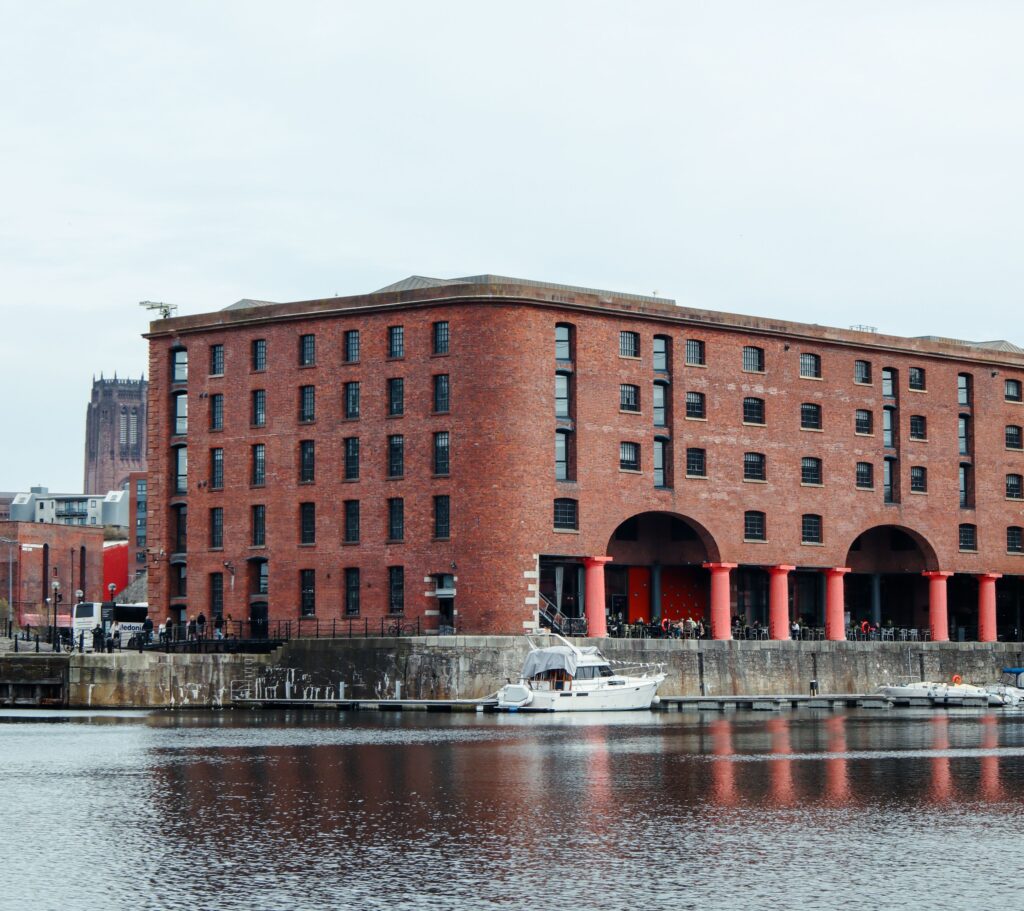
The Royal Albert Dock is free to wander at any hour, and it is one of the finest pieces of urban scenery in Britain. The dock opened in 1846 and was designed by Jesse Hartley as the first warehouse system in the world built without structural timber, so that it could not catch fire. Today its red-brick warehouses, reflected in still water, hold museums, galleries, cafes and shops — but the walk itself, with street performers and public art, costs nothing.
From the dock, follow the waterfront north to the Pier Head, home of the Three Graces: the Royal Liver Building, the Cunard Building and the Port of Liverpool Building. The Liver Building’s two Liver Birds, perched on its towers, are the city’s emblem, and the open space of the Pier Head, with the Mersey on one side and the city behind you, is the classic Liverpool photograph. The Beatles Statue, unveiled on the Pier Head in 2015, is another free landmark. The whole stretch takes about 30 to 40 minutes at a gentle pace and is flat and pushchair-friendly.
Liverpool Central Library
On William Brown Street, next door to the World Museum, Liverpool Central Library is far more than a place to borrow books. Entry is free, and inside you will find the circular Picton Reading Room, the wood-panelled Hornby Library, public computers and free Wi-Fi, and a roof terrace with views across St George’s Quarter. It is a calm, beautiful place to rest between museums, and the children’s library runs free craft, story and Lego sessions during most school holidays. Check current opening times before you go, as hours vary across the week.
Sefton Park And The Palm House
Sefton Park, a 235-acre Grade I listed park in the south of the city, is Liverpool’s great green escape, and it is free to use. There is a boating lake, broad paths, open parkland, a children’s playground and the Fairy Glen, a quiet wooded hollow that feels a world away from the city. At the park’s heart stands the Palm House, a Victorian glasshouse that opened in 1896 and is free to enter. It hosts free events, exhibitions and live music through the year, though private celebrations and special events can affect its opening pattern.
Crosby Beach And Another Place
A short train ride north of the city centre brings you to Crosby Beach, home of Antony Gormley’s Another Place — 100 cast-iron, life-size figures spread across three kilometres of the foreshore and stretching almost one kilometre out to sea. There is no admission fee, and the sight of the silent figures standing in the sand and the surf, especially at low tide or sunset, is one of the most striking free experiences anywhere in England.
Take the safety advice seriously: Crosby is not a bathing beach and is permanently red-flagged for swimming, so stay within 50 metres of the promenade at all states of the tide. The tide comes in fast and the mud further out is genuinely dangerous, so check tide times before you go.
Free Beatles Sights Around Mathew Street
Beatles fans do not need a ticket to feel the band’s Liverpool. The Cavern Quarter around Mathew Street is free to explore on foot: the street itself, the Cavern Pub opposite the original Cavern Club, statues and plaques, and the atmosphere of the city’s music quarter. The Beatles Statue on the Pier Head and the Eleanor Rigby statue on Stanley Street are both free to visit, and a self-guided walk linking them with Mathew Street and the waterfront makes a satisfying free hour. The paid attractions — The Beatles Story at the Albert Dock and the Liverpool Beatles Museum — charge admission.
More Free Days Out: Formby Beach And Port Sunlight
If you have a second free day, two short trips are worth the train fare. Formby Beach, further up the coast from Crosby, offers wide sandy beach backed by pinewoods and sand dunes, and the beach itself is free — though parking is charged for non-members of the National Trust, so arrive by train or on foot to keep the day free. In the other direction, Port Sunlight on the Wirral is a model village built for soap workers, and its Lady Lever Art Gallery, part of National Museums Liverpool, is free to enter, with a fine collection of Pre-Raphaelite and eighteenth-century art.
How To Plan A Free Day In Liverpool
A single free day works best when you cluster your stops. Start on William Brown Street with the World Museum and the Walker Art Gallery, then cross to the Central Library and St George’s Hall. Walk down to the Pier Head for the Three Graces and the Beatles Statue, then along the waterfront to the Royal Albert Dock for the Museum of Liverpool and a look at Tate Liverpool + RIBA North on Mann Island. That route covers the city’s best free culture in one walkable loop, with no transport needed.
For a second day, head outdoors: Sefton Park in the morning, then the train to Crosby Beach for Another Place in the afternoon. The same route works as a Liverpool for couples day out, finishing with the two cathedrals and a walk down Hope Street as the light fades. Keep the day free by checking opening times before you travel, remembering special exhibitions inside free museums can charge, and packing a picnic, since food and transport are the real costs.
Final Thoughts
The free things to do in Liverpool reward budget travellers more than most British cities. Its great museums are free, its cathedrals are free, its waterfront, parks and beaches are free, and even its most famous musical heritage can be enjoyed from the street. Check before you go, but a full day of world-class culture here can still cost exactly nothing.
Frequently Asked Questions
What Is The Best Free Thing To Do In Liverpool?
The free museum cluster around William Brown Street is the best starting point: the World Museum, the Walker Art Gallery and the Central Library sit steps apart and are all free. Outdoors, the walk from the Pier Head through the Royal Albert Dock and the visit to Another Place at Crosby Beach are the two most memorable free experiences.
Are Liverpool’s Museums Really Free?
Yes. General admission to the National Museums Liverpool venues that are currently open — the Museum of Liverpool, World Museum, Walker Art Gallery and Lady Lever Art Gallery — is free, with no ticket needed. Special exhibitions sometimes charge, and donations are welcome. The Merseyside Maritime Museum and the International Slavery Museum are closed for redevelopment, and Tate Liverpool’s main building is closed until 2027.
Is Tate Liverpool Open In 2026?
Not at its Royal Albert Dock home. The dock building closed in October 2023 for redevelopment and is due to reopen in 2027. A small temporary space, Tate Liverpool + RIBA North on Mann Island, is open daily and free to visit, but it holds only two small RIBA displays and no further Tate exhibitions are planned there.
Is Crosby Beach Free To Visit?
Yes, there is no admission fee to visit Crosby Beach and see Antony Gormley’s Another Place. Parking nearby can be charged, so arriving by train to Crosby station and walking to the beach keeps the visit free. Stay within 50 metres of the promenade and check tide times, as the beach is not safe for swimming.
Can You Visit Liverpool Cathedral For Free?
Yes, entry to Liverpool Cathedral is free, as is entry to the Metropolitan Cathedral at the other end of Hope Street. The cathedral tower climb is a separate ticketed experience, and both cathedrals welcome donations.
Leave a Reply