
Manchester is a city that surprises first-time visitors. It is famous for football and music, but the real pleasure of a trip here is how much of it is free, walkable and packed into a compact centre. The best things to do in Manchester include world-class museums that cost nothing, a Victorian Gothic library, the creative streets of the Northern Quarter, canal-side walks in Castlefield and the galleries of Salford Quays.
The Northern Quarter: Manchester’s Creative Heart
Start in the Northern Quarter, the grid of red-brick streets that is Manchester’s creative heart. This is where you will find independent record shops, vintage boutiques, street art, speciality coffee and some of the city’s best bars and cafes. Oldham Street and Tib Street have the most concentrated mix of independent shops, while Thomas Street and Dale Street are good for bars and brunch spots. Stevenson Square is the neighbourhood’s main public space, surrounded by bars, cafes and murals that change regularly.
Afflecks, on Church Street, is the essential Northern Quarter stop. The multi-floor indoor market fills a former department store with independent stalls selling vintage clothes, records, jewellery and gifts. Give it about forty-five minutes; it is smaller than the hype suggests, but it captures the area’s spirit. The nearby Craft and Design Centre sells work by local makers.
Free Museums: The Best Value In The City
Manchester’s free museums are one of the best-value things about the city, and they are the backbone of any visit. The Science and Industry Museum, housed in the world’s oldest surviving passenger railway station on Liverpool Road, tells the story of how Manchester’s cotton mills, canals and engineering helped launch the Industrial Revolution. Admission is free, though some special exhibitions cost extra — allow at least ninety minutes.
Manchester Art Gallery, on Mosley Street, holds one of the finest public art collections in the UK and is entirely free. Its Pre-Raphaelite collection is outstanding, with major works by Rossetti, Millais and Ford Madox Brown. Manchester Museum, on Oxford Road and part of the University of Manchester, covers natural history, ancient Egypt and much more, and it is also free. The People’s History Museum, in Spinningfields, tells the story of British democracy and workers’ rights, again free, and it is a natural stop on a walk from Deansgate to Castlefield.
The John Rylands Library
The John Rylands Research Institute and Library, a Victorian Gothic building on Deansgate, is one of the finest neo-Gothic buildings in Britain, and many visitors walk straight past it without going in. Entry is free. Inside, the reading room feels like something from a film set, with stone arches, stained glass and rows of old books. The library holds rare manuscripts and early printed books, and it is worth thirty to forty-five minutes even if you are not a history lover.
Castlefield, Canals And Roman Manchester
Castlefield is where Manchester began. The Romans built a fort here, called Mamucium, and you can still see the reconstructed fort and the remains of the Roman walls in Castlefield Urban Heritage Park. The area is now a mix of canals, Victorian railway viaducts and open green space, and it is one of the most pleasant places in the city for a slow walk. From Castlefield you can walk along the Bridgewater Canal or the Rochdale Canal towards the city centre, passing waterside bars and restaurants. In summer the canal basin fills with people eating outside, and it is a good place to end a day of sightseeing.
Football, Music And The National Football Museum
Football is woven into Manchester’s identity, and even non-fans will enjoy seeing how seriously the city takes it. The National Football Museum, in the Urbis building in the city centre, is free to enter and houses the FIFA collection, interactive penalty shootout simulators and memorabilia from every era of the English game. It works well for visitors who want the history of the game rather than one club’s story, and an hour is enough for most people.
For the full stadium experience, Old Trafford, home of Manchester United, seats over 74,000 fans and offers daily stadium tours through the players’ tunnel, the home dressing room and the on-site museum. Manchester City’s Etihad Stadium, east of the centre, also runs tours. Book in advance, especially on match weekends. Music is the other half of Manchester’s identity: the city gave the world bands from The Smiths and Oasis to Joy Division and New Order, and the Northern Quarter’s small venues, such as the Night and Day Café, still host live music most evenings. For bigger shows, the AO Arena, Co-op Live and Aviva Studios host major concerts and performances.
Salford Quays: The Lowry And Imperial War Museum North
A short tram ride from the centre, Salford Quays is Manchester’s waterfront cultural quarter, and it is worth half a day. The Lowry, the arts centre on the water, is free to enter and holds the largest collection of paintings by L. S. Lowry in the world — a fitting experience, since His work depicts the industrial landscapes that surrounded this area a century ago.
Across the water, the Imperial War Museum North is one of the most architecturally distinctive buildings in Britain, designed by Daniel Libeskind, and entry is free. Its main exhibition space covers conflict from the First World War to the present day. The Metrolink tram from the city centre takes about twenty minutes.
Where To Eat And Drink In Manchester
Manchester’s food scene is one of the strongest in the north of England. The Curry Mile, the stretch of Wilmslow Road in Rusholme, is one of the most famous food streets in the UK, lined with South Asian restaurants, sweet shops and shisha cafes. It is about a twenty-minute bus ride from the city centre and is best visited in the evening. For a single-stop meal, Mackie Mayor, a converted Victorian meat market in the northern part of the centre, has around twenty independent food and drink traders under one roof, open daily, from wood-fired pizza to Szechuan noodles. The Northern Quarter is the best area for brunch, coffee and independent restaurants, while Ancoats, just east of the Northern Quarter, has built a reputation for some of the city’s most interesting small restaurants and bakeries. Book ahead for popular restaurants on Friday and Saturday nights.
Shopping, Markets And The Gay Village
Manchester’s shopping runs from the high street to the independent. The Arndale Centre is the main shopping mall, and the streets around Market Street and King Street have the big-name shops. For something more interesting, the Northern Quarter’s vintage shops and Afflecks are the places to browse, and the Craft and Design Centre sells work by local makers. Manchester’s Christmas Markets, which run from November to late December, are enormously popular and fill the city centre with wooden chalets selling food, drink and gifts — Arrive early in the day to avoid the worst of the crowds.
The Gay Village, around Canal Street, is one of the most famous LGBTQ+ neighbourhoods in the UK and is lively at night, with bars and clubs along the canal. It is also the focus of Manchester Pride, which takes place in August.
Day Trips From Manchester
Manchester is a good base for day trips, and the Peak District is the obvious first choice. The national park begins about an hour away by train or car, with walking, cycling and pretty villages such as Bakewell, Castleton and Edale. The train to Edale, on the edge of the Kinder Scout moors, takes around an hour from Manchester Piccadilly and is a popular starting point for walkers.
Liverpool is about forty-five minutes away by train and makes an easy day trip: the waterfront, the Beatles Story, the Tate Liverpool and the city’s own museums and galleries fill a full day. Chester, about an hour away, has Roman walls, a Tudor-style shopping arcade called the Rows, and a cathedral. For a quieter day, the market town of Hebden Bridge in West Yorkshire is about forty minutes by train. Whichever trip you choose, check return train times before you leave, especially on Sundays, when services are less frequent.
Practical Tips: Getting Around, Tickets And The Best Time To Visit
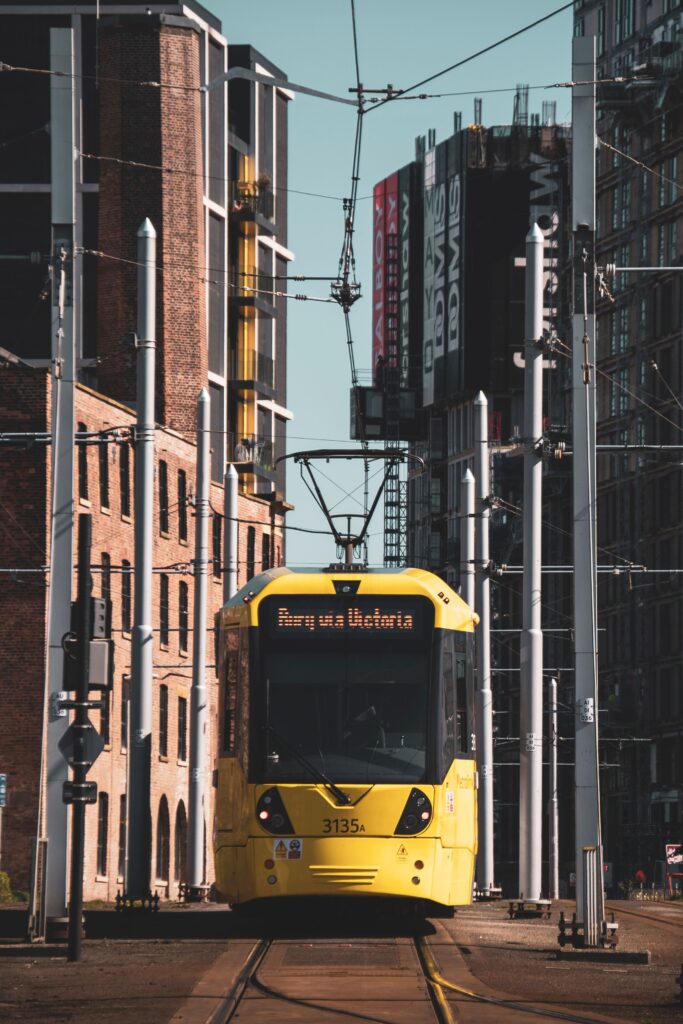
Getting around Manchester is easy. The Metrolink tram network covers the city centre, Salford Quays, MediaCity, Altrincham and the airport, and a day ticket is good value if you plan several rides. The city centre itself is walkable, and the free bus service runs around the main shopping and cultural areas. Manchester Piccadilly is the main station, with trains to London, Liverpool, Leeds, Edinburgh and the Peak District, while Manchester Airport is about twenty minutes from the centre by train or tram. You do not need a car in the city, and parking is expensive in the centre.
The best time to visit depends on what you want. Late spring and early autumn offer the best balance of mild weather and manageable crowds. Summer is festival season, with Manchester Pride in August and the Manchester International Festival bringing performances across the city. The Christmas Markets, from November to late December, are hugely popular and the city centre gets very busy at weekends. Winter is quieter and cheaper, and the museums are indoors — just pack a waterproof jacket, as Manchester’s rain is famous for a reason.
A Suggested Two-Day Plan
If you have two days, here is a way to fit the highlights together. On day one, start in the Northern Quarter for coffee and a browse around Afflecks, visit Manchester Art Gallery and the John Rylands Library, then walk to Castlefield for the afternoon and finish with dinner on the Curry Mile. On day two, take the tram to Salford Quays for the Lowry and the Imperial War Museum North, then spend the afternoon at the Science and Industry Museum and the National Football Museum. If you have a third day, take the train to Edale for a walk in the Peak District, or to Liverpool for the waterfront and museums.
Manchester does not try to impress you with a single famous view. It wins you over with free museums, creative neighbourhoods, good food and a city centre that is easy to explore on foot. Walk slowly, book the stadium tours early, and leave time to wander the Northern Quarter.
Frequently Asked Questions
How Many Days Do You Need In Manchester?
Two days is a good amount for a first visit: one for the Northern Quarter, the free museums and Castlefield, and one for Salford Quays and football or music. Three days lets you add a day trip to the Peak District or Liverpool.
What Is Free To Do In Manchester?
A lot. The Science and Industry Museum, Manchester Art Gallery, Manchester Museum, the People’s History Museum, the National Football Museum, the John Rylands Library, the Lowry gallery and the Imperial War Museum North are all free. Castlefield, the Northern Quarter and the canals cost nothing to explore.
Is The Northern Quarter Worth Visiting?
Yes. It is the city’s creative heart, with independent shops, record stores, street art, cafes and bars. Afflecks indoor market, the Craft and Design Centre and Stevenson Square are the main stops, but the area rewards slow walking and turning down unfamiliar streets.
What Is The Best Time Of Year To Visit Manchester?
Late spring and early autumn offer the best balance of mild weather and manageable crowds. Summer brings festivals and Pride in August, while the Christmas Markets run from November to late December and are very popular. Winter is quieter and cheaper, and the museums are indoors.
Can You Walk Everywhere In Manchester?
Almost. The whole city centre, from Deansgate to the Northern Quarter, is about a twenty-five minute walk end to end. The tram covers Salford Quays, MediaCity, Altrincham and the airport, and you do not need a car in the city centre.
Leave a Reply