
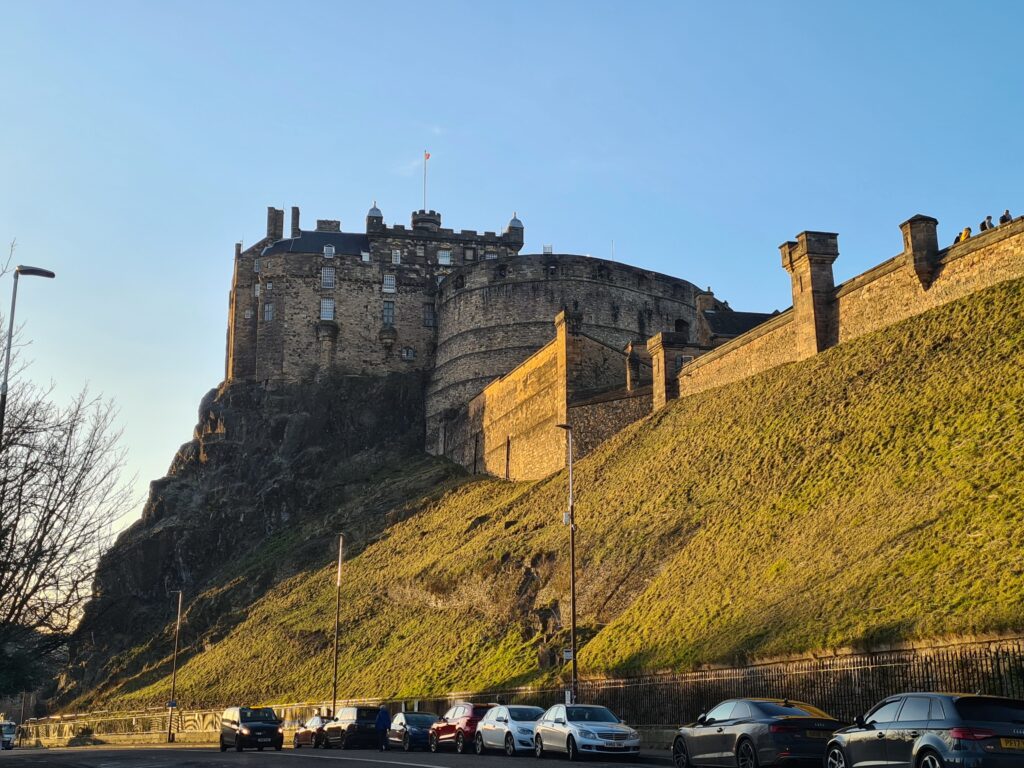
Edinburgh is one of those cities that rewards slow walking. Scotland’s capital packs a medieval Old Town, an elegant Georgian New Town, a volcanic hill, a royal palace and a working port into a centre you can cross on foot in under an hour. The best things to do in Edinburgh are not hidden away — they sit along one famous ridge, the Royal Mile, and in the neighbourhoods that fan out from it. This guide covers the unmissable sights, the quieter corners locals love, where to eat, and how to plan your days, so you can enjoy the city without rushing from one queue to the next.
Edinburgh Castle And The Royal Mile
Start at the top of the city. Edinburgh Castle stands on Castle Rock, a volcanic plug fortified since at least the twelfth century, and it dominates the skyline from almost everywhere in the centre. Inside you will find the Honours of Scotland, the crown jewels, the Stone of Destiny, the fifteenth-century cannon Mons Meg and St Margaret’s Chapel, a small Romanesque chapel dating to around 1130 that is thought to be the oldest surviving building in the city. The One O’Clock Gun is still fired daily, a tradition that began as a time signal for ships in the Firth of Forth.
Allow at least two hours for the castle, and book timed tickets online in advance. Adult tickets cost around £23.50 when booked online, and the earliest slots sell out in summer. Opening hours are generally 9:30am to 6pm from April to September and 9:30am to 5pm from October to March, with last entry an hour before closing. The castle is closed on 25 and 26 December, and the site is steep and cobbled, so wear comfortable shoes.
Walking The Royal Mile Downhill
From the castle gates, the Royal Mile runs downhill for about a mile to the Palace of Holyroodhouse. It is actually four streets in succession — Castlehill, Lawnmarket, High Street and Canongate — and walking it downhill is the sensible direction. Along the way you will pass St Giles’ Cathedral, the historic parish church of Edinburgh, which is free to enter and worth a look inside for the Thistle Chapel. The narrow closes branching off the Mile, steep little lanes between the tall tenement buildings, are some of the most atmospheric corners of the Old Town. The Real Mary King’s Close, a guided tour through preserved seventeenth-century streets buried under the City Chambers, is the best-known visit beneath the Old Town — book ahead, as it is popular. Camera Obscura and World of Illusions, on Castlehill beside the castle, fills six floors with optical illusions and a working camera obscura dating from 1853, and makes a good wet-weather stop.
Holyrood, Arthur’s Seat And Calton Hill
At the bottom of the Royal Mile sit three very different sights side by side: a royal palace, the Scottish Parliament building and a 251-metre extinct volcano. The Palace of Holyroodhouse is the King’s official residence in Scotland, and visitors can tour the State Apartments and the ruins of Holyrood Abbey. Tickets cost around £22 when booked in advance, and the palace is closed when the King is in residence, so check dates before planning your day around it.
Arthur’s Seat is Edinburgh’s party trick: a proper hill walk in the middle of a city. The summit rises 251 metres above sea level in Holyrood Park, and the usual route from the Holyrood side takes about 45 minutes up, with around two hours for the full return walk. The views stretch across the city, the Firth of Forth and the Pentland Hills. It is free and genuinely steep in places, so wear shoes with grip and skip it in high winds or heavy rain. If the climb sounds too much, Calton Hill is the easier alternative: a ten-minute climb from the east end of Princes Street brings you to a hilltop scattered with monuments, including the unfinished National Monument, and one of the best sunset views in the city.
The New Town, Princes Street And Free Museums
Cross Princes Street Gardens and you are in the New Town, the Georgian grid of wide streets and grand townhouses built from the late eighteenth century onwards. Princes Street itself is the city’s main shopping street, and the gardens below it are a good place to sit with a coffee and look back at the castle. George Street, one parallel street north, has the smarter shops, bars and restaurants, while the streets around Charlotte Square show the New Town at its most elegant.
The National Museum of Scotland, on Chambers Street in the Old Town, is free and deserves two or three hours. Its collections span Scottish history, science, the natural world and world cultures, and the rooftop terrace gives a free view of the castle. The Scottish National Gallery, on the Mound between the Old and New Towns, holds the national collection of fine art and is also free. The Royal Botanic Garden, a short walk north of the New Town, has free grounds — only the glasshouses charge — and is at its best in spring and early summer.
Leith, Dean Village And Stockbridge
Leith, Edinburgh’s historic port, sits about two miles north of the centre and is now one of the city’s best food and drink neighbourhoods. The Royal Yacht Britannia is moored here: the former royal yacht, now a visitor attraction, shows life on board. The Shore, Leith’s waterfront street, is lined with pubs and restaurants, and the area has built a strong reputation for seafood. A tram or bus from Princes Street takes about twenty minutes.
The Water of Leith is one of Edinburgh’s loveliest walks. The riverside path runs from the city centre through Dean Village, a pocket of old mill buildings and stone cottages that feels like a village dropped into the city, and on to Stockbridge, a relaxed neighbourhood of independent shops, cafes and a popular Sunday market. These three places — Leith, Dean Village and Stockbridge — are where Edinburgh feels most like a place people live, rather than a place people visit.
Where To Eat And Drink In Edinburgh
Edinburgh eats well at every price. Scottish classics are easy to find: haggis, Cullen skink (a smoked haddock soup), fish and chips, and Aberdeen Angus beef. The city also has a strong cafe culture, and the neighbourhoods around Stockbridge, Bruntsfield and Leith are the best places to find independent cafes and bakeries. For whisky, the Royal Mile has several tasting rooms and specialist shops, and a guided tasting is a good introduction if you are new to Scotch — book ahead in August, when everything fills up.
Day Trips From Edinburgh
Edinburgh makes a good base for day trips, and the train network puts several famous places within easy reach. Stirling, about an hour away by train, has a castle that rivals Edinburgh’s and a historic old town, and it is a natural stop on the way to the Highlands. St Andrews, on the Fife coast, is about two hours by train and bus and is famous as the home of golf and for its ruined cathedral and university — one of the oldest in the English-speaking world.
Closer to the city, the Forth Bridges at South Queensferry are about half an hour away by train. The Forth Bridge, the red cantilever railway bridge completed in 1890, is a UNESCO World Heritage Site. Rosslyn Chapel, about seven miles south of the city, is a fifteenth-century chapel famous for its intricate stone carvings; it is reachable by bus. For a Highland taste without a long drive, Loch Lomond and the Trossachs are around ninety minutes away by car. Whichever trip you choose, start early in summer, when the days are long, and check return train times before you leave.
Practical Tips: Getting Around, Tickets And The Best Time To Visit
Getting around Edinburgh is straightforward. The city centre is walkable, and Lothian Buses run frequent services across the city — a day ticket is good value if you plan several rides. The tram runs from Edinburgh Airport through the city centre to Leith and Newhaven, and it is the easiest way to reach the airport, taking around thirty-five minutes from the city centre. Edinburgh Waverley, the main station, sits in the valley between the Old and New Town and connects to London, Glasgow and the Highlands. You do not need a car in the city, and parking is expensive and scarce in the centre.
The best time to visit depends on what you want. May, June and September offer the best balance: long daylight, milder weather and smaller crowds than midsummer. August is festival season — the Edinburgh Festival Fringe, the world’s largest arts festival, transforms the city with thousands of shows and packed streets. It is an extraordinary time to visit, but book accommodation and tickets months ahead and expect higher prices. Winter is quiet and atmospheric, with the Christmas markets and Hogmanay, the Scottish New Year celebration, at the end of December. Edinburgh’s weather is changeable at any time of year, so pack layers and a waterproof jacket whatever the forecast says.
A Suggested Two-Day Plan
If you have two days, here is a way to fit the highlights together. On day one, start at Edinburgh Castle when it opens, walk the Royal Mile downhill to Holyrood, and spend the afternoon at the National Museum of Scotland. End the day on Calton Hill at sunset. On day two, walk the Water of Leith through Dean Village to Stockbridge in the morning, take the tram to Leith for lunch and the Royal Yacht Britannia, and spend the afternoon in the New Town and Princes Street Gardens. If you have a third day, climb Arthur’s Seat in the morning and take an afternoon day trip to Stirling or South Queensferry.
Edinburgh does not need selling. A castle on a volcano, a mile of history, a hill in the middle of the city and a port full of good restaurants add up to a city break that works in any season. Walk slowly, book the big tickets early, and leave time to wander. The city will do the rest.
Frequently Asked Questions
How Many Days Do You Need In Edinburgh?
Two full days is the sensible minimum: one for the Old Town and the castle, one for the New Town, a viewpoint and a museum. Three days lets you add Arthur’s Seat, Leith or a day trip without rushing. One day is possible but will feel hurried.
Is Edinburgh Castle Worth The Price?
Yes, for most first-time visitors. The Honours of Scotland, the Stone of Destiny, St Margaret’s Chapel and the views from the battlements are unique to the castle. Book online in advance for the best price and a timed entry slot, and allow at least two hours.
Is Arthur’s Seat Hard To Climb?
It is a moderate climb: about 45 minutes up from the Holyrood side, steep and uneven in places, with a short scramble near the top. It is free and open all day. Wear shoes with grip, carry water, and avoid it in high winds or heavy rain. Calton Hill is the easier alternative, taking about ten minutes.
What Is The Best Time Of Year To Visit Edinburgh?
May, June and September offer the best balance of daylight, mild weather and manageable crowds. August is festival season and extraordinary, but busy and expensive, so book months ahead. Winter is quiet and atmospheric, with Christmas markets and Hogmanay at the end of December.
Can You Walk Everywhere In Edinburgh?
Almost. The Old Town, New Town, Princes Street and the main museums are all within easy walking distance of each other. Buses and the tram cover Leith, the airport and the Botanic Garden, and you do not need a car in the city centre.
Leave a Reply