
Newcastle upon Tyne is one of the friendliest cities in Britain, and it packs a surprising amount into a compact centre. In a single weekend you can walk beneath seven bridges, climb a Norman castle keep, browse a Victorian market and visit world-class museums without paying a penny. The city sits on the steep northern bank of the River Tyne, and its story runs from a Roman fort through medieval merchants, coal and shipbuilding to the modern galleries on the Gateshead bank. This guide covers the highlights, plus practical tips on getting around, eating well and planning day trips.
Walk The Quayside And Cross The Bridges
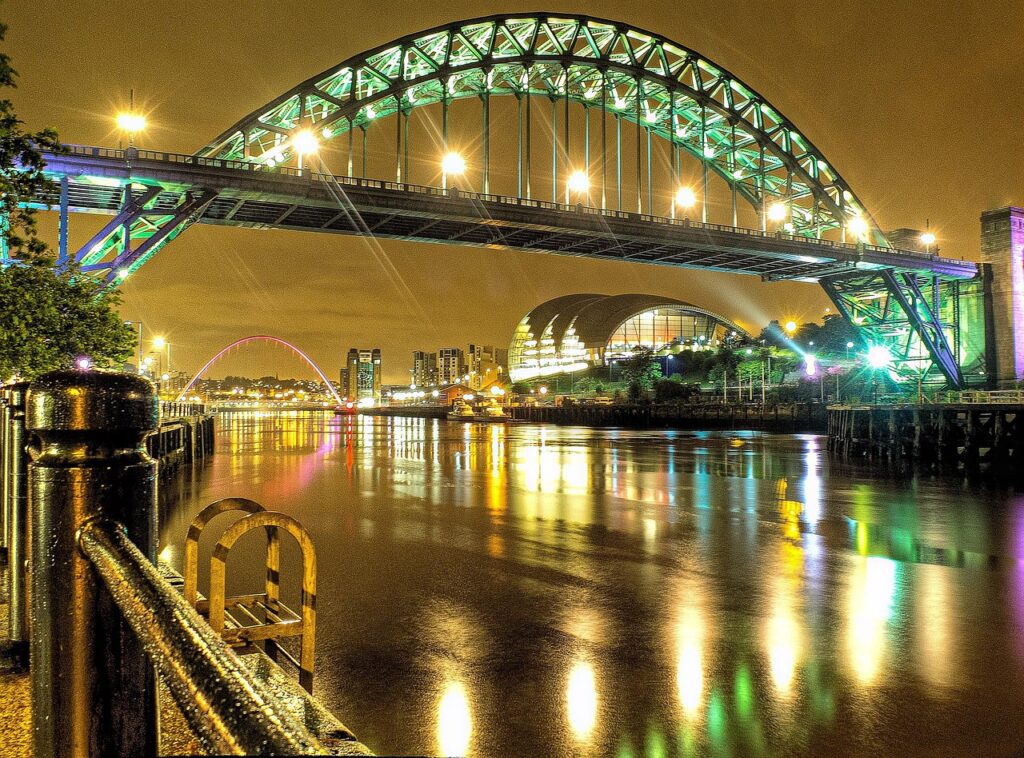
Start at the Quayside, the riverside walkway that is the heart of the city. It runs along the northern bank of the Tyne, lined with bars, restaurants and old merchants’ houses, looking across to Gateshead. Walking here is one of the great city walks in Britain, and it costs nothing. Seven bridges cross the Tyne within about a mile, and each one tells a different part of the city’s story. The green arched Tyne Bridge, opened in 1928, is the symbol of the city and the view most visitors photograph first. The High Level Bridge, designed by Robert Stephenson and opened in 1849, carries trains above and road traffic below, while the Swing Bridge, from 1876, can still turn to let ships pass. The newest crossing, the Gateshead Millennium Bridge, opened in September 2001 and tilts like a giant eyelid to let boats through, so check the published tilt times if you want to watch it move. On Sundays the Quayside hosts a market, open from around 9:30 until 4, with local crafts and street food. Come back after dark, when the bridges are lit and their reflections shimmer on the river, for the prettiest view in the city. The Tyne Bridge is being restored until 2028, so check walking routes before your visit.
Step Inside Newcastle Castle And The Black Gate
Newcastle takes its name from the “new castle” built here in 1080 by Robert Curthose, eldest son of William the Conqueror, on the site of a Roman fort near the eastern end of Hadrian’s Wall. The stone keep that stands today was built by King Henry II in the twelfth century, and the Black Gate, the castle’s gatehouse, was added in the thirteenth century. Together they form Newcastle Castle, a short walk from Central Station and the Quayside. Climb the keep for rooftop views over the Tyne bridges and visit the exhibition in the Black Gate, which tells the story of the castle and the city. The castle is open from 10 in the morning until 5 in the afternoon, with last entry at 4, and from November to March it closes on Tuesdays and Wednesdays except during Newcastle school holidays. Tickets are annual passes covering returns for a year, with an audio guide included. The keep has steep, uneven stairs, while the Black Gate has step-free access with an outdoor lift. Nearby Newcastle Cathedral is free to visit, with a lantern tower that was once a landmark for ships on the river.
Explore Grainger Town, Grey Street And Grainger Market
From the castle, walk up to Grainger Town, the elegant classical centre built by Richard Grainger between 1834 and 1839. Grey Street curves down towards the river, lined with some of the finest Georgian buildings in England, and Grey’s Monument stands at the top as the area’s meeting point. This is the best part of the city for wandering, with independent shops, cafes and old pubs tucked between the grand facades. At the heart of Grainger Town sits Grainger Market, designed by John Dobson and opened in 1835. It has more than 100 traders and opens Monday to Saturday from 9 in the morning until half past 5, selling fresh produce, street food, flowers and vintage finds. It is also one of the best places in the city to eat cheaply and well. If you only have time for one indoor wander in the centre, make it this one.
Visit Newcastle’s Free Museums And Galleries
Newcastle has several excellent museums, and most of them are free, which makes the city one of the best-value city breaks in Britain. The Great North Museum: Hancock, near the university, covers natural history, archaeology and world cultures, with a large model of Hadrian’s Wall, Egyptian mummies and a planetarium that charges a small fee. The Discovery Museum tells the story of Tyneside’s science and industry, and its star exhibit is Turbinia, the first ship powered by a steam turbine. The Laing Art Gallery holds a fine collection of British art, including dramatic works by John Martin. All three are free to enter and open most days, so it is easy to fit two or three into a single trip. Across the river in Gateshead, BALTIC Centre for Contemporary Art stands in a huge former flour mill built in the 1950s and is one of the largest galleries of contemporary art in Europe, with free entry and a rooftop viewing platform. Next door, The Glasshouse, the curvy music venue formerly known as the Sage, hosts concerts on the Gateshead bank.
Go Underground In The Victoria Tunnel
For something different, take a guided tour of the Victoria Tunnel, a preserved nineteenth-century waggonway running beneath the city from the Town Moor to the Quayside. Tours start at 51 Lime Street, last about an hour and a quarter, and the tunnel stays at around 12 degrees, so bring a layer and wear sensible shoes. Guides tell the story of its working life and later use as an air-raid shelter, and it is one of the most memorable things to do in Newcastle on a rainy day.
Green Escapes: Jesmond Dene, Leazes Park And The Town Moor
Newcastle is greener than many visitors expect. Jesmond Dene, a wooded valley park a short walk from the centre, follows a stream through trees and past a waterfall, and it feels a world away from the city streets. Closer to the centre, Leazes Park and Exhibition Park sit beside the Town Moor, a huge open space of common land where you can walk, run or simply sit and watch the city go by. These parks are free and open all day, and they make a good break between museums and meals, especially with children who need space to run around.
Where To Eat In Newcastle
Newcastle’s food scene has grown well beyond its pub-grub reputation. The Quayside is lined with restaurants and bars, from casual spots to smarter dining rooms with river views, and it is the obvious choice for a first evening. Grainger Market is the place for lunch, with stalls serving dishes from around the world at low prices. Ouseburn Valley, a short walk east of the centre, is the city’s creative quarter, with craft breweries, independent cafes and weekend food markets in old industrial buildings. For a taste of something local, try a stottie, the flat, chewy bread roll that is a Tyneside staple. Prices are generally lower than in London or Edinburgh, and booking ahead is wise for popular Quayside restaurants on Friday and Saturday nights.
Newcastle After Dark: Nightlife And Live Music
Newcastle is famous for its nightlife, and the reputation is well earned. The Bigg Market has been the centre of the city’s late-night scene for generations, while the Diamond Strip around Collingwood Street draws a smarter, dressier crowd. The Quayside offers a more relaxed evening, with riverside bars and pubs that suit a quiet drink with a view. Live music is easy to find, from small venues in Ouseburn to big concerts at the Utilita Arena and The Glasshouse across the river. Comedy clubs and cocktail bars fill the gaps, and the compact centre is easy to walk between areas. If you prefer a quieter evening, the theatres around Grey Street stage plays, musicals and touring shows most nights.
Easy Day Trips From Newcastle
Newcastle makes an excellent base, and several of the North East’s best days out are under an hour away. Durham is the quickest trip by rail, with the fastest direct trains from Central Station taking just 11 minutes, and its cathedral and castle are a UNESCO World Heritage Site. Take the Metro to Tynemouth, about 25 minutes from Monument, for Longsands beach, the clifftop priory and a weekend market in the Victorian station. The Angel of the North, Antony Gormley’s steel sculpture standing 20 metres tall with a 54-metre wingspan, is free to visit in Gateshead and is reached by bus in about 20 minutes. For Roman history, take the train to Hexham and then the AD122 bus to Hadrian’s Wall, where forts such as Housesteads and the museum at Vindolanda show the best-preserved sections of the frontier. Beamish, the open-air museum recreating North East life across the 1820s, 1900s and 1950s, is reached by buses 28 and 29. Alnwick Castle is closed for the winter season and reopens in March 2027, so check before travelling.
Practical Tips For Visiting Newcastle
Trains run regularly from London King’s Cross, Edinburgh, York and Manchester to Newcastle Central Station, at the edge of the city centre. Newcastle International Airport is a short Metro ride away, and long-distance coaches stop near the station. Once there, the centre is compact and best explored on foot, though the hills between the Quayside and the centre are steep, so comfortable shoes matter. The Tyne and Wear Metro connects the centre with Jesmond, Gosforth, the coast and Sunderland. The best time to visit is late spring to early autumn, when the weather is mildest and the Quayside is at its liveliest, but the city works well in winter too. Many of the best attractions are free, from the museums and BALTIC to the Quayside walks and the Angel of the North. Stay near the Quayside or Grainger Town to be within walking distance of almost everything.
A Simple One-Day Itinerary For Newcastle
With one day, start at Grey’s Monument, walk down Grey Street to Grainger Market for a browse and an early lunch, then head to Newcastle Castle for the keep and its rooftop views. Spend the afternoon walking the Quayside, crossing the Millennium Bridge to BALTIC, and return along the river as the lights come on. Finish with dinner on the Quayside. With a second day, add the Great North Museum and the Discovery Museum in the morning, Jesmond Dene in the afternoon, and a Metro ride to Tynemouth.
Frequently Asked Questions About Visiting Newcastle
How many days do you need in Newcastle? Two days is ideal, covering the Quayside, the castle, Grainger Town, the free museums and an evening out. Add a third day for Durham, the coast or Hadrian’s Wall.
Is Newcastle good for a weekend break? Yes. The centre is compact and walkable, trains arrive at Central Station in the heart of things, and free museums, markets and riverside walks can fill a weekend without a car.
What is Newcastle most famous for? The Tyne Bridge and the Quayside, Newcastle Castle, its friendly locals, Newcastle United Football Club and a lively nightlife scene, plus Georgian architecture in Grainger Town.
Is Newcastle expensive to visit? Compared with London and Edinburgh, Newcastle is good value. The Great North Museum, the Discovery Museum, the Laing Art Gallery, BALTIC and the Quayside walks are all free, and food and drink prices are generally lower.
What is the best way to get around Newcastle? On foot in the compact city centre, and by Metro for longer trips to Jesmond, the coast and the airport.
Newcastle rewards travellers who take their time. Walk the river, climb the castle, eat in the market, and let the city set the pace. It is easy to like on a first visit and even easier to return to.
Leave a Reply