
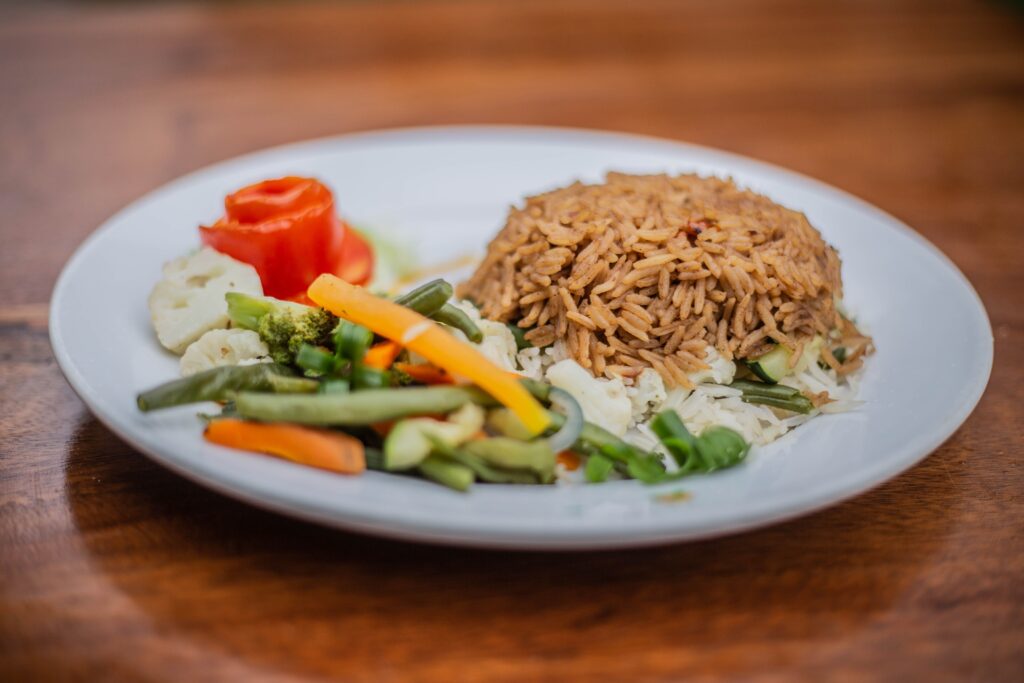
Finding healthy meals for dinner does not have to mean bland food, long cooking times or a strict set of rules. A good evening meal is simply one that leaves you satisfied, gives your body a useful mix of nutrients and fits into a normal weeknight. The ideas in this guide follow the UK Eatwell Guide, so they are built around balance rather than cutting out whole food groups.
The goal is a pattern across the week, not perfection on every plate: plenty of vegetables, a sensible portion of starchy food, a protein source and a little healthy fat.
What Makes A Dinner Healthy?
A healthy dinner is a balanced one. The UK Eatwell Guide, the official model for a balanced diet, shows the proportions to aim for across the day: fruit and vegetables make up just over a third of what we eat, starchy carbohydrates make up just over another third, and the rest is split between protein foods, dairy or dairy alternatives, and a small amount of unsaturated oils and spreads.
That balance matters more over a whole week than at a single meal. The NHS advice on 5 A Day sets a clear daily target: at least five portions of a variety of fruit and vegetables, with an adult portion weighing about 80g.
Fibre is another useful marker: UK guidance advises adults to aim for around 30g of fibre a day, and dinner can contribute a good share through wholegrains, beans, lentils and vegetables. Adults should also eat no more than 6g of salt a day in total, so flavouring with herbs, spices, lemon and garlic often works better than extra salt. The Eatwell Guide advises two portions of fish a week, one of which should be oily fish, with a portion weighing about 140g.
How To Build A Balanced Plate For Dinner
Start with the vegetables, not the main dish. Frozen peas, salad leaves, roasted carrots or a tin of chopped tomatoes can each count towards your 5 A Day.
Next, choose a starchy food, ideally a wholegrain one. Brown rice, wholemeal pasta, wholemeal bread and potatoes with their skins on all add fibre.
Then add a protein food: chicken, fish, eggs, beans, lentils, chickpeas, tofu or a small portion of red meat. Beans and pulses are especially useful because they are cheap, filling and high in fibre, and they count towards your 5 A Day too, although only as one portion a day. A little unsaturated oil, such as rapeseed or olive oil, finishes the plate.
Good sleep and regular meals support each other. When you are tired, quick sugary snacks and heavy takeaways feel more tempting, and a late, very heavy dinner can disturb sleep. Reading about what REM sleep is can help you plan evening routines, including dinner timing.
Quick Healthy Meals For Dinner In 20 Minutes Or Less
Weeknight dinners need to be fast, or they simply will not happen. The meals below all take about twenty minutes or less and use everyday ingredients.
- Stir-fry with chicken or tofu, mixed frozen vegetables and noodles, flavoured with ginger, garlic and a little soy sauce.
- Wholemeal pasta with a tomato and lentil sauce, served with a green salad and a drizzle of olive oil.
- Omelette filled with mushrooms, spinach and cheese, served with wholemeal toast and sliced tomato.
- Grilled chicken breast with new potatoes and steamed broccoli, finished with lemon and black pepper.
- Bean and vegetable chilli with tinned kidney beans, chopped tomatoes and sweetcorn, served with brown rice.
The trick is keeping a few reliable ingredients in the cupboard and freezer at all times: tinned tomatoes, tinned beans, frozen vegetables, eggs, wholemeal pasta and brown rice. With those in place, a healthy dinner is rarely more than fifteen minutes away.
Vegetarian Healthy Dinner Ideas
Vegetarian dinners can be just as filling and balanced as meat-based ones, as long as they include a proper protein source and plenty of vegetables. A plate of pasta with only a tomato sauce is mostly starchy carbohydrate, while the same pasta with lentils, beans or cheese added becomes a much more complete meal.
Lentil and vegetable soup with wholemeal bread freezes well, so a large pot can cover several evenings. A chickpea and spinach curry with brown rice is another reliable choice, using spices for flavour instead of salt. A roasted vegetable and halloumi traybake needs little hands-on time, and bean burgers suit families, because everyone can build their own.
Small changes to everyday habits often make healthy eating easier than a complete overhaul. Our guide on how to be a better person looks at simple habits, including eating well.
Healthy Fish Dinners For The Week
Fish is one of the easiest ways to make dinner both quick and balanced. The Eatwell Guide advises at least two portions of fish a week, including one portion of oily fish, and a portion is about 140g. Oily fish include salmon, sardines and mackerel, while non-oily fish include haddock, cod and tuna.
Baked salmon with roasted sweet potato wedges and green beans takes about twenty minutes in the oven. Sardines on wholemeal toast with a tomato salad is an even quicker, inexpensive option. A simple fish pie can be prepared in advance, and tuna and sweetcorn jacket potato is another easy choice, with the potato skin adding fibre.
Frozen fish fillets are worth keeping in the freezer for nights when fresh fish is not available, and they cook straight from frozen in many cases. Serve fish with vegetables rather than chips most of the time.
Batch Cooking Healthy Dinners
Batch cooking is the single most useful habit for healthy weeknight dinners. Cooking a larger amount once and eating it over two or three evenings removes the nightly decision about what to cook.
Good batch cooking dishes reheat well and improve with a day in the fridge: vegetable and lentil soup, bean chilli, vegetable curry and bolognese sauce made with a mix of mince and lentils. Cook a large pot on Sunday evening, portion it into containers and refrigerate or freeze the extras.
Label containers with the date they were cooked, cool food quickly and reheat until piping hot throughout. Freezing in single portions makes weekday dinners almost effortless, because a healthy meal only needs reheating and a quick salad alongside it.
Portion Guidance Without Weighing Everything
Portion sizes cause more confusion than almost any other part of healthy eating, but a few simple hand-based guides are enough for most people. Your palm gives a rough guide for a portion of meat or fish, your fist for a portion of starchy food such as rice or pasta, and a cupped hand for a portion of fruit or vegetables. These are general guides, not exact measurements.
The amount of food each person needs also depends on age, sex, body size and how active they are, so there is no single correct portion that suits everyone. Serve a reasonable amount first and go back for more only if you are still hungry.
Common Mistakes That Make Dinners Less Healthy
The most common mistake is not the main dish itself but what goes around it. A grilled chicken breast with vegetables is a balanced meal, but the same chicken served with a large portion of chips, a creamy sauce and a sugary drink is a very different one. Sauces, dressings and drinks often add more salt, sugar and fat than the main ingredients.
Another common mistake is cooking with too much salt, much of which comes from processed foods such as ready meals, bread, cheese and processed meats. Tasting food before adding salt, and using herbs, spices, vinegar and citrus for flavour, usually means less salt is needed. Skipping vegetables is a third mistake: a meal without any vegetables is rarely balanced, however good the protein is.
Heavy evening meals can also be connected with snoring and disturbed sleep, and a lighter dinner eaten earlier sometimes helps. If snoring is a regular problem, our guide on how to stop snoring explains common causes and practical steps that may help.
A Simple Week Of Healthy Dinners
A week of healthy dinners could look like this, with fish twice, vegetarian meals twice and a batch cooked meal that covers two evenings.
- Monday: Lentil and vegetable soup with wholemeal bread.
- Tuesday: Stir-fry with chicken, frozen mixed vegetables and noodles.
- Wednesday: Baked salmon with sweet potato wedges and green beans.
- Thursday: Bean and vegetable chilli with brown rice, cooked in a double batch.
- Friday: Leftover bean chilli with a fresh salad and wholemeal pitta.
- Saturday: Wholemeal pasta with tomato and lentil sauce and a green salad.
- Sunday: Roast chicken with roast potatoes, carrots and broccoli, with leftovers saved for Monday lunch.
This is a starting point, not a prescription. Swap days around and repeat meals you enjoy. The pattern is what matters: vegetables at every dinner, a wholegrain food, a protein source and fish twice a week.
Conclusion
Healthy meals for dinner are not about strict rules or expensive ingredients. They are about a simple pattern repeated most nights: plenty of vegetables, a starchy food, a protein source and a little healthy fat, with fish twice a week and vegetarian meals mixed in. Start with one or two of the ideas in this guide this week, and let the habit grow from there.
Please note: this article is general information only, not medical advice or personalised dietary advice. If you have a medical condition, take medication, are pregnant or breastfeeding, have food allergies or follow a special diet, please speak to your GP or a registered dietitian before making significant changes to what you eat.
Frequently Asked Questions
What Is The Easiest Healthy Meal For Dinner?
A stir-fry is often the easiest healthy dinner, because it cooks in one pan in about fifteen minutes. Combine a protein such as chicken, tofu or prawns with frozen mixed vegetables and noodles or rice, flavoured with ginger, garlic and a little soy sauce.
How Many Portions Of Vegetables Should Dinner Include?
Aim for two portions of vegetables at dinner where you can, since that makes the daily target of at least five portions much easier to reach. An adult portion is about 80g, roughly three heaped tablespoons of cooked vegetables or a small bowl of salad.
Are Healthy Dinners Expensive?
Healthy dinners do not have to be expensive. Beans, lentils, eggs, frozen vegetables, tinned tomatoes and seasonal vegetables are among the cheapest foods available. Buying in season and cooking in batches all help to keep costs down.
Can I Eat Pasta Or Rice Every Night?
You can eat pasta or rice regularly as part of a balanced diet, especially if you choose wholemeal or brown versions, which add fibre. What matters is what goes with them: a portion with plenty of vegetables and a protein source such as lentils, beans, chicken or fish is a balanced meal.
Is It Healthy To Eat Dinner Late At Night?
Eating very late can leave some people feeling uncomfortable at bedtime, and a heavy late meal may disturb sleep. If you often eat late because of work, try keeping the meal lighter, with vegetables and a modest portion of protein and starchy food.
Leave a Reply