
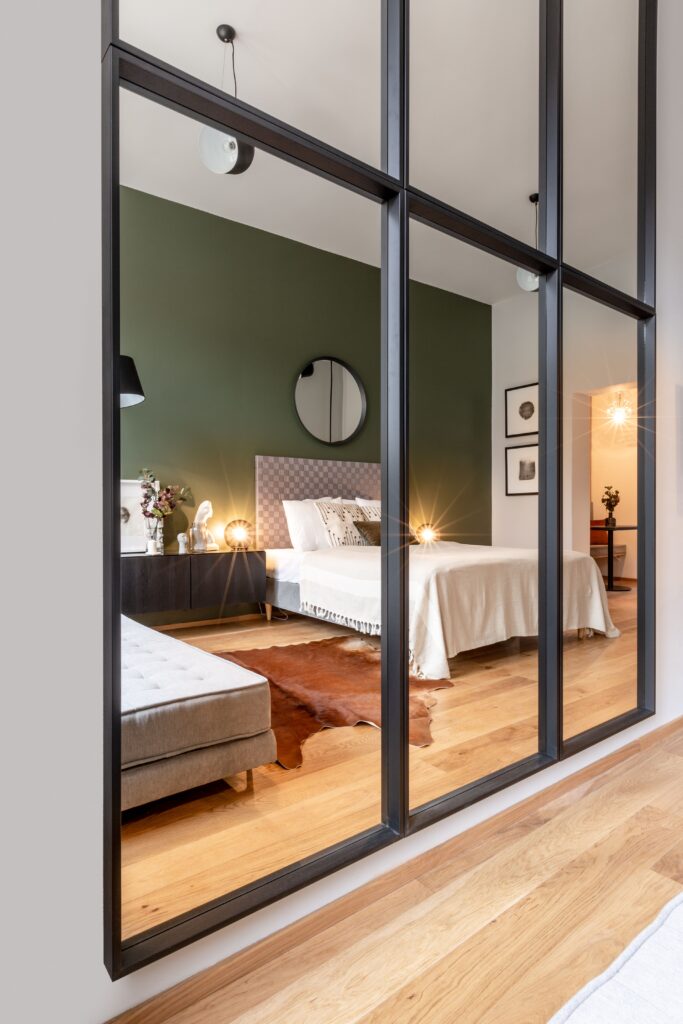
Green is one of the most forgiving colours you can choose for a bedroom. It sits between the calm of blue and the warmth of yellow, so it can feel restful without feeling cold, and natural without feeling dull. From whisper-soft sage to deep forest green, there is a shade for almost every room. The trick is choosing the right green for your light, your furniture and the mood you want to wake up to.
A green bedroom works because green is the colour we associate most with nature: leaves, moss, fields and forests. That association makes it feel grounding in a way that brighter colours rarely manage, which is exactly what most people want from a bedroom. Whether you paint all four walls, try a single feature wall, or bring green in through bedding and furniture, these ideas will help you build a calm, stylish scheme.
Why Green Works So Well In A Bedroom
Bedrooms need to do two things at once: help you relax at night and feel pleasant in the morning. Green suits both jobs. Softer greens read as quiet and restful, while deeper greens create a cocooning feeling that many people find helps them switch off. Unlike stark white, which can feel clinical, or bold red, which can feel stimulating, green rarely fights with the purpose of the room.
Green is also remarkably versatile. It pairs naturally with wood, linen, rattan and warm metals. It works with cream and warm white for a soft, timeless look, and with dark wood and brass for something more dramatic.
Choosing Your Shade Of Green
Not all greens behave the same way, so choosing a shade is the most important decision in the whole scheme. The main thing to understand is undertone. Some greens lean yellow, which makes them feel warm and earthy. Others lean blue, which makes them feel cooler and fresher. A yellow-based olive feels warm and grounded, while a blue-based sage can look cool, even grey, in a north-facing room. Tikkurila’s green bedroom colour schemes guide gives the same advice: check undertones against your fabrics, flooring and lighting before committing to a full application.
Sage green is the easiest starting point. It is a muted, grey-green that reads as calm and understated, and it works in almost any bedroom regardless of size. Sage pairs beautifully with warm white, cream, beige, linen and light oak, and it suits both modern and traditional furniture. Dulux Tranquil Dawn, a soft sage-meets-grey, and Farrow and Ball Vert de Terre, a muted sage-green, are two widely used examples of this family.
Olive green has a warmer, more grounded character. It sits in the yellow-green range and feels earthy and lived-in, especially with walnut furniture, tan accents and natural fabrics. Olive works particularly well in rooms with warm light.
Forest and emerald greens are the dramatic end of the range. Forest green is deep and wooded, while emerald has a richer, jewel-like quality. Both create a strong sense of enclosure, which can feel luxurious in a larger bedroom or on a single feature wall in a smaller one. Emerald pairs beautifully with brass, gold and dark wood.
Mint and eucalyptus greens sit at the lighter, fresher end. Eucalyptus sits between soft green and blue-green and feels spa-like and clean.
Paint Ideas: All Four Walls, A Feature Wall, Or Colour Drenching
How much green you use matters as much as which green you choose. Painting all four walls in a soft sage or eucalyptus creates a consistent, calm envelope that feels restful and uncluttered. This works best with paler shades, since a light green on every wall still reflects plenty of light. Keep the ceiling and woodwork in warm white to lift the room.
A feature wall is the gentlest way to try a deeper green. Paint the wall behind the bed in forest or emerald, and keep the other walls in warm white or a very pale green. The bed becomes the focal point of the room, and the dark wall adds depth without overwhelming the space. This approach suits smaller bedrooms well, and it makes changing the scheme easier later, since only one wall needs repainting.
Colour drenching, painting the walls, woodwork and even the ceiling in the same green, creates the most dramatic and cocooning result. It works best with mid-tone or deep greens in a room with good proportions.
Whatever approach you choose, test first. Paint a large sample on the wall, at least a metre square, and look at it in morning light, evening light and lamplight before committing. Green changes more with light than most colours.
Furniture And Bedding Combinations
Furniture is where a green bedroom either comes together or falls apart. Light oak and pale ash suit sage and eucalyptus walls, keeping the room bright and airy. Walnut and darker woods suit olive and forest greens, adding warmth and contrast. Painted furniture in cream or warm white works with almost any green.
Bedding is the easiest place to bring green into a bedroom without painting at all. Sage green linen bedding with white or cream sheets feels fresh and spa-like, while deep green velvet cushions or a throw add richness to a neutral bed. If your walls are already green, keep the bedding lighter: white, cream or oatmeal bedding against sage walls creates a calm, layered look. The general rule is to repeat each colour at least twice in the room, so the green in the walls echoes in the cushions, the art or the rug.
Light, Plants And The Finishing Touches
Light changes how green reads more than almost any other colour, so it deserves attention. North-facing bedrooms get cooler, bluer light, which can make blue-based sages look grey and chilly. In a north-facing room, warmer greens such as olive or moss usually work better, and warm-toned bulbs help in the evening. South-facing bedrooms get warm, direct light, which supports cooler sages and eucalyptus beautifully. If your room is dark, a paler green will reflect more light.
Plants are the natural finishing touch in a green bedroom. They echo the wall colour, add life and texture, and suit the calm of a bedroom. Choose plants that tolerate low light if the room is dark, and keep them in simple pots in cream, terracotta or natural ceramic. A trailing plant on a high shelf, a compact potted plant on the windowsill, or a larger floor plant in an empty corner all work, provided they are easy to reach for watering.
Art and accessories should support the scheme, not fight it. Botanical prints, landscape photography and abstract art in green, cream and warm neutrals all suit a green bedroom. A mirror with a brass or wooden frame adds light and warmth. The same restraint applies here as in any bedroom: a few considered objects beat a crowded surface, and every item should earn its place. If you are refreshing the rest of the house too, our bedroom decor ideas guide covers the wider styling principles, and our bedroom layout ideas guide can help if the furniture arrangement needs rethinking first.
Common Mistakes To Avoid
The most common mistake with a green bedroom is choosing a shade that is too bright or too yellow for the room. A vivid lime or acid green can feel stimulating rather than restful, and a very yellow green can look dated once it is on four walls. Muted, grey-toned greens are almost always safer for a bedroom, and they age better too. If you love a brighter green, use it as an accent in cushions or art rather than on the walls.
Another mistake is pairing green with too many competing colours. Green with cream and wood is calm. Green with cream, wood, pink, navy and gold all at once is busy. Limit the palette to three main shades and repeat them. A third mistake is forgetting the undertone. A blue-based sage in a north-facing room can look cold, while a yellow-based olive in a south-facing room can look warmer than expected.
Finally, do not forget the ceiling and woodwork. Bright white ceilings and woodwork can look harsh against a deep green wall, while warm white softens the contrast and makes the room feel cohesive.
Conclusion
Green is a bedroom colour that rewards a little thought. Choose a shade that suits your light, decide how much of it you want on the walls, and let the furniture, bedding and textures support it rather than compete with it. Sage for calm, olive for warmth, forest or emerald for drama, and eucalyptus for freshness: each has its place, and each can create a bedroom that feels restful, natural and genuinely yours.
Frequently Asked Questions
What Is The Best Green For A Bedroom?
Sage green is the most versatile choice for a bedroom because it is muted, calm and works in almost any light and room size. Olive suits warmer, earthier schemes, while forest and emerald suit larger rooms or a feature wall where you want more drama. The best green for your room depends on its light: warmer greens such as olive suit north-facing rooms, while cooler sages suit south-facing rooms.
Does Green Make A Bedroom Look Smaller?
A pale green such as sage or eucalyptus will not make a bedroom look smaller, since it reflects a good amount of light. A deep green such as forest or emerald can make a room feel more enclosed, which is why it works best on a single feature wall in a smaller bedroom.
What Colours Go With A Green Bedroom?
Green pairs naturally with warm white, cream, beige and oatmeal, and with wood tones from pale oak to dark walnut. Brass and gold add warmth to deep greens, while rattan and natural textures suit sage and olive. Keep the palette to three main shades and repeat them across the room for a calm, cohesive result.
Should I Paint All The Walls Green Or Just One?
Painting all four walls in a soft sage or eucalyptus creates a calm, consistent room and works well in most bedrooms. A single feature wall behind the bed is the gentlest way to try a deeper green such as forest or emerald, and it suits smaller bedrooms. Colour drenching, painting walls, woodwork and ceiling in the same green, creates the most dramatic effect and suits a confident scheme in a well-lit room.
Can I Have A Green Bedroom Without Painting The Walls?
Yes, absolutely. Green bedding, cushions, throws, curtains or an upholstered headboard can bring green into a bedroom without any painting at all. Sage green linen bedding with white sheets, or deep green velvet cushions on a neutral bed, both create a clear green scheme. A painted piece of furniture, such as a bedside table in sage or olive, is another easy way to introduce the colour.
Is Green A Good Colour For A Small Bedroom?
Green can work very well in a small bedroom, provided you choose the right shade. Pale sage and eucalyptus reflect light and keep the room feeling open, and they pair well with light wood and white bedding. If you love a deeper green, use it on the wall behind the bed as a feature wall and keep the other walls pale.
Leave a Reply