
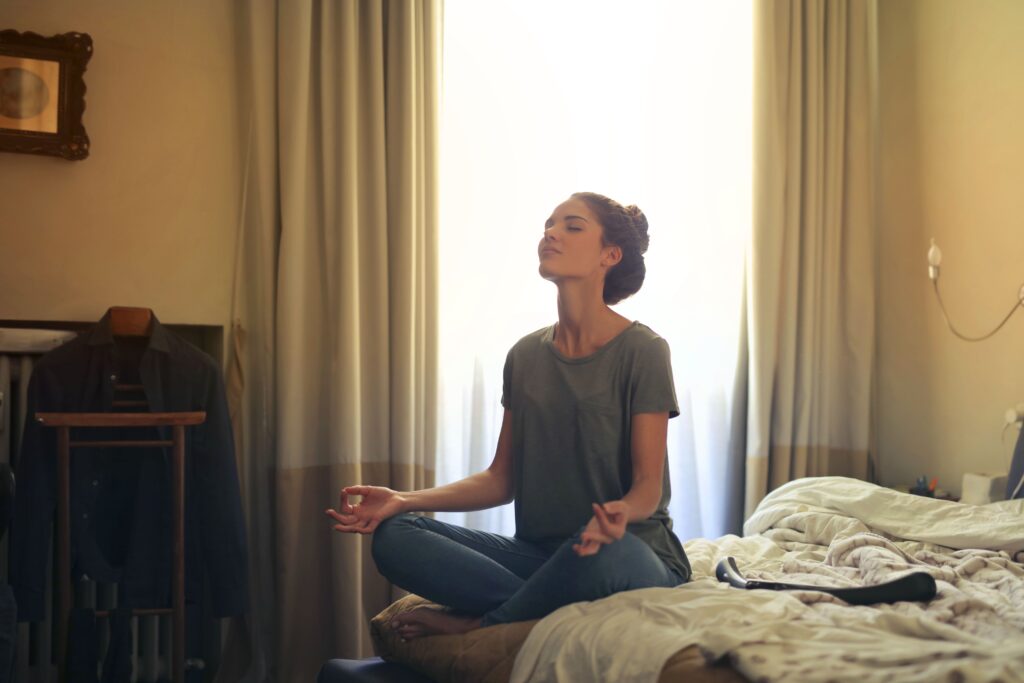
You meditate by sitting comfortably, choosing one simple focus such as your breath, and gently returning your attention to that focus whenever your mind wanders. That is the whole practice. You do not need special equipment, a silent room, or years of experience, and you do not need to empty your mind. If you can sit still for a few minutes and notice your breathing, you can meditate.
This guide explains meditation in plain language. It covers what meditation is, how to do it step by step, the most common beginner methods, and how to build a habit that survives a busy week. It is general information only, not medical advice. Meditation can support relaxation and stress management, but it does not replace medical treatment. If you have a mental health condition, or if anxiety, low mood or sleep problems feel persistent or overwhelming, speak to your GP or another healthcare professional.
What Meditation Actually Is
Meditation is a practice of training attention. Mayo Clinic describes it as a type of mind-body practice in which people focus on one thing, such as their breath, and train the mind to return to that focus when it wanders. Most forms of meditation share a few simple features: a quiet setting, a comfortable position, focused attention, and an open attitude towards whatever happens, without harsh judgement.
That last point matters more than most beginners expect. Meditation is not about achieving a blank mind or feeling calm on demand. Thoughts will arrive. Sounds will interrupt you. Your shoulders may ache, and your to-do list may suddenly feel urgent. None of that means you have failed. Noticing the distraction and coming back, kindly and without scolding yourself, is the practice itself.
People have meditated for thousands of years, in many cultures and traditions. Today, many people practise it in a secular way, simply as a tool for focus, calm and self-awareness. You can also practise it alongside a faith tradition if that is meaningful to you, but no belief system is required to begin.
Research summarised by Mayo Clinic suggests meditation may help with focus, relaxation, mood, sleep and stress, and may help some people manage symptoms of conditions that stress makes worse, such as anxiety, chronic pain and sleep problems. The evidence is promising rather than absolute, and experts note that more research is needed on both benefits and possible harms. For most people, meditation is considered low risk, but Mayo Clinic also notes that for some people it can bring up anxiety or low mood. That is another reason to start gently, keep sessions short, and seek support if practice feels distressing rather than helpful.
How To Meditate In Five Simple Steps
You can use this simple method for your first session today. Set aside five minutes, and keep your expectations low. A short, calm session you actually finish is far better than an ambitious session you abandon.
Step 1: Choose A Time And Place
Pick a time you can repeat. Many beginners choose first thing in the morning, before the day fills up, but any regular time works: a lunch break, the quiet minutes after work, or before bed. Choose a place where you are unlikely to be interrupted. It does not need to be beautiful or silent. A chair in a bedroom, a corner of a living room, or a quiet spot in a park is enough. Put your phone on silent and out of reach if you can.
Step 2: Sit Comfortably With A Straight Back
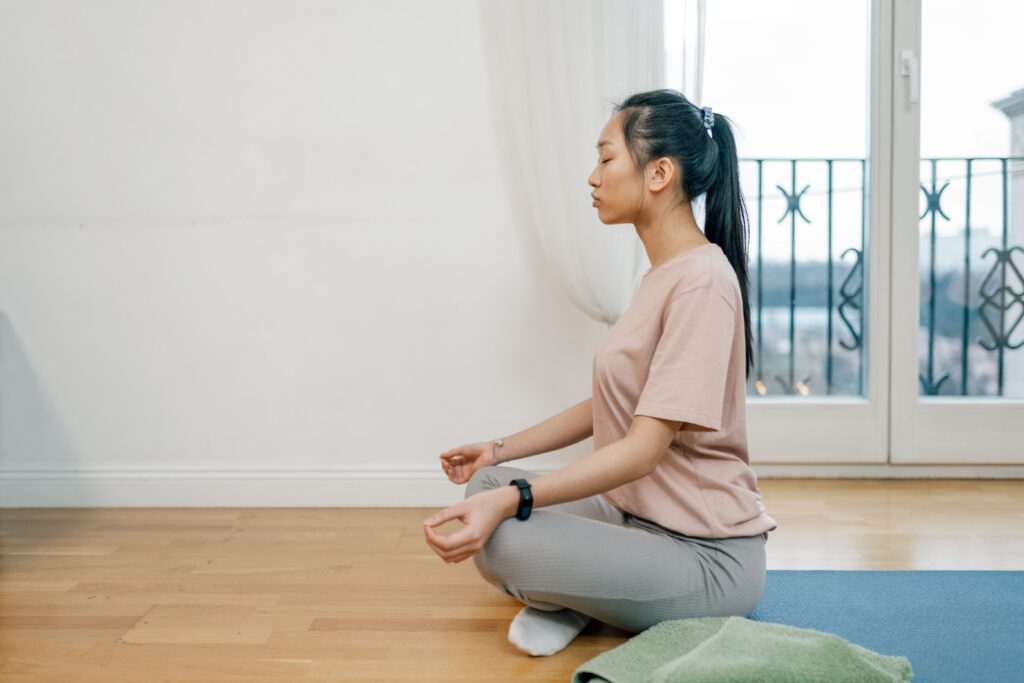
Sit in a chair with your feet flat on the floor, or sit cross-legged on a cushion or the floor if that is comfortable for you. Keep your back reasonably straight, but not stiff. Let your shoulders drop and your hands rest on your thighs or in your lap. If sitting is painful, you can lie down, although lying down makes it easier to fall asleep. Comfort matters more than looking like a picture of meditation. If your body is in pain, your attention will be pulled to the pain, not to your breath.
Step 3: Set A Timer And Close Your Eyes
Set a timer for five minutes. A timer frees you from checking the clock. Then close your eyes, or lower your gaze softly towards the floor if closing your eyes feels uncomfortable. Take one or two natural breaths. You are not trying to breathe in a special way. Let your breath find its own rhythm.
Step 4: Focus Gently On Your Breath
Bring your attention to the feeling of breathing. You might notice cool air at your nose as you breathe in, and warmer air as you breathe out. You might notice your chest or belly rising and falling. Choose one spot and stay there. An NHS hospital guide on meditation describes a similar approach: close your eyes, feel the sensations of your breath, notice where you feel it most vividly, and allow your breath to breathe itself rather than trying to control its rhythm.
If focusing on the breath feels difficult, you can silently say “breathe in” on each in-breath and “breathe out” on each out-breath. This gives a wandering mind something simple to hold on to. You can also count breaths: count each out-breath from one to ten, then start again at one. If you lose count, simply start again. Losing count is not a mistake. It is information that your mind wandered, which is exactly what you are learning to notice.
Step 5: Notice When Your Mind Wanders And Return
Within seconds or minutes, your mind will wander. You will think about dinner, replay a conversation, plan tomorrow, or notice a sound outside. This is normal. It happens to beginners and experienced meditators alike.
When you notice it, do three things. First, notice without judgement: “Ah, thinking.” Second, let the thought go without following it or arguing with it. Third, gently bring your attention back to your breath. Repeat this as many times as needed. If you return twenty times in five minutes, you have practised twenty times. The return is the exercise, not a sign of failure.
When the timer sounds, do not jump up immediately. Open your eyes slowly, take one full breath, notice how your body feels, and then move on with your day. That slow ending helps carry a little of the calm into whatever comes next.
Common Meditation Methods For Beginners
Breath meditation is the easiest place to start, but it is not the only method. Trying two or three approaches over a few weeks can help you find one you will actually repeat.
Mindfulness Meditation
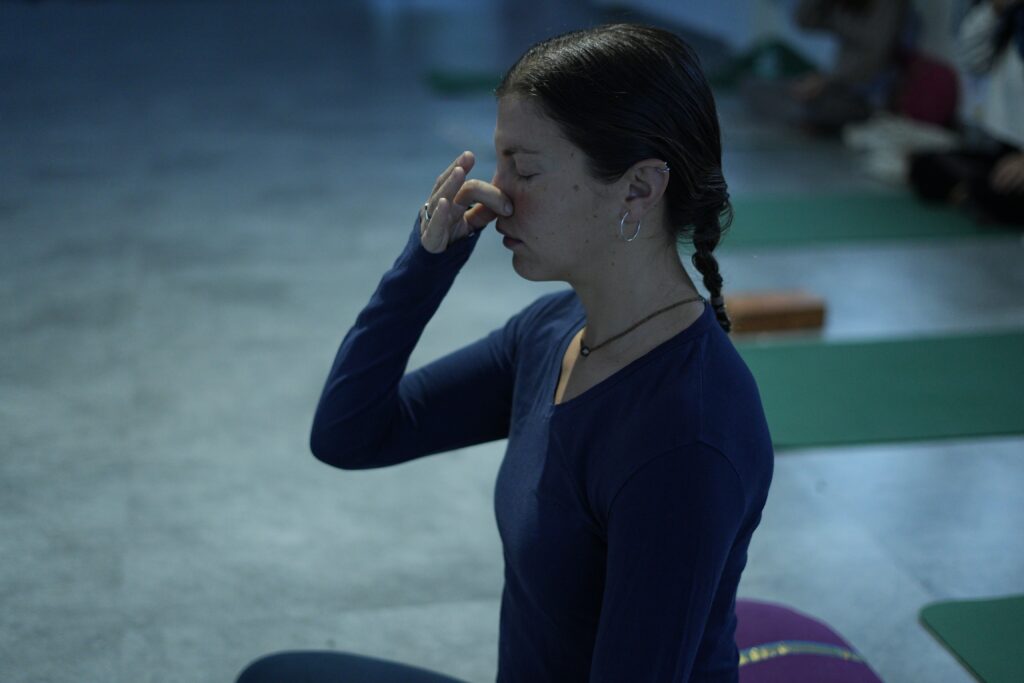
Mindfulness meditation means paying attention to the present moment, on purpose and without judgement. In practice, this often means noticing your breath, bodily sensations, sounds and thoughts as they arise, and returning to the present when your attention drifts. Mayo Clinic describes mindfulness as focusing intensely on what you are sensing and feeling in the moment, without interpretation or judgement. This is the style behind many secular courses and apps, and it is a good default for most beginners.
Body Scan Meditation
In a body scan, you slowly move your attention through your body, from your feet to the top of your head, or from head to toe. At each area, you simply notice what you feel: warmth, coolness, pressure, tingling, tightness, or nothing at all. You are not trying to change anything. You are practising noticing. Body scans are useful if focusing only on the breath feels too narrow, or if you tend to carry tension without realising it. They also work well before bed, because they slow attention down and draw it away from looping thoughts.
Guided Meditation
In guided meditation, a teacher or recording talks you through the session, telling you when to breathe, what to notice, and when to return to your focus. This is often the easiest starting point, because you do not have to remember the steps yourself. Free guided exercises are available through NHS Every Mind Matters resources, and many meditation apps offer free introductory sessions. If you use an app, choose one guided session and stick with it for a week before judging it. Switching apps every day is another form of distraction.
Walking Meditation
Walking meditation is meditation in slow motion. Walk slowly, indoors or outdoors, and pay attention to the feeling of each step: the heel touching the ground, the weight shifting, the toe lifting. If your mind wanders, return to the steps. This is a helpful option if sitting still feels restless, if you have a busy mind, or if you want to practise mindfulness during a short walk rather than adding another seated task to your day. Walk at a pace that feels natural, not exaggerated, and choose a safe, quiet path where you do not need to watch traffic closely.
Loving-Kindness Meditation
Loving-kindness meditation focuses on silently repeating simple, kind phrases, first for yourself and then for others. For example: “May I be safe. May I be healthy. May I live with ease.” You then extend the same wishes to someone you care about, then to a neutral person, and eventually, if you wish, to all beings. This method suits people who find breath meditation dry, or who want a practice that directly supports patience and compassion. Keep the phrases simple and sincere. You do not need to force a feeling of love. Repeating the intention is enough.
How Long Should You Meditate?
Start short. Five minutes a day is a genuine practice, and for some people, even two or three minutes is a sensible first step. Mayo Clinic Connect guidance for beginners suggests starting with two to three minutes and building up gradually, which is a useful reminder that longer is not automatically better.
A helpful progression looks like this: five minutes a day for the first week or two, then ten minutes when five feels comfortable, then fifteen or twenty minutes if you want a longer practice. Consistency matters more than duration. Ten minutes every day will teach you more about your attention than thirty minutes once a week. If you miss a day, do not try to “make up” the time with a long session the next day. Simply return to your normal short session. Missing a session is not a reason to abandon the habit. It is a normal part of building any habit.
It also helps to attach meditation to something you already do. Meditate after brushing your teeth, before your morning coffee, or after you sit down at your desk. A clear cue — same time, same place, same chair — makes the habit easier to remember than relying on willpower alone.
Common Beginner Problems And How To Handle Them
“My Mind Will Not Stop”
This is the most common worry, and it is based on a misunderstanding. Meditation does not stop thoughts. It changes your relationship with them. Instead of automatically following every thought, you practise noticing it and choosing to return. A busy mind during meditation is not proof that you are bad at it. It is proof that you have a normal human mind, and that you are getting plenty of practice in returning.
If thoughts feel especially loud, try labelling them briefly: “planning,” “worrying,” “remembering.” A label creates a little distance. Then return to the breath. Do not analyse the thought during the session. You can reflect on it afterwards if it matters.
“I Keep Falling Asleep”
Falling asleep usually means you are tired, meditating lying down, or practising late at night. Try meditating earlier in the day, sitting upright rather than lying down, and keeping your eyes slightly open with a soft gaze if needed. A shorter session can also help. If you regularly fall asleep, that may be useful information about your sleep, rather than a meditation failure. Regular sleep, rather than longer meditation, may be what you need most.
For more on how rest and stress show up in everyday life, see FM Magazine’s guide to stress rings around the eyes, which looks at how sleep, screen time and stress can affect how tired you look and feel.
“I Feel Restless Or Bored”
Restlessness is also part of the practice. Notice it as a sensation: fidgeting hands, an urge to check your phone, a feeling of impatience. You do not need to fix it immediately. Sit with it for a breath or two, then return to your focus. If restlessness is strong every time, try walking meditation, shorten the session to three minutes, or use a guided session so you have a voice to follow. Boredom often fades once you stop expecting meditation to be entertaining.
“I Do Not Feel Calmer Afterwards”
You may not feel calm after every session, and that is normal. Some sessions feel settled. Others feel scattered. Benefits, when they come, tend to build quietly over weeks: you might notice you pause before reacting, or that you catch yourself spiralling a little sooner. Judge the practice over a month, not over a single session. If meditation consistently leaves you feeling anxious, distressed or worse, stop and talk to a healthcare professional. Meditation is a support for wellbeing, not a test to push through.
Building Meditation Into Everyday Life
Formal practice is valuable, but meditation does not have to stay on a cushion. Small mindful moments through the day can reinforce the same skill: one slow breath before replying to a difficult message, noticing the taste of your first sip of tea, or paying full attention to a short walk without headphones. These moments are not a replacement for sitting practice, but they help the calm of a session last beyond the timer.
It also helps to keep your surroundings simple. You do not need candles, incense, special clothes or an expensive cushion to begin. If a scent or a quiet ritual helps you settle, that is fine, but treat it as a support, not a requirement. FM Magazine’s guide to bergamot and its calming scent is a good example of how a simple sensory ritual can support relaxation, without turning meditation into a shopping list.
Pairing meditation with an existing self-care routine can also help it stick. For example, you might meditate for five minutes, then follow your normal skincare routine, or meditate before a relaxing bath. Keeping the whole routine short and pleasant makes it more likely you will repeat it tomorrow. FM Magazine’s piece on cold cream as a simple self-care ritual shows how an uncomplicated routine can feel restorative, which is the same principle that makes a short meditation habit sustainable.
Finally, be kind to yourself about progress. Meditation rewards patience more than perfection. Some weeks will feel easy. Some weeks will feel messy. Returning after a gap, without guilt or grand resolutions, is itself a meditation skill: notice, let go, and begin again.
Conclusion: Start Small, Return Often, Be Kind
So, how do you meditate? Sit comfortably, focus gently on your breath, notice when your mind wanders, and return without judgement. Repeat for five minutes. Then do it again tomorrow.
You do not need to master meditation to benefit from it. You only need to practise it regularly, in a way that fits your real life. Choose one method, one time and one place. Keep sessions short. Expect distraction. Celebrate the return, not the absence of thoughts. Over time, that simple habit can help you feel steadier, more focused and a little calmer — not because your life becomes quieter, but because you get better at meeting it with attention.
If you are ready, set a timer for five minutes now. Close your eyes, take a natural breath, and begin.
Frequently Asked Questions
Can You Meditate Lying Down?
Yes, you can meditate lying down, and it can be a good option if sitting is painful or uncomfortable. The main drawback is that lying down makes it easier to fall asleep, especially if you are tired or practising in bed. If you lie down to meditate, keep your eyes open or choose a time when you are alert, and keep the session short.
Do You Need A Meditation App?
No. You can meditate with nothing more than a timer and a quiet chair. Apps can be helpful for guided sessions and reminders, especially at the start, but they are optional. If an app helps you practise regularly, use it. If choosing an app becomes a distraction, drop it and practise in silence with your breath as your focus.
Is Meditation Religious?
Meditation has roots in many religious and spiritual traditions, but it can also be practised in a completely secular way. Mindfulness and breath meditation, as described by Mayo Clinic and NHS resources, do not require any religious belief. You can adapt the practice to fit your own beliefs, or practise it simply as an attention and relaxation exercise.
What Should You Do If Meditation Makes You Feel Anxious?
Stop the session, open your eyes, and ground yourself by noticing your surroundings. Shorter sessions, guided meditation, or walking meditation may feel easier. If anxiety during meditation is frequent, intense or persistent, speak to your GP or a mental health professional before continuing. Meditation should support your wellbeing, not worsen distress.
How Soon Will You Notice A Difference?
There is no fixed timeline, and this guide makes no guarantee. Some people notice small changes, such as pausing before reacting, within a few weeks of regular practice. Others notice little at first. Consistency, rather than session length or intensity, is the most useful thing to focus on. Judge the habit over weeks, not days.
General-information note: This article is for general information only and does not provide medical advice. Meditation does not replace medical treatment. If you have a health condition or persistent anxiety, low mood or sleep problems, speak to your GP or another healthcare professional.
Featured image: Adult woman practicing meditation on her bed, by Andrea Piacquadio via Pexels
Leave a Reply