

What you wear to a job interview matters because it shapes a first impression before you have answered a single question. Interview attire is not about buying an expensive outfit or following one rigid rule. It is about looking clean, polished and appropriate for the specific role and workplace you are hoping to join, so that the interviewer can focus on what you say rather than what you are wearing. The safest general principle, repeated across UK careers advice, is to dress one step smarter than the everyday dress code of that workplace. That way you show respect for the opportunity without looking out of place if the office itself is relaxed.
Getting this right starts before you open your wardrobe. Look at the employer’s website and social media pages for photos of staff, read the job description for clues about the working environment, and if you are working with a recruiter, ask directly what people usually wear in that office. A law firm, a bank, a tech start-up and a creative agency can all mean very different things by “smart”, and an outfit that is perfect for one could feel wrong in another. A little research at this stage prevents the two most common errors: turning up underdressed for a formal employer, or overdressed in a way that makes you look unfamiliar with the company culture.
Understanding Interview Dress Codes
Interview dress codes are usually described in a few broad bands, and it helps to know which one applies to your interview. Business formal is the most traditional: a well-fitting suit in navy, charcoal or black, a pressed shirt or blouse, polished closed-toe shoes and minimal jewellery. This is still the expected standard for many roles in law, finance, senior management and the civil service, and for client-facing positions where a conservative appearance is part of the job. If you are unsure and the role is senior or corporate, business formal is rarely the wrong choice.
Business casual is a step down in formality but still professional. It typically means tailored trousers or a knee-length skirt, a collared shirt or smart blouse, and optionally a blazer, with closed-toe shoes. It does not mean jeans, trainers, shorts or graphic T-shirts, even if the company describes its everyday culture as casual. Smart casual is looser again and is common in technology, creative and start-up settings, where a smart shirt or blouse with tailored trousers or a smart skirt, plus clean, smart shoes, can be entirely appropriate. The distinction matters: smart casual for an interview is still smarter than smart casual for a weekend, because the interview version should be pressed, clean and free of worn or faded pieces.
If the invitation gives no dress guidance, choose the smarter option within reason: a blazer over a smart top gives you a polished baseline you can adjust on arrival. When in doubt, neutral colours and clean lines are your friends, while loud patterns and bright contrasts can distract from your answers.
Interview Attire By Industry
Different industries have different expectations, so tailor your outfit to the sector rather than wearing the same look everywhere. For banking, law, accountancy and other corporate roles, a suit remains the safest choice.

Choose a dark, plain suit, a white or light blue shirt or a simple blouse, a conservative tie if you wear one, and polished leather shoes. Keep jewellery small and understated, and carry a tidy bag or briefcase rather than a casual backpack. The aim is to look as if you already belong in a formal meeting room.
For most office, administrative and public-sector roles, business casual or a suit without a tie will usually be right. Tailored trousers or a skirt with a smart shirt or blouse and a blazer covers most of these interviews well. For healthcare, education and charity roles, the same smart baseline applies, but practicality matters too: choose shoes you can walk in comfortably, avoid dangling jewellery that could catch, and keep the outfit simple enough that it does not get in the way of a tour, a practical task or a classroom visit. For retail and hospitality roles, smart and approachable beats overly formal: a smart shirt or blouse with tailored trousers or a smart skirt, plus clean shoes, shows you understand customer-facing work without looking stiff.
Technology and creative roles allow more personality, but the interview still calls for polish. A smart shirt or blouse with tailored trousers, a blazer or a smart jacket, and clean shoes is a strong starting point. You can show a little individuality here, perhaps through texture, a muted colour or a well-chosen accessory, but keep it subtle. A creative employer wants to see taste, not a fashion statement that competes with your portfolio or your answers. In every sector, the same rule applies: your clothes should support your confidence, not compete with it.
Outfit Ideas That Work
Building an interview outfit is easier if you start from pieces you already own and trust. For a formal interview, a navy or charcoal suit with a white or light blue shirt, a simple tie in a muted colour if worn, and black leather shoes is a reliable combination. For a business-casual interview, tailored trousers in navy or grey with a pressed shirt or blouse and a blazer, plus leather shoes or smart loafers, will work across many workplaces. A smart dress with a blazer is another strong option, provided the length is knee-length or longer and the fabric is not too casual or revealing.
For a smart-casual interview, consider dark tailored trousers or a smart skirt with a collared shirt or a structured blouse, and add a blazer or smart jacket if the weather or the setting calls for it. Clean, plain shoes complete the look; trainers, even smart ones, are best avoided for interviews unless the role is explicitly sporty or outdoors and the recruiter has confirmed that casual footwear is expected. Whatever combination you choose, try it on in full at least a day before the interview. Sit down in it, walk around in it and check it in natural light. An outfit that feels fine for five minutes in front of a mirror can feel restrictive after an hour in an interview room, and it is far better to discover that at home.
Fit deserves special attention, because a well-fitting modest outfit always looks better than an expensive outfit that pulls, gaps or bunches. Jacket shoulders should sit at the edge of your own shoulders, shirt collars should close comfortably without gaping, and trousers should sit at the waist with a clean break at the shoe. Skirts should allow you to sit comfortably without needing adjustment. If a piece does not fit well, it is worth altering it or choosing a different piece, because fit is one of the first things an interviewer notices, even if they cannot name why an outfit looks polished. For everyday workwear ideas beyond interview day, our guide to casual work wear for everyday work explains how to keep a professional look comfortable once you are in the role.
Grooming, Shoes And Finishing Details
Grooming is part of interview attire, not an afterthought. Hair should be clean and tidy, nails clean, and any fragrance light or absent, since a strong scent can be distracting in a small interview room. Makeup, if worn, is best kept natural and simple, and jewellery should be minimal and quiet. Tattoos and piercings are a personal choice, but for a first interview in a conservative sector, covering or minimising them is a cautious approach until you know the workplace culture. The goal is not to hide who you are, but to remove anything that might distract from your experience and answers on the day.
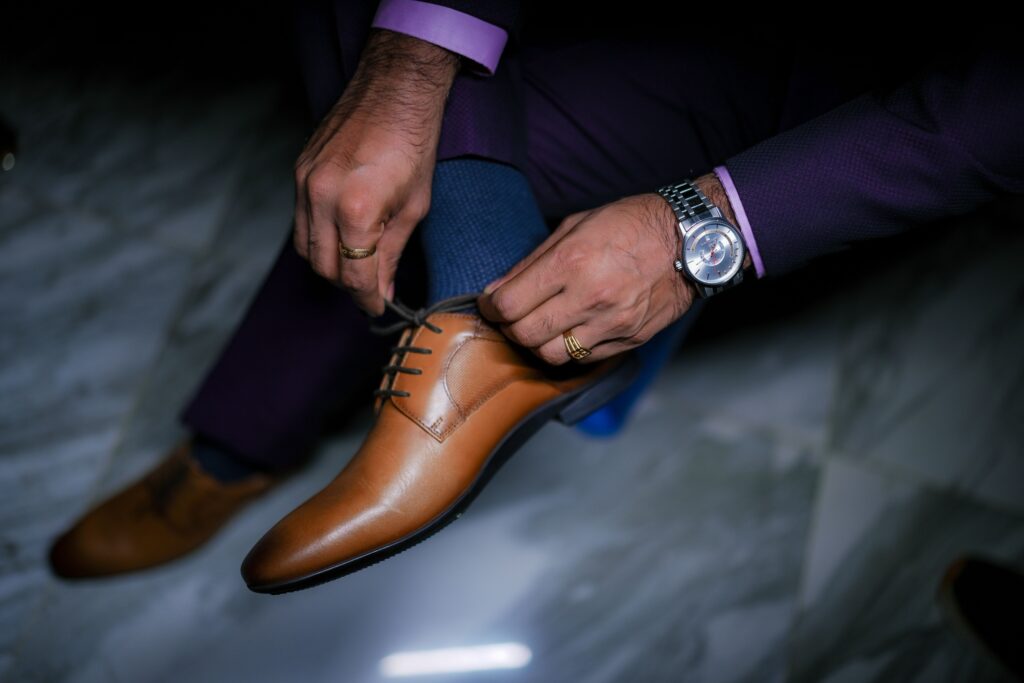
Shoes often decide whether an outfit looks finished. Clean and polish them the night before and choose a pair you can walk in confidently. Choose a tidy bag that holds your documents without looking bulky, iron or steam your outfit the evening before, and lay everything out, including shoes, belt and accessories. That routine removes morning stress and means you arrive calm rather than rushed.
What To Wear For A Video Interview

Video interviews have not lowered the standard; they have changed where attention falls. Dress as you would for an in-person interview, at least from the waist up, and ideally in full, because you may need to stand up or adjust your camera. Solid, mid-tone colours tend to look better on camera than busy patterns, very bright white or fine stripes, which can shimmer or wash out under laptop lighting. Keep jewellery simple so it does not catch the light or make noise, and check your background, lighting and camera angle in advance. A tidy, quiet setting with light on your face, rather than behind you, helps you look professional and makes it easier for the interviewer to focus on you.
Test your microphone, camera and connection before the call. Dressing properly also helps you sit up straighter and speak more confidently, even if only your upper half is visible.
Common Interview Attire Mistakes To Avoid
Several mistakes come up again and again, and most are easy to avoid with a little planning. Wearing jeans to an interview is the most debated example. Dark, smart jeans without rips or fading can be acceptable in some relaxed workplaces, but for most interviews they are a risk, and trousers or a skirt are the safer choice. Our separate guide asks are jeans business casual for everyday work, but interview day is not everyday work: the bar is higher, and an interviewer who has never met you has only your appearance and answers to judge. If you are unsure about jeans, do not wear them to the interview.
Other mistakes include wearing trainers, sportswear or overly casual fabrics, choosing clothes that are wrinkled, stained or in need of repair, and wearing strong fragrance or noisy jewellery. Revealing clothing, very short skirts, low necklines and sheer fabrics without a proper layer underneath can also distract, regardless of gender, and are best avoided for a first meeting. Finally, avoid a last-minute outfit you have never worn before. New shoes can pinch, a new jacket can feel unfamiliar, and an untested outfit adds anxiety on a day when you want to focus on the conversation. Wear something you have tried, that fits, and that you feel confident in.
The Day Before And The Morning Of The Interview
Preparation the day before makes interview morning far calmer. Try on the full outfit, including shoes and accessories, and check it in daylight. Iron or steam it, polish your shoes, prepare your bag, and check the journey and weather so you know whether you need a coat or umbrella. Arriving a few minutes early gives you time to compose yourself and check your appearance before you are called in.
On the morning, give yourself more time than you think you need. Shower, groom, dress carefully, and do a final check in a full-length mirror: collar straight, shirt tucked if it should be, no loose threads, shoes clean, bag tidy. Then stop adjusting. Once you have prepared well, the best thing your outfit can do is disappear into the background, leaving the interviewer free to remember your answers, your enthusiasm and your suitability for the role. That is the real purpose of good interview attire: not to impress with fashion, but to present you at your most capable and confident.
Conclusion
Good interview attire is appropriate, clean, well-fitting and a step smarter than the everyday dress code of the employer. Research the company, choose a dress code that matches the industry, build your outfit around trusted pieces that fit well, and finish with tidy grooming, polished shoes and a calm morning routine. Done well, your clothes will not be the thing the interviewer remembers. Your answers will be, and that is exactly how it should be.
Frequently Asked Questions
Should I always wear a suit to a job interview?
Not always. A suit is safest for corporate, legal, financial and senior roles, but smart business-casual attire is often appropriate for technology, creative and more relaxed workplaces. Research the employer and dress one step smarter than its everyday dress code.
Can I wear jeans to a job interview?
Usually it is safer not to. Dark, smart jeans may be accepted in some very relaxed workplaces, but tailored trousers or a skirt are a lower-risk choice for a first interview when you are unsure of the culture.
What should I wear for a video interview?
Dress as you would in person, in solid mid-tone colours, with simple jewellery and a tidy background. Avoid busy patterns and bright white, which can look poor on camera, and dress in full in case you need to stand up.
How far in advance should I choose my interview outfit?
At least a day before. Trying the full outfit on in advance lets you check the fit, comfort and appearance in daylight, and leaves time to iron, polish shoes or swap a piece that does not work.
Leave a Reply