
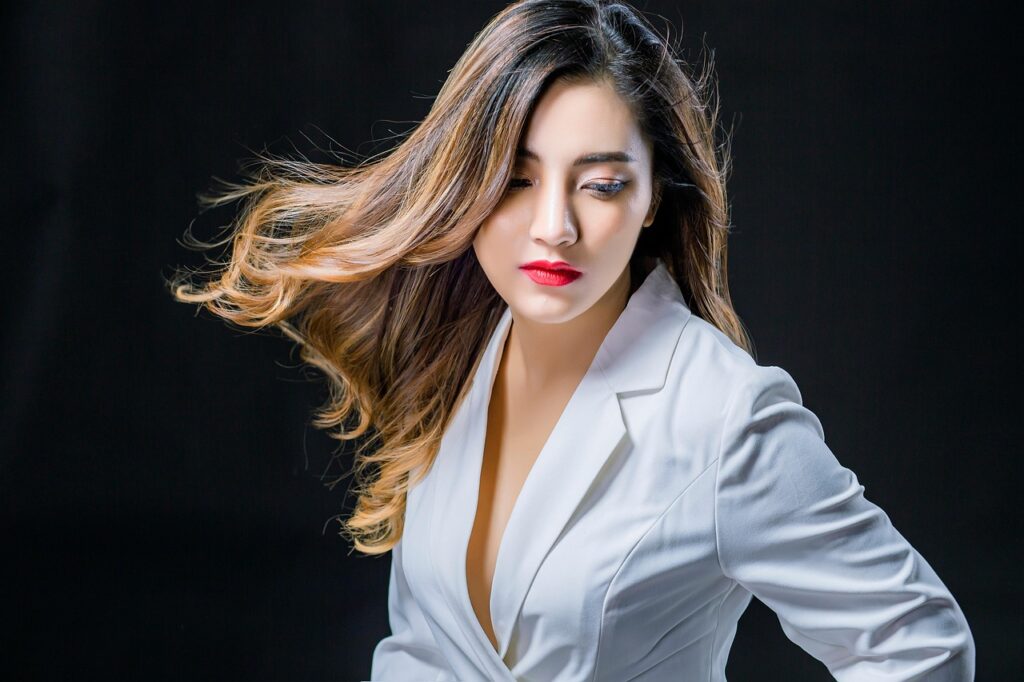
When it comes to ladies with suit styling, a suit is one of the most useful outfits a woman can own, because it is a complete look in itself: a jacket and trousers or a skirt, made from the same cloth, cut to work together. Worn well, a suit looks intentional and polished without needing much else. Worn badly, it can look stiff, oversized or uncomfortable, however much it cost. The difference is rarely the label. It is the fit, the fabric, the colour and the way the suit is styled for the occasion.
What Counts As A Ladies’ Suit?
A ladies’ suit is a set of garments made from the same cloth, at least a jacket with trousers or a skirt, tailored to give one crisp, polished outfit. That definition is useful because it separates a true suit from a blazer worn with unrelated trousers. When the jacket and the lower half are made from the same fabric, the outfit reads as a single, deliberate look, even if the colour is bold or the cut is relaxed. The main forms are the trouser suit, the skirt suit and the three-piece suit, which adds a waistcoat. A trouser suit is the most versatile form. A skirt suit is more formal in tone and is often chosen for interviews and formal workplaces.
How A Suit Should Fit A Woman
Fit is the single most important factor in how a suit looks. A mid-priced suit that has been tailored to fit will usually look better than an expensive suit worn straight off the rack, because the clean, polished appearance of a good suit is, in the end, fit made visible. Off-the-rack suits rarely fit perfectly, because they are cut to a standard pattern, and most women need at least a small alteration. Budgeting for that alteration from the start is a practical step, not an extra cost to be avoided.
Shoulders, The Most Important Fit Point
The shoulders are the most critical part of a jacket, because they are the hardest and most expensive part to alter. The shoulder seam should end where your natural shoulder ends, at the point where the shoulder curves down towards the upper arm. If the seam extends beyond your shoulder, the jacket will look oversized. If the seam sits inside your shoulder, the jacket will pull and feel tight. Check the shoulders first. A jacket that fits in the shoulders can usually be taken in at the waist by a tailor; one that does not is much harder to fix.
Bust, Waist And Button Stance
A tailored blazer should close smoothly over the bust without pulling into an X shape across the front. If the lapels bow outwards, or the button pulls, the jacket is too tight across the chest. Try a larger size and have the waist taken in, rather than forcing a smaller size to close. The waist of a women’s jacket is usually shaped with darts or seams, so that it follows the natural waist. The jacket should skim the waist, not cling to it. A single button at the waist is the most common position, and it creates a clean, open line below the waist.
Sleeve Length And Jacket Length
A classic suit sleeve should end at the wrist bone when your arms rest naturally at your sides, with a small amount of shirt cuff showing if you are wearing a shirt underneath. Sleeves that cover your hands look untidy, and sleeves that end well above the wrist look too short. Shortening sleeves is a straightforward alteration, so a sleeve that is slightly long is not a reason to reject a jacket that otherwise fits well. A classic jacket usually ends at or just below the hip, which works with both trousers and skirts.
Trousers And Skirts: Fit And Hem
Suit trousers should sit smoothly at the natural waist or hips without pinching, and they should skim the thighs without horizontal tension lines across the front. The hem should be set for the shoes you will actually wear with the suit. Wide-leg and straight-leg trousers usually look best with a minimal break, finishing just above the floor or skimming the top of the shoe, so the fabric falls straight without pooling. Slim trousers can be worn slightly shorter, showing the ankle or the shoe. For a skirt suit, fit through the hips and waist takes priority over total length, and a length ending at or just above the knee is the most versatile.
Choosing The Right Suit Style For Your Shape And Height
There is no single suit style that suits every woman, and the right suit is the one that follows your build and allows movement. If you are tall, a double-breasted jacket, a longer jacket or wide-leg trousers can work well. If you are shorter, a single-breasted jacket and a tapered or straight trouser can help to avoid being overwhelmed by fabric. An oversized suit can look modern, but it needs careful proportion: balance a looser jacket with a slimmer trouser, or a looser trouser with a more fitted jacket. Buying for the largest dimension, shoulders, bust or hips, and having the rest tailored is a practical approach.
Ladies’ Suits For Work
For work, a suit should be comfortable for a full day, appropriate for your workplace, and easy to wear with the rest of your wardrobe. In a formal workplace, a classic tailored suit in navy, charcoal, grey or black is the safest choice. These neutral colours are easy to match with shirts, blouses and shoes, and they read as professional without drawing attention to the outfit itself. A white or light-coloured shirt is the classic partner, but a fine-knit top or a silk blouse can also work. Comfort matters as much as appearance at work. A suit that is too tight will restrict you when you sit at a desk, and a suit that needs constant adjustment does not fit well enough. For video calls, the top half of the suit matters most. Our guide to video conference tips covers how clothing, colour and lighting affect how you appear on camera.

Ladies’ Suits For Weddings And Formal Occasions
A suit can be an excellent choice for a wedding guest, a formal dinner or a special occasion, especially if you prefer tailoring to dresses or if you want an outfit you can wear again. The key difference from a work suit is the fabric, colour and styling. For a wedding, a suit in a soft colour, a pastel shade or a light neutral can look celebratory without competing with the bride. Ivory and white are best avoided as a wedding guest, out of respect for the bride, and very dark colours such as black can look too sombre for a daytime wedding unless the dress code calls for it. A suit with a satin lapel, a silk blouse or a delicate camisole underneath can lift a tailored outfit into occasion wear. For an evening occasion, a tuxedo-style suit, sometimes called Le Smoking after the Yves Saint Laurent design introduced in 1966, is a classic choice, with a sharp, tailored jacket and sleek trousers. Accessories make the difference between a work suit and an occasion suit. A statement earring, a silk scarf or a bold belt can change the feel of the same suit. Keep the number of accessories small.

Colours, Fabrics And Patterns For Women’s Suits
Neutral shades, navy, grey, charcoal, black and stone, are the easiest to wear and combine, because they work with most shirts, tops and shoes. Navy is often recommended as a first suit colour, because it is softer than black, works in both formal and relaxed settings, and pairs well with white, cream and pastels. Black is the most formal colour, and a good choice for evening wear, but it can look harsh in bright daylight. A suit in a soft pastel, a muted green, a warm brown or a deep burgundy can look fresh and modern. Fabric affects how a suit drapes and how warm or cool it feels. Lightweight wool is popular for its shape retention and all-season wear. Flannel is softer and better for cooler weather, while cotton twill offers a relaxed look. Linen is cool and breathable, but it creases easily. A fine pinstripe is subtle and elongates the body, and it is a classic work pattern. If you choose a patterned suit, keep the top underneath and the accessories simple.

Accessories, Shoes And Bags With A Suit
Accessories should support the suit, not compete with it. A belt can define the waist if the jacket is worn open, but it is usually unnecessary if the jacket is buttoned, because the tailoring already shapes the waist. A structured bag suits a tailored outfit better than a soft, unstructured bag. Jewellery should be chosen with the neckline in mind: a delicate necklace works with an open neckline, while statement earrings can add interest to a high-necked top. Court shoes, with a low or mid heel, are the classic choice for a work suit, and they work with both trousers and skirts. Loafers can be a smart, comfortable alternative, while ankle boots can work in autumn and winter. Choose shoes that you can walk in comfortably, and have the trousers hemmed for the shoes you will wear most often. For more ideas on how a tailored layer can change an outfit, see our guide to the Ike jacket, and for occasion dressing, see our guide to what to wear to a spa day.
Common Mistakes To Avoid When Wearing A Suit
- Buying a jacket that does not fit in the shoulders, because shoulder fit is the hardest part to alter.
- Choosing a size that pulls across the bust, instead of buying for the largest measurement and tailoring the rest.
- Wearing a suit that is too tight to sit, walk or raise your arms in comfortably.
- Pairing a patterned suit with a busy top and bold accessories, so the outfit has no single focus.
- Forgetting to hem trousers for the shoes you will actually wear, so they pool or look too short.
- Dry-cleaning a suit after every wear, which can wear out the fabric and structure more quickly than necessary.
- Treating a suit as a single outfit, and never trying the jacket and trousers as separates.
The best suit is the one that fits your shoulders, follows your shape, suits the occasion, and feels comfortable enough to wear for a whole day. Get the fit, the fabric, the colour and the styling right, and a suit becomes one of the most reliable and versatile outfits in your wardrobe.
Frequently Asked Questions About Ladies With Suit
Can Women Wear A Suit To A Wedding As A Guest?
Yes. A suit can be an excellent choice for a wedding guest, especially in a soft, pastel or light neutral colour, with a silk blouse or camisole and elegant shoes. Avoid white or ivory out of respect for the bride, and check the dress code on the invitation.
What Should A Woman Wear Under A Suit Jacket?
A classic white shirt is the most formal choice, while a silk blouse, a fine-knit top, a camisole or a simple T-shirt can work depending on the occasion. For work, choose a top that is comfortable, opaque and easy to move in. For an evening occasion, a silk or lace top can lift the suit into occasion wear.
How Should A Women’s Suit Jacket Fit?
The shoulder seam should end at your natural shoulder, the jacket should close smoothly over the bust without pulling, and the sleeves should end at the wrist bone. The waist should skim your natural waist without clinging, and the jacket should allow you to move your arms comfortably. Buy for the shoulders first, because they are the hardest part to alter, and have the waist and sleeves tailored if needed.
Leave a Reply