
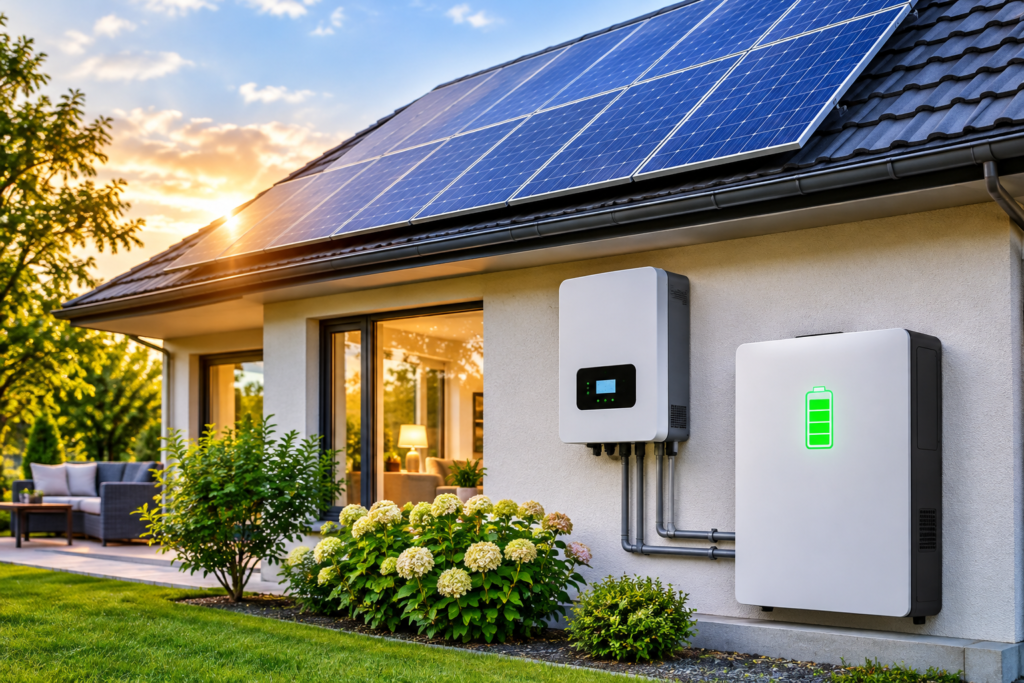
Residential energy planning increasingly considers how rooftop PV and batteries can work together. Residential Solar Storage is not simply a matter of adding a battery; it involves matching generation, household demand, backup expectations, and the home’s electrical configuration. Long-term performance is shaped by early decisions about layout, interfaces, and service. Good procurement balances present requirements with realistic future demand, without paying for capacity that has no defined use. The central design task is to connect the selected equipment with a clear site requirement.
Leave room for future changes
Household energy use can change after an EV charger, heat pump, extension, or new appliance is added. A design review should consider whether the inverter, distribution board, battery interface, and cable routes can accommodate likely future requirements. Planning for expansion does not mean installing every possible component at the outset; it means avoiding choices that make sensible upgrades unnecessarily difficult.
Check electrical protection and installation quality
Protection devices, grounding, isolation points, cable sizing, and enclosure ratings are important parts of a safe installation. Equipment compatibility must be confirmed using the manufacturer’s current documentation, and the work should comply with local electrical and building requirements. A neat array is only one visible part of a system whose reliability depends on the complete electrical design. For a closer look at the solution scope, review Residential Solar Storage and consider how its documented functions fit the site layout, electrical interfaces, and operating plan.
Make monitoring part of normal ownership
Digital monitoring helps homeowners and installers understand whether the system is producing as expected and whether an individual component needs attention. Useful information includes daily generation, household consumption, battery state of charge, grid import, and alerts. The platform should make these readings understandable rather than requiring the owner to interpret raw electrical data.
Begin with the household load profile
A useful residential design starts with a record of how electricity is used throughout the day. Evening cooking, air conditioning, water heating, and vehicle charging can create very different demand patterns from a home that is empty during working hours. Reviewing seasonal bills and major appliances helps the installer estimate how much generation can be used directly and whether storage is likely to add practical value. Performance should always be assessed against the actual installation conditions and the complete system boundary.
Prepare a useful handover package
At commissioning, the owner should receive the as-built electrical diagram, equipment list, warranty information, shutdown and restart instructions, and contact details for service. Monitoring access should be configured and tested. A clear handover makes routine operation easier and gives future installers the information they need if the property is modified or the system is expanded. A project specification for Residential Solar Storage should identify the applicable configuration, installation limits, commissioning checks, and service responsibilities.
Use evidence rather than headline figures
Published ratings are useful starting points, but they describe performance under defined test conditions. A project team should confirm the load, temperature, operating mode, measurement boundary, and configuration behind any important figure. Site-specific modeling and commissioning records are needed before a performance claim is treated as a project outcome.
Leave a Reply