
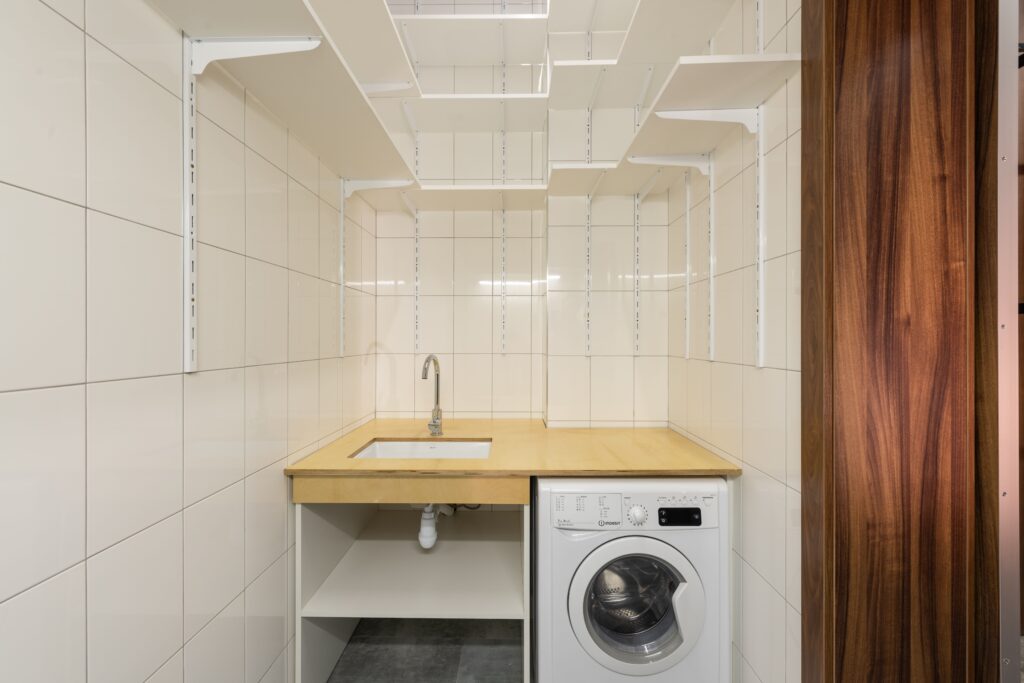
A small utility room can still work brilliantly, provided every inch has a job to do. The secret is rarely a bigger room or a bigger budget. It is a clear layout, storage that uses the full height of the walls, and a routine that keeps dirty laundry, clean laundry and cleaning products in their own places. With a few well-chosen changes, even a cupboard-sized space can handle washing, drying, ironing and everyday household jobs without turning into a dumping ground.
This guide brings together practical small utility room ideas for UK homes, from single-wall layouts and stacked appliances to fold-away drying and safer chemical storage. None of them requires knocking down walls, and most can be tackled one weekend at a time.
Start With The Layout, Not The Shopping List
Before buying baskets, shelves or a new dryer, look at how you actually move through the room. In a narrow space, a single-wall run usually works best: washing machine, sink and worktop in one straight line, with tall storage at one end. An L-shaped layout can work if a second wall has room for a sink or a tall cupboard without blocking the door. A galley layout, with runs on both sides, only works when there is enough space in the middle for doors and drawers to open and for someone to pass with a full basket.
Think in terms of workflow rather than furniture. Dirty laundry comes in, gets washed, gets dried, gets folded and goes away again. If clean washing has to cross the dirty-laundry pile every time, the room will always feel chaotic. Keep the machine close to the water supply and waste route where practical, put laundry products beside it, and place the folding surface nearby so the journey from washer to basket is short and simple.
Measure everything before you order anything. Leave room for appliance doors to open fully, for the washing machine to be pulled out for servicing, and for a replacement machine that may be slightly larger than the current one. Building every opening to one exact model can cause problems later. For a fuller overview of layouts, see this utility room ideas guide on single-wall, L-shaped and galley layouts.
Go Vertical: Use The Walls From Floor To Ceiling
When floor space is limited, the walls are your greatest asset. Floor-to-ceiling cabinetry or shelving above the washing machine turns wasted head-height space into useful storage. Keep daily items low and easy to reach, and move seasonal supplies, spare cleaning products and bulk buys to the highest shelves.
Open shelving works well for items you grab every day, but too much open storage can look cluttered. A mix usually works best: closed cupboards for the visual calm, open shelves for baskets and everyday essentials. Uniform baskets or labelled boxes on open shelves hide packaging and make the room feel considered rather than crowded, but leave a little breathing room on each shelf so it does not look crammed.
Do not forget the smaller vertical tricks either. A peg rail or sturdy hooks can hold an ironing board, dustpan and brush, aprons and bags off the floor, and a slim rolling cart beside the machine can slide into a gap that would otherwise be wasted.
Stack, Hide And Fold Away To Free The Floor
Stacking a tumble dryer on top of a washing machine, using a manufacturer-approved stacking kit, frees a whole footprint for a tall broom cupboard or a laundry hamper. It is one of the most effective small utility room ideas, but it must be done safely: never place one machine on top of another without the specified fixing system, and check that you can still reach the controls comfortably.
Concealment helps just as much as stacking. A utility cupboard with bi-fold or pocket doors can hide a stacked washer and dryer in a kitchen or hallway, so the room returns to its main purpose the moment the doors close. Curtains on a simple track can do a similar job at low cost, hiding appliances, baskets or pet beds at lower level while keeping everything easy to reach.
Fold-away equipment is the other floor-saver. A wall-mounted ironing board, a fold-down drying rack and a retractable washing line all do their job when needed and disappear afterwards. The aim is simple: nothing bulky should sit in the middle of the floor when it is not being used.
Zone The Room By Task, Not By Appearance
A tidy utility room is really a set of small zones, each with a clear purpose. Sorting by task makes it far easier to keep the room working than sorting by how things look. A single shelf, basket or cupboard can become its own zone if it has a clear job.
- Washing zone: the machine, detergent, stain remover and a small tray for the products you use most often. Bulk refills can live higher up.
- Drying and folding zone: a worktop over front-loading machines, a fold-away rack or a ceiling airer, and space for a clean basket.
- Cleaning zone: cloths, sprays and brushes grouped by task, with hazardous chemicals on a high, closed shelf, ideally with a child lock if children or pets are in the house.
- Odds and ends zone: tall space for the mop, vacuum cleaner, ironing board and step stool, so awkward items are not leaning against the washer.
Labelling helps, but only where it genuinely simplifies the routine. Decanting like products into clear, labelled containers makes it easy to see what you have at a glance and avoids buying duplicates. A short stock list taped inside a cupboard door can do the same job for very little effort.
For more ideas on making a small entrance and storage work together, see our guide to hallway decor, which covers the same principle of keeping a tight space welcoming rather than cluttered.
Dry Laundry Without Letting It Take Over
Drying is where many small utility rooms fall apart. A freestanding airer left up permanently eats floor space and makes the room hard to use. A retractable wall-mounted line, a fold-down concertina rack or a ceiling-mounted pulley airer each hold a full load when needed and fold flat or wind up out of the way afterwards. A pulley airer has an extra advantage: warm air rising in the room helps clothes dry, and it keeps laundry overhead rather than underfoot.
If you use a tumble dryer, think about where its heat and moisture go. Good ventilation matters in any small utility room, and it matters even more in a room full of damp washing. A room that stays damp will smell musty and can encourage mould, so keep air moving, wipe up spills promptly and do not dry load after load in a sealed room with no airflow.
It also helps to set a simple rule: laundry gets folded and put away the same day it dries, where possible. Clean washing left in a basket becomes a second pile, and a second pile soon becomes the room itself. More utility room organisation ideas for small spaces cover the same vertical-storage and zoning principles in detail.
Light, Colour And Flooring Make A Small Room Feel Bigger
Practical storage does most of the work, but light and colour finish the job. Light-coloured cabinetry, pale walls and a good ceiling light make a small room feel brighter and less cramped. If there is a window, keep the area around it clear so daylight can do its work, and place a drying rack nearby rather than blocking the light with a tall cupboard.
Keep the floor as clear as possible. Shoes, bags and parcels creep into utility rooms near the back door, but every item on the floor makes the room harder to clean. A single hook row for coats and bags, or a small basket for shoes, keeps the habit contained.
Durable, easy-clean flooring is worth prioritising over a fashionable finish. The floor will see water, detergent drips and muddy shoes, so choose something that can be mopped quickly and will not be ruined by the occasional spill. The same practical approach applies elsewhere in the home: our guide on how to accessorize a kitchen shows how practical choices can still look good.
Safety, Ventilation And The Practical Checks People Skip
A small utility room packs water, electricity and chemicals into a tight space, so a few checks are worth making before any redesign. Make sure washing machine hoses are in good condition and not kinked, that electrical sockets are not overloaded, and that cleaning products are stored away from food, children and pets. Never mix cleaning chemicals, and keep hazardous products in their original containers or in clearly labelled decants, never in food or drink bottles.
Ventilation deserves the same attention. If the room has an extractor fan or a vent, keep it clear and use it when drying clothes. If there is no ventilation at all, opening a door or window while the room is in use is better than leaving damp air trapped inside. For a wider look at practical home improvements that reduce waste and improve how a home runs, our guide to building a greener home one upgrade at a time covers ventilation and efficiency in context.
Finally, think about noise. Anti-vibration pads, a level machine and a door that closes properly all help, and a utility cupboard with doors can muffle sound as well as hide clutter.
A Simple Weekend Plan For A Tidy Utility Room
If the room feels overwhelming, do not try to fix everything at once. Work through it in order, and stop when each stage is done.
- Empty the room completely, clean it, and throw away empty bottles and products you no longer use.
- Sort what remains into washing, drying, cleaning and odds-and-ends groups.
- Measure the walls and the gaps beside and above the appliances.
- Fit one vertical solution first, such as shelving above the machine or a tall cupboard, before buying smaller organisers.
- Give every group a home, label only what needs labelling, and put daily items at arm height.
- Choose one fold-away drying solution and remove the freestanding airer from the floor.
That sequence alone transforms most small utility rooms, because it removes clutter before adding storage.
Conclusion
A small utility room does not need to be a compromise. Start with a layout that follows the laundry workflow, use the full height of the walls, stack or hide appliances where it is safe to do so, and give drying a fold-away home. Zone the room by task, keep chemicals safe and high, and let light and a clear floor do the rest.
Frequently Asked Questions
How Do I Organise A Really Small Utility Room?
Go vertical first. Floor-to-ceiling shelving or tall cabinets use the wall space above head height, slim pull-out storage fits narrow gaps beside appliances, and daily items stay low while rarely used items go high. Fold-away drying racks and ironing boards keep the floor clear.
What Is The Best Layout For A Narrow Utility Room?
A single-wall run is usually the most efficient choice for a narrow room, with appliances, sink and worktop in one line and tall storage at one end. An L-shaped layout works if a second wall can take a sink or tall cupboard without blocking the door or the workflow.
Can I Stack A Dryer On Top Of A Washing Machine?
Yes, provided you use a manufacturer-approved stacking kit and the arrangement is stable and safe to use. Never stack machines without the specified fixing system, and check that the dryer controls remain easy and safe to reach.
How Can I Store Cleaning Products Safely In A Small Room?
Group like products together in clear, labelled containers, keep hazardous chemicals on a high, closed shelf, and fit a child lock if young children or pets use the house. Keep chemicals away from food and never store them in food or drink containers.
Leave a Reply