
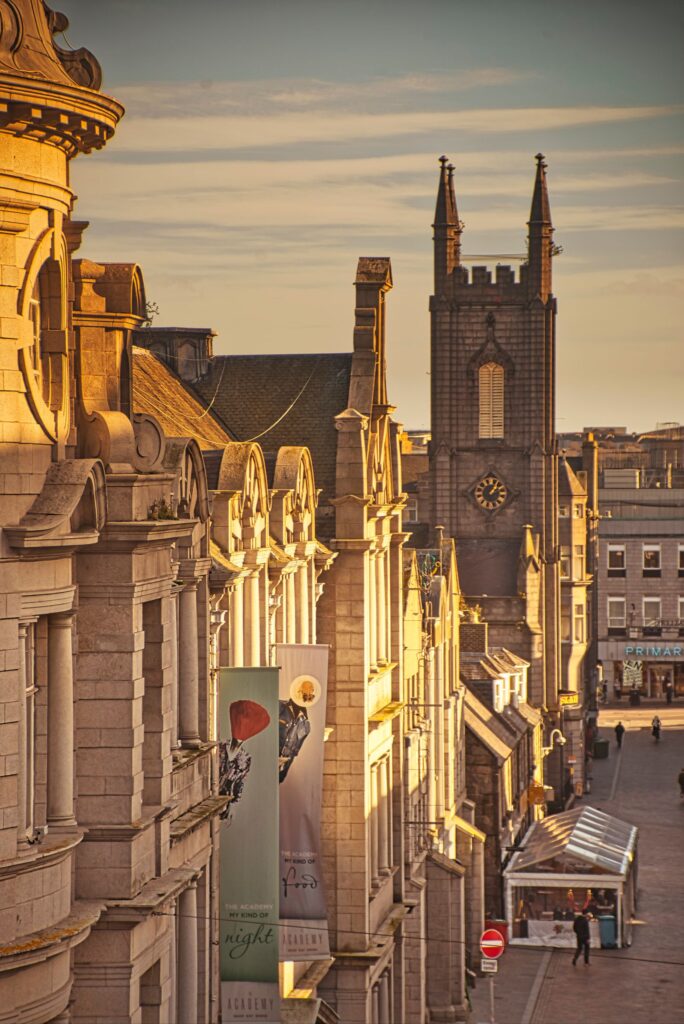
Aberdeen often surprises first-time visitors. Scotland’s third-largest city is known as the Granite City because so many of its buildings are made from sparkling grey granite, and it sits where the Rivers Dee and Don meet the North Sea. The result is a place that mixes grand Victorian architecture, a working harbour, quiet historic streets and a long sandy beach, all within a compact area that is easy to explore on foot. Whether you have a weekend or just a single day, the things to do in Aberdeen cover museums, coastal walks, old villages, green parks and some of the best dolphin watching in the UK.
Getting Your Bearings In The Granite City
Aberdeen city centre is built around Union Street, a long shopping street that runs from the Castlegate in the east towards the west end. Most of the main sights sit within a short walk of it, so a good plan is to start in the centre, then head north to Old Aberdeen or south to the harbour and the beach. The city is under three hours away by train from both Edinburgh and Glasgow, which makes it a realistic weekend trip from either city. Travellers combining Aberdeen with the Scottish capital can also read our Edinburgh restaurant guide.
The granite is the first thing most visitors notice. On a sunny day the stone glitters in the light, and on a grey day it gives the city a serious, handsome character that is quite different from anywhere else in Scotland. The Castlegate, at the eastern end of Union Street, is a good place to start, with the Mercat Cross nearby and the harbour only a short walk downhill.
Aberdeen Art Gallery And The Maritime Museum
Two of the city’s best attractions are free museums, and they sit close together in the centre. Aberdeen Art Gallery, on Schoolhill, first opened in 1885 and was transformed by a major renovation between 2015 and 2019. Inside, the collection covers around 700 years of creativity, from Scottish paintings and decorative art to works by French Impressionists and Pre-Raphaelites, including pieces by the Aberdonian artist William Dyce. Check the gallery’s own website before visiting for current opening times and exhibitions.
A short walk away on Shiprow, the Aberdeen Maritime Museum tells the story of the city’s long relationship with the sea. Fishing, shipbuilding and the North Sea oil and gas industry have all shaped Aberdeen, and the museum covers them across four floors of hands-on exhibits. The highlight for many visitors is a detailed model of an oil platform that stands around 30 feet high and shows how an offshore rig works. The top floor has wide windows with panoramic views over the harbour. Admission is free.
Between the two museums, stop at Marischal College on Broad Street. This vast granite building is one of the most photographed sights in the city, and it now serves as the home of Aberdeen City Council. Nearby, Provost Skene’s House is a small museum of local history with painted ceilings.
Old Aberdeen And King’s College
Old Aberdeen feels like a different place from the city centre, and it is one of the most rewarding areas to explore on foot. This historic quarter, north of the centre near the mouth of the River Don, has been a centre of learning and church life since the Middle Ages. Its cobbled streets are lined with granite cottages, and the atmosphere is quiet and unhurried.
The heart of Old Aberdeen is King’s College, part of the University of Aberdeen, which was founded in 1495. The college chapel, with its distinctive crown tower, is one of the most recognisable buildings in Scotland. Close by stands St Machar’s Cathedral, a granite church at the centre of the old town. Seaton Park, beside the River Don, is a green riverside space where otters have been spotted on the banks of the river.
The Brig o’ Balgownie, a handsome old stone bridge over the River Don, is a short walk from the cathedral area, and the riverside path there is one of the prettiest corners of the city.
Footdee (Fittie) And The Harbour
Footdee, known to locals as Fittie, is a small historic fishing village at the east end of Aberdeen Harbour, where the River Dee meets the sea. It was laid out in 1809, and its low granite cottages and sheds are arranged around small squares, many of them painted in bright colours and decorated with flowers, driftwood and murals by the artists and creative people who live there now. It is a residential area first and a visitor attraction second, so walk quietly, respect residents’ privacy and keep to the public lanes.
Footdee is also the best place to feel Aberdeen’s working harbour. The Port of Aberdeen is one of Britain’s busiest harbours, and from the village you can watch fishing boats, ferries and offshore supply vessels moving in and out. From Footdee it is a short walk to the beach, and the coastal path south leads towards Torry Battery and Greyhope Bay.
Aberdeen Beach And Dolphin Watching At Greyhope Bay

Many visitors are surprised to learn that Aberdeen has a beach at all, yet Aberdeen Beach is a long stretch of golden sand running for around two to three miles from Footdee at the harbour to the mouth of the River Don near Old Aberdeen. The southern end, near the city, has the most facilities, including cafes, a cinema, a leisure centre and Codona’s amusement park, while the northern end is quieter, backed by dunes and the King’s Links golf course, and ends at the Donmouth nature reserve. For more British coastal inspiration, see our Cornwall guide.
For wildlife, head south across the harbour to Torry Battery and Greyhope Bay. The battery is a 19th-century coastal defence at the entrance to the harbour, and the Greyhope Bay Centre there has one of the best chances of spotting bottlenose dolphins anywhere in Scotland. The dolphins are seen feeding and playing at the harbour entrance on most days throughout the year, and the resident population in the north-east of Scotland numbers around 190 animals. Binoculars are available at the centre, and the cafe there is a good place to wait and watch.
Parks And Gardens: Duthie Park And Union Terrace Gardens
Aberdeen has more green space than many visitors expect. Duthie Park, in the south of the city near the River Dee, was gifted to Aberdeen in 1883 and remains a favourite for families and walkers. It is also the starting point of the Deeside Way, a 41-mile walking and cycling route into Royal Deeside.
Inside Duthie Park stands the Winter Gardens, one of the largest indoor gardens in Europe, filled with exotic plants, cacti and orchids. The gardens are free to enter, and they are especially popular with families.
Back in the city centre, the redeveloped Union Terrace Gardens offer lawns, planting, seating and a cafe beside Union Street, a natural resting point between the art gallery and the shops.
Where To Eat In Aberdeen
Aberdeen’s food scene reflects its position as a port city and a farming region. Fresh fish and seafood are a natural strength, and the city has everything from traditional fish and chip shops to modern restaurants and independent cafes.
Look out for the buttery, also called an Aberdeen rowie, a salty, flaky bread roll that is the city’s best-known local speciality. It is sold in bakeries across the city and is best eaten warm. Scottish dishes such as haggis, and locally made ice cream from Mackie’s of Scotland, are also easy to find.
Day Trips From Aberdeen: Dunnottar Castle And Royal Deeside

Aberdeen makes a good base for exploring Aberdeenshire, and the most famous day trip is Dunnottar Castle. The ruined castle stands on a rocky headland above the sea, about two miles south of the fishing town of Stonehaven and roughly 15 to 18 miles south of Aberdeen, around a 25 to 30 minute drive. It played a part in the country’s history as the hiding place of the Honours of Scotland, the Scottish crown jewels, in the 17th century. The coastal path from Stonehaven to the castle takes around 45 minutes and is one of the finest short walks in the area. Check the castle’s own website for current opening times before you go.
Stonehaven itself is worth an hour or two, with its picturesque harbour, shops and cafes. In the other direction, Royal Deeside stretches west from Aberdeen along the River Dee towards Balmoral, with castles, villages and woodland walks.
Practical Tips For Visiting Aberdeen
A little planning makes a visit to Aberdeen much smoother. The city centre is compact and walkable, and most attractions are close together, so comfortable shoes matter more than transport. If you are visiting in summer, you will have long daylight hours for walking and sightseeing, while winter days are short and the weather can be cold and windy, so pack layers and a waterproof jacket at any time of year.
Several of the best museums and parks are free, including the art gallery, the maritime museum, the Winter Gardens, the beach and the parks, which leaves more of your budget for food, transport and day trips. Check the official website of any attraction before travelling, because opening times change. VisitAberdeenshire, the city’s official visitor site, lists what is on during your visit, and VisitScotland has wider information about travelling around Scotland. For more UK day trip ideas, see our days out in the UK guide.
Conclusion
The granite streets, the free museums, the old fishing village of Footdee, the long beach and the dolphins at Greyhope Bay all show different sides of a city shaped by the sea. Add Old Aberdeen’s cobbles, the green calm of Duthie Park and an easy day trip to Dunnottar Castle, and Aberdeen makes a rewarding short break.
Frequently Asked Questions
How Many Days Do You Need In Aberdeen?
Two days is enough to see the main sights at a relaxed pace, including the city centre museums, Old Aberdeen, Footdee, the beach and Greyhope Bay.
Is Aberdeen Worth Visiting?
Yes, Aberdeen is worth visiting for its granite architecture, free museums, historic Old Aberdeen, the fishing village of Footdee, a long sandy beach and dolphin watching at Greyhope Bay.
What Is Aberdeen Most Famous For?
Aberdeen is most famous as the Granite City, for its grey granite buildings, its working harbour and its role in the North Sea oil and gas industry. It is also known for its long beach, its university heritage in Old Aberdeen and its nearby castles, including Dunnottar Castle.
Can You See Dolphins In Aberdeen?
Yes, bottlenose dolphins can often be seen from the Greyhope Bay Centre at Torry Battery, at the entrance to Aberdeen Harbour. They are spotted on most days throughout the year, though sightings are never guaranteed, so allow time and bring patience.
What Is The Best Time To Visit Aberdeen?
Late spring and summer bring the longest days and the mildest weather, which suits walking, the beach and day trips. Aberdeen is a year-round city, and its museums, Winter Gardens and parks can be enjoyed in any season.
Leave a Reply