
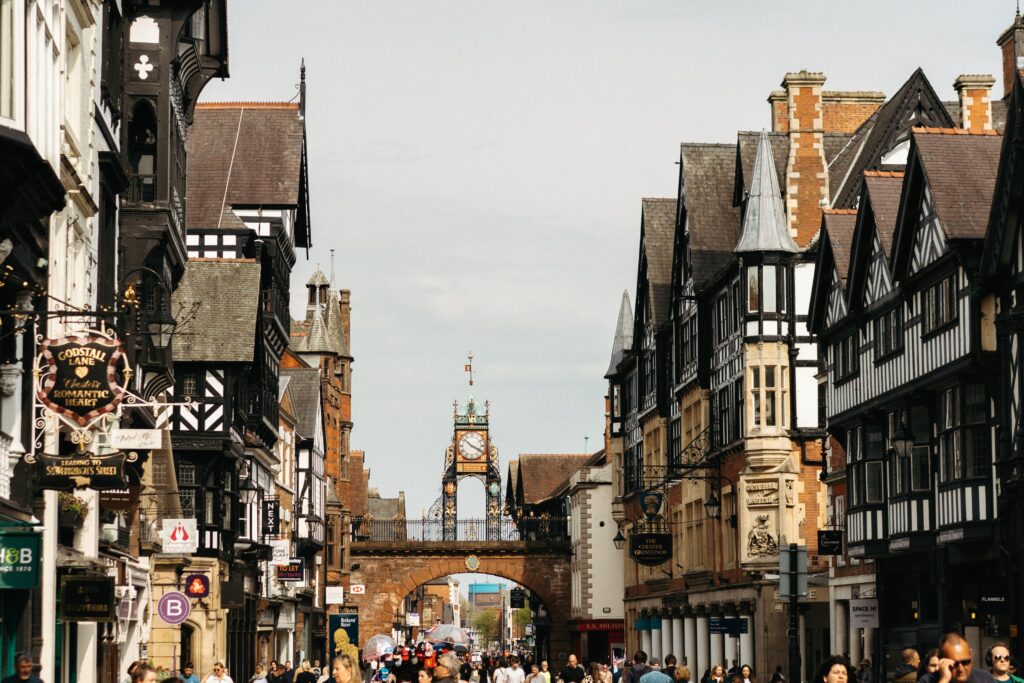
Chester is one of those English cities that rewards you the moment you arrive. Small enough to explore on foot, it is packed with almost two thousand years of history. Founded by the Romans as the fortress of Deva, the city still carries its past in plain sight: the most complete city walls in Britain, a Roman amphitheatre, medieval shopping galleries found nowhere else in the country, and a red sandstone cathedral that has stood at its heart for centuries. Add a riverside promenade, a famous racecourse and one of the best zoos in the UK, and you have a destination that suits a weekend break as well as a single day trip.
The best way to enjoy Chester is to slow down. Its centre is compact, so the main sights sit within a short walk of each other, and much of the pleasure comes from simply wandering: looking up at black-and-white timber-framed buildings, ducking into the covered galleries of the Rows, and stopping for coffee in a centuries-old street. This guide covers the essential things to do in Chester, with practical advice to help you plan your visit.
Walk The Chester City Walls
If you only do one thing in Chester, make it the city walls. They are the most complete Roman and medieval walls in Britain, running for about two miles in a full circuit around the historic centre. The walk takes around one to two hours at a leisurely pace with stops for photographs, and it is free at all times.
Start at the Eastgate, where the famous clock stands, and follow the walls clockwise. From the elevated walkway you get views over Chester Racecourse, the River Dee, the cathedral and the rooftops of the old city. Along the way you will pass King Charles Tower, the Water Tower and the Roman Gardens. The walls mix Roman foundations with later medieval rebuilding, so you are walking through layers of the city’s history. Wear comfortable shoes: the surface is uneven in places and there are steps at several gates. If you have limited mobility, shorter stretches still give you the flavour of the walk, for example the section between the Eastgate and the cathedral. If you enjoy historic walled cities, our Mostar, Bosnia city guide is another rewarding read.
Explore The Rows
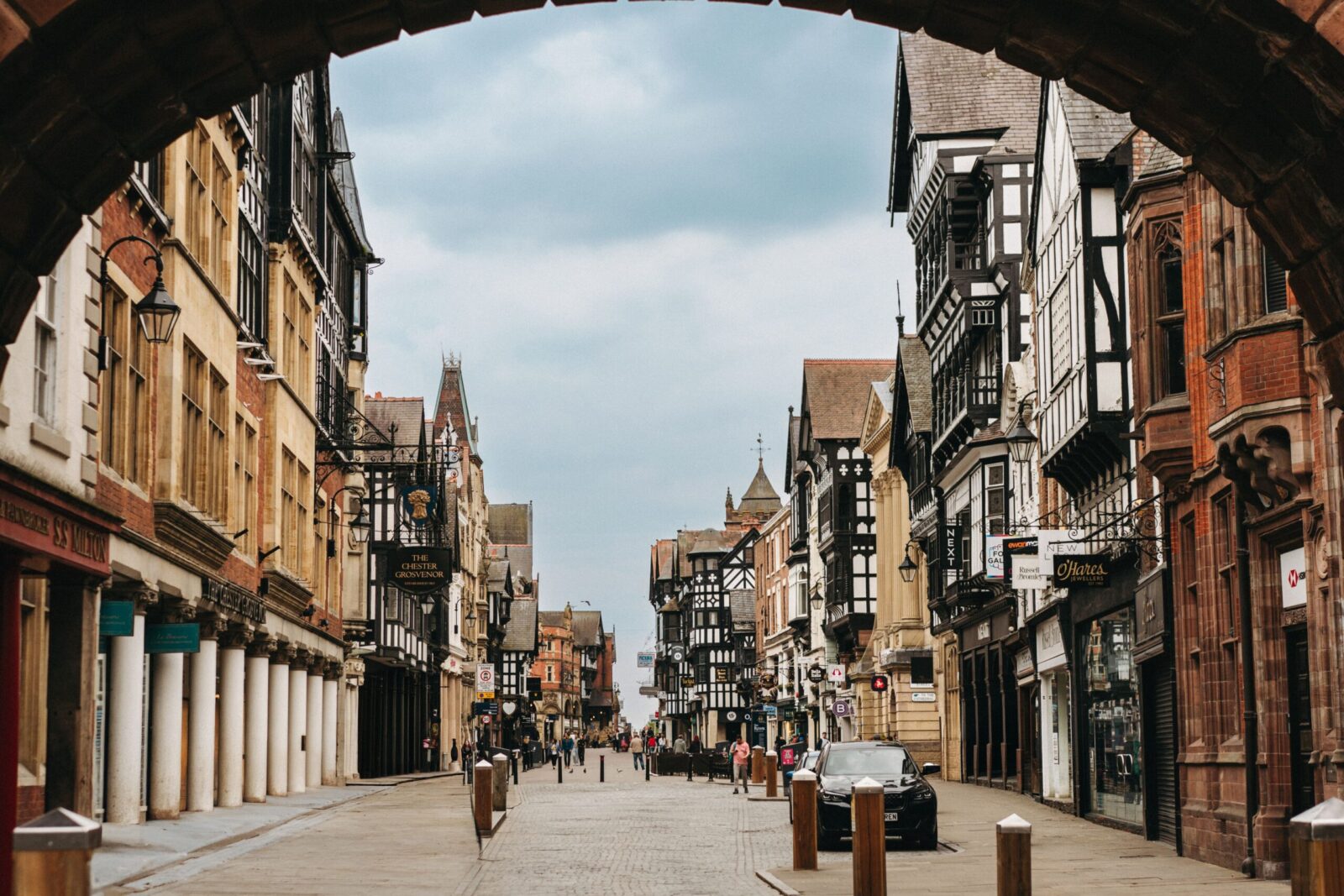
The Rows are Chester’s most unusual feature and the sight visitors remember longest. They are two-tiered medieval shopping galleries, with covered walkways running along the first floor of the main streets and shops at both street level and above. There is nothing quite like them anywhere else in Britain, and they run along parts of Eastgate Street, Watergate Street, Bridge Street and Northgate Street.
Walk along the upper level for the full experience: the timber-framed buildings, the overhanging upper floors and the shopfronts create a scene that feels closer to a film set than a modern high street. The buildings themselves are a mix of genuinely medieval structures and later black-and-white revival architecture, but the effect is the same either way. Down at street level you will find independent shops, cafes and boutiques, and the upper galleries hold more of the same. Look out for 48 Bridge Street, which is said to be home to the oldest shop front in England, dating back to the thirteenth century. The Rows are also a practical blessing on a wet day, since the covered walkways keep you dry while you browse.
See The Eastgate Clock
Standing on the Eastgate, part of the city walls, the Eastgate Clock is one of the most photographed clocks in England, often described as second only to Big Ben. It was built to celebrate Queen Victoria’s Diamond Jubilee in 1897, and its ornate ironwork and four faces have made it the city’s unofficial symbol.
Most visitors photograph it from the street below, at the junction of Eastgate Street and Foregate Street, but climb the steps to the walls to see it up close. It marks the traditional starting point for the wall walk and sits at the top of the city’s main shopping street, so you will pass it more than once. Early morning or late afternoon gives the best light and the fewest crowds.
Visit Chester Cathedral
Chester Cathedral is a magnificent red sandstone building at the centre of the city, and entry is free, though donations are welcome. It was founded as a Benedictine abbey in 1092, on the site of an earlier church, and became a cathedral in 1541 after Henry VIII closed the monasteries. Inside, the carved wooden choir stalls from the fourteenth century are among the finest in the country, and the cloisters, stained glass and peaceful gardens reward a slow visit.
If you are feeling energetic, the tower tour is worth booking. It climbs 216 steps and ends with panoramic views across the city, the surrounding countryside and, on a clear day, into Wales and across five counties. Tower tours are popular and places are limited, so check availability in advance and book ahead if you can. The cathedral also hosts concerts, exhibitions and events through the year, and the refectory cafe is a good place to rest between sights. As with any working place of worship, check opening arrangements before you go, since services and events can affect visiting times.
Discover The Roman Amphitheatre And Roman Gardens
Just outside the city walls, near St John’s Church, lie the remains of the largest Roman amphitheatre yet discovered in Britain. Built in the late first century AD and later enlarged, it once hosted gladiatorial contests and public spectacles. Only part of it has been excavated, with the rest lying beneath later buildings, but what you can see is still impressive, and it is completely free to visit.
Stand in the centre of the arena floor and it is easy to imagine the scale of the place in Roman times. Beside the amphitheatre, the Roman Gardens display fragments of Roman stonework, including columns and carved pieces found during excavations around the city, set out in a small landscaped garden. Together the two sites make a good half-hour stop, and they sit on the way between the walls and the river, so they fit naturally into a walking route. For more Roman history, the Grosvenor Museum in the city centre holds one of the best collections of Roman tombstones in Britain, many carved with images of the soldiers who served in the legion stationed here.
Stroll Along The River Dee And Grosvenor Park
When you need a break from history, head for the river. The Groves, the riverside promenade beside the River Dee, is one of the prettiest walks in Chester, with views across the water to the Welsh hills and the old stone bridge. In summer the promenade fills with walkers, ice cream sellers and people hiring rowing boats, while in quieter months it is a peaceful place for a slow stroll.
Beside the river sits Grosvenor Park, laid out in the 1860s and regarded as one of the finest Victorian parks in the country. It has lawns, flower beds, a miniature railway in summer and a small cafe, and it makes a natural picnic spot. River cruises run from the Groves for much of the year, offering a short trip along the Dee, and rowing boats are available to hire in the warmer months. If you are visiting with children, the combination of the park, the river and the nearby playground makes an easy, low-cost afternoon.
Step Inside The Grosvenor Museum
The Grosvenor Museum is easy to miss, but it deserves a place on any list of things to do in Chester. Run by the local council and free to enter, it covers the city’s Roman and medieval past with displays that put the amphitheatre, the walls and the Rows into context. The Roman gallery is the highlight, with tombstones, mosaics and everyday objects from the fortress of Deva, but there are also galleries on the city’s later history, natural history and art.
An hour is enough for a good look around, and the museum is centrally located on Grosvenor Street, a short walk from the cathedral. It is also a useful wet-weather option, since so much of Chester is best enjoyed outdoors. Check current opening days before you go, as opening hours can change with the season.
Spend A Day At Chester Zoo
A short drive or bus ride north of the city centre, Chester Zoo is one of the largest zoos in the UK and the most visited zoo in the country. It is a full-day attraction in its own right, so treat it as a separate trip from the historic centre rather than something to squeeze in after lunch.
The zoo is known for its large natural-style enclosures and conservation work, with animals from around the world and themed areas including a large island zone inspired by South East Asia. Weekends and school holidays are busy, so book tickets online in advance, check current prices on the zoo’s own website, and arrive early. Without a car, local buses run from the city centre to the zoo in around fifteen to twenty minutes.
Watch Racing At The Roodee
Chester Racecourse, known as the Roodee, sits just outside the city walls beside the River Dee, and it is Britain’s oldest racecourse still in use. Race meetings run from spring to autumn, and a day at the races is one of the liveliest things to do in Chester, with the city centre filling up on race days.
You do not need to be a racing expert to enjoy it. The atmosphere is part of the appeal, and many visitors come for the occasion as much as for the horses. Even outside race days, the Roodee is worth a look from the city walls, where you can see the full sweep of the course below. If you plan to attend a meeting, book in advance, as popular days sell out, and check the racecourse’s own website for dates and ticket details.
Planning Your Visit To Chester
A few practical tips will help you get the most from your trip. Chester is well connected by train, with direct services from London, Liverpool, Manchester and North Wales, and the station is a short walk from the city centre. If you are driving, the city centre has limited parking, so use one of the park and ride sites on the edge of the city and take the bus in.
The best time to visit depends on what you want. Spring and summer bring the longest days and river cruises, while autumn is quieter. Chester is also known for its Christmas market, which draws large crowds in late November and December, so book accommodation early if you are visiting then. One full day covers the walls, the Rows, the cathedral and the amphitheatre, while two days let you add the zoo and the museum. Pack for changeable weather: the Rows and the cathedral give you cover when it rains, but the wall walk is fully exposed. For a detailed one- to two-day itinerary, the Team Thomas Travels Chester guide is a useful companion, and the Cottages.com Chester guide has more ideas for exploring the city and the surrounding area.
- Getting there: Direct trains run from London, Liverpool, Manchester and North Wales, and the station is a short walk from the centre.
- Getting around: The historic centre is compact and best explored on foot; use park and ride if you are driving.
- How long to stay: One day covers the main sights; two days allow a relaxed pace plus the zoo.
- Best time to go: Spring and summer for the river and the zoo, autumn for quieter streets, and late November to December for the Christmas market.
Chester packs an unusual amount into a small space. In a single day you can walk walls that date back to the Romans, shop in medieval galleries found nowhere else in Britain, and finish with a walk along the River Dee. It is that combination, history you can touch and a city that still feels lived in, that keeps visitors coming back. Plan a day, wear good shoes, and give yourself time to wander. If you are planning a longer trip, our Rodanthe travel guide and Chiang Rai, Thailand guide show how the same slow-travel approach works far beyond Chester.
Frequently Asked Questions
How Long Do You Need In Chester?
One full day is enough to walk the city walls, explore the Rows, visit the cathedral and see the Roman amphitheatre. Two days let you add Chester Zoo, the Grosvenor Museum and a slower afternoon along the River Dee.
Is Chester Worth Visiting For A Day Trip?
Yes. Chester’s historic centre is compact, so the main sights sit within a short walk of each other, and the city works well as a day trip by train from Liverpool, Manchester or North Wales.
What Is Chester Most Famous For?
Chester is famous for its Roman and medieval city walls, the unique two-tier medieval Rows, the Eastgate Clock, Chester Cathedral, the Roman amphitheatre and Britain’s oldest racecourse, the Roodee.
Is Chester Cathedral Free To Visit?
Entry to Chester Cathedral is free, though donations are welcome. There is a charge for the tower tour, which climbs 216 steps for panoramic views.
Can You Walk The Full Circuit Of Chester City Walls?
Yes, the full circuit is about two miles and takes one to two hours at a leisurely pace. The walls are free to walk at all times, though the surface is uneven in places and there are steps at several gates.
Leave a Reply