
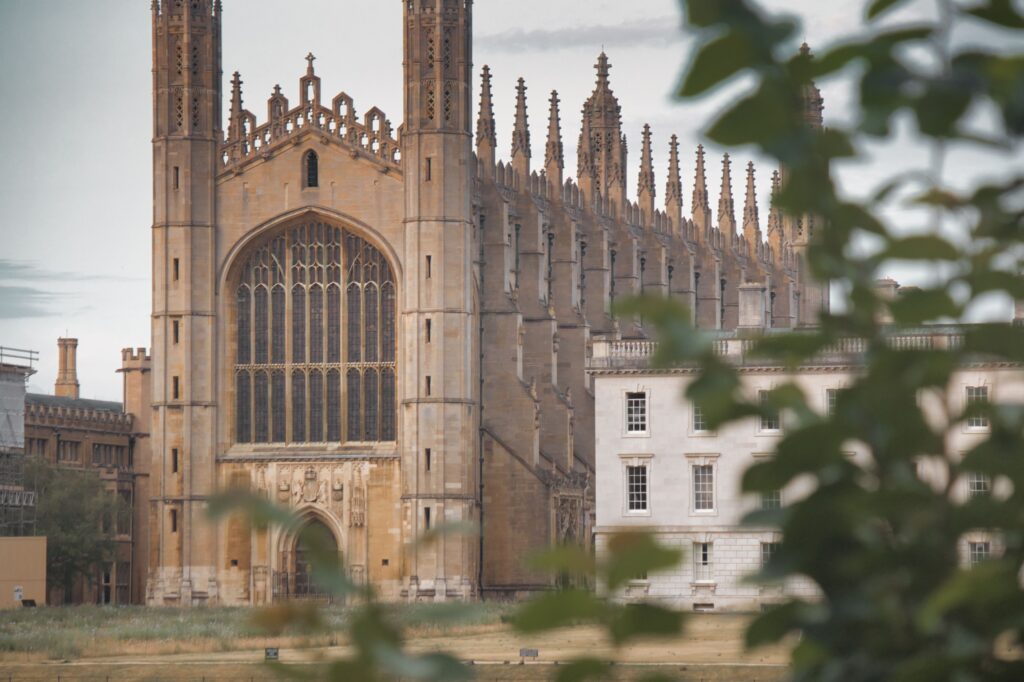
Cambridge is a university town you can see in a day and love for a lifetime. Thirty-one colleges line a slow river, punts glide under stone bridges, and some of the best small-city museums in England are free. The University of Cambridge was founded in 1209, and eight centuries of history are still visible in its chapels, courts, gardens and the green lawns of the Backs. Yet Cambridge is not a museum. Students cycle past on their way to lectures, the market square is busy every day, and the pubs are full of conversation.
Why Visit Cambridge
Cambridge works so well as a short break because everything is close together. The historic centre is compact and flat, which makes it easy to explore on foot or by bicycle, and the main sights sit within a short walk of each other. You can step inside a world-famous chapel in the morning, punt along the river after lunch, and spend the late afternoon in a free museum, all without once needing a bus or a taxi. The city is also one of the easiest day trips from London, with direct trains from King’s Cross taking around an hour and running roughly every fifteen to thirty minutes. Avoid the exam period, roughly April to June, when many colleges close to visitors.
Step Inside King’s College Chapel
King’s College Chapel is the single building most worth paying to enter in Cambridge. Built between 1446 and 1515, it is one of the greatest examples of late Gothic architecture in the world, and its fan-vaulted ceiling is the largest of its kind anywhere. The interior is astonishing: vast medieval stained glass, dark wooden choir stalls, and Rubens’ Adoration of the Magi behind the altar. The college itself was founded by King Henry VI in 1441, and the chapel was his great statement of ambition. There is an admission charge to visit the chapel outside services, and it sometimes closes for events, so check before you go. The better way to experience it, if your timing allows, is to attend Choral Evensong during term time. Services are free and open to everyone, and hearing the choir sing beneath that ceiling is one of the great experiences in English travel.
Go Punting On The River Cam
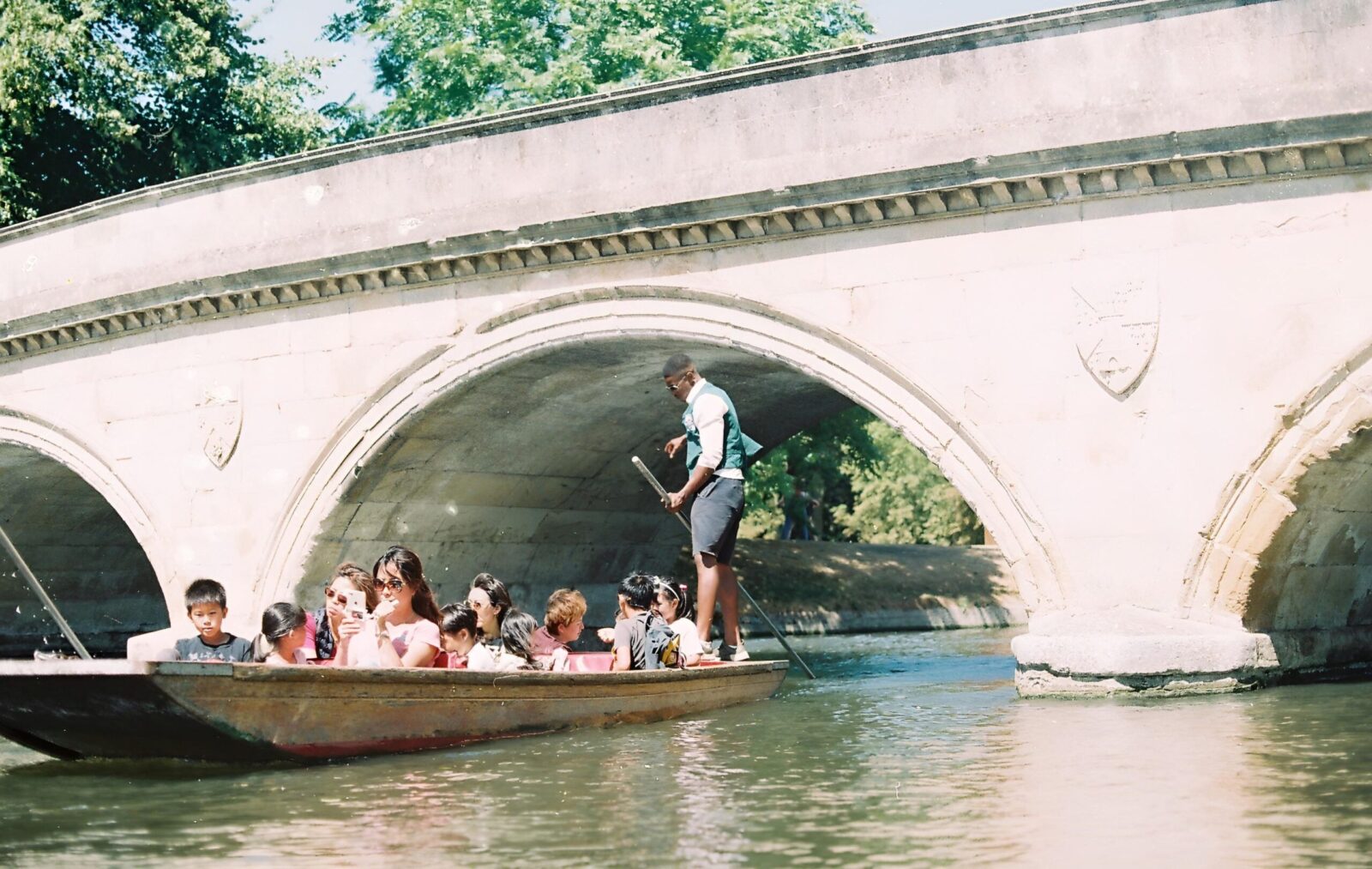
No trip to Cambridge is complete without a punt on the River Cam. A punt is a long, flat-bottomed boat pushed along with a pole that you plant on the riverbed, and gliding along the water past the colleges is one of the loveliest ways to spend an hour in England. The most famous stretch is the Backs, where the river runs behind several of the grandest colleges, including Queens’, King’s, Clare, Trinity and St John’s. From the water you will see the Mathematical Bridge at Queens’ College, the covered Bridge of Sighs at St John’s, and the great west front of King’s College Chapel rising above its lawn. There are two ways to go. A chauffeured punt tour, with a guide doing the hard work and telling stories about the colleges, takes around forty-five minutes and is the easiest option. Punts leave from several points along the river, including Quayside near Magdalene Bridge and the Mill Pond near Silver Street, and tours run all year round. You can also hire a punt and do it yourself, which is great fun but harder than it looks, and many first-timers end up spinning in circles or losing the pole. The river is busiest on summer weekends. Early morning or early evening is calmer, and the light is softer.
Walk The Backs And Explore The Colleges
The Backs are the lawns and gardens behind the riverside colleges, and they give the classic view of King’s College Chapel across the Cam. You can walk them for free along Queen’s Road, looking across the river at the college buildings and their gardens, and the view costs nothing. The colleges themselves are working communities, not museums, and each sets its own opening times. Many charge an entry fee, and access is often restricted during exams, roughly May to mid-June. The best way to see several colleges in a short time is from a punt, but on foot you can still enjoy a great deal. King’s Parade, the main street past King’s College, is the heart of the city, and the lanes around it hold bookshops, cafes and quiet courts. Trinity College, with its great court and the Wren Library, and St John’s College, with its Bridge of Sighs, are both worth visiting when they are open. If you enjoy exploring historic university cities, our guide to Lichfield, another English cathedral city, makes a good companion read.
Discover The Fitzwilliam Museum
The Fitzwilliam Museum is the university’s art and antiquities museum, and one of the finest museums in Britain outside London. Housed in a grand Neoclassical building on Trumpington Street, it holds a collection of more than half a million works of art and antiquities, from Egyptian coffins to masterpieces by Titian and Monet. You can move from ancient Egypt to Impressionist painting in a single afternoon. Entry is free, which makes it an easy choice on a wet afternoon or as a calm break between the busier sights. Opening days and hours vary, and several of the university museums close on Mondays, so check before you go. Allow at least an hour, and longer if you love art. For more ideas on slow, museum-rich travel, see our guide to Mostar, Bosnia, where history and art fill every street.
Wander The Cambridge University Botanic Garden
A short walk south of the centre, the Cambridge University Botanic Garden covers forty acres of gardens and glasshouses holding more than 8,000 plant species. It is one of the most peaceful places in the city, and a welcome change of pace after the busy college streets. The garden is laid out for both science and pleasure, with a systematic collection, a lake, mature trees and glasshouses full of tropical plants. There is an entry charge, but it is modest, and the garden is at its best in spring and autumn, when the planting is at its most colourful. Allow an hour or two.
Climb Great St Mary’s Tower And Browse Market Square
Great St Mary’s is the University Church, standing on Senate House Hill at the north end of King’s Parade, directly beside the Senate House and opposite King’s College. The church has served both town and university since the thirteenth century, and entry to the nave is free. The real draw is the tower. Climb 123 steps and you reach a viewing platform with 360-degree views across the rooftops, spires and college courts, one of the best panoramas in the city. The climb is steep and confined, and the descent uses the same staircase, so it is not suitable for anyone with limited mobility. There is a small charge for the tower. From the church, step into Market Square, which has been the city’s main marketplace for centuries and still operates daily. Stalls sell produce, street food, crafts and second-hand books. Come in the morning for a quieter browse.
Enjoy Cambridge’s Free Museums
One of the best things about Cambridge is how much of it is free. The university has eight museums, and entry to all of them is free, including the Fitzwilliam, the Museum of Zoology, the Museum of Archaeology and Anthropology, the Sedgwick Museum of Earth Sciences and the Whipple Museum of the History of Science. Each is small enough to enjoy in under an hour, and each has its own character. The Museum of Zoology holds skeletons and specimens that delight children, including a two-horned narwhal suspended from the ceiling, while the Whipple’s collection of telescopes, astrolabes and sextants tells the story of how science was done. Kettle’s Yard, a house and gallery of twentieth-century art arranged as a home rather than a museum, is a quieter and more unusual stop.
Have A Drink At The Eagle Pub
The Eagle, on Bene’t Street just around the corner from King’s College Chapel, has poured pints since 1667, and it holds two stories that make it worth a visit. In 1953, Watson and Crick announced their discovery of the structure of DNA here, and a plaque inside the pub marks the moment. During the Second World War, airmen left their names and squadron numbers on the ceiling of the RAF bar, and the graffiti is still there, a moving record of young men who passed through Cambridge on their way to war. The pub itself is warm and traditional, with wood panelling, exposed brick and good beer, and it is popular with locals as well as visitors.
Walk To Grantchester And The Green Spaces
Cambridge is a green city, and its parks and commons are free and open to everyone. Jesus Green, beside the river north of the centre, is a favourite for picnics and summer afternoons, and Parker’s Piece, the large common south-east of the centre, is where the rules of football were first drawn up. The best walk in the city, though, is the river path to Grantchester. The walk through the water meadows takes about an hour each way, passing grazing cattle, willow trees and the backs of the colleges, and Grantchester itself is a quiet village with a famous tea garden.
Eat And Drink In Cambridge
Cambridge eats well, though it is not a cheap city. Market Square is the best place for a quick and affordable lunch, with street food stalls serving everything from noodles to falafel. The lanes around King’s Parade hold cafes, bakeries and restaurants, and Mill Road, east of the centre, has the city’s most interesting food scene. In the evening, the pubs around the centre and the river are the natural choice.
Practical Tips For Visiting Cambridge
Direct trains from London King’s Cross take around an hour, and services run roughly every fifteen to thirty minutes. The station is about a fifteen-minute walk from the centre, or a short bus or taxi ride. Driving into the centre is best avoided: parking is limited and expensive, and the park and ride sites around the ring road are the practical choice. Once you arrive, walk or cycle. The centre is flat and compact, and almost everything in this guide lies within a short walk of King’s Parade. For the paid attractions, check opening times and prices before you go, because college access changes during exams and the chapel sometimes closes for events. For the latest events and visitor information, the official Visit Cambridge website is the most reliable place to check before you travel. If you are planning a longer trip, our travel guides, including Chiang Rai, Thailand, show how the same slow-travel approach works far beyond England.
A Suggested Day In Cambridge
If you have one day, a simple plan works well. Start at King’s College Chapel in the morning, then climb Great St Mary’s tower for the view over the city. After lunch in Market Square, take a chauffeured punt along the Backs, then spend the late afternoon in the Fitzwilliam Museum. Finish with a drink at the Eagle and dinner in the centre.
Cambridge is a city that rewards visitors who slow down. Its great sights are genuinely great, but its real charm lies in the quiet moments between them: the view across the Backs at dusk, the sound of the choir in the chapel, the green calm of the Botanic Garden and the walk through the meadows to Grantchester. Few places in England combine so much beauty, history and learning in so walkable a space.
Frequently Asked Questions
How Many Days Do You Need In Cambridge?
One full day covers the main sights: King’s College Chapel, punting on the Cam, the Backs, the Fitzwilliam Museum and Market Square. A second day allows a slower pace, the Botanic Garden and the walk to Grantchester.
Is Punting In Cambridge Expensive?
Prices vary between operators. A chauffeured punt tour of around forty-five minutes is the easiest option, while self-hire is cheaper but harder to steer. Compare a few operators before you book, and go early or late in the day to avoid the busiest times.
Is The Fitzwilliam Museum Free?
Yes, entry to the Fitzwilliam Museum is free, as is entry to the university’s other museums. Opening days and hours vary, and several close on Mondays, so check before you go.
Can You Visit The Cambridge Colleges?
The colleges are working communities, and each sets its own opening times. Many charge an entry fee, and access is often restricted during exams, roughly May to mid-June. The Backs can be walked for free along Queen’s Road.
What Is The Best Time Of Year To Visit Cambridge?
Spring and autumn offer mild weather and fewer crowds. Summer is best for punting and long evenings, while winter is quieter. Avoid the exam period, roughly April to June, when many colleges close to visitors.
Leave a Reply