
York is one of those rare cities where two thousand years of history fit inside a centre you can cross on foot in about twenty minutes. Founded by the Romans as Eboracum in AD 71, ruled by the Vikings as Jorvik, and enriched in the Middle Ages, it is encircled by the most complete medieval city walls in England and dominated by the soaring York Minster. Add cosy pubs, independent shops, ghost walks and a free railway museum, and you have one of the best city breaks in the country.
Why Visit York
York rewards slow exploration. The historic core is compact, and Roman foundations lie beneath medieval walls while Viking street names survive in the snickelways. Most visitors arrive by train, walk everywhere, and still see the main sights comfortably in two days. Spring and autumn bring mild weather and thinner crowds, summer brings festivals and long evenings on the river, and winter brings the Christmas market and candlelit streets. Book ahead, arrive early, and leave time to wander.
Visit York Minster, The City’s Great Cathedral
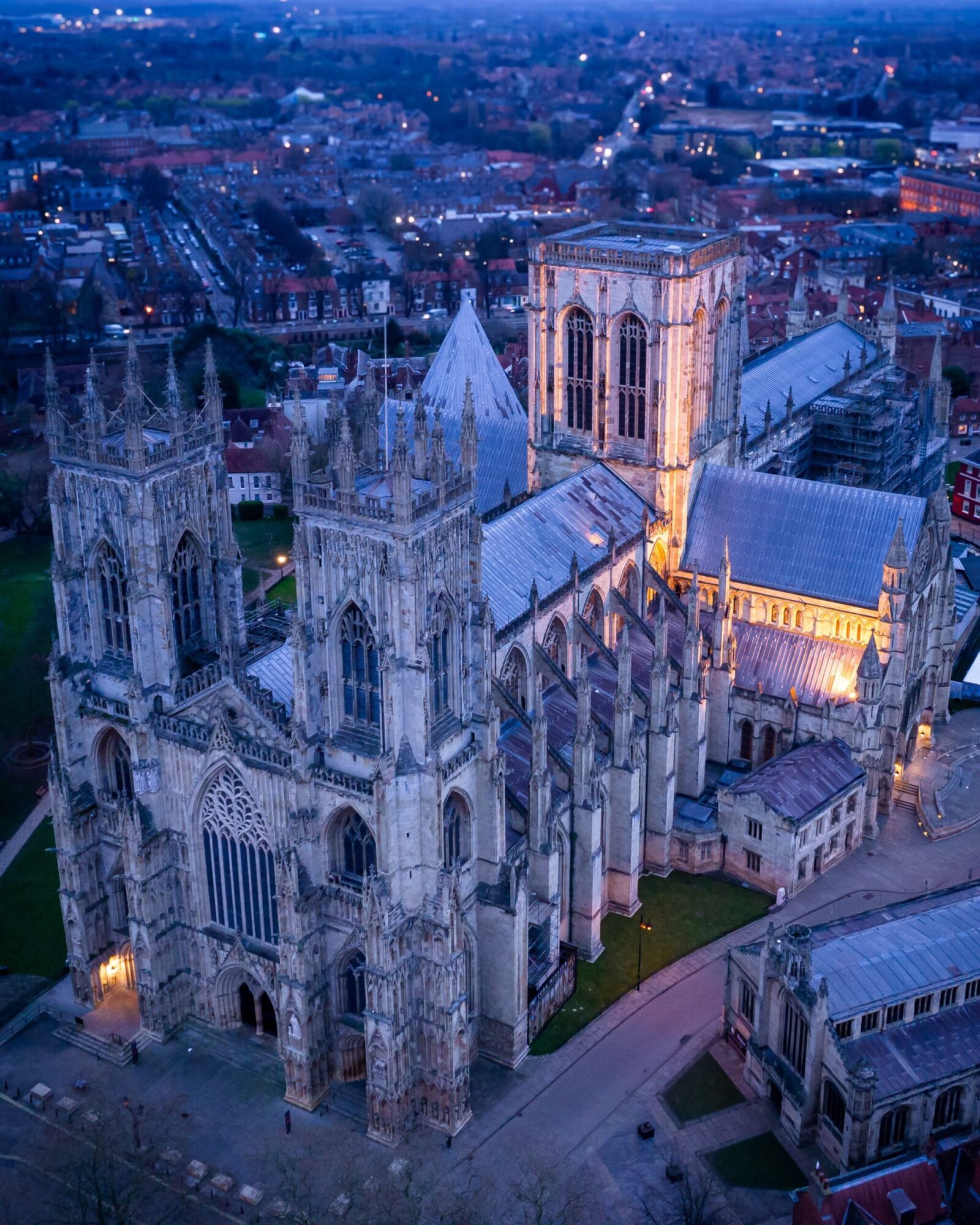
York Minster is the place to start. It is one of the largest Gothic cathedrals in northern Europe, built from creamy limestone, and its towers dominate every view of the city. The present building took shape over several centuries of medieval construction. Inside, the scale is what stays with you. The nave stretches ahead in a long sweep of stone, and the Great East Window, built between 1405 and 1408, holds the largest expanse of medieval stained glass in the world, with seventy-eight panels telling the story of the Apocalypse in coloured light. If you are steady on your feet, climb the central tower. The staircase is narrow, with 275 steps, but the reward is a panoramic view over the city rooftops and the countryside beyond. Allow at least two hours, and check the Minster’s guidance before you go, as visitor routes change around services. Sightseeing entry is charged, while attending a service, including Evensong, is free, and a sightseeing ticket is usually valid for a year.
Walk The York City Walls
York has the longest circuit of medieval town walls in England, and walking them is one of the best free things to do in the city. The full route runs for roughly two miles, or about three and a half kilometres, and takes around two hours at a relaxed pace. Much of the stonework dates from the thirteenth and fourteenth centuries, built on earlier Roman and Viking banks, and the walk passes four main gateways, known as bars: Bootham Bar, Monk Bar, Walmgate Bar and Micklegate Bar. Bootham Bar still shows the grooves of its portcullis, Monk Bar is the tallest of the four at four storeys, and Micklegate Bar is where the heads of traitors were displayed until 1754. The most rewarding stretch for first-time visitors runs from Bootham Bar to Monk Bar, with the Minster towering on the right and gardens falling away below. The walls are free and open during daylight hours, but they close in icy or very windy weather, and there are no handrails on most sections, so steps and narrow stretches make them unsuitable for wheelchairs and pushchairs. Wear sensible shoes and go in the morning, when the light is soft and the route is quiet.
Wander The Shambles, York’s Most Famous Street
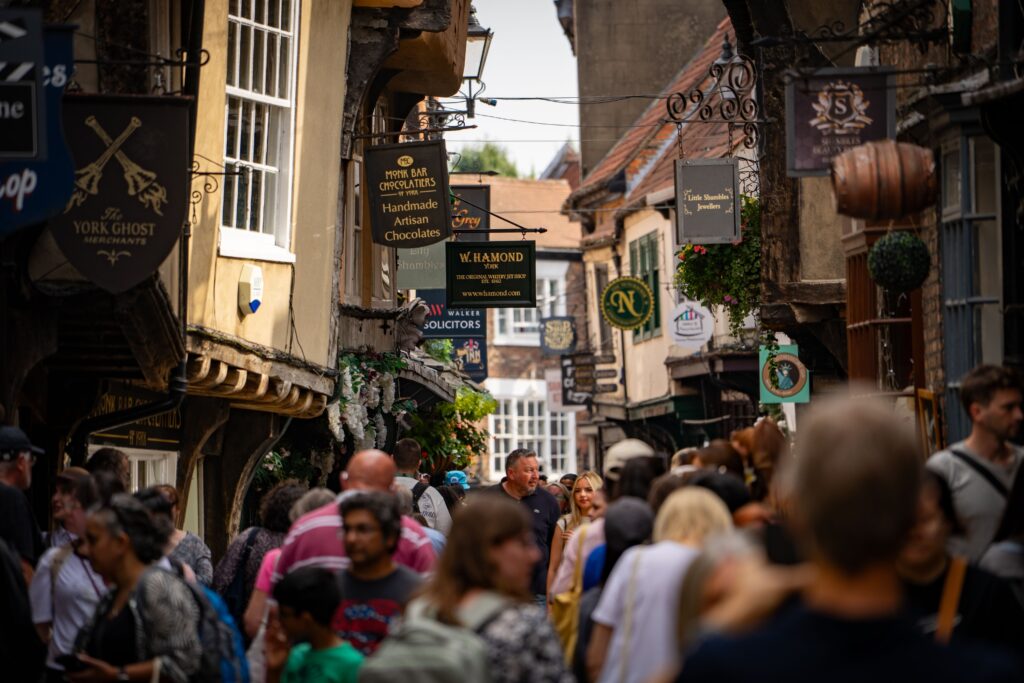
The Shambles is one of the best preserved medieval streets in Europe and one of the most photographed streets in Britain. Its timber-framed buildings date back to the fourteenth and fifteenth centuries, and their upper storeys lean so far over the cobbles that neighbours could almost shake hands from the windows. The street was recorded in the Domesday Book of 1086 as Fleshammels, the flesh-shelves of the butchers, and as late as 1872 there were still twenty-six working butchers here. Today the butchers are gone and the shops sell everything from fudge and cheese to gifts and film merchandise. Go early, before nine in the morning, or in the evening, if you want photographs without the crowds. The Shambles is at its best when it is quiet and you can look up at the overhanging gables instead of watching your feet. Just off the main lane, the Shambles Market is worth a browse for local produce and street food, and the surrounding snickelways, the narrow passages between streets, are a pleasure to explore. If you enjoy this kind of historic street, our guide to Lichfield, another English cathedral city with a fine medieval core, makes a good companion read.
Step Back In Time At The JORVIK Viking Centre
Between 1976 and 1981, archaeologists digging at Coppergate before a shopping centre was built uncovered the remains of the Viking city of Jorvik. The finds were extraordinary: preserved timbers, leather offcuts and the largest collection of Viking-period artefacts in Britain. The JORVIK Viking Centre, on the site of the dig at 19 Coppergate, takes you on a ride through a reconstruction of those Viking streets, complete with sounds, smells and lifelike figures going about their daily work. It explains clearly how York became the Viking capital of Britain after Danish forces took the town in 866 and renamed it Jorvik. The centre is compact, so a visit takes about an hour, but it is popular and queues build quickly. Book a timed slot online to skip the wait. Every February, York hosts the JORVIK Viking Festival, one of the largest Viking festivals in Europe, with battle re-enactments and markets across the city.
Explore The National Railway Museum
A short walk from York station, the National Railway Museum holds one of the largest and most important railway collections in the world, and entry is free. The Great Hall alone is worth the visit, with great locomotives standing under a soaring roof, including Mallard, the fastest steam locomotive ever built, which reached 126 miles per hour in 1938. Elsewhere you will find a Japanese Shinkansen bullet train, royal carriages, and the only surviving locomotive from the Stockton and Darlington Railway, the line that started it all in 1825. The museum suits all ages, and the social history of the railways is as absorbing as the engines themselves. Allow at least half a day if you want to see it properly, and consider booking a timed ticket online, especially in school holidays, even though entry itself is free. For more travel inspiration, our guide to Mostar, Bosnia, shows how another historic city blends old streets with modern life.
Climb Clifford’s Tower And Explore The Castle Area
Clifford’s Tower is the stone keep of York Castle, standing on its grassy mound where the River Ouse meets the River Foss. It is the most visible reminder of Norman York, built after the Conquest to keep the city under control, and its history is a serious one: the tower was the scene of a terrible massacre of the Jewish community in 1190, which is remembered on site today. Climb to the top for wide views across the city. The surrounding castle area holds more to see. York Castle Museum, just beside the tower, is famous for Kirkgate, a full-scale recreation of a Victorian street, complete with shops and a horse-drawn carriage. It is one of the most enjoyable museums in the city and a good choice on a wet afternoon.
Relax In York Museum Gardens And Stonegate
Not every hour in York needs an entrance ticket. York Museum Gardens, beside the River Ouse and the Minster, are free and open daily from morning until early evening, closing earlier in winter. The gardens hold the ruins of St Mary’s Abbey, the Yorkshire Museum, and some of the most peaceful lawns in the city centre, with views of the Minster rising above the trees. It is a good place to sit with a coffee and plan the rest of the day. From there, walk through Stonegate, one of York’s prettiest streets, lined with independent shops, cafes and pubs in buildings that span several centuries. Stonegate has been a shopping street since Roman times, and it still feels like the York that locals use, rather than a street built for visitors.
See York From The River Ouse
A sightseeing cruise on the River Ouse gives you a different view of the city and a rest for your feet. Cruises last around forty-five minutes to an hour, depart from King’s Staith Landing and Lendal Bridge, and pass Clifford’s Tower, the Museum Gardens, the Guildhall and the Minster from the water, with live commentary along the way. The river has shaped York since Roman times, when it made the city an inland port, and seeing the medieval warehouses and bridges from the water helps that history make sense.
Eat, Drink And Take Afternoon Tea In York
York eats well, and the city suits a slow approach to food. The Shambles Market and the food stalls around Parliament Street are good for a quick lunch, while the lanes around Stonegate and Fossgate hold independent cafes, delis and restaurants that reward a little exploration. Yorkshire is rightly proud of its produce, and you will find local cheese, charcuterie and baked goods in the market halls. For a classic York experience, afternoon tea at Bettys, the famous tea rooms on St Helen’s Square, is a rite of passage. It is popular, so book ahead or be ready to queue. In the evening, York’s pubs are among its great pleasures. Many are centuries old, with low beams, open fires and local ales. The city also has a strong ghost-walk tradition, with guided evening walks telling the stories of York’s reputedly haunted streets.
Day Trips From York
York makes an excellent base for exploring the wider region. Castle Howard, one of England’s great stately homes, sits about fifteen miles north-east of the city and combines a magnificent house with extensive gardens and parkland. The Yorkshire Dales and the North York Moors are both within easy reach by car or organised tour, offering walking, villages and open countryside. Closer to home, the village of Helmsley and the market town of Malton are pleasant half-day trips. If you have a third day, use it for one of these rather than cramming more into the city itself.
Practical Tips For Visiting York
Direct trains run from London King’s Cross in around two hours, and from Edinburgh in a similar time, and the station is a short walk from the city centre. Driving into the centre is best avoided: parking is limited and expensive, and the park and ride sites around the ring road are the practical choice. Once you arrive, walk. Almost everything in this guide lies within a twenty-minute walk of the Minster. For the big attractions, book timed tickets in advance, especially the Minster, JORVIK and the Railway Museum in school holidays. Check opening times on the day, because the Minster’s visitor routes change around services and the walls close in bad weather. York is a safe and welcoming city, but like any popular destination, keep an eye on your belongings in crowded spots such as the Shambles. For the latest opening times and visitor information, the official Visit York website is the most reliable place to check before you travel.
A simple two-day plan works well: Minster and walls on the first morning, the Shambles and JORVIK in the afternoon, then the Railway Museum, Bettys and the castle area on day two, with a river cruise to finish. This pace leaves room for unplanned discoveries, which is where York is at its best.
York is a city that rewards visitors who slow down. Its great sights are genuinely great, but its real charm lies in the streets between them: the crooked lanes, the hidden gardens, the sound of the Minster bells and the view from the walls at dusk. Plan the essentials, book the big tickets, and then let the city surprise you. Few places in England pack so much history into so walkable a space.
Frequently Asked Questions
How Many Days Do You Need In York?
Two full days cover the main sights comfortably: York Minster, the city walls, the Shambles, JORVIK and the National Railway Museum. A third day allows a slower pace or a trip out to Castle Howard or the Yorkshire countryside.
Is York Minster Free To Visit?
Attending a service, including Evensong, is free. Sightseeing visits are charged, and a sightseeing ticket is usually valid for a year. Check the Minster’s official guidance before visiting, as routes change around services.
Is The National Railway Museum Free?
Yes, entry to the National Railway Museum is free, although booking a timed ticket online is recommended, especially in school holidays. Allow at least half a day to see it properly.
Can You Walk The York City Walls For Free?
Yes, the walls are free to walk and open during daylight hours. The full circuit is about two miles and takes around two hours. They close in icy or very windy weather and are not suitable for wheelchairs or pushchairs.
What Is The Best Time Of Year To Visit York?
Spring and autumn offer mild weather and fewer crowds. Summer brings festivals and long evenings, while winter brings the Christmas market and a festive atmosphere. York works well in every season.
Leave a Reply