
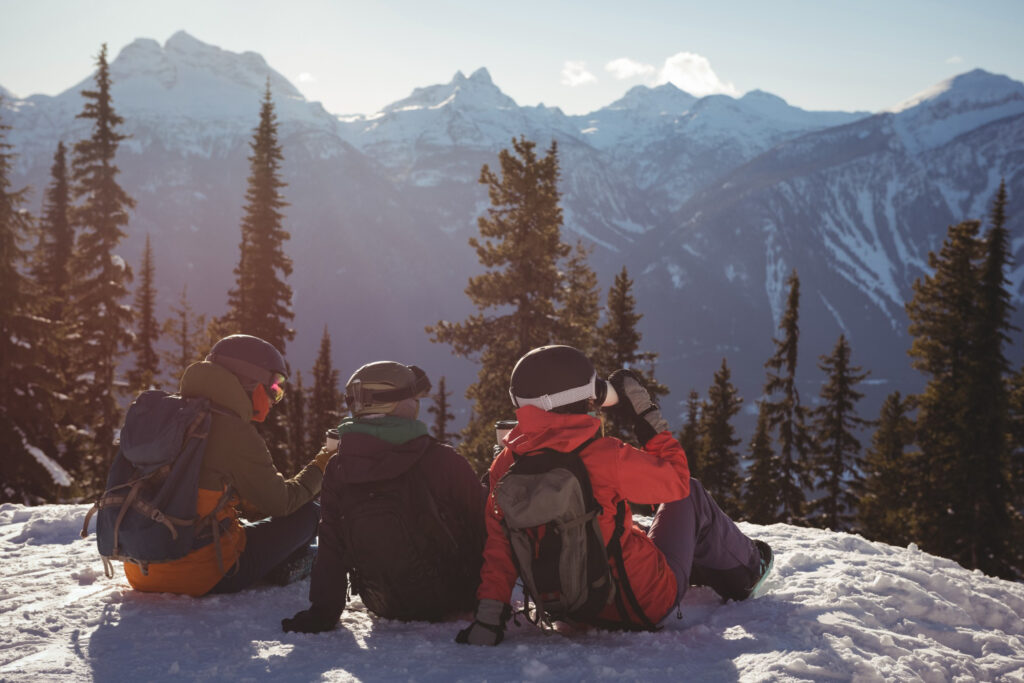
Luxury travel used to have a fairly predictable geography. Winter meant ski resorts for dedicated skiers, while summer luxury was more readily associated with Mediterranean beaches, private islands and glamorous cities. That division is becoming less convincing. Mountain destinations now appeal to travellers who may own no ski equipment at all.
The change is partly about what luxury itself has come to mean. Privacy, restorative experiences, natural surroundings and time outdoors can feel more valuable than formality. The mountains offer all of these without requiring guests to abandon good restaurants, thoughtful design or sophisticated wellness facilities.
For a new generation of travellers, altitude is becoming an alternative to excess.
Why is mountain luxury no longer only about skiing?
Skiing remains central to Alpine tourism, but it no longer needs to dominate the holiday.
Modern mountain resorts increasingly support a broader rhythm. A winter morning might involve skiing, but the afternoon could belong to a spa, a long lunch or a walk through the snow. Non-skiers can build an entire stay around wellness, food and scenery.
Summer expands the possibilities further. Hiking, cycling and scenic mountain crossings transform resorts previously associated primarily with snow into warm-season destinations.
This shift matters because it widens the audience. Couples with different interests no longer need to agree on spending six hours a day on the pistes. A mountain holiday can accommodate activity and inactivity equally well.
Why has privacy become an important part of luxury travel?
Mountains naturally create distance.
That does not mean complete isolation. Many Alpine destinations have lively restaurants and resort centres. Yet the landscape provides a sense of separation that is harder to achieve in crowded coastal destinations or major cities.
A room facing peaks rather than a busy street changes the atmosphere immediately. So does waking without a long list of monuments to visit.
This quieter environment corresponds with a broader interest in slower travel. The objective is less about displaying where one has travelled and more about creating conditions in which the trip actually feels restorative.
Luxury therefore becomes connected to space, silence and control over one’s time.
How is wellness changing the traditional Alpine holiday?
The old ski-holiday routine could be physically demanding: breakfast, slopes, lunch, more skiing, drinks, dinner and another early start.
Contemporary mountain wellness proposes something more balanced.
Swimming pools overlooking peaks, saunas, massages and recovery treatments now sit naturally alongside skiing and hiking. They are not simply solutions for bad-weather afternoons. Wellness can be one of the principal reasons for choosing the destination.
This makes the mountains particularly attractive to travellers who want activity without returning home exhausted.
A demanding morning outdoors followed by several hours of recovery creates a satisfying contrast. At properties such as Cervino, for example, the spa experience includes a panoramic pool and dedicated wellness spaces designed around relaxation after time in the mountains.
For guests relaxing at the Cervino Spa in the Alps, the appeal is therefore connected as much to restoration as to the surrounding peaks.
Why are Alpine summers becoming more attractive?
The mountains are increasingly competing with beaches for summer attention.
Part of the explanation is climatic. When southern European cities and coastal destinations experience intense summer heat, higher-altitude locations can offer more comfortable conditions for outdoor activity.
But temperature alone does not explain the attraction.
An Alpine summer provides a different daily rhythm. Mornings can be spent hiking or cycling, lunch can stretch across a terrace, and afternoons may include a spa or simply time outdoors. Lakes, forests and mountain paths replace crowded beaches and heavily scheduled sightseeing.
This has helped change the perception of mountain resorts as seasonal destinations. The same landscape that supports skiing in winter can offer walking, cycling and restorative stays when the snow disappears.
What does a new generation expect from a luxury mountain hotel?
Traditional Alpine decoration still has appeal, but contemporary travellers often want something less literal.
Modern mountain hospitality increasingly combines local materials with cleaner architecture and large windows that make the landscape part of the interior. Wood and stone may remain, but they can appear alongside restrained furniture, contemporary lighting and open wellness spaces.
The strongest properties do not try to compete with the mountains visually.
They frame them.
Comfort has evolved too. Guests may expect equipment rental and transfers to be easy, but they also value excellent beds, thoughtful food, fitness facilities and spaces where spending several quiet hours feels intentional rather than unproductive.
The hotel becomes somewhere to inhabit, not merely somewhere to return after skiing.
Why has food become central to sophisticated mountain travel?
Alpine cuisine once carried an image dominated by heavy dishes designed to restore energy after physical work or skiing. Those traditions remain important, but mountain gastronomy has become much broader.
Regional cheeses, cured meats, wines and local recipes provide a strong sense of place. Contemporary restaurants can use the same ingredients with greater lightness while retaining their geographical identity.
This is particularly visible in regions with strong culinary traditions, including Italy’s Aosta Valley, South Tyrol and parts of the French, Swiss and Austrian Alps.
Food also works particularly well within the slower mountain rhythm. A long lunch does not feel like time taken away from sightseeing because the landscape is already part of the experience.
The meal itself becomes a destination.
Are mountain holidays better suited to digital detox?
They can be, provided travellers allow them to be.
The attraction is not that mountain resorts lack connectivity. Most modern luxury properties offer all the technology guests expect. The difference is that the surrounding environment provides convincing reasons to ignore it.
A forest path, snowfall or mountain panorama naturally redirects attention away from screens. Physical activity also creates periods when constant checking becomes inconvenient.
This makes the mountains particularly compatible with a softer version of digital detox: not surrendering a phone at reception, but simply discovering that there are better things to do with the next few hours.
That kind of disconnection can feel more sustainable than a rigid wellness programme.
Why do the mountains work for different generations of travellers?
The variety of pace is one of their strongest advantages.
One person can ski while another visits the spa. Parents can walk while older children choose more adventurous activities. Couples can spend the morning separately and meet for lunch. Multi-generational groups do not necessarily need identical physical abilities to enjoy the same destination.
This flexibility makes mountain holidays increasingly relevant to travellers who might previously have dismissed them as too sporty.
The landscape remains the common experience even when the activities differ.
Everyone sees the same peaks from breakfast. Everyone notices the temperature drop in the evening. Everyone returns to the same table after following a different route through the day.
What does the future of mountain luxury look like?
The most interesting change is that the mountains no longer need to imitate other luxury destinations.
Their appeal comes from what coastal resorts and cities cannot easily reproduce: altitude, dramatic seasonal change, access to wilderness and the possibility of moving quickly between physical activity and deep rest.
Winter will remain important, but it is becoming only one chapter. Summer hiking, autumn food trips and wellness weekends give Alpine destinations a much longer calendar.
At the same time, the idea of luxury is moving away from constant stimulation.
A beautiful room, several quiet hours, a demanding walk, good local food and time in warm water while mountains fill the windows can be enough.
For travellers accustomed to busy itineraries and crowded destinations, that simplicity may be precisely what now feels exceptional.
Leave a Reply