
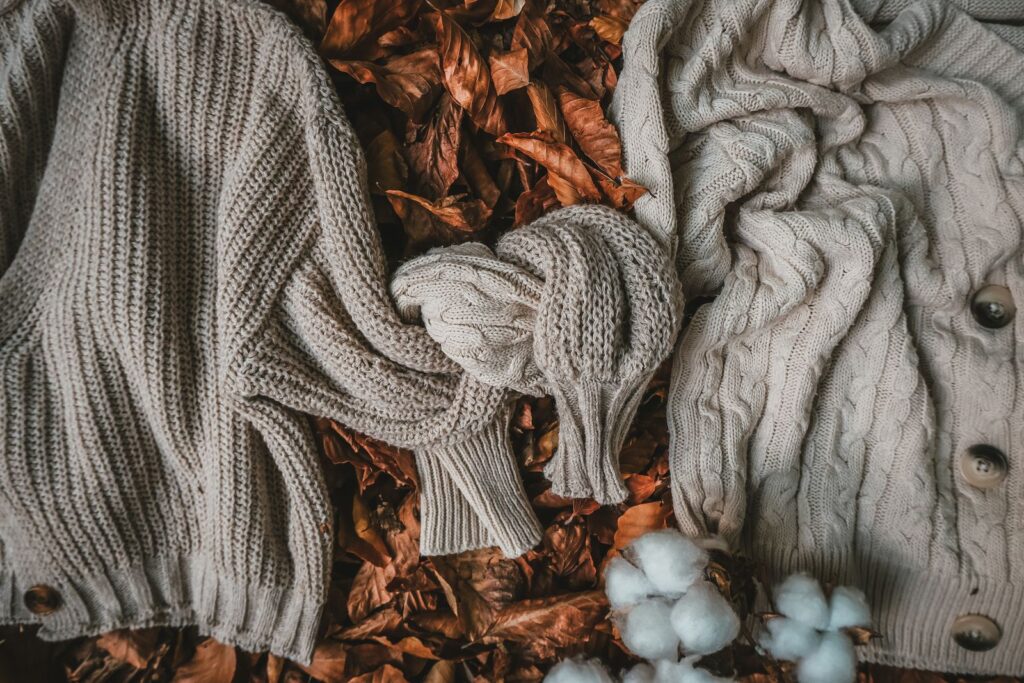
Autumn clothes need to do a practical job: keep you warm on cold mornings, cope with rain, and work indoors without overheating you. The best autumn wardrobe is not the biggest one — it is a small set of versatile pieces in fabrics that suit the season, layered so they adapt to the day. This guide covers the essential pieces, the fabrics worth choosing, layering, care, and a simple capsule wardrobe for the whole season.
Why Autumn Clothes Are Different
Autumn sits between two extremes. Summer clothes are too light and winter clothes are often too heavy, so autumn dressing is really about the middle ground: medium-weight fabrics, pieces that layer, and an outer layer you can take on and off. In the UK this matters more than in many places, because a single autumn day can start cold, turn mild by lunchtime and end in rain.
That changeability is why the same autumn clothes need to work in several situations: a jumper perfect for a cold morning walk may be too warm in a heated office, and a coat that keeps out the rain may be too heavy to carry around a shopping centre. The answer is not more clothes — it is better-chosen clothes, with layers that come off and go on without fuss.
The Essential Autumn Clothes
A Proper Coat
A coat is the single most important autumn purchase, because it is the piece other people see most and the one that does the most practical work. A long wool coat is the most versatile choice: it works over knitwear, dresses, tailoring and jeans, and it looks smart without trying. Camel, charcoal, navy and chocolate brown are the safest colours, and a deep burgundy or forest green coat adds colour without being hard to wear.
A trench coat is the other classic autumn option. It is lighter than a wool coat, so it suits the early weeks of autumn and milder days, and it handles light rain well. A quilted jacket is a good practical alternative for weekends and outdoor days. Whichever you choose, check that it fits over your thickest jumper — a coat that only fits over a thin top will be useless on the coldest days. Our guide to autumn dresses shows how a good coat can carry a lighter dress through the season.
Knitwear: Jumpers, Cardigans And Roll-Necks

Knitwear is the workhorse of the autumn wardrobe. You need three kinds. First, a fine roll-neck or crew-neck jumper that works as a base layer under a blazer, a coat or a dress. Second, a chunky jumper — a cable knit or a brushed, soft knit — for cold days and casual outfits. Third, a long cardigan that can double as a light coat indoors or on mild days.
Choose knitwear in colours that match your coat and trousers, so each piece works in several outfits — burgundy, moss green, chocolate, navy and cream all work well together. A knitted waistcoat is also useful: it adds warmth over a shirt without the bulk of a full jumper.
Trousers And Jeans
Dark jeans are the easiest autumn bottom. They work with boots, trainers and knitwear, and they hide mud and rain marks better than light colours. Wool trousers are the smarter option: they are warm, they hold their shape, and they look right with a blazer or a fine knit. Wide-leg trousers in wool or a heavy cotton work well with ankle boots and a fitted top.
Avoid very light fabrics in autumn: linen trousers and thin cotton chinos feel cold and look out of season. If you like skirts, a long plaid skirt or a wool midi skirt with tights and boots is a practical choice.
Dresses That Work In Autumn
Dresses do not have to be put away in autumn. A long-sleeved midi dress in a heavier fabric — wool, heavy cotton or a knit dress — works with tights, boots and a coat. Layering a chunky jumper over a summer dress turns the dress into a skirt, which is a useful trick for getting more wear out of clothes you already own. A slip dress layered over a fine roll-neck is another simple autumn outfit. For more ideas, see our casual dresses guide.
Boots And Shoes
Autumn footwear needs grip, because wet leaves and wet pavements are slippery. Ankle boots with a sturdy sole are the most useful autumn shoe: they work with jeans, trousers, skirts and dresses, and they keep your feet dry in light rain. Knee-high boots work well with skirts and dresses and add warmth on cold days.
Trainers still have a place in autumn, but choose leather or a water-resistant pair rather than light canvas, which soaks through quickly. Keep waterproof shoes or wellington boots by the door for the worst days, and save suede for dry days.
Scarves, Gloves And Hats
Accessories are part of staying warm, not decoration. A large scarf can add as much warmth as an extra layer and is easy to remove indoors. Leather gloves keep hands warm without bulk, and a beanie or felt hat makes a real difference on cold, windy days. Choose accessories in a season colour, such as a cherry-red scarf, to add interest to a neutral coat.
Autumn Fabrics: What To Choose And Why

Fabric matters more in autumn than in any other season, because it decides whether you feel warm, comfortable and dry.
Wool is the most useful autumn fabric: warm even when damp, breathable, and good at holding its shape. Merino is soft enough to wear next to the skin, lambswool makes warm, slightly chunkier jumpers, and cashmere is softer and lighter but more delicate and expensive — treat it as an investment piece.
Cotton is comfortable but less warm than wool, so it works best as a base layer or in a heavier weave, such as corduroy or a thick cotton twill. Corduroy is a good autumn fabric: it is warm, hard-wearing and adds texture to an outfit. Denim is another autumn staple, and a heavier denim holds up well in cold weather.
Leather and faux leather are useful for jackets, skirts and trousers, because they block wind. If you prefer not to wear leather, look for textured alternatives such as velvet or bouclé, which add warmth and visual richness. Avoid very thin synthetic fabrics in autumn: they feel cold, they do not breathe well, and they often look cheaper than they are.
When you buy autumn clothes, check the fabric label before the price tag. A jumper that is mostly wool will feel warmer and last longer than a similar-looking jumper made mostly from acrylic. Natural fibres cost more, but one good wool jumper will outlast several cheap ones.
How To Layer Autumn Clothes Properly
Layering is the skill that makes autumn clothes work. The aim is to stay warm without looking bulky and to be able to adjust as the temperature changes.
Start with a thin base layer: a fine roll-neck, a long-sleeved T-shirt or a cotton shirt. This layer sits close to the body and should be comfortable under everything else. Add a mid layer for warmth: a jumper, a cardigan or a knitted waistcoat. Finish with an outer layer you can take off indoors: a wool coat, a trench or a quilted jacket.
The rule that prevents bulk is simple: keep only one layer thick. If your jumper is chunky, wear it over a thin base and under a coat with room in the shoulders. If the coat is the heavy piece, keep the knit fine. Balance proportions as well: a roomy knit looks best with slim trousers or a straight skirt, while a fitted top works with wide-leg trousers.
Think about what each layer looks like on its own, because you will take layers off during the day. A fine knit in a good colour, a checked shirt or a smart cardigan all work as the visible layer when the coat comes off.
Looking After Autumn Clothes
Autumn clothes last longer with a little care, and the care is simple once you know it.
Wool jumpers should be washed rarely and gently. Air them between wears, spot-clean small marks, and hand-wash or use a cold wool cycle only when needed. Never tumble-dry wool — it shrinks. Dry jumpers flat, not on a hanger, so they keep their shape. Fold knitwear rather than hanging it, because hangers stretch the shoulders out of shape.
Building A Simple Autumn Capsule Wardrobe
A capsule wardrobe is a small set of clothes that all work together. It saves money and time in the morning, and stops the problem of a full wardrobe with nothing to wear. Here is a practical autumn capsule for the UK:
- One long wool coat in a neutral colour
- One trench coat or quilted jacket for milder days
- Two fine-knit jumpers in colours that match your coat
- One chunky knit jumper
- One long cardigan
- Two pairs of dark jeans or one pair of jeans and one pair of wool trousers
- One long-sleeved midi dress or a wool skirt
- One pair of ankle boots and one pair of knee-high boots
- One large scarf, one pair of gloves and one hat
That is around fifteen pieces, and they combine into dozens of outfits. The trick is choosing a simple colour palette — for example, chocolate, cream, burgundy and navy — so everything matches. Add one or two pieces in a brighter colour, such as a cherry-red scarf, for variety.
Before buying anything new, go through what you already own. Most people have more autumn clothes than they think: a coat from last year, jumpers that still fit, boots that need a clean rather than a replacement. Fill the gaps first, and only then add a trend piece or two. For a wider view of seasonal style, our British fashion guide is worth a look.
Conclusion
Good autumn clothes are practical first and fashionable second. Choose a proper coat, a few quality knits, dark jeans or wool trousers, boots with grip and accessories that add warmth. Pick fabrics that suit the season — wool, corduroy, denim and leather — layer with one thick piece at a time, look after what you own, and add new pieces where there is a real gap. Done this way, autumn dressing is simple, comfortable and far cheaper than a new outfit for every cold day.
FAQs
What Clothes Do I Need For Autumn In The UK?
You need a proper coat, two or three jumpers including one chunky knit, dark jeans or wool trousers, ankle boots with grip, and a scarf, gloves and hat. A trench or quilted jacket and a long-sleeved dress or wool skirt cover most other situations.
How Many Layers Should I Wear In Autumn?
Three layers work best: a thin base layer, a mid layer such as a jumper or cardigan, and an outer layer such as a coat. Keep only one layer thick, and make sure each layer looks good on its own when the coat comes off.
What Is The Warmest Fabric For Autumn Clothes?
Wool is the warmest practical autumn fabric, and it stays warm even when damp. Merino is soft enough for base layers, lambswool makes warm jumpers, and cashmere is softer and lighter but more delicate. Corduroy and heavy denim are also good autumn choices.
How Do I Stop My Autumn Clothes Looking Bulky?
Keep only one layer thick, balance proportions by pairing a roomy knit with slim trousers or a fitted top with wide-leg trousers, and choose a coat with room in the shoulders.
How Should I Wash And Store Wool Jumpers?
Wash wool rarely and gently — air jumpers between wears, hand-wash or use a cold wool cycle when needed, and never tumble-dry wool. Dry jumpers flat, fold them instead of hanging them, and store them clean and dry with cedar or lavender.
Leave a Reply