
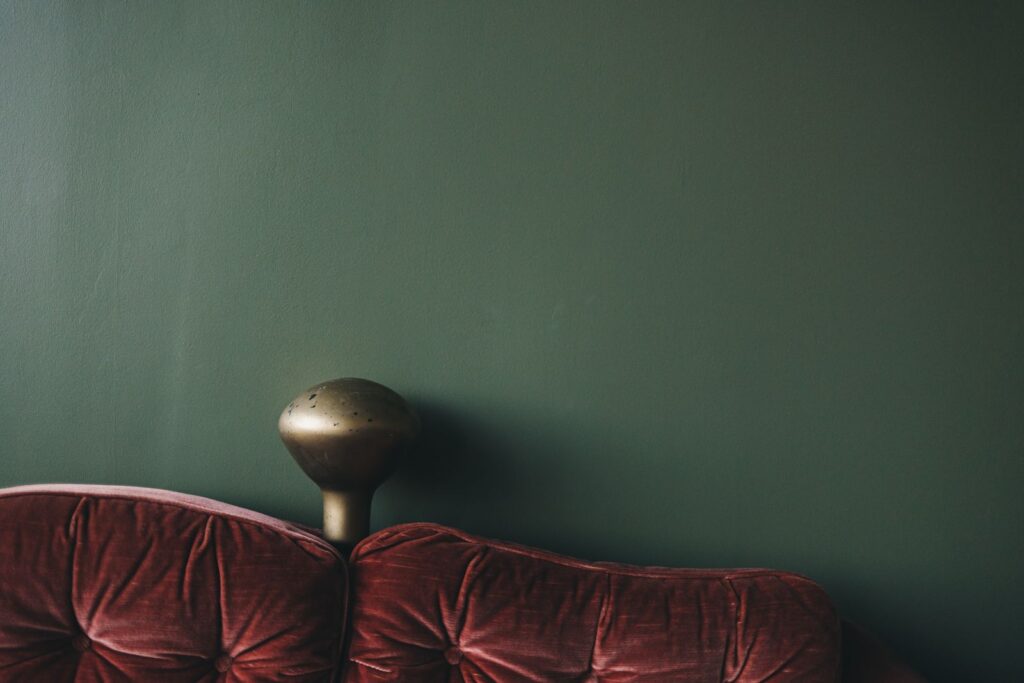
Green is one of the most forgiving and versatile colours for a living room: it can feel calm or dramatic, fresh or traditional, depending on the shade and how much of it you use. A soft sage wall makes a small room feel light; a deep emerald wall makes it feel rich and considered. This guide covers the shades that work, how to pair them, and how to use green in walls, furniture, plants and lighting — whether you want a small change or a full transformation.
Why Green Works So Well In A Living Room
Green sits between the warm and cool sides of the colour wheel, which is why it is so easy to live with. It connects naturally to wood, plants and natural fibres, so it suits rooms full of timber, linen, rattan and wool. It also works as a neutral: pale sage reads almost like a warm grey, while deep forest green behaves like a dark, grounding tone that makes lighter furniture stand out.
Green is also a colour people associate with nature and calm, so a room with green in it tends to feel restful rather than demanding — a good quality for the room where you spend your evenings. Unlike a very bright colour, green does not tire the eye, and unlike a plain white room, it gives the space a clear identity.
Choosing The Right Shade Of Green

Green spans pale sage to near-black forest, and the depth you pick should follow your room’s light and how bold you want to be.
Sage: The Safest Starting Point
Sage is a pale grey-green and the most forgiving shade for a living room. It reads almost neutral, so it works in bright or small rooms, with cream sofas, rattan furniture and warm wood floors, and it rarely clashes with existing furniture. Paint one wall — usually behind the sofa — in a matte or eggshell finish, since flat sage can look chalky under artificial light.
Olive And Moss: Warm And Grounded
Olive and moss sit in the middle of the range: earthy, warm and grounding. They suit rooms with good natural light and warm wood, and pair well with terracotta, brass and oak. Olive is a yellow-based green, so it feels warm with camel leather and terracotta cushions. If sage feels too pale and emerald too bold, olive is the comfortable middle ground.
Emerald And Forest: Bold And Dramatic
Emerald and forest green are the dramatic end of the range. They work best as a confident full wall in a light-filled room, or as a saturated velvet accent such as a sofa or armchair. They suit rooms with good ceiling height, or as a backdrop for a fireplace, shelving or a gallery wall, where the dark tone frames what sits in front of it. Balance the intensity with brass hardware, warm lighting and lighter furniture like a cream bouclé sofa, so the room does not feel closed in.
Mint And Pistachio: Light And Fresh
At the pale end, mint and pistachio bring a lighter, fresher feel. They suit modern or Scandinavian-style rooms, pair well with pale wood, white and soft pastels, and are a good choice if you prefer a bright, airy result rather than a moody one.
How Much Green Should You Use?
How much green to use depends on your confidence and your room. There are four levels, and each one works.
The lightest touch is accessories: cushions, throws, a rug and a few plants in a neutral room. This costs little, takes an afternoon, and can be changed easily.
Next, a single accent wall: paint the wall behind the sofa in sage or olive, keep the other walls warm white, and let the green anchor the room. This is the most popular approach, because it gives a clear result without committing the whole room.
A bolder step is a green anchor piece: a velvet sofa in emerald, olive or forest green introduces colour, texture and a slightly luxurious feel at once, without repainting. Olive, forest and bottle green are the most versatile sofa shades, because they read as neutral from a distance but still add richness up close.
The full commitment is painting all four walls deep green, with walnut shelving and brass picture lights. This works best with good natural light and a high ceiling, and creates a rich, library-like feel — but keep the ceiling and woodwork light, or the room can feel too dark.
What Colours Pair With Green?
Green is easy to pair because it has so many natural partners. Wood is its most reliable one: oak and rattan keep sage or olive rooms light, while walnut deepens emerald or forest into something rich. Metals set the mood: brass and aged gold warm green into a vintage, collected feel, while black and bronze sharpen deeper greens into something modern and graphic.
For a second colour, the pairing depends on the shade. Sage works with terracotta for an earthy feel, or charcoal and chrome for a cooler one. Emerald pairs with brass and gold for a luxe look, or cream and soft pink for something softer. Olive goes with mustard for a retro feel, or brown leather for warmth. Mint pairs with lavender, and forest green with cognac leather and brass.
The simplest rule is to pair one green with one warm neutral and one accent. A sage room with cream walls, oak floors and terracotta cushions feels connected rather than overly matched. The same green with charcoal cushions and black metal fittings feels cooler and more modern. Changing the second colour changes the whole mood, even when the green stays the same.
Mix different shades of green rather than matching everything exactly: two or three shades together create depth and stop the space feeling flat. Try a muted green for large surfaces, a deeper green for cushions or a rug, and a brighter green for small details like books or ceramics.
Green Furniture And Soft Furnishings
You do not need to repaint to bring green into a living room. Furniture and soft furnishings can do the job on their own.
A green sofa is the strongest single piece. A velvet emerald sofa brings instant glamour, especially with brass accents; a deep olive sectional leans warm and slightly bohemian; a sage linen sofa feels light and airy. If a whole sofa feels like too much, a pair of emerald velvet chairs adds symmetry, or a single sage armchair makes a corner feel cosy straight away.
Curtains are another easy way in: floor-length curtains in soft sage or olive linen add a relaxed, textural quality, while heavier velvet curtains in deep forest green feel genuinely luxurious. A green patterned rug ties a seating area together, and a distressed sage rug feels casual and comfortable underfoot.
Smaller pieces matter too: green cushions in mixed shades add depth to a neutral sofa, and green vases, emerald candle holders and a green throw all add colour without a big commitment. For more ideas, our home decor ideas cover the same approach room by room.
Plants: The Living Part Of A Green Room
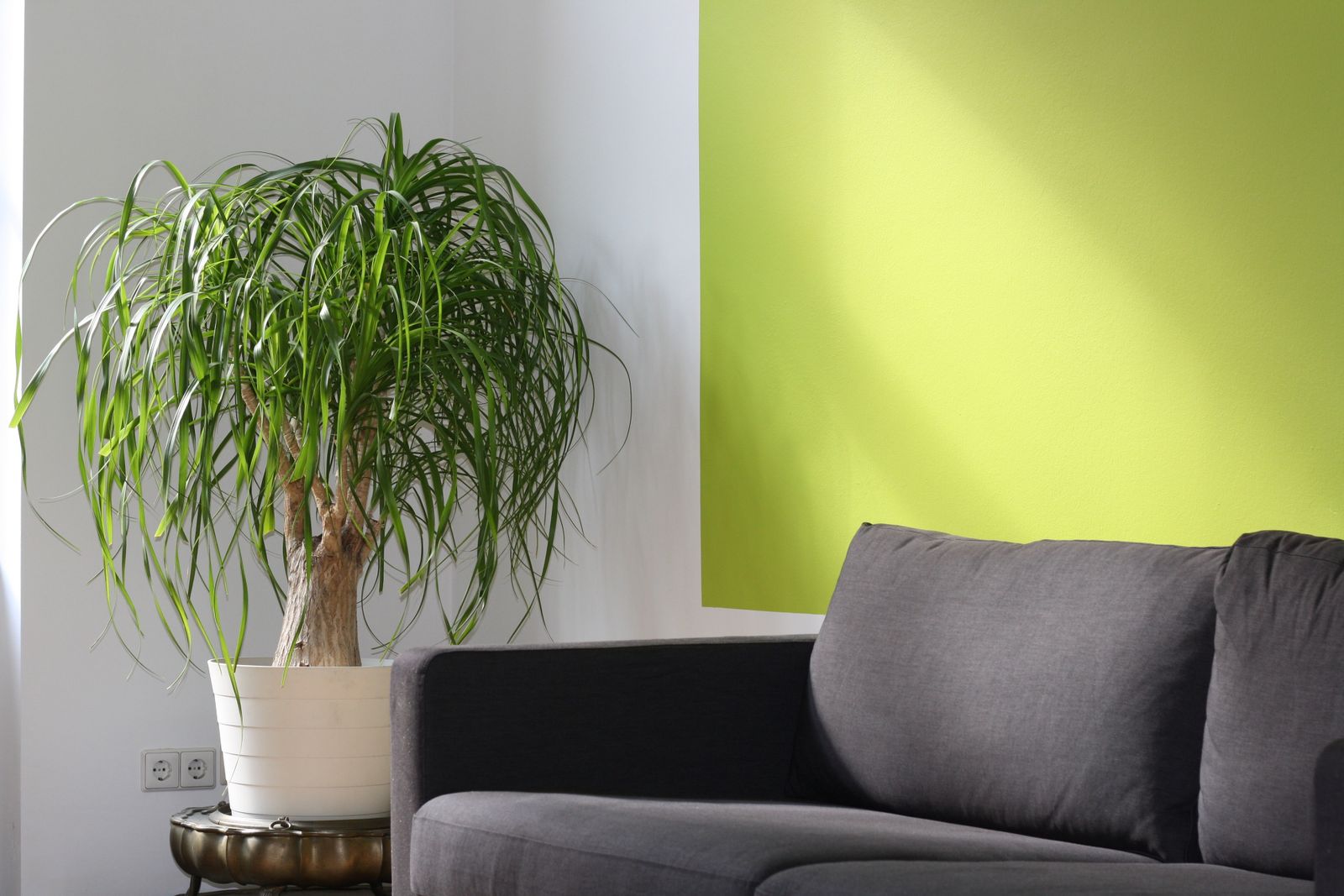
Plants are the easiest and most natural way to add green to a living room, and they suit every shade on the walls. A tall plant in a corner softens the room, a trailing plant on a shelf adds life at eye level, and a cluster of smaller plants on a windowsill creates a green focal point without taking up floor space.
Choose plants that suit your light and habits. A monstera or fiddle-leaf fig needs bright, indirect light and makes a strong statement; a snake plant or pothos copes with lower light and less attention. A ponytail palm in a sunlit corner is an easy, sculptural choice.
Terracotta pots warm a sage room, brass planters suit an emerald room, and woven baskets soften a modern one. Group plants in odd numbers and vary the heights so the arrangement looks natural.
Lighting A Green Living Room
Lighting can make or break a green living room, because green reacts strongly to warm and cool light. Very warm bulbs, around 2700K, can push a subtle sage into a yellow-brown tone, while very cool light, at 4000K or higher, drains green towards grey. For most green living rooms, warm light in the 2700K to 3000K range is a good middle ground: inviting, without letting greens go muddy.
If you have an emerald accent wall, add wall washers or sconces aimed along the surface, not straight at it, so the colour glows rather than glares. A floor lamp with a warm shade next to a green sofa softens the whole seating area. Natural light matters too: a green room with a large window will look different at midday and at dusk, so check your paint sample at different times of day before committing.
Common Mistakes To Avoid
The most common mistake is choosing a green with the wrong undertone for your room. Yellow-based greens like olive and moss feel warm and pair with terracotta, brass and oak, while blue-based greens like emerald and teal feel cooler and more formal. Test a sample on the wall and look at it in daylight and in the evening before buying a full tin.
Lighting is the third mistake: a green that looks perfect in the shop can look muddy under the wrong bulbs, so check your lighting first. For a wider approach to making a home greener, our guide to building a greener home covers upgrades that reduce environmental impact.
Conclusion
A green living room works because green is both a colour and a neutral: sage is soft enough for a small room, olive is warm enough for a family space, and emerald is bold enough to carry a whole design. Start with the shade that suits your light, decide how much green you want, and pair it with wood, brass and a second colour that sets the mood. Add plants, get the lighting right, and the room will feel calm, considered and easy to live with for years.
FAQs
What Is The Best Green For A Living Room?
Sage is the safest choice for most living rooms because it is soft and adaptable. Olive suits rooms with warm wood and good light, while emerald or forest green suits a bold accent wall or a velvet sofa in a light-filled room.
What Colour Goes With A Green Living Room?
Green pairs well with oak and walnut, brass and aged gold, and natural fibres like jute and linen. For a second colour, try blush or terracotta for warmth, navy or charcoal for depth, cream for calm, or mustard for a retro feel.
Is A Green Sofa A Good Idea?
Yes, a green sofa is a good anchor piece because it adds colour and texture without repainting. Olive, forest and bottle green are the most versatile shades, since they read as neutral from a distance. Velvet suits a formal room, linen or a flat weave a relaxed one.
How Do I Make A Dark Green Living Room Feel Bright?
Use warm lighting in the 2700K to 3000K range, keep the ceiling and woodwork light, and balance dark walls with lighter furniture such as a cream sofa and a pale rug. Good natural light matters most, so check the shade at different times of day.
Should All The Walls Be Green Or Just One?
One accent wall, usually behind the sofa, is the most popular choice and suits most rooms. Painting all four walls in a deep green works best in a room with good natural light and a high ceiling. If you are unsure, start with one wall — you can always paint the rest later.
Leave a Reply