
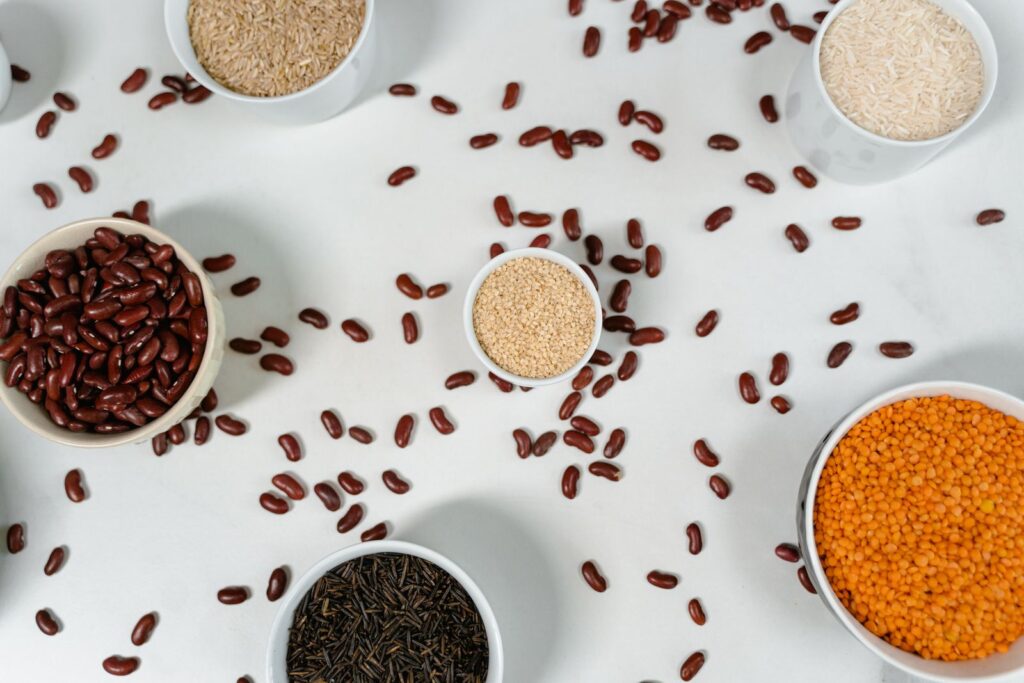
Most of us are not eating enough fibre. In the UK, government guidelines say adults should aim for 30 grams of fibre a day as part of a healthy, balanced diet. Yet the NHS reports that most adults are only eating an average of about 20 grams a day, leaving a shortfall of around 10 grams every single day.
Fibre matters because it does far more than keep digestion moving. The NHS notes that eating plenty of fibre is associated with a lower risk of heart disease, stroke, type 2 diabetes and bowel cancer, and it helps prevent constipation. Closing the gap does not require a special diet or expensive supplements. Small, ordinary swaps at breakfast, lunch and dinner can add up to 30 grams, and this guide shows exactly how.
How Much Fibre Per Day Do Adults Need?
The headline number for the UK is straightforward: 30 grams of fibre a day for adults aged 17 and over. That figure comes from UK government guidelines quoted by the NHS, and it sits alongside the rest of a balanced diet rather than replacing it.
Other countries set slightly different targets. The World Health Organization advises people aged 10 and over to get at least 25 grams a day from food, while dietary guidelines in the United States set a range of roughly 22 to 34 grams depending on age and sex. The UK figure of 30 grams sits comfortably within that international picture.
What makes the UK target useful is that it is a single, memorable number. You do not need to weigh your food or track every gram. The aim is simply to choose more high-fibre foods more often, and to build the habit gradually so your digestive system can adjust.
How Much Fibre Do Children And Teenagers Need?
Children need less fibre than adults, but the amount they need builds up with age. The NHS gives the following daily amounts, and they are worth knowing if you cook for a family.
- 2 to 5-year-olds: about 15 grams of fibre a day
- 5 to 11-year-olds: about 20 grams of fibre a day
- 11 to 16-year-olds: about 25 grams of fibre a day
- Adults aged 17 and over: 30 grams of fibre a day
The NHS also notes that children are falling short, just like adults. On average, children aged 11 to 18 are getting only 16 grams a day, well below their 25-gram target. Plenty of fruit, vegetables and starchy foods, wholegrain versions where possible and potatoes with their skins on, can help children move closer to the amount they need.
Why Most Of Us Fall Short On Fibre
The average UK adult eats around 20 grams of fibre a day, according to the NHS, and only a small minority reach the target. Figures cited by BBC Food suggest that just 4 per cent of women and 13 per cent of men aged 19 to 64 manage 30 grams a day. Modern diets lean heavily on refined foods: white bread instead of wholemeal, white rice instead of brown, and breakfast cereals with little fibre. Many of us eat fewer pulses, beans and lentils than previous generations did. None of this is a personal failing. It is simply how everyday eating has changed, and it can be changed back.
What Is Fibre And Why Does It Matter?
Fibre is the part of plant foods that your body cannot fully digest. It passes through the digestive system largely intact, and that is exactly what makes it useful. Fibre adds bulk to stools, helps food move through the gut, and feeds the friendly bacteria in the large intestine.
There are two broad types, and most plant foods contain a mix of both. Soluble fibre dissolves in water and is found in oats, barley, beans, lentils, fruit and vegetables. Insoluble fibre does not dissolve, and it is found in wholegrains, wheat bran and the skins of fruit and vegetables. Both types play a role, which is why the NHS stresses getting fibre from a variety of sources.
The health associations are well established. The NHS states there is evidence that eating plenty of fibre is associated with a lower risk of heart disease, stroke, type 2 diabetes and bowel cancer. Fibre also helps you feel full after eating, which can make it easier to manage your weight, and it supports regular bowel habits.
The Best High-Fibre Foods To Eat Every Day

The strongest sources of fibre are not exotic or expensive. They are ordinary foods that most supermarkets stock all year round, and a few of them deliver a large share of your daily target in a single serving.
Beans, lentils and chickpeas sit at the top of the list. Cooked lentils and black beans are among the richest sources of all, with around 15 grams of fibre per cup when cooked, and chickpeas are not far behind. Adding a tin of beans to a stew, a handful of lentils to a soup, or chickpeas to a salad can add 10 grams or more to a single meal. Wholegrains come next: oats, wholewheat pasta, brown rice, bulgur wheat and wholemeal bread all contribute useful amounts, especially when they replace refined versions.
Fruit and vegetables add fibre in smaller amounts per portion, but they add up across the day. Raspberries, pears with the skin on, apples, bananas and avocados are useful fruit choices, while broccoli, carrots, peas and Brussels sprouts are among the better vegetable sources. Potatoes with their skins on add more fibre than peeled potatoes, and a small handful of nuts or seeds, such as almonds, chia seeds or flaxseed, makes a useful snack.
A food counts as high in fibre if it contains 6 grams or more of fibre per 100 grams, according to the NHS. Checking the nutrition label on packaged foods is a quick way to compare products.
A Day Of High-Fibre Eating: The NHS Example

The NHS gives a worked example of a day of eating that adds up to just over 30 grams of fibre, using ordinary meals rather than special foods.
Breakfast: two slices of wholemeal toast with peanut butter, followed by a medium orange, should give you around 8.3 grams of fibre. That is already more than a quarter of the daily target, and it shows how much difference a wholegrain choice makes at the first meal of the day.
Lunch: wholemeal spaghetti with a lentil and tomato sauce should give you around 11 grams of fibre. The combination of wholewheat pasta and lentils is what makes this meal so effective: either ingredient alone would contribute far less, but together they cover more than a third of the day’s target.
Dinner: grilled chicken breast with a skin-on baked potato, carrots and green beans should give you around 11.2 grams of fibre. Add a snack of a small handful of unsalted nuts, some fruit, or crackers with hummus, and the day’s total moves comfortably past 30 grams. The lesson is that 30 grams is reachable with three ordinary meals and a snack, provided each meal includes at least one genuinely high-fibre food.
Simple Swaps That Add 10 Grams Of Fibre
If you are currently eating around 20 grams a day, you need roughly 10 more. The easiest way to find them is to swap, not to add. Replacing a low-fibre food with a high-fibre version keeps the meal familiar while raising the total.
- Choose wholemeal or granary bread instead of white bread, and wholewheat pasta, bulgur wheat or brown rice instead of refined versions.
- Start the day with porridge or plain wholewheat biscuits instead of a low-fibre breakfast cereal.
- Leave the skins on potatoes, whether baked or boiled as new potatoes.
- Add pulses such as beans, lentils or chickpeas to stews, curries and salads.
- Include plenty of vegetables with meals, as a side dish or stirred into sauces and curries.
- For snacks, try fresh fruit, vegetable sticks, rye crackers, oatcakes, and unsalted nuts or seeds.
Each of these swaps adds a few grams, and three or four of them together are usually enough to close the 10-gram gap. Aim for a mix of wholegrains, pulses, fruit and vegetables across the week rather than relying on a single food.
How To Increase Fibre Safely Without Discomfort
Increasing fibre too quickly is the most common mistake people make. A sudden jump from 15 grams to 30 grams in a single day can cause bloating, wind and stomach discomfort. The British Nutrition Foundation advises increasing fibre gradually, and that advice is worth following.
A practical approach is to add around 3 to 5 grams a day each week until you reach your target. Start with one swap, such as switching to wholemeal bread, and keep it for a week before adding the next change. Your digestive system adapts over a few weeks, and the discomfort usually fades as it does.
Drinking enough fluid matters just as much as the fibre itself. Fibre absorbs water as it moves through the gut, so increasing fibre without drinking enough can make constipation worse rather than better. Water is the simplest choice.
People with certain digestive conditions should take extra care. If you have irritable bowel syndrome, inflammatory bowel disease, diverticular disease or another gut condition, a sudden increase in fibre can make symptoms worse. If you have a digestive condition, or you take medication that affects your digestion, speak to your GP or a registered dietitian before making large changes.
Key Takeaways
Adults in the UK should aim for 30 grams of fibre a day, while most of us currently eat only around 20 grams. Children need less, building from about 15 grams for 2 to 5-year-olds to 25 grams for 11 to 16-year-olds. The best sources are beans, lentils and chickpeas, wholegrains such as oats and wholemeal bread, fruit, vegetables, nuts and seeds. Increase intake gradually and drink enough fluid. If you have a digestive condition, get personalised advice before making big changes.
Frequently Asked Questions
How Much Fibre Per Day Should I Eat?
Adults in the UK should aim for 30 grams of fibre a day, according to government guidelines quoted by the NHS. Most adults currently eat only around 20 grams. Children need less: about 15 grams for ages 2 to 5, 20 grams for ages 5 to 11, and 25 grams for ages 11 to 16.
What Foods Are Highest In Fibre?
Beans, lentils and chickpeas are the richest sources, with cooked lentils and black beans providing around 15 grams of fibre per cup. Wholegrains such as oats, wholemeal bread and wholewheat pasta are also strong sources, along with raspberries, pears, avocados, broccoli and potatoes eaten with their skins on.
Can You Eat Too Much Fibre?
It is possible, particularly if you increase your intake very quickly. Too much fibre at once can cause bloating, wind and stomach cramps. Build up gradually towards 30 grams a day and drink enough fluid. If you have a digestive condition, seek advice from your GP or a dietitian.
Is 30g Of Fibre A Day Hard To Reach?
No, it is realistic with ordinary foods. The NHS example day reaches just over 30 grams with wholemeal toast and an orange at breakfast, wholemeal spaghetti with lentil sauce at lunch, and chicken with a skin-on baked potato and vegetables at dinner, plus a small snack. Include at least one high-fibre food at each meal.
Disclaimer: This article is for general information only and is not a substitute for medical advice. If you have a digestive condition, take regular medication, or are unsure about changing your diet, speak to your GP or a registered dietitian.
Leave a Reply