
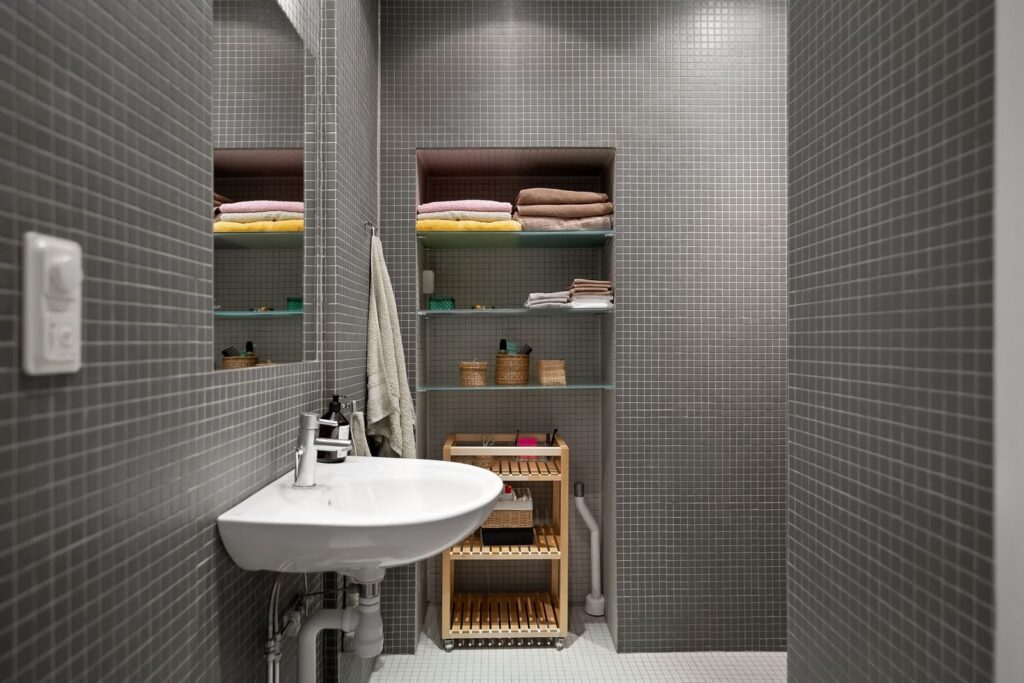
Every bathroom, however small, has to hold a surprising amount of stuff. Toothbrushes and toothpaste, skincare and medicines, hair tools and styling products, towels and spare toilet rolls, cleaning supplies and first-aid bits, all need a home, and in a small bathroom they often end up piled on the basin, balanced on the windowsill or stuffed into a single crowded cabinet. The result is a room that feels cluttered even when it is clean, and a morning routine that starts with a hunt for the thing you need.
The good news is that better bathroom storage rarely needs a renovation. Most small bathrooms have unused space on the walls, above the toilet, inside the vanity and in narrow gaps beside the sink, and a few well-chosen pieces can turn that dead space into useful storage. This guide brings together practical bathroom storage ideas that work in real homes, including rented homes, family bathrooms and tiny cloakrooms, with a focus on storage that is easy to keep tidy rather than storage that simply hides the mess.
Start By Clearing Out And Measuring
Before you buy anything, start with a clear-out. Take everything out of the bathroom, including the contents of every cupboard and drawer, and sort it into three groups: things you use every day, things you use sometimes, and things you no longer need. Expired medicines, dried-out cosmetics, empty bottles and products you bought and never liked should go. This step alone often frees up a surprising amount of space, and it tells you exactly what you actually need to store.
Next, measure the room. Note the width of the walls, the depth of the gaps beside the toilet and sink, the height of the space above the toilet, and the size of the vanity unit. Write the measurements down and keep them with you when you shop, because the best bathroom storage ideas start with measurements rather than shopping. A shelf that is a centimetre too wide is useless, while a slim unit that fits exactly into a gap beside the sink can hold a dozen bottles without taking up any floor space.
Use The Walls Before The Floor
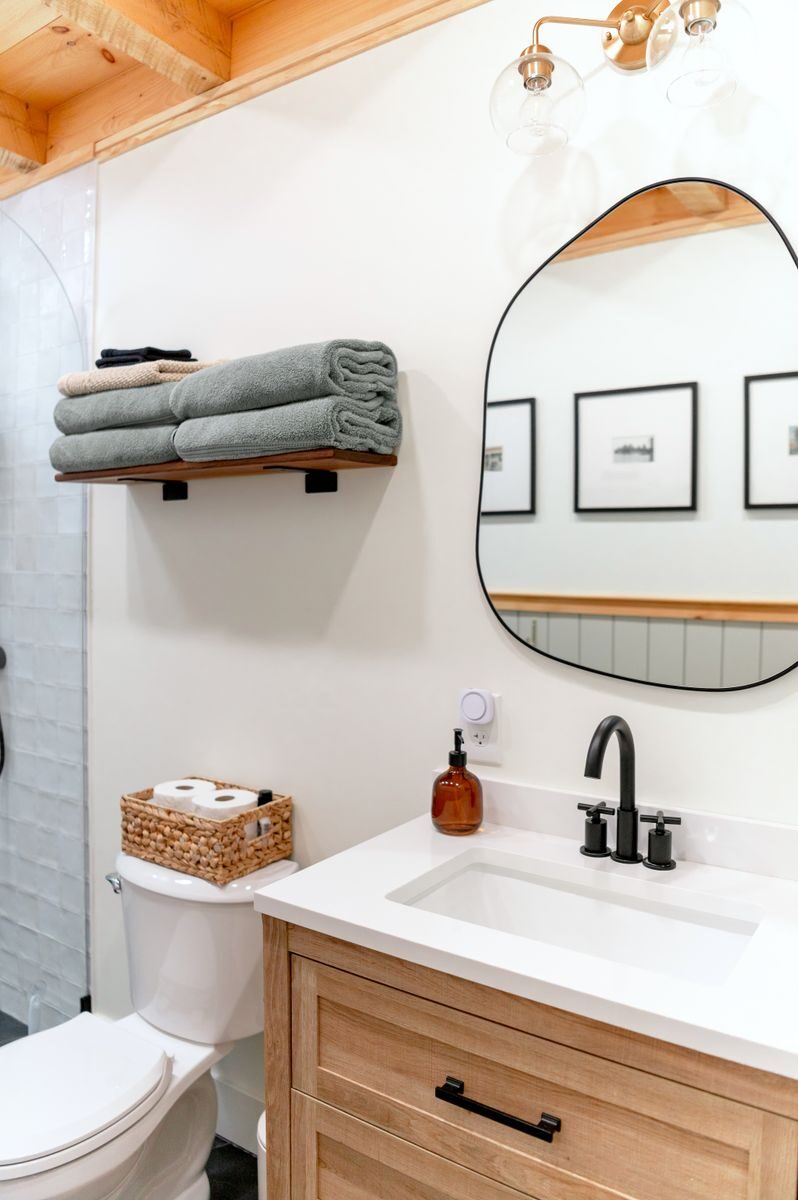
In a small bathroom, the floor is precious, and the walls are your best friend. Wall-mounted storage keeps the floor clear, which makes the room feel bigger and makes cleaning easier, and it puts things at eye level where you can actually find them. Start with the wall above the toilet, which is usually wasted space. Two or three floating shelves there can hold towels, spare toilet rolls, baskets of toiletries and a plant, turning dead space into generous storage without taking up a single centimetre of floor.
A mirror cabinet is one of the hardest-working pieces in any bathroom. From the outside it is a functional mirror, but inside it holds shelves for medicines, skincare and everyday toiletries, keeping them close at hand and out of sight. If you are replacing a plain mirror, choose the deepest cabinet that fits your wall, and look for one with adjustable shelves so you can fit tall bottles as well as small jars. A lit mirror cabinet adds a soft light that is useful for shaving and applying make-up, and it removes the need for a separate wall light.
Open shelving works well for things you use every day and want to grab quickly, such as rolled towels, a favourite moisturiser or a diffuser. Use baskets and lidded boxes on open shelves to hide visual clutter, and keep the prettiest things on display. A good rule is to mix closed and open storage: closed cabinets for medicines and clutter, open shelves for towels and the things you reach for daily. This balance keeps the room looking calm while keeping everything accessible.
Make The Vanity Work Harder
The vanity unit is the centre of most bathroom storage, and it is often badly organised. A single deep cupboard under the basin becomes a dark cave where things disappear, so the first step is to add structure inside it. Drawer organisers, small boxes and stackable trays can divide a deep drawer into zones for dental care, skincare, hair tools and medicines, so you can find what you need without emptying the whole drawer.
If your vanity has a cupboard rather than drawers, add a small shelf or a stackable rack inside it to double the usable space, and use a turntable or a pull-out basket for the things at the back. Keep the items you use every morning at the front, and the spares and back-ups at the back or on a higher shelf. A small caddy or tray on top of the vanity can corral the daily essentials, such as your toothbrush, hand soap and moisturiser, so they look tidy rather than scattered.
A floating vanity, which is fixed to the wall with no legs, is a good choice if you are replacing the unit, because it leaves the floor visible underneath and makes the room feel larger. It also gives you a place to tuck a small basket or a step stool for children. If a new vanity is not in the budget, a fresh set of drawer organisers and a clear-out of the cupboard underneath can make the one you have work far better than it does now.
Fill The Narrow Gaps
Small bathrooms are full of narrow gaps that look useless but can hold a surprising amount. The gap between the sink and the wall, the space beside the toilet, and the strip of wall next to the shower can all take a slim shelving unit or a narrow trolley. A slim rolling trolley, only a few centimetres wide, can hold shampoo, conditioner, cleaning products and spare toilet rolls, and it can be pulled out when you need it and pushed back when you do not.
In the shower, a suction-cup basket or a corner shelf keeps shampoo and soap within reach without drilling any holes, which is ideal for rented homes. Look for baskets with drainage holes in the bottom, so water does not collect, and choose rust-proof materials such as plastic or stainless steel. A shower caddy that hangs over the shower head or the door can hold several bottles without taking up any shelf space at all.
Do not forget the back of the door. An over-door rack or a set of hooks can hold towels, robes and hair tools, and it uses space that would otherwise be empty. In a cloakroom or a very small bathroom, a towel ring or a heated towel rail on the back of the door can free up a whole wall for storage. Hooks are also useful inside cupboard doors, where they can hold a hairdryer, a straightener or a dustpan and brush.
For more small-space ideas, see our guide to bedroom storage ideas.
The same principles work in the kitchen — read how to organise kitchen cupboards.
Storage For Renters And Tiny Bathrooms
If you rent your home, you may not be able to drill holes or fit a new vanity, but there is still plenty you can do. Suction-cup hooks and baskets attach to tiles and glass without any drilling, and they are strong enough for most toiletries. A freestanding shelving unit that leans against the wall, or a narrow trolley that slides into a gap, needs no fixing at all. An over-door rack uses the back of the door, and a shower caddy hangs over the shower head.
In a very small bathroom or a cloakroom, the key is to keep only the essentials in the room and store the rest elsewhere. A small wall cabinet or a single shelf can hold the daily essentials, while spare supplies live in a hallway cupboard or under the stairs. A mirror with a shallow cabinet behind it gives you storage without taking up any extra space, and a slim wall-mounted shelf above the basin can hold a toothbrush holder and a soap dish without crowding the room.
Light colours and mirrors also help a small bathroom feel larger, which makes the storage you do have feel less cramped. A large mirror reflects light and doubles the sense of space, while pale tiles and a clear floor make the room feel airy. This is not storage in itself, but it makes the storage you add look intentional rather than crowded. For more layout inspiration, see IKEA’s guide to laying out a small bathroom.
Frequently Asked Questions
How Can I Add Storage To A Small Bathroom Without Renovating?
Use the walls before the floor. Add floating shelves above the toilet, fit a mirror cabinet, use a narrow trolley in the gap beside the sink, and add baskets and drawer organisers inside the vanity. Suction-cup hooks and over-door racks work well in rented homes where you cannot drill. These changes cost little and need no building work.
What Is The Best Storage For A Bathroom With No Vanity?
If you have a pedestal basin with no vanity, use a tall narrow cabinet or a freestanding shelf unit beside the basin, and add a mirror cabinet above it. A small trolley or a set of baskets can hold toiletries, while hooks on the back of the door take care of towels and robes. A wall-mounted shelf above the basin gives you a place for daily essentials.
How Do I Organise Bathroom Drawers?
Divide each drawer into zones with small boxes or drawer organisers, one zone for dental care, one for skincare, one for hair tools and one for medicines. Keep the items you use every day at the front, and the spares at the back. A clear-out first makes the biggest difference, as most drawers hold things that are expired or no longer used.
What Storage Works Best In A Rented Bathroom?
Suction-cup baskets and hooks, freestanding shelf units, narrow trolleys and over-door racks all work without drilling or permanent changes. A shower caddy that hangs over the shower head and a small basket for daily essentials can transform a rented bathroom, and everything can be taken with you when you move. For affordable pieces, see this round-up of budget bathroom organisers.
Conclusion
The best bathroom storage ideas are not about buying more furniture, they are about giving every item a clear place and using the space you already have. Start with a clear-out and a tape measure, then use the walls above the toilet and beside the basin, make the vanity work harder with organisers and zones, and fill the narrow gaps with slim trolleys and shelves. Baskets and boxes keep the small things under control, and a clear place for everything keeps the room working. Whether you own your home or rent it, and whether your bathroom is a family room or a tiny cloakroom, these ideas can make the smallest bathroom feel calm, organised and easy to use, with no renovation required.
Leave a Reply