
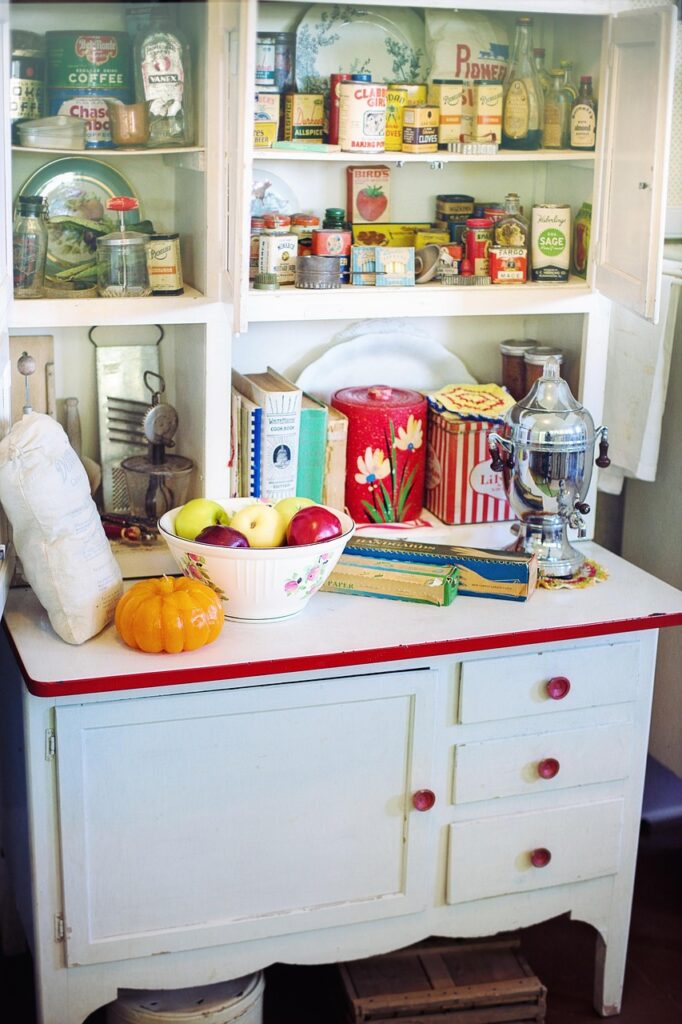
Learning how to organise kitchen cupboards starts with one simple idea: every cupboard should have a clear job, and everything inside it should belong to that job. When plates live beside the dishwasher, cooking oils live beside the hob, and breakfast items live together in one place, cooking becomes calmer and quicker. You stop opening three doors to find one thing, and you stop buying a second jar of something you already own. This guide walks through your cupboards one type at a time, so you can work through the whole kitchen in a weekend or tackle one cupboard each evening, using habits that are easy to keep up.
Key Takeaways
- Empty one cupboard at a time, sort everything into groups, and only put back what you actually use.
- Give each cupboard a job based on where you use its contents, not on where there happens to be space.
- Put everyday items at eye level and within easy reach, and move rarely used items higher or further back.
- Use shelf risers, turntables, baskets and door racks to make deep or tall cupboards easier to use.
- Label food cupboards and review them briefly once a month so the system does not slowly drift back to clutter.
Start With A Full Empty And An Honest Sort
The fastest way to organise a cupboard properly is to empty it completely. Take everything out, wipe the shelves, and look at what you actually own. Handling each item forces a decision that simply shuffling things around inside a full cupboard never does. Professional organisers recommend this step because, when you can see the whole collection at once, duplicates and unused items become obvious. Wayfair’s step-by-step guide to organising kitchen cupboards makes the same point, starting with a full clear-out before anything goes back.
As you sort, make four groups: keep, relocate, donate or pass on, and throw away or recycle. Keep only items you use, or that you genuinely need for a specific occasion, such as festive serving dishes. Donate clean, usable items you no longer need, and recycle or throw away anything broken, chipped, or past its best. Check food dates as you go, and be honest about ingredients bought for one recipe and never used again. Work cupboard by cupboard rather than emptying the whole kitchen at once, so the kitchen stays usable and each cupboard is finished properly before you move on.
Sort Into Clear Groups Before Anything Goes Back
Once a cupboard is empty, group its contents by how you use them. Food groups might include breakfast items, tinned goods, pasta and rice, baking ingredients, snacks, and sauces and condiments. Crockery groups might include everyday plates and bowls, mugs and glasses, and serving dishes. Cooking groups might include saucepans and frying pans, baking trays and tins, and utensils. Keeping groups small and specific makes it much easier to decide where each one should live, and it stops one large mixed group from becoming a dumping ground.
Avoid creating a large group labelled as miscellaneous. A miscellaneous cupboard quickly becomes the place where everything without a home ends up, and it is usually the first cupboard to become messy again. If an item does not fit any group, ask whether it belongs in the kitchen at all. This grouping step also shows what kind of help each cupboard needs: a cupboard full of small packets needs baskets, a cupboard full of tall bottles needs the right shelf height, and a cupboard full of pans needs a way to reach the bottom pan without lifting everything else.
Plan Cupboard Zones By Where You Use Them
The most useful rule for placing groups is simple: store things close to where you use them. Plates, bowls and glasses work well near the dishwasher or sink, because that is where they are washed and put away. Saucepans, oils, herbs and spices work well near the hob, because that is where cooking happens. Breakfast items work well together in one cupboard, ideally near the kettle or toaster, so mornings need only one or two doors opened.
Think of each cupboard as a zone with one main task. A cooking zone holds pans, oils and everyday seasonings. A preparation zone holds boards, knives and mixing bowls. A serving zone holds everyday crockery and glasses. A food zone holds dry goods, tins and snacks. A cleaning zone, usually under the sink, holds washing-up liquid, cloths and bin bags. When zones are clear, other people in the household can also put things away correctly, which is one of the best ways to keep the system working after the first tidy. Within each zone, place the most-used items at the front and at a comfortable height, and move seasonal items and rarely used dishes higher or further back.
Related reading: Small Utility Room Ideas: Smart Ways To Make The Most Of Your Space and House Cleaning 101: The Ultimate Guide To A Sparkling Home.
Organise Wall Cupboards And Base Cupboards
Wall cupboards are best for lighter items that you use often, such as plates, bowls, mugs and glasses. Heavy items are harder and less safe to lift down from height, so keep heavy casserole dishes and large appliances in base cupboards where possible. Inside a wall cupboard, use the lowest shelf for everyday items and reserve higher shelves for lighter, less-used things such as spare glasses or seasonal serving pieces. Shelf risers are particularly useful here, because they create a second level inside a tall space, letting you stack bowls on one level and plates on another.
Base cupboards hold heavier and bulkier items, including saucepans, baking trays, mixing bowls and small appliances, and their main problem is depth: items at the back are hard to see and reach. Pull-out shelves, sliding baskets and turntables all solve this by bringing the back of the cupboard to you. For saucepans, avoid tall, unstable stacks. A pan organiser, a vertical divider, or storing lids separately and upright can make a real difference, because a stack of pans with loose lids takes up extra space and rattles every time you move one. Baking trays and chopping boards also store well upright in a vertical divider, rather than stacked flat where the bottom tray is always hardest to reach.
Solve Corner Cupboards And Deep Shelves
Corner cupboards and very deep shelves are where good intentions often fail, because items pushed to the back simply disappear from view. Turntables are a practical answer for corner cupboards: a rotating tray lets you spin the contents around and see everything without removing the front items first. Pull-out corner shelves or swivel trays serve the same purpose and are worth considering if your corner cupboard is a daily frustration rather than an occasional annoyance.
For deep shelves without a special fitting, baskets are the simplest solution. A basket acts like a drawer: you pull the whole basket out, take what you need, and slide it back. Use one basket per group, such as one for baking ingredients and one for snacks, and label each basket so its contents stay clear. Avoid overfilling baskets, because a basket that is too heavy to pull out easily will soon be ignored. Another useful habit is to keep a clear space at the front of each shelf, so new items do not get pushed in front of old ones and the back stays reachable.
Organise Food Cupboards With First In First Out
Food cupboards benefit from a simple stock rule: new shopping goes behind older stock, so older items get used first. This first-in, first-out habit reduces waste and stops tins and packets from hiding at the back until they are out of date. It works best when similar foods are grouped together, because you can see the older tin of tomatoes behind the newer one instead of finding three tins in three different cupboards.
Decanting dry goods such as flour, sugar, rice and pasta into clear, sealed containers can help, but it is not essential for every household. Clear containers make it easy to see how much is left and keep food fresh, but they take time to fill and label. A practical middle ground is to decant only the items you buy regularly and use often, and to leave occasional ingredients in their original packets inside a labelled basket. Whichever approach you choose, label containers clearly, including the contents and, where helpful, the date it was opened. Houzz’s eight-step guide to organising kitchen cupboards and drawers offers a similar approach, grouping food by category and placing the most-used items in the easiest-to-reach places.
Keep The System Going With A Short Monthly Check
Organised cupboards stay organised when they are checked little and often, rather than left until they need a full overhaul. A short monthly check is enough for most kitchens. Open each food cupboard, check dates, move older items to the front, and remove anything out of date or no longer needed. Return any item that has drifted into the wrong cupboard, and check that baskets and labels are still accurate after any change in shopping habits.
This check also works well as a shopping aid. Before a weekly shop, a quick look at the food cupboards shows what is running low and what is already well stocked, which helps avoid duplicate purchases. Over time, this habit saves money as well as space, because fewer ingredients are bought twice and fewer items are thrown away unseen. If a cupboard starts to feel crowded again, repeat the honest sort for that one cupboard, rather than waiting until the whole kitchen needs attention. Involve the household from the start, so everyone knows where breakfast items and pans live, and putting shopping away becomes straightforward.
Related reading: How To Accessorize A Kitchen: The Ultimate Guide.
Frequently Asked Questions
How Long Does It Take To Organise Kitchen Cupboards?
A single cupboard can usually be emptied, cleaned, sorted and restocked in under an hour. A full kitchen may take a weekend if worked through cupboard by cupboard, or several evenings if tackled one cupboard at a time. Working in small sections keeps the kitchen usable and makes the task feel manageable.
Should Food Be Decanted Into Containers?
Decanting can help for foods you buy and use regularly, such as flour, rice, pasta and sugar, because clear containers show how much is left and keep food fresh. It is not necessary for every item. Occasional ingredients can stay in their original packets inside a labelled basket, which saves time and avoids a cupboard full of half-empty containers.
What Is The Best Way To Store Pan Lids?
Lids store best upright, either in a lid rack, a vertical divider, or a narrow holder inside the cupboard. Storing lids separately from pans avoids unstable stacks and makes it easier to find the right lid. If space is very tight, a rack fitted to the inside of a cupboard door can hold lids without using shelf space.
Conclusion
Organising kitchen cupboards is less about buying perfect containers and more about giving every cupboard a clear job and keeping that job simple. Empty one cupboard at a time, sort honestly, group items by use, and place each group where it will actually be used. Use baskets, risers and turntables only where they solve a real problem, and leave a little space on every shelf so daily cooking stays easy. With a short monthly check, the system you build this weekend can still be working months from now, and the kitchen becomes a calmer, more practical place to cook in every day.
Leave a Reply