
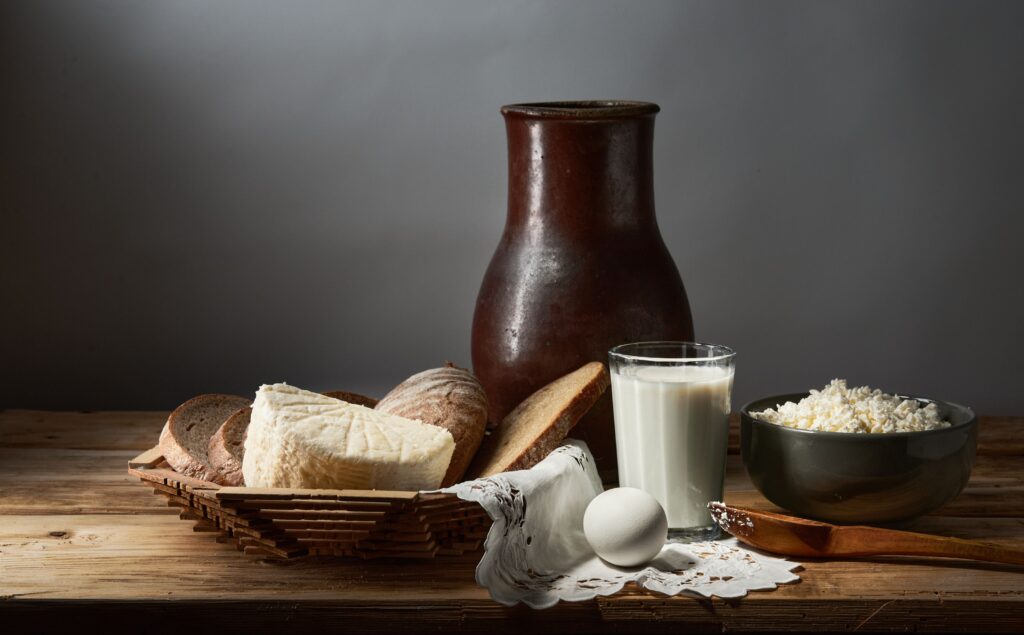
Calcium rich foods are the simplest way to look after your bones, teeth, muscles and nerves. You do not need an unusual diet or an expensive supplement to get enough calcium. In most cases, a varied, balanced diet in the UK already contains several good sources, from a glass of milk in the morning to kale, beans, fortified bread and tinned sardines at dinner.
The NHS explains that calcium helps build bones and keep teeth healthy, regulates muscle contractions, including your heartbeat, and helps blood clot normally. A lack of calcium in childhood could lead to rickets, while adults may develop osteomalacia or osteoporosis in later life. For most adults, food comes first, and this guide shows how to make that practical.
Why Calcium Matters More Than Bone Strength Alone
Bones often get all the attention, and for good reason. Your skeleton stores most of the calcium in your body. Yet calcium is also involved in everyday processes: it helps muscles contract and relax, supports normal nerve signalling, and plays a part in blood clotting.
Your body keeps the level of calcium in your blood within a narrow range. If your diet regularly provides too little, your body may draw calcium from your bones to keep blood levels steady. Over a long period, that can weaken bone density. Steady, daily intake therefore matters more than one calcium-heavy meal once in a while, and NHS dietitian guidance notes that it is better to think about intake over a number of days than to worry about missing the target on one day.
How Much Calcium Do You Need Each Day
In the UK, adults aged 19 to 64 need 700mg of calcium a day, according to the NHS. The NHS also states that you should be able to get all the calcium you need from your daily diet.
Needs differ at other life stages. A dietitian fact sheet used by NHS trusts lists: children aged 1 to 3 need 350mg, aged 4 to 6 need 450mg, and aged 7 to 10 need 550mg. Adolescents aged 11 to 18 need 800mg for girls and 1,000mg for boys. The same guidance lists 1,250mg for people who are breastfeeding and 1,200mg for women past the menopause. These are general guideline amounts, not personal prescriptions. If you have coeliac disease, osteoporosis, a digestive condition, or take regular medication, speak to your GP or a registered dietitian.
The NHS also advises that taking more than 1,500mg of calcium a day from supplements could lead to stomach pain and diarrhoea, and that 1,500mg or less a day is unlikely to cause harm. That advice is about supplements, not food. It is very difficult to reach harmful levels from food alone, which is another reason to focus on meals first.
Dairy Foods: The Most Familiar Calcium Rich Foods
Milk, cheese and yoghurt remain the most concentrated and convenient calcium sources for many people in the UK. They are also easy to use in everyday cooking, which makes them practical rather than just nutritious.
A 200ml glass of semi-skimmed milk provides about 240mg of calcium, according to British Dietetic Association figures, while NHS trust guidance lists a similar figure of 244mg for semi-skimmed milk. A 30g piece of Cheddar cheese, roughly the size of a matchbox, provides about 220mg. Plain yoghurt is another strong choice: a 150g pot provides about 240mg in BDA figures, while smaller pots still contribute a useful amount. Cottage cheese, by contrast, is much lower, so it should not be your main calcium food if cheese is your main source.
Low-fat dairy is worth choosing if you are watching saturated fat: NHS trust guidance notes that low-fat dairy contains just as much calcium as full-fat versions. Milk can go into porridge, tea, coffee and sauces; grated cheese works in pasta, jacket potatoes and omelettes; yoghurt works with fruit and oats. If you are lactose intolerant, lactose-free milk is still useful: BDA figures list it at 120mg per 100ml, the same as standard milk.
Leafy Greens, Beans And Other Plant Sources
If you eat little or no dairy, you can still build a calcium-rich diet, but it takes more planning, and not all plant sources are equal.
Curly kale, spring greens, pak choi, broccoli and okra are among the most useful green vegetables. The NHS specifically lists curly kale and okra as calcium sources. BDA figures put boiled kale at about 150mg per 100g and boiled broccoli at about 40mg for two spears, or 85g. Spring greens provide about 55mg per 75g serving.
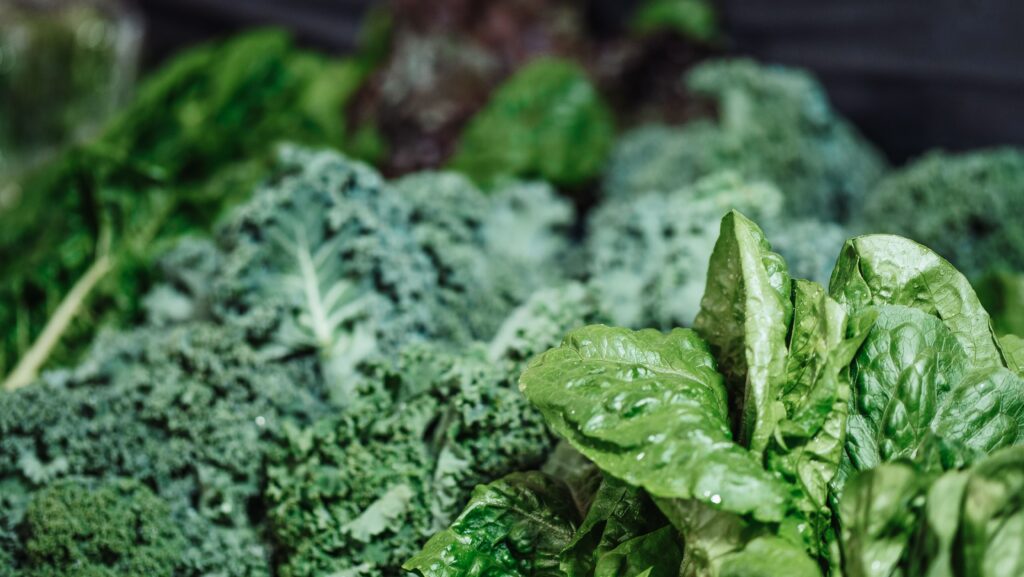
Photo by Kindel Media / Pexels
Spinach needs a careful note. Spinach does contain calcium, but the NHS points out that the body cannot digest all of it. That does not mean spinach is a bad food. It is rich in other nutrients. It simply means you should not rely on spinach alone for calcium. Choose kale, broccoli, pak choi or spring greens when calcium is the goal.
Beans and pulses add calcium in smaller amounts, but they add up across the day. Baked beans provide about 105mg per half tin in NHS trust figures, while kidney beans provide about 85mg per 120g. White beans and chickpeas are also useful, and bring fibre and protein. Nuts, seeds and dried fruit work best as toppings and snacks: almonds provide about 70mg per 30g, sesame seeds about 170mg per two tablespoons, and dried figs about 75mg per 30g. Tahini, made from sesame seeds, is a convenient way to add them to dressings and hummus. These foods are energy-dense, so a small handful is enough.
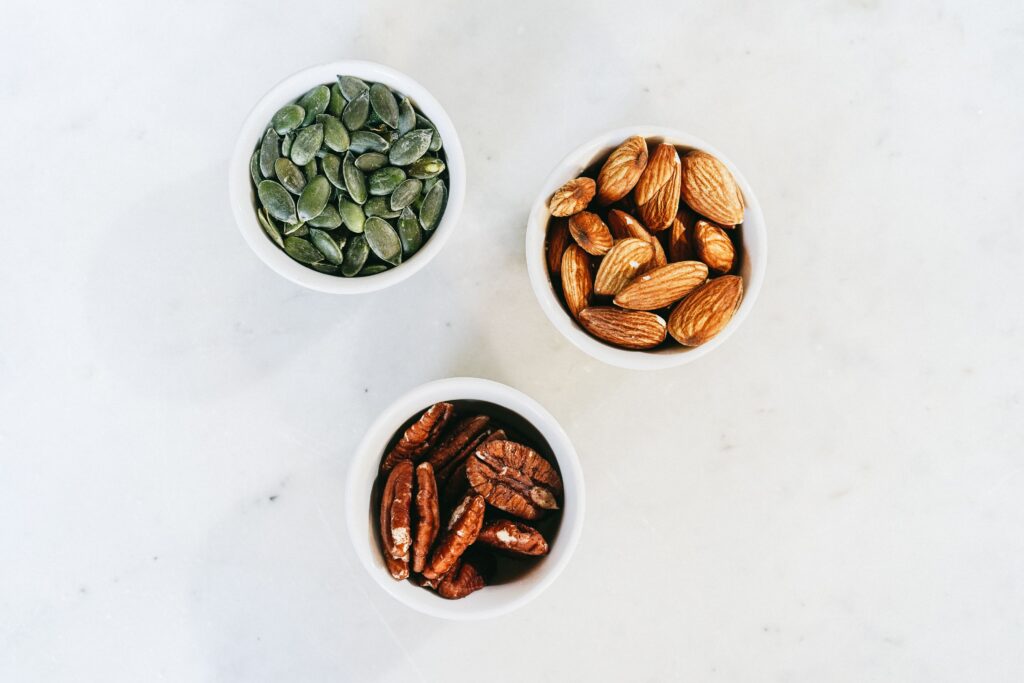
Photo by Antoni Shkraba / Pexels
Fish With Bones, Fortified Foods And Bread
Some of the strongest non-dairy calcium sources are foods that many people overlook. Tinned sardines eaten with their soft, edible bones are a standout. BDA figures list sardines at about 240mg per half tin, or 60g, while NHS trust guidance lists a similar portion at 230mg for half a tin, drained. Pilchards provide about 150mg per 60g serving. Tinned salmon with bones is lower, at about 115mg to 174mg per half tin depending on whether it is pink or red salmon, but still useful. The bones are the point here. If you remove them, you remove much of the calcium.
Fortified foods are especially important in the UK. By law, white and brown flour milled in the UK is fortified with calcium. BDA figures list two large slices of white bread at about 155mg and two large slices of wholemeal bread at about 105mg. Calcium-fortified plant drinks are another key source, listed at 120mg to 190mg per 100ml, so a 200ml glass can provide a similar amount to cow’s milk. Always check the label, because not every plant drink is fortified, and organic versions are often not fortified.
Calcium-set tofu is another strong option, listed at about 300mg per 100g uncooked weight. Tofu set with nigari does not provide the same amount, so check for calcium chloride (E509) or calcium sulphate (E516). Fortified breakfast cereals and calcium-fortified yoghurt alternatives, listed at 120mg to 210mg per 100g, can also help at breakfast.
How To Help Your Body Absorb Calcium
Eating calcium-rich foods is only part of the story. Your body also needs to absorb the calcium, and vitamin D plays a central role in that process. The Royal Osteoporosis Society explains that vitamin D helps your body absorb and use calcium, which is vital for bone health. You can get vitamin D from sunlight, from oily fish, eggs and fortified foods, and, in some circumstances, from supplements, but supplement decisions should be discussed with a healthcare professional.
A few practical habits can help. First, spread calcium across the day rather than trying to get it all in one meal. Second, pair calcium foods with a varied diet that includes fruit, vegetables and protein, rather than relying on a single food. Third, check labels on plant drinks, tofu and cereals, because fortification varies by brand. The goal is balance across the week, not perfection at every meal.
A Simple Calcium Rich Day In The UK
A calcium-rich day does not need to be complicated. Breakfast could be porridge made with semi-skimmed milk, or fortified soya drink, topped with a small handful of almonds. That alone can provide several hundred milligrams, depending on portions and brands.
Lunch could be a sandwich on fortified bread with Cheddar cheese and salad, or a chickpea and kale salad with tahini dressing. Dinner could be sardines on toast, a tofu stir-fry with pak choi and broccoli, or a bean stew with bread. A pot of plain yoghurt with fruit makes a useful pudding or snack.
A glass of milk, a piece of cheese, a pot of yoghurt and two slices of bread can already take an adult close to, or beyond, the 700mg daily target. Plant-based days need more variety, but a fortified drink, calcium-set tofu, kale, beans and tahini can reach a similar total with planning.
Common Mistakes And When To Ask For Advice
One common mistake is assuming that any green vegetable is an equally good calcium source. As noted above, spinach is less reliable for calcium than kale or broccoli. Another mistake is choosing an unfortified plant drink and assuming it matches cow’s milk. It usually does not, so the label matters.
A third mistake is turning to supplements before checking food intake. Supplements have a place for some people when a clinician has advised them, but they are not automatically better than food. If your intake seems low, you avoid whole food groups, you have a digestive condition, or you have broken a bone from a minor fall, talk to your GP or a registered dietitian.
Conclusion: Build Calcium Into Meals You Already Enjoy
Calcium rich foods are not exotic, expensive or difficult to find. Milk, cheese and yoghurt, kale and broccoli, beans, sardines, fortified bread and plant drinks, calcium-set tofu, almonds, sesame seeds and dried figs all contribute. Include a calcium source at most meals, vary your choices across the week, check labels on fortified products, and support absorption with vitamin D and a balanced diet.
You do not need to count every milligram. Start with one easy swap, such as choosing a fortified plant drink, adding kale to a stir-fry, or keeping tinned sardines in the cupboard, and build from there.
For more everyday food ideas on FM Magazine, see Bergamot: The Fragrant Citrus With Hidden Health And Wellness Benefits, Celtic Salt: The Ancient Mineral-Rich Salt Making A Modern Comeback, and Fresno Chile: Flavor, Heat, And Uses That Make It A Kitchen Favorite.
Disclaimer: This article is general information only and is not medical advice. It does not replace advice from your GP, dietitian or other healthcare professional. If you have a health condition, take medication, or are concerned about your calcium intake, consult a healthcare professional for personal advice.
Frequently Asked Questions
Can You Get Enough Calcium Without Dairy?
Yes, it is possible, but it needs more planning. Fortified plant drinks, calcium-set tofu, kale, pak choi, broccoli, beans, tahini, almonds and fortified bread can combine to meet daily needs. Always check labels for fortification, because unfortified plant drinks and nigari-set tofu provide much less calcium.
Is Cheese A Healthy Calcium Source?
Cheese is concentrated, with Cheddar providing about 220mg per 30g, but it can be high in saturated fat and salt. Enjoy matchbox-sized portions as part of a varied diet, balanced with vegetables, beans and wholegrains.
Do You Need A Calcium Supplement?
Most adults should be able to get enough calcium from food, according to the NHS. Supplements may be advised for some people by a clinician, but they are not a substitute for a balanced diet. Do not take high-dose calcium supplements without professional advice, and remember that the NHS advises that taking more than 1,500mg a day could cause stomach pain and diarrhoea.
Which Leafy Green Is Best For Calcium?
Curly kale, spring greens, pak choi, broccoli and okra are better choices than spinach for calcium, because the NHS notes that the body cannot digest all the calcium in spinach. Kale is particularly useful, at about 150mg per 100g boiled, and it works well in soups, stir-fries and salads.
Featured image: A rustic still life featuring bread, cheese, egg, milk, and cottage cheese on a wooden table. Photo by Matvei / Pexels
Leave a Reply