
If you eat a typical UK diet, there is a good chance you are not getting enough fibre. Adults in the UK are advised to eat 30g of dietary fibre a day, yet the NHS notes that most people eat only around 18g a day — roughly 60% of the recommended amount. That gap matters, because fibre is linked with better digestive health and a lower risk of heart disease, stroke, type 2 diabetes and bowel cancer.
The good news is that closing the gap does not require a special diet, expensive products or a complete overhaul of the way you eat. Food rich in dietary fibre is ordinary food: porridge, wholemeal bread, beans, lentils, vegetables, fruit, nuts and seeds. This guide explains what fibre is, which foods are richest in it, how much you actually need, and how to build it into everyday meals without discomfort.
Disclaimer: This article is general information only and is not medical advice. It does not diagnose, treat or replace professional advice for any digestive condition. If you have a digestive disorder, a restricted diet, or symptoms that persist, speak to your GP or a registered dietitian for advice personalised to you.
What Is Dietary Fibre And Why Does It Matter?
Dietary fibre is a type of carbohydrate found almost exclusively in plants. Unlike other carbohydrates, it is not digested in the small intestine. Instead, it passes through to the large bowel, where some of it is fermented by gut bacteria. The British Nutrition Foundation explains that fibre is found in wholegrain cereals and cereal products, beans, lentils, fruit, vegetables, nuts and seeds, and that eating a variety of fibre-rich foods is more beneficial than relying on a single source.
Fibre helps in several practical ways. It adds bulk to stools and helps waste move through the digestive tract, which can help prevent constipation. Foods with fibre also tend to make you feel fuller, which can help with weight control as part of a balanced diet. The NHS also notes that eating plenty of fibre is associated with a lower risk of heart disease, stroke, type 2 diabetes and bowel cancer. None of this means that fibre alone prevents disease — it is one part of an overall healthy pattern of eating, alongside regular activity, not smoking, and a varied diet. But it is a part that most of us are currently missing.
How Much Fibre Do You Need Each Day?
For adults aged 17 and over, the UK recommendation is 30g of dietary fibre per day. Children need less, and the amount rises with age: around 15g a day for children aged 2 to 5, around 20g for ages 5 to 11, and around 25g for ages 11 to 16, according to NHS guidance.
If 30g sounds like a lot, it helps to see it in meals rather than grams. The NHS gives two useful examples. Two slices of wholemeal toast with peanut butter followed by a medium orange provides around 8.3g of fibre. A lunch of wholemeal spaghetti with lentil and tomato sauce provides around 11g. Put a fibre-rich breakfast and lunch together and you are already well over halfway there, before dinner, snacks or fruit are even counted.
When you are shopping, labels can help. A food described as a “source of fibre” must contain at least 3g of fibre per 100g, while a food described as “high fibre” must contain at least 6g per 100g. That simple check makes it easier to compare breads, cereals and ready meals without guessing.
Soluble Fibre Versus Insoluble Fibre: What Is The Difference?
You will often see fibre divided into two types, and most plant foods contain a mixture of both, in different proportions.
Soluble fibre dissolves in water to form a gel-like substance. It is found in foods such as oats, barley, beans, lentils, peas and some fruits, and the British Nutrition Foundation links cereal fibres such as beta-glucans from oats and barley with improved cholesterol and heart health. Pulses provide fermentable fibres that feed beneficial gut bacteria and support blood sugar control.
Insoluble fibre does not dissolve in water. It adds bulk and helps food pass through the gut. It is found in wholewheat products, the skins of fruit and vegetables, nuts and seeds. Fruit and vegetables provide a mix of both types, including fermentable pectins and insoluble cellulose, which is one reason variety matters more than chasing a single “best” fibre food.
There is no need to sort every food into one box. The practical rule, repeated by both the NHS and the British Nutrition Foundation, is to eat fibre from a variety of sources: wholegrains, pulses, fruit, vegetables, nuts and seeds.
Pulses And Legumes: Beans, Lentils And Chickpeas
If there is one food group that does the most work for your fibre intake, it is pulses. They are cheap, filling, widely available in UK supermarkets — dried or tinned — and they cook into meals most families already eat, from stews and curries to salads and soups.
The British Heart Foundation lists approximate fibre per 100g for several everyday foods, and pulses sit near the top: red kidney beans at 11.1g, green and brown lentils (boiled) at 7.4g, and baked beans in tomato sauce at 4.9g. Boiled peas come in at 5.6g per 100g. Those figures are for 100g portions, so the fibre in an actual serving will depend on how much you eat, but the ranking is clear.
Practical ways to use them include adding a tin of drained chickpeas to a salad, stirring red lentils into a tomato sauce until they disappear into it, or swapping half the meat in a chilli or Bolognese for kidney beans. Tinned beans and chickpeas are a quick, cost-effective shortcut: rinse them, and they are ready in minutes. If you are new to pulses, build up gradually — a sudden large increase in fibre can cause bloating and wind, and the NHS advises increasing fibre alongside extra fluid.
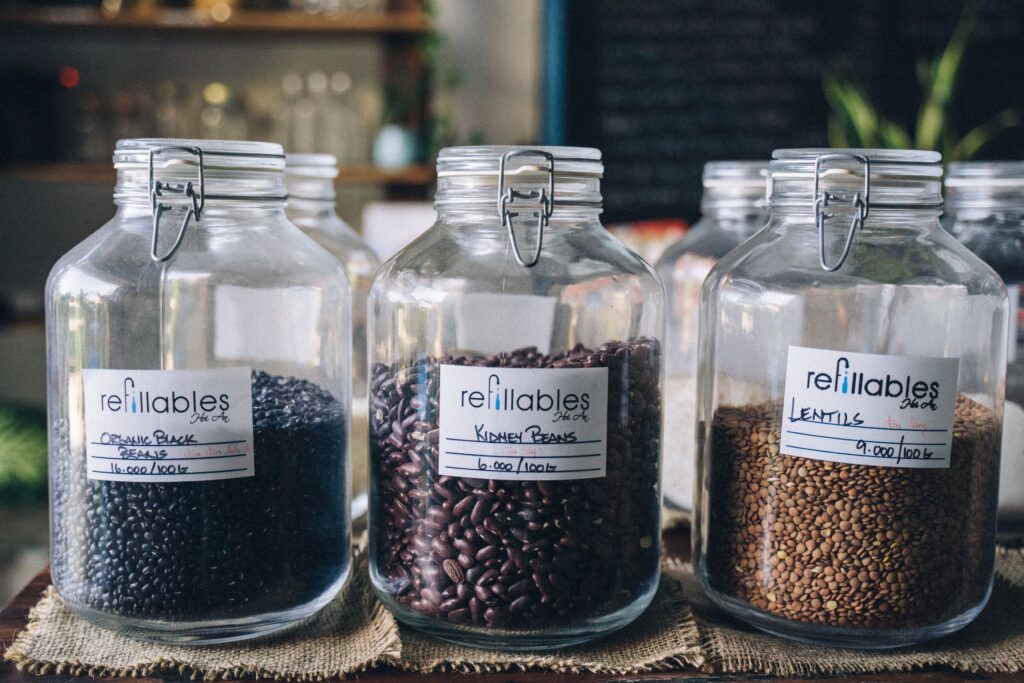
Photo by Anna Tarazevich / Pexels
Wholegrains And Breakfast Cereals: Oats, Bread, Rice And Pasta
Wholegrains are the easiest fibre win for most people, because they simply replace a refined version of something you already eat. Choose wholemeal or granary bread instead of white, wholewheat pasta instead of white pasta, and brown rice or bulgur wheat instead of white rice, and your fibre intake rises without any new cooking skills.
Breakfast is a particularly good place to start. The NHS suggests a higher-fibre breakfast cereal such as plain wholewheat biscuits, plain shredded wholegrain, or porridge, noting that oats are also a good source of fibre. The British Heart Foundation puts porridge oats at 7.8g of fibre per 100g and toasted wholemeal bread at 8.2g per 100g. Adding fresh fruit, dried fruit, seeds or nuts to cereal or yoghurt adds more fibre still — and, as FM Magazine has explored in other food pieces, small flavour additions can transform a plain dish without adding much salt or fat.
One habit worth keeping is eating potatoes with their skins on, whether as a baked potato or boiled new potatoes. Sweet potato, baked, provides around 5.2g of fibre per 100g according to the British Heart Foundation, and the skin is where much of a potato’s fibre sits. Peeling it away throws fibre in the bin.
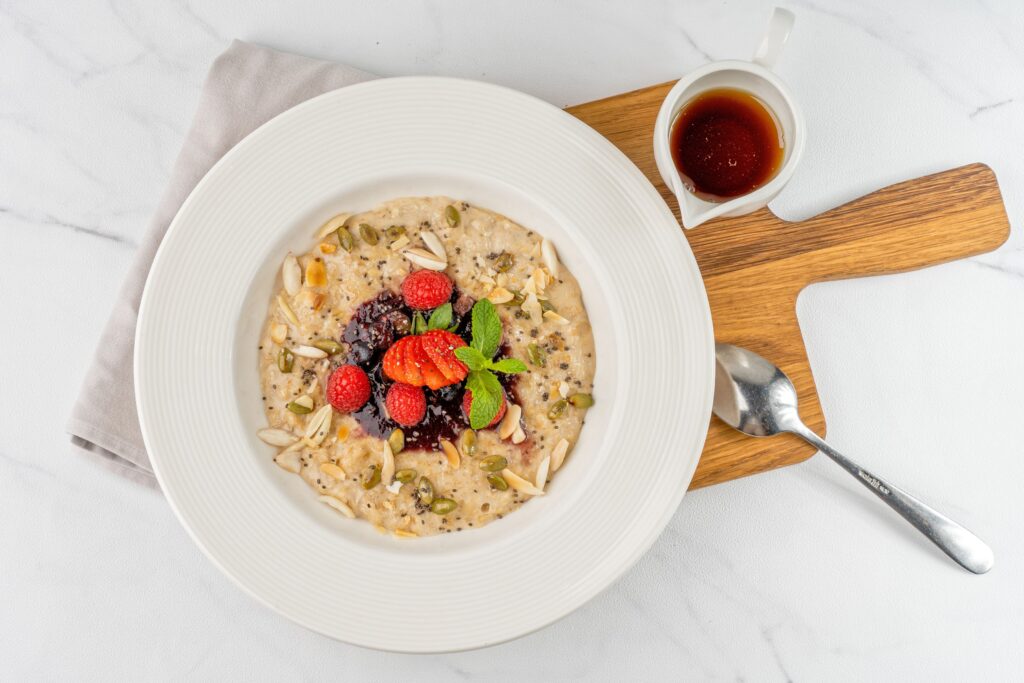
Photo by Denys Gromov / Pexels
Fruit And Vegetables: Eat The Skin Where You Can
Fruit and vegetables are familiar fibre sources, but the details matter. Whole fruit generally provides more fibre than fruit juice, because juicing removes much of the pulp. Where possible, eat the skin: an apple eaten whole gives you more fibre than the same apple peeled, and the same applies to pears, carrots and potatoes.
The NHS advises aiming for five portions of fruit and vegetables a day, and including plenty of vegetables with meals, either as a side dish or added to sauces, stews and curries. Broccoli, steamed, provides around 3.8g of fibre per 100g, and raspberries around 3.7g per 100g, according to the British Heart Foundation. Neither figure is dramatic on its own, but across five portions a day they add up quickly — and fruit and vegetables bring vitamins, minerals and variety that fibre supplements cannot replace.
Dried fruit deserves a note of caution. It does contain fibre, but because it is sticky it can increase the risk of tooth decay, so the NHS advises eating it as part of a meal rather than as a between-meal snack. Fresh fruit, vegetable sticks, rye crackers, oatcakes and unsalted nuts or seeds make better everyday snacks.
Nuts, Seeds And Healthy Snacks
Nuts and seeds are compact sources of fibre, and they are useful precisely because they are easy: a small handful needs no cooking and travels well. The British Nutrition Foundation notes that nuts and seeds provide a range of fibre types, including fermentable oligosaccharides, soluble pectins and insoluble cellulose, and can support satiety, help lower cholesterol and support gut health. Peanuts, dry roasted, provide around 7.6g of fibre per 100g according to the British Heart Foundation.
Portions do matter here, because nuts and seeds are energy-dense. A small handful as a snack, or a spoonful of seeds scattered over porridge, yoghurt or a salad, is the right scale. The NHS snack suggestions — fresh fruit, vegetable sticks, rye crackers, oatcakes and unsalted nuts or seeds — are a good template: fibre plus something fresh, rather than a large bag of salted nuts on its own.
A Simple High Fibre Day: Breakfast, Lunch And Dinner
Theory is useful, but a day of meals makes the 30g target feel achievable. Here is one realistic pattern built entirely from the foods above.
For breakfast, have porridge made with oats, topped with raspberries and a spoonful of seeds, or two slices of wholemeal toast with peanut butter and a medium orange — the NHS example worth around 8.3g of fibre. For lunch, try wholemeal spaghetti with lentil and tomato sauce (around 11g in the NHS example), or a baked potato with its skin on, filled with baked beans, plus a side salad. For dinner, a stew or curry with chickpeas, vegetables and brown rice, or a stir-fry with vegetables and bulgur wheat, keeps the fibre coming without any special ingredients.
Snacks can quietly add several more grams: an apple, a handful of unsalted nuts, vegetable sticks with houmous, or oatcakes. None of these meals is exotic, and none requires you to give up foods you enjoy. The shift is mostly about choosing the wholegrain version, keeping skins on, and adding pulses or vegetables where they fit naturally.
How To Increase Fibre Without Bloating Or Discomfort
The most common mistake is trying to jump from a low-fibre diet to 30g overnight. A sudden increase can cause bloating, wind and cramps, and that discomfort is what puts many people off. The NHS and the British Nutrition Foundation both advise the opposite approach: increase gradually, and drink more fluid as you do so.
A workable pace is to add one extra high-fibre food a day, give your gut a week or so to adjust, and then add another. Drink plenty of fluids — the British Nutrition Foundation suggests around 6 to 8 glasses a day for adults — because fibre draws water into the bowel, and without enough fluid it cannot do its job properly. Chewing food well, eating at regular intervals and staying active also support digestion, according to NHS patient guidance.
If you live with irritable bowel syndrome or another digestive condition, be especially cautious: NHS Tayside notes that larger amounts of fermentable fibre can cause bloating, gas and diarrhoea for some people with IBS. In that case, the general advice in this article is not a substitute for guidance from your own clinician or dietitian, who can advise on the types and amounts of fibre that suit you.
Common Fibre Myths Worth Dropping
One myth is that fibre means bran and little else. Bran cereals are indeed high in fibre, but the richest everyday sources are far more varied: beans, lentils, oats, wholemeal bread, vegetables, fruit, nuts and seeds all count, and a varied mix is better than a single source.
Another myth is that white bread, pasta and rice are “just as good” if you eat enough vegetables. Vegetables help, but swapping the staple itself is one of the simplest ways to add grams every single day, and it costs nothing extra. Similarly, fruit juice is not a fibre equivalent of whole fruit, and a fibre supplement is not a replacement for a varied diet — supplements have a place for some people on professional advice, but they do not provide the range of nutrients, or the satisfaction, of whole foods.
Finally, fibre is not a weight-loss trick on its own. Foods rich in fibre can help you feel fuller, and that can support weight control as part of a balanced diet, but no single nutrient overrides overall eating patterns, activity and sleep.
Conclusion: Small Swaps, Repeated Daily, Close The Gap
Most UK adults are eating around 18g of fibre a day against a recommended 30g, and that shortfall is not caused by a lack of willpower. It is caused by refined staples, peeled vegetables, skipped pulses and juice instead of whole fruit — all small, fixable habits.
Start where you already eat: porridge or wholewheat cereal for breakfast, wholemeal bread for sandwiches, potatoes with their skins on, a tin of beans or lentils in a sauce you already make, fruit for dessert and nuts or oatcakes for snacks. Add one change at a time, drink enough fluid, and let your gut adjust. Within a few weeks, 30g stops being a target on a chart and becomes simply the way you eat — with the digestive and long-term health benefits that the NHS and the British Nutrition Foundation describe.
For more everyday food ideas on FM Magazine, see how bold flavour can be added without extra salt or fat, and how a fragrant citrus ingredient is used in tea and cooking — small touches that, like the fibre swaps above, make healthy eating easier to stick with.
Frequently Asked Questions
Can I Get Enough Fibre Without Eating Bran Every Day?
Yes. Bran is only one source. Oats, wholemeal bread, wholewheat pasta, brown rice, beans, lentils, chickpeas, vegetables, fruit, nuts and seeds all contribute, and the NHS and British Nutrition Foundation both emphasise variety over any single food. A day built from porridge, wholemeal bread, a lentil sauce and vegetables can reach the 30g target without bran at all.
Is It Better To Get Fibre From Food Or From A Supplement?
Food first, for most people. Whole high-fibre foods also provide vitamins, minerals, protein and other plant compounds, and they help you feel full in a way a supplement does not. Supplements may be appropriate for some people, but that is a decision to make with a healthcare professional, particularly if you have a digestive condition or take regular medication.
Why Do I Feel Bloated When I Eat More Fibre?
Bloating often happens when fibre increases too quickly, or when fluid intake does not increase alongside it. Increase gradually, one extra high-fibre food at a time, drink plenty of fluids, and give your gut time to adjust. If bloating is severe, persistent, or accompanied by pain, weight loss or blood in your stool, seek medical advice promptly rather than pushing through it.
Do Children Need The Same 30g Of Fibre As Adults?
No. Children need less, rising with age: around 15g a day for ages 2 to 5, around 20g for ages 5 to 11, and around 25g for ages 11 to 16. The same principles apply — wholegrains, fruit, vegetables and pulses, with skins on where appropriate — but portions and targets should be age-appropriate, and very high-fibre diets are not suitable for very young children without professional guidance.
Does Cooking Reduce The Fibre In Food?
Cooking does not remove fibre in the way it can reduce some vitamins. Boiled lentils, baked beans, steamed broccoli and cooked wholegrains all retain their fibre. What does reduce fibre is refining (white flour instead of wholemeal), peeling (removing skins) and juicing (removing pulp). Keep skins on, choose wholegrain versions, and eat whole fruit, and cooking itself is not a problem.
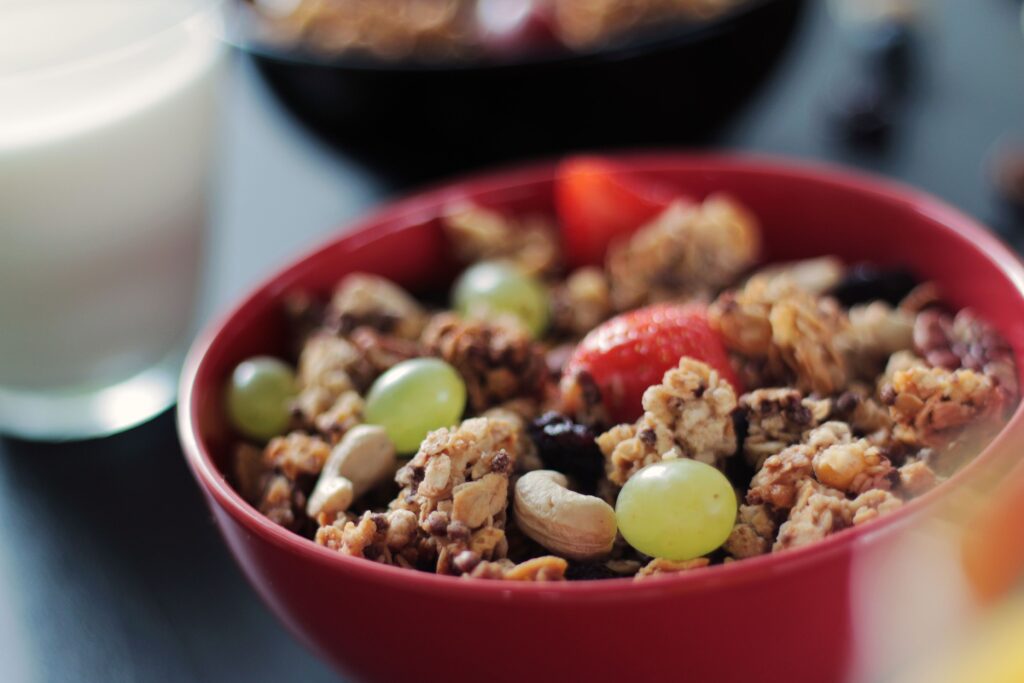
Featured image: A vibrant red bowl of muesli with fresh fruits and nuts, perfect for a healthy breakfast. Photo by JÉSHOOTS / Pexels
Leave a Reply