
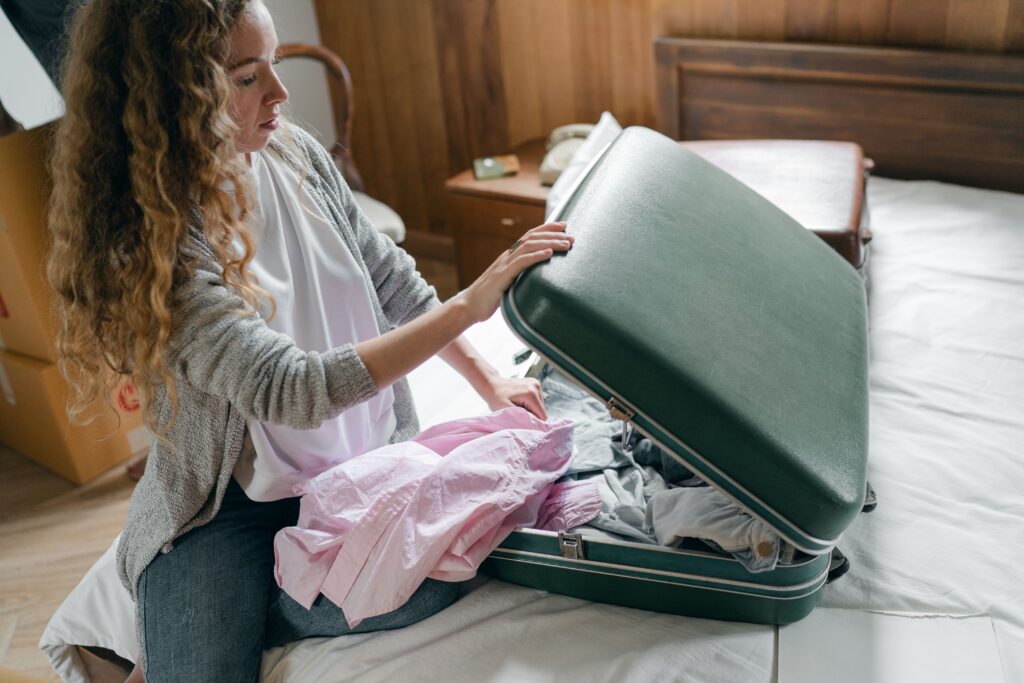
Packing carry on luggage well comes down to three decisions: choose a bag that fits the rules, plan your outfits before you open the case, and pack only what you will actually use. Travelling with just a cabin bag means no waiting at the carousel, no risk of a checked bag going missing, and far less to carry through stations and airports. This guide explains how to pack smart and travel light, with honest, general advice and the size guidance that airlines actually publish.
What Carry On Luggage Means
Carry on luggage, also called hand luggage or cabin baggage, is the bag you take into the passenger cabin of the aircraft instead of checking it into the hold. You keep it with you for the whole journey, which is why it needs to hold everything you cannot do without: travel documents, money, medication, electronics, and a change of clothes.
Size limits matter, and they are not the same everywhere. The International Air Transport Association (IATA) recommends, as of 2022, a maximum cabin bag size of 56 cm × 45 cm × 25 cm (22.0 in × 17.7 in × 9.8 in), including wheels, handles, and pockets. These IATA guidelines are voluntary, and the actual size and weight limits imposed by airlines vary, so always check your own airline’s rules before you fly. A bag that is fine on one airline may be too large or too heavy on another, and the only reliable check is the airline you are travelling with.
Liquids need separate attention. In the EU and the US, liquids in hand luggage are generally limited to small containers of about 100 ml (3.4 oz) each, carried together in a single clear, resealable bag. Pack that bag where you can reach it easily, because you will usually need to take it out at security.
Choose The Right Carry On Bag
The best carry on bag is the one that fits your airline’s limits, suits your trip, and is comfortable to carry. A soft-sided bag can squeeze into an overhead locker more easily, while a hard-shell case protects fragile items better. Four spinner wheels make a heavy bag easy to roll through an airport, but two wheels are often sturdier on rough pavements. Neither choice is right for everyone.
Pay attention to the bag’s empty weight. A heavy case eats into your weight allowance before you pack a single shirt, so a lighter bag gives you more room for your belongings. Outside pockets are useful for documents, a book, and a water bottle, while a separate padded section for a laptop saves you unpacking everything at security. Before buying, measure the bag including its wheels and handles, because airlines measure the whole bag, not just the main compartment.
If you already own a bag, test it before a real trip. Pack it fully, lift it into an overhead locker at home if you can, and walk with it for ten minutes. A bag that feels fine empty can feel very different when it is full, and it is better to discover that at home than at the airport.
Plan Your Outfits Before You Pack
Most overpacking happens before the bag is opened. People pack for every possible occasion instead of for the trip they are actually taking. Start by checking the weather for your destination and the activities you have planned, then lay out complete outfits, not separate items. Each top should work with at least two bottoms, and each pair of shoes should work with several outfits.
Choose a small colour palette, for example navy, white, and one accent colour, so that everything mixes and matches. Neutral colours hide creases better and make a small wardrobe look larger. Wear your bulkiest items on the journey: heavy shoes, a coat, and a thick jumper take up far more room in a bag than on your body. For a trip of up to a week, three to four tops, two bottoms, and one extra layer are usually enough, with underwear and sleepwear packed in a small separate bag.
Write a short list before you pack, and cross items off as they go into the bag. A list stops the common mistake of packing the same type of item twice, and it makes unpacking and repacking during the trip much quicker. If you are travelling with a journal, note what you actually wore each day; that record is surprisingly useful for packing the next trip, as explained in How To Start A Travel Journal You Will Actually Keep.
How To Pack Smart: Rolling, Folding And Cubes
Rolling soft, casual clothes such as T-shirts, knitwear, and underwear saves space and reduces creasing, because a roll has no sharp folds. Fold structured items such as shirts and trousers, and place them on top of the rolled layers so they stay flat. Shoes go at the bottom of the bag, near the wheels, where their weight keeps the bag stable, with socks tucked inside them to use every bit of space.
Packing cubes are small zippered bags that divide a case into sections: one for tops, one for bottoms, one for underwear, and one for laundry. They do not magically create space, but they stop a small bag turning into a mess after the first day, and they make security checks and hotel unpacking much faster. A separate clear bag for toiletries and a small pouch for cables keep the two things you need most often within easy reach.
Pack in layers, heaviest at the bottom and lightest on top, and fill gaps with small soft items such as scarves or swimwear. Leave a little empty space if you can. A bag packed to bursting is hard to close, hard to search, and leaves no room for anything you buy on the trip.
Packing List For A Short Trip
Use this list as a starting point, and adjust it for your destination and the season:
- Travel documents, money, and payment cards
- Phone, charger, and any adapters you need
- Medication and a basic first-aid item
- Three to four tops and two bottoms in matching colours
- One warm layer and a light waterproof jacket
- Comfortable walking shoes and one smarter pair
- Underwear, sleepwear, and swimwear if needed
- Toiletries in containers of about 100 ml each, in a clear bag
- Sunglasses, a hat, and sun protection for warm destinations
- A book, headphones, and a snack for the journey
Liquids, Electronics And Security
Keep liquids together in one clear, resealable bag at the top of your case, with each container no larger than about 100 ml, following the EU and US hand luggage rules described above. Buy larger toiletries at your destination if you need them, or use solid alternatives such as shampoo bars and solid deodorant, which do not count as liquids.
Electronics usually need to come out at security, so keep your laptop or tablet near the top of the bag, not buried underneath clothes. Pack chargers and cables in one small pouch, and carry a portable charger for long travel days. Keep valuables, documents, and medication in your personal item or jacket pocket rather than in the overhead locker, so they stay with you even if your bag is checked at the gate.
Common Carry On Packing Mistakes
The most common mistake is packing “just in case” items: extra outfits, books you will not finish, and gadgets you rarely use. Every “just in case” item adds weight and takes space from something you will actually need. A useful test is to ask whether you used the item on your last similar trip. If the answer is no, leave it behind.
Another mistake is packing shoes first and clothes second. Shoes are heavy and awkward, so they should go in first, at the bottom, with clothes packed around them. Packing toiletries loosely is another problem: a leaking bottle can ruin clothes, so keep liquids in a sealed bag and keep that bag upright. Finally, many travellers forget a small personal item for the flight itself, such as a phone charger, a snack, and a layer for a cold cabin, and then have to open the overhead locker mid-flight to find them.
Packing For Different Types Of Trip
A city break needs comfortable walking shoes, a small day bag, and clothes that work for both daytime sightseeing and an evening meal. A beach holiday needs swimwear, sun protection, and a light cover-up, but not a different outfit for every day. A business trip needs one smart outfit that can be worn twice with different accessories, plus wrinkle-resistant fabrics that survive a small bag.
For longer trips, plan to do laundry rather than packing more clothes. Most hotels and many holiday rentals offer laundry facilities, and a small travel laundry bag keeps clean and worn clothes separate. For a family trip, give each child a small packing cube of their own, so their clothes stay together and mornings are simpler. The principle stays the same whatever the trip: pack for the days you have, not for every imagined possibility.
Good packing also makes the journey itself easier. When your bag is light and organised, you move through airports, stations, and city streets with less stress, and you have more energy left for the trip itself. For ideas about where to use that extra energy, see Holidays to Brazil and Holidays to LA USA, and for a lighter way of thinking about travel, read Travel Quotes That Capture Why We Wander.
Travel Light, Travel Well
Travelling light is not about deprivation. It is about choosing well: a bag that fits the rules, outfits that work together, and belongings you will genuinely use. The reward is practical, not just philosophical. You walk past the carousel, you carry less up hotel stairs, and you spend less time packing, unpacking, and searching for things.
Start small if you are new to cabin-only travel. Try it for a short trip first, note what you missed, and adjust your list for the next one. Most people find they missed very little, and that the freedom of a single small bag is worth far more than the extra outfits they left behind. Pack smart, check your airline’s rules, and travel light.
Leave a Reply