
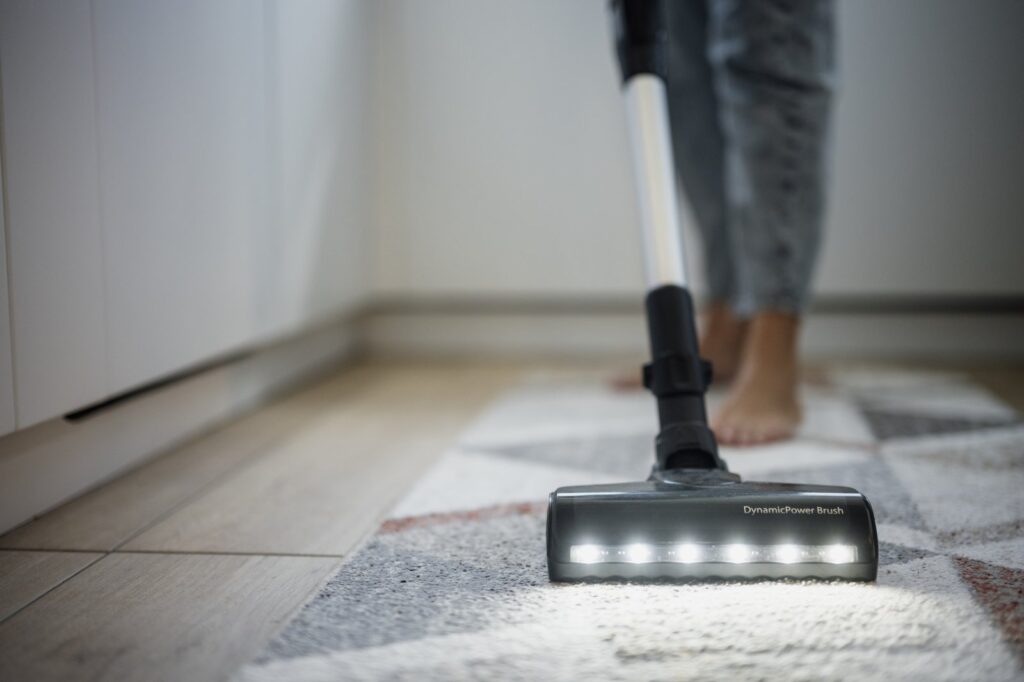
Knowing how to clean a carpet properly can make a room feel fresher without turning a small mark into a bigger problem. The safest method is simple: remove loose dirt first, treat stains according to what caused them, use as little water as you can, rinse away cleaning residue, and let the carpet dry fully before walking on it again. Rushing with too much water, scrubbing hard, or mixing products can damage fibres, spread colour, and leave dampness deep in the pile.
A good clean does not always need a machine. Hand cleaning can suit one room, a rug, or a small spill, while large areas, heavy soil, or damp smells may need a hired machine or professional help. Match the method to the fibre, stain, and amount of dirt.
Start With The Right Cleaning Approach
Carpet fibres trap grit, dust, hair, and dried spills. Vacuuming first matters because loose grit can be pushed deeper when liquid is added. Move small furniture where you can, vacuum slowly, and go over busy areas from more than one direction. If the carpet is only dusty, this may be enough for a routine refresh. If there are marks, treat them before any wider clean so you do not spread them across a larger area.
Check the carpet type if you know it. Wool and delicate rugs need extra care because strong cleaners, heat, and rough agitation can harm them. Synthetic carpets can still lose colour or melt with unsuitable solvents or high heat. Follow any care label, use the gentlest method first, and stop if colour changes.
What You Need Before You Begin
You do not need a cupboard full of products. A small kit is enough for most everyday marks:
- A vacuum cleaner with a suitable floor head or brush attachment
- Clean white cloths or kitchen roll
- A spoon or blunt knife for lifting solids
- A bowl of cool or lukewarm water
- A small amount of washing-up liquid
- Bicarbonate of soda for some greasy marks and odours
- A soft brush for gentle agitation
- Gloves for pet accidents or dirty spills
- A fan, open window, or dehumidifier for drying
Keep a separate cloth for rinsing. One common mistake is to keep using the same dirty cloth, which puts soil back onto the carpet. Change to a clean part of the cloth as soon as it picks up colour or dirt.
Test Every Cleaner First
Before using any solution on a visible area, test it on a hidden patch, such as under furniture. Apply a little, wait, blot with a white cloth, and check for colour transfer or fibre damage. Even mild mixtures need this test, especially on wool, silk, viscose, or older rugs.
Never mix cleaning chemicals. In particular, do not combine bleach with ammonia, vinegar, or other cleaners, because dangerous gases can form. Use one method at a time, rinse between methods, and read the label on any commercial carpet product. If a product warns against use on wool or a particular fibre, do not use it on that carpet.
How To Clean A Carpet By Hand
Hand cleaning works best when the carpet stays damp rather than wet. Too much water can soak into the backing and underlay, where it dries slowly and may cause odour or mould. Work in small sections and rinse each one before moving on.
- Vacuum the whole area slowly, including edges and under movable furniture.
- Mix a small amount of washing-up liquid into lukewarm water. Use only a little; excess soap leaves residue that attracts dirt.
- Dip a soft brush or cloth into the solution, shake off the excess, and clean a small section with light strokes.
- Blot with a clean cloth dampened with plain water to rinse away soap and loosened dirt.
- Press dry towels into the section to lift moisture.
- Repeat section by section, changing the rinse water when it looks dirty.
- Leave the carpet to dry fully with good airflow before replacing furniture or walking on it in socks or shoes.
If a spill also reached nearby hard flooring, deal with the carpet first while it is still fresh, then use a suitable method for the floor. For tiled areas, FM Magazine’s guide on how to clean grout can help you treat the joints without soaking the carpet edge again.
How To Treat Common Carpet Stains
The best stain method depends on the spill. HSS gives similar advice in its guide to removing difficult carpet stains: blot rather than rub, work from the outside in, patch test first, and use cool water where heat could set the stain. Those rules prevent many stains from becoming permanent.
Mud And Grit
Do not scrub wet mud. Let it dry fully, then break up the crust gently with a spoon or blunt knife and vacuum slowly. Once the dry soil is removed, dab any remaining mark with a mild washing-up liquid solution, working from the outside towards the centre. Rinse with a cloth dampened with clean water and blot dry. This method avoids smearing mud deeper into the pile.
Tea And Coffee
Blot tea or coffee straight away with kitchen roll, pressing down and lifting rather than rubbing. Dab the mark with a mild washing-up liquid solution on a white cloth. For a stubborn ring, a small amount of diluted white vinegar may help on colourfast synthetic carpet, but patch test first and rinse well. If the drink contained milk, finish by blotting carefully and drying the area, because milk residue can smell sour if left behind.
Red Wine
Act quickly with red wine. Blot the spill immediately, then dab with a little cold water to dilute what remains. Use a mild detergent solution on a cloth, working inwards, and rinse by blotting with clean water. Repeat gently rather than scrubbing. Avoid pouring on more liquid than needed, as excess moisture can carry pigment deeper into the backing.
Grease And Food Spills
Lift solids with a spoon, moving towards the centre so you do not spread the spill. Blot liquid grease with kitchen roll. Cover the mark with bicarbonate of soda or cornflour to absorb oil, leave it for a while, then vacuum it up. Dab the remaining mark with a mild detergent solution, rinse, and blot dry. Grease can need more than one gentle round, but repeated blotting is safer than hard scrubbing.
Pet Accidents
Wear gloves and remove solids first. Press kitchen roll firmly into the area to absorb liquid, rinse with a little cold water, and blot again. An enzymatic pet-stain cleaner can help break down organic matter, but follow the label and patch test it, especially on wool. Dry fully. Persistent smell may mean urine reached the underlay.
Wax And Chewing Gum
For wax, harden it with ice in a sealed bag, scrape off the brittle pieces, and vacuum the flakes. Remaining wax can be lifted by placing plain brown paper over it and pressing briefly with a warm iron on a low setting, checking often so synthetic fibres do not overheat. For chewing gum, freeze it with ice, chip it away gently, vacuum fragments, then dab any residue with mild detergent solution and rinse.
How To Dry A Carpet Properly
Drying is part of cleaning. After rinsing, press dry towels into the carpet, open windows where weather allows, and use a fan to move air across the surface. Keep ventilating until the pile and backing feel dry. A dehumidifier can help in cold or humid rooms. Do not replace furniture too soon.
Damp conditions are linked with mould growth. Bexley Council explains that mould is caused by damp conditions and that ventilation helps control moisture in the home in its damp and mould guidance. If you already have mould on nearby walls, deal with the moisture source as well as the surface growth; FM Magazine’s guide on how to remove mould from walls is a useful next step. If windows stream with moisture after cleaning, read how to get rid of condensation before the room becomes damp again.
Mistakes That Can Damage Carpet
Several common habits make carpet cleaning harder. Rubbing spreads stains and roughens fibres. Hot water can set protein stains such as milk, egg, blood, and vomit. Too much detergent leaves sticky residue that attracts new dirt. Flooding the carpet pushes soil into the backing. Using bleach or strong solvents without checking fibre suitability can remove colour or weaken the pile.
Another mistake is stopping too soon. If you lift colour from a stain but leave detergent behind, the patch may look clean at first and then attract dirt quickly. Always rinse by blotting with clean water and then blot dry. If the cloth still picks up colour or foam, keep rinsing gently.
When To Call A Professional
Call a professional if the carpet is valuable, antique, wool, silk, or badly stained; if a large area smells damp; if mould is in the backing; or if a stain has dyed the fibres. Ask what method they plan to use and whether it suits your carpet type.
Frequently Asked Questions
Can I Clean A Carpet Without A Machine?
Yes. For a small room, rug, or local mark, vacuum first, clean in small sections with a mild solution, rinse by blotting with clean water, press out moisture with towels, and dry fully. A machine is more practical for large areas or heavy soil.
Should I Use Hot Water On Carpet Stains?
Use cool or lukewarm water for most stains. Hot water can set protein-based stains such as milk, blood, egg, and vomit. Warm water may be used in some detergent mixtures, but avoid heat unless the method and carpet fibre are suitable.
How Long Should A Carpet Take To Dry?
Drying time depends on how much water was used, the carpet thickness, airflow, temperature, and humidity. A lightly cleaned patch may dry within hours, while a deeper clean can take longer. Do not replace furniture or cover the area until it feels dry through the pile.
Why Does My Carpet Still Smell After Cleaning?
Odour often remains when residue, pet urine, or moisture is trapped in the backing or underlay. Rinse thoroughly, dry fully, and check whether the smell is coming from beneath the carpet. If the underlay is soaked or mouldy, cleaning the surface alone may not solve it.
What Should I Do If A Stain Will Not Lift?
Stop scrubbing and reassess the stain type. Some marks dye the fibres or need a specialist product. If the carpet is valuable or the stain keeps spreading, professional help is safer than trying stronger chemicals at home.
Final Thoughts
The safest way to clean a carpet is patient and controlled: vacuum first, patch test, blot from the outside in, use the right method for the stain, rinse away residue, and dry the carpet fully. That approach protects the fibres, reduces odours, and lowers the risk of damp problems. If a mark is old, valuable, or linked with mould or underlay damage, professional advice is the better choice.


Leave a Reply