
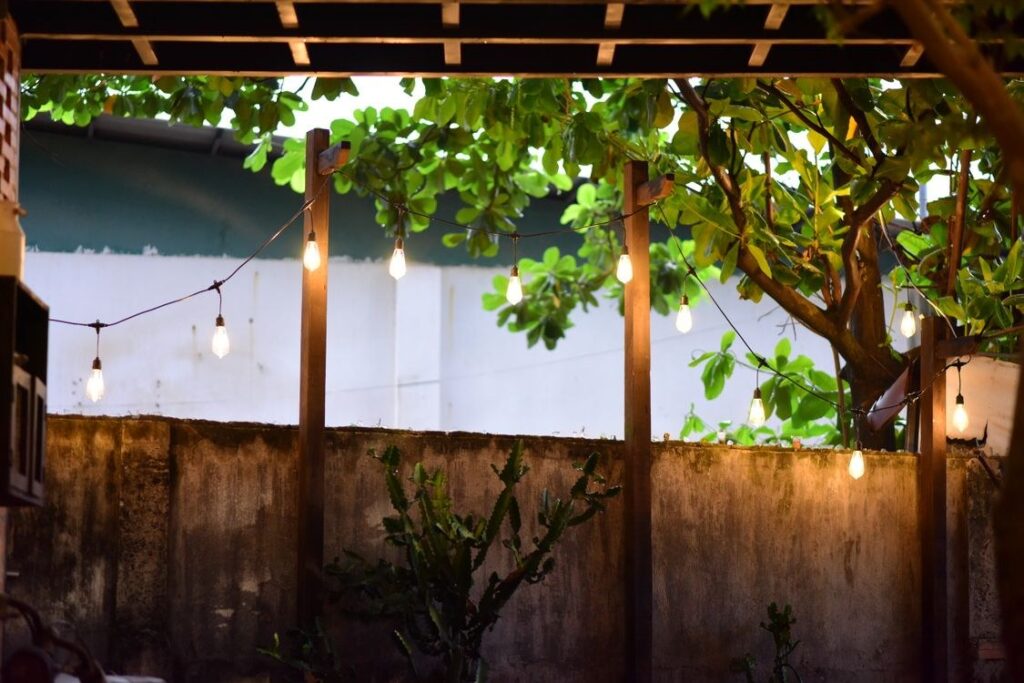
The best garden lighting ideas do three jobs at once: they help you move safely after dark, they make seating areas feel welcoming, and they show off the plants and features you enjoy in daylight. Good lighting does not mean flooding every corner with brightness. In most UK gardens, a few well placed, outdoor rated fittings in the right places will look better and feel calmer than one powerful light. This guide explains how to choose safe fittings, where to place them, and which power options suit different parts of the garden.
Start With Safety And Outdoor Ratings
Safety comes before style in any outdoor space. Rain, frost, damp soil and wet paving all increase the risk around electricity, so every fitting, cable and connection used outside must be designed for outdoor use. Never use indoor lights or damaged cables in the garden, even for a single evening.
The IP rating on a fitting tells you how well it keeps out dust and water. The second number is the one to watch for rain. As a general guide, IP44 suits sheltered spots such as a covered porch, while IP65 is a safer choice for exposed paths, borders and open patios. Lights set into the ground usually need a higher rating such as IP67, and anything placed in a pond or water feature needs a rating made for use in water, such as IP68. If a product does not state an outdoor rating clearly, do not use it outside.
Power needs the same care. Outdoor sockets and circuits should have RCD protection, which cuts the power quickly if a fault occurs. Keep plugs and connections dry and off the ground, follow the manufacturer instructions, and check cables for damage before use. For general electrical safety advice, Electrical Safety First is a trusted UK starting point.
One rule should stay clear from the start: mains wired electrical work belongs to a qualified electrician. New outdoor circuits, fixed wall lights, driveway lighting and buried supplies are not jobs to improvise. Solar, battery and plug in low voltage lights can cover many decorative needs without fixed wiring, but anything connected into your home wiring should be installed and checked by a qualified electrician.
Choose Garden Lighting Ideas For Paths And Steps
Paths and steps are where lighting earns its keep first. Wet slabs, uneven gravel, frost and changes in level are easy to miss after dark, so light should define edges and reveal each step clearly. Low bollard lights, stake lights and small fittings set along the edge of a walkway all work well when they are spaced evenly enough to avoid dark gaps.
Aim for gentle pools of light rather than glare. A path light that shines into your eyes hides the ground instead of revealing it, so choose fittings that direct light downwards or shield the bulb. On steps, small lights near the edge of each tread help visitors judge depth.
Solar path lights are popular because they need no wiring and switch on automatically at dusk. They work best where the panel receives direct sun during the day. In shade or through a grey winter, solar output can drop a great deal, so do not rely on weak solar markers for the only route to a door.
Add Warm Light To Patios And Seating Areas
A patio needs a softer mood than a path. Warm white light, often described as around 2700K to 3000K, feels closer to candlelight and usually looks kinder on skin, brick, timber and planting than cool white light. Festoon or string lights above a seating area create an instant evening setting, while lanterns on a table or low wall add a gentle glow at sitting height.
Layering works outdoors just as it does indoors. Combine one gentle overhead source, such as string lights, with lower accents around pots, borders or decking edges. Wall lights beside a back door help with keys and trips in and out of the kitchen, and they make the garden feel connected to the house.
If your patio doubles as a cooking space, keep task light practical as well as pretty. You need to see work surfaces, steps and hot pans clearly, so a brighter, well directed fitting near the cooking area is sensible. Our guide to small outdoor kitchen ideas shows how lighting fits into a compact cooking corner without overwhelming the rest of the garden.
Highlight Plants Walls And Garden Features
Once safe routes and seating are covered, accent lighting adds depth. A small spotlight at the base of a tree or architectural plant throws soft shadows upwards and makes the shape read against the night sky. The same approach works for a textured wall, a statue, a birdbath or a water feature. Keep the beam aimed at the feature, not outwards into neighbouring gardens.
Fences and boundaries can also carry light well. String lights along the top of a fence, small fittings on posts, or low lights along a border help a garden feel enclosed and finished after dark. If you are planning planting and lighting together, our tiny garden ideas can help you make a small plot feel larger after dark.
Water features need extra care. Lights in or near water must be rated for that use, and the electrical supply must be protected properly. Submersible LED lights are widely available, but fitting them safely is a job to discuss with a qualified electrician rather than a task to guess at.
Compare Solar Battery And Low Voltage Options
There are four common ways to power garden lights, and each suits a different job. Solar lights suit paths, borders and low level accents where wiring would be awkward. They charge during the day and need no running cost, but their brightness depends on sun exposure and season. Battery lanterns suit temporary setups, parties and table lighting, although batteries need replacing or recharging.
Plug in low voltage kits use a transformer to step power down for the lights. They can give steadier light than solar and suit feature lighting along borders and paths. Keep the transformer and plug in a dry, suitable place, use only outdoor rated parts, and follow the manufacturer instructions exactly. If a kit needs a new outdoor socket or any change to fixed wiring, that part belongs to a qualified electrician.
Mains wired fittings give the most reliable output for driveways, security lights and permanent wall lights. They are also the option that most clearly needs professional installation. For a balanced view of styles, power choices and safety points, the Checkatrade outdoor lighting guide is a useful companion to this article.
Security lighting deserves a separate thought. A motion sensor light switches on when it detects movement, which can deter unwanted visitors and uses less electricity than a light left on all evening. Position it to cover gates, side passages and doors, and angle it onto your own ground.
Plan Garden Lighting Ideas For Small Gardens
Small gardens benefit from restraint. One warm string of lights, two or three path markers and a single accent on a plant or wall can be enough. Too many fittings in a tight space create glare and make the plot feel smaller, while a few gentle sources create depth.
Think about where you actually walk and sit. Light the route from the back door, the seating corner, and one feature you enjoy looking at from indoors. That simple triangle covers most evenings. If you work or read outside, a garden room or shed also needs a safe route and a door light. Our guide to garden office ideas covers the workspace side of that planning.
Timers and dusk sensors help small and large gardens alike. Lights that switch on at dusk and off later in the evening save energy and spare you from walking outside in the rain to switch fittings off.
Keep Neighbours And Wildlife In Mind
Good garden lighting stays on your own ground. Angle spotlights downwards or towards the feature they highlight, avoid very bright unshielded fittings near boundary fences, and choose warm, low level light where you can. A harsh floodlight may feel secure, but it can also annoy neighbours and wash out the calm mood you wanted.
Wildlife also responds to light at night. Excessive artificial light can disturb nocturnal creatures, so use only the light you need, shield fittings where possible, and switch lights off when the garden is not in use. Timers make this easy.
Common Mistakes To Avoid With Garden Lighting
- Buying indoor lights for outdoor use. Always check that a fitting is rated for outdoors and suitable for its exact position.
- Choosing brightness over placement. A modest light in the right place beats a powerful light aimed at your eyes.
- Relying on shaded solar lights for safety routes. Solar needs direct sun to charge well, so test positions before you depend on them.
- Leaving cables across paths. Trailing leads create trip hazards and can be damaged by feet, tools and weather.
- Forgetting steps and level changes. The prettiest scheme fails if visitors cannot see the edge of a step.
- Treating mains wiring as a casual job. Fixed outdoor wiring belongs to a qualified electrician, every time.
Frequently Asked Questions
What IP Rating Do Garden Lights Need?
Outdoor lights should be rated at least IP44, and that level suits sheltered spots such as a covered porch. For exposed paths, borders and open patios, IP65 is a safer choice. Ground level fittings usually need IP67, and lights used in ponds or water features need a rating made for water, such as IP68.
Do Solar Garden Lights Work Well In The UK?
They can, but performance depends on sun exposure. Solar lights need several hours of direct sunlight to charge properly, so they work best in sunny positions and in brighter months. In shade or through winter they may glow for a shorter time, so use them for accents rather than as your only safety lighting.
Do I Need An Electrician For Garden Lighting?
For anything mains wired, yes. Solar and battery lights do not need professional installation, but new outdoor circuits, fixed wall lights, driveway lighting and buried supplies should be installed by a qualified electrician. The same applies to a new outdoor socket.
What Colour Light Looks Best In A Garden?
Warm white light, around 2700K to 3000K, usually creates the cosiest feel outdoors. It flatters planting, timber and brick and feels closer to candlelight. Cooler white light can look clinical in a garden, although it may suit a practical area where clear visibility matters most.
How Can I Stop Garden Lights Annoying Neighbours?
Keep light low, warm and directed at your own paths and features. Angle spotlights downwards, shield bright fittings near fences, and use timers so lights switch off later in the evening. Motion sensor security lights also help because they shine only when movement is detected.
Final Thoughts
Garden lighting works best when it follows the way you use the space. Light the paths and steps first, add warm light where you sit and eat, then use a few accents to give plants and features depth after dark. Choose outdoor rated fittings, respect the limits of solar power, and leave mains wired work to a qualified electrician. With that order in mind, even a modest scheme can make a UK garden feel safer, calmer and far more inviting on dark evenings.




Leave a Reply