
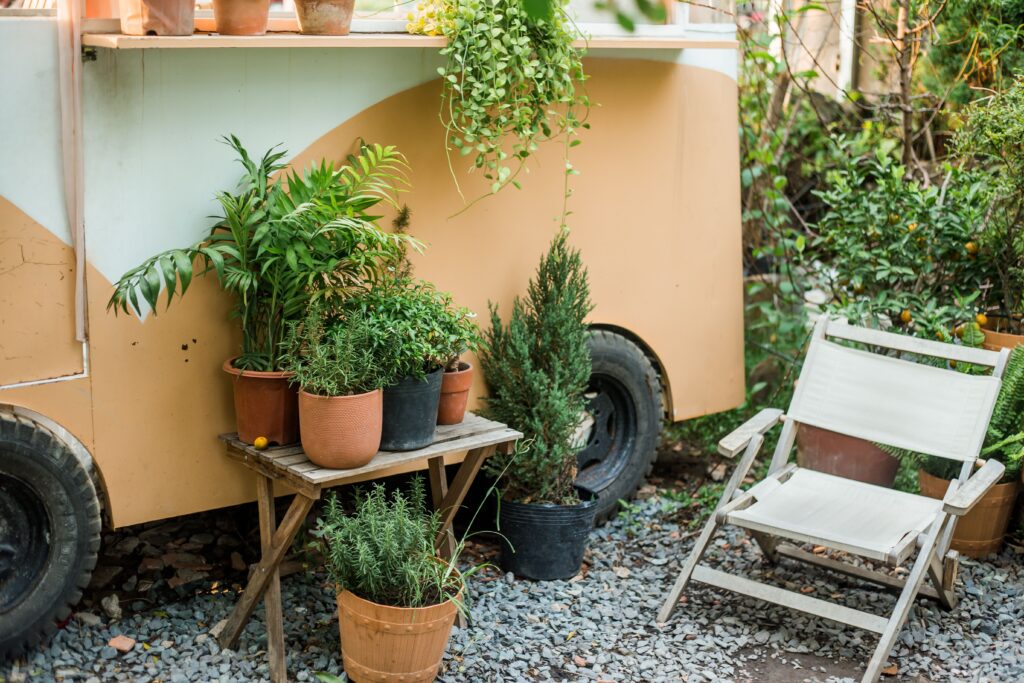
A tiny garden is not a failed big garden. A small courtyard, a narrow side return, a pocket-sized patio or a balcony can be just as beautiful and useful as a large garden, as long as it is designed with its size in mind. The secret is not to squeeze in as much as possible. It is to make clever choices about layout, planting and colour so the space feels bigger than it is.
The designers at the RHS Chelsea Flower Show return to the same principles again and again for small spaces: use fewer, larger features, build upwards, layer planting, and keep the palette simple. Gardeners’ World gives similar advice in its small garden design guide, recommending a balance of around 50 per cent planting and furniture to 50 per cent paving or decking, so a small patio feels easy on the eye rather than overcrowded.
Start With One Job For The Garden
Before buying a single plant, decide what the garden is for. A tiny space cannot do everything, and the gardens that work best do one or two things really well. A quiet place to sit? A spot for summer meals? Somewhere to grow herbs? Pick the main use, and let it shape every other decision. As RHS Chelsea designers put it, simplicity creates a sense of spaciousness.
Sketch the space on paper first. Mark the sunny and shady spots and where you walk, and note where the sun falls in the morning and the afternoon, because that decides what will grow where. Most fruit and vegetables need around six hours of sunshine a day to produce good crops, according to Gardeners’ World, so use the sunny corner for veg and herbs and the shady corner for ferns and hostas.
Use Big Containers, Not Lots Of Small Ones
The single most useful trick for a tiny garden is to use fewer, bigger pots. A collection of small pots can look cluttered, while one large container has instant impact and creates a focal point. Gardeners’ World recommends planting up one big container on a small patio instead of a collection of small pots, choosing plants that last for more than one season.
RHS Chelsea designers agree. Their advice for small spaces includes choosing a bigger container than you think you need, so plants have room to grow, and preferring a few large statement pots to lots of small ones. Choose containers in matching materials or colours so the eye moves smoothly across the space, and make sure every container has drainage holes, because plants sitting in water will rot.
Grow Upwards With Vertical Planting
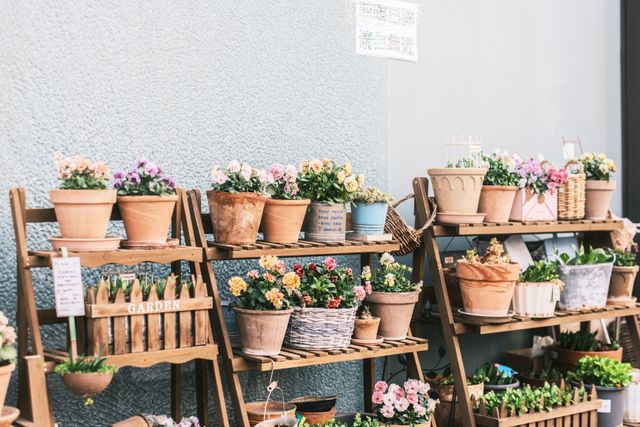
When floor space is short, the walls are free. Vertical planting can double your growing area without taking up a single extra square foot of ground. Cover a fence or wall with climbers, fix a trellis or a green wall, or hang planters and baskets. The RHS advises gardeners to look up and cloak walls with climbers.
Good climbers for small UK gardens include star jasmine, or Trachelospermum jasminoides, which is evergreen and scented in summer, honeysuckle, clematis and climbing roses. Gardeners’ World suggests evergreen flowering climbers such as star jasmine, honeysuckle, chocolate vine and passion flower to clothe walls and fences in all four seasons. Hanging baskets planted with begonias, lobelia and pelargoniums, or with ferns in shade, add colour without using floor space.
If you want a small tree, choose one that earns its place. A trained fruit tree takes up far less room than a standard tree and can be grown flat against a wall or fence. Espaliers and fans grow flat against walls, while cordon apples take up the least area. Good container fruit varieties include cherry ‘Stella’, apple ‘Fiesta’ and plum ‘Opal’.
Layer Your Planting For Depth
Layered planting is how designers make a small garden feel deep and full. Instead of one flat row of plants, build layers: low ground cover at the front, mid-height perennials and shrubs in the middle, and one or two taller plants or a small tree at the back. The RHS Chelsea designers recommend arranging plants in layers, with taller plants towards the back and shorter ones nearer the front.
Height without width is especially useful in narrow borders. Gardeners’ World suggests tall bulbs such as alliums, agapanthus or lilies, which add height without taking up much ground space, and obelisks planted with climbers such as sweet peas. Tall, slim plants such as alliums and Verbena bonariensis draw the eye upwards and make a small garden feel taller. For year-round shape, add evergreen shrubs or topiary such as box balls. The spring-flowering Amelanchier lamarckii also has black berries in summer and autumn leaf colour.
Choose A Simple Colour Palette
A limited colour palette makes a small garden look calm and considered. Repeating two or three key colours, rather than mixing every colour available, creates a sense of order and makes the space feel bigger. Gardeners’ World advises repeating a limited selection of plants, which makes the design look cohesive.
Colour can also change how big a garden feels. Cooler colours, such as blue and purple, seem further away, while hot colours such as red and orange look closer. Gardeners’ World explains that choosing a cooler plant palette will therefore create a feeling that the garden is bigger than it is. Try blues, purples and whites at the far end of the garden, and keep hot colours near the house or the seating area.
Divide The Space So You Cannot See It All At Once
A small garden looks bigger when you cannot see everything at once. Dividing the space with a raised bed, a screen, a hedge or a change in level creates a sense of journey and makes the garden more interesting to look at. As Gardeners’ World puts it, a small garden looks bigger if you cannot see everything at once.
You do not need a big structure to divide a tiny garden. A low raised bed, a row of tall grasses, a trellis panel, or a large pot placed partway across the space can all break the view. A path that runs diagonally, rather than straight to the back wall, makes the eye travel further and the garden feel longer. Keep the floor as clear as you can, put seating against a boundary or in a corner, and keep the centre open.
Pick Plants That Work Hard All Year
In a tiny garden there is no room for plants that look good for only a few weeks a year. Choose types with a long flowering season, evergreen structure, scent or edible value. Gardeners’ World recommends repeat-flowering roses, such as Rosa ‘Flower Carpet Amber’, which it notes flowers for eight months, and Rosa ‘Lady of Shalott’, a shrub rose that flowers from June to October. Erigeron karvinskianus, Erysimum ‘Bowles’s Mauve’ and hardy geraniums also flower all summer long.
Scent is especially powerful in a small space, because fragrance is more noticeable when you are close to the plants. Gardeners’ World suggests growing scented plants along a path or next to a bench, and trying the climber Trachelospermum jasminoides, lavender for containers, or nicotiana for evening scent. For shade, try ferns, hostas and foxgloves.
If you want to grow food, keep it small and fast. Gardeners’ World suggests sowing salad successionally in containers, sowing a second container two weeks after the first, and growing fast-cropping plants such as spring radishes and short, fast-growing carrot varieties such as ‘Nantes 2’. Spring radishes take four weeks to reach maturity and spring onions can be harvested in eight weeks. A square metre bed can hold beetroot, rocket, spring onions and chard, and climbing beans grow well up a wigwam.
Make Room For Sitting, Storage And Wildlife
Seating and storage need to work together in a tiny garden. A bench with storage underneath, or seating built into the design, saves space and keeps the garden tidy. Gardeners’ World suggests building seating that doubles as storage, or using a corner bench and putting seating up against a boundary to save space on a table in the centre of the patio.
Water and wildlife fit into small gardens too. Even a small water feature, such as a water bowl, can attract birds and insects and add a calming effect. A shallow dish with pebbles gives pollinators a safe place to drink. Simple solar lights or a lantern make the space welcoming after dark.
Five Mistakes That Make A Tiny Garden Feel Smaller
- Too many small pots in different shapes and colours, which look cluttered instead of calm.
- Pushing every plant against the edges, which leaves the middle empty and the garden flat.
- Too many features, such as a pond, a statue, a water feature and a seating set all in one tiny space.
- A lawn that is too small to use, when planting or paving would look better and need less care.
- Ignoring the boundaries, so bare fences and walls make the garden feel boxed in.
The fix for most of these is the same: fewer, bigger choices, planting that covers the boundaries, and one clear purpose for the space. A single large pot, one good climber, and a simple seating spot will do more for a tiny garden than a dozen small ideas competing for attention.
For more ways to make the most of a small home and garden, see our guides to small outdoor kitchen ideas, box room bedroom ideas and neutral living room ideas, which use the same small-space thinking indoors and out.
Frequently Asked Questions
How Do I Make A Tiny Garden Look Bigger?
Use a few large containers instead of many small pots, grow climbers up walls and fences, and layer planting with tall plants at the back and low plants at the front. Divide the space so you cannot see it all at once, keep the floor clear, and use cool colours such as blue and purple at the far end, since they seem further away.
What Plants Are Best For A Tiny UK Garden?
Choose plants that work hard in a small space: long-flowering perennials such as Erigeron karvinskianus, Erysimum ‘Bowles’s Mauve’ and hardy geraniums, repeat-flowering roses such as Rosa ‘Lady of Shalott’, and tall slim plants such as alliums and Verbena bonariensis. For scent, try lavender and Trachelospermum jasminoides.
Can I Grow Vegetables In A Tiny Garden?
Yes. Grow salad in containers, sowing a second batch two weeks after the first for a continuous supply. Fast crops such as spring radishes, which take about four weeks to mature, and spring onions, which can be harvested in about eight weeks, suit small spaces well. Climbing beans grow well up a wigwam, and a square metre bed can hold beetroot, rocket and chard.
Should I Use A Mirror In A Small Garden?
A mirror can work well if it is used carefully. An outdoor mirror fixed to a boundary wall and framed with climbers can make a small garden feel deeper, but it should be angled away from direct sunlight so it does not dazzle. Use one mirror as a feature, not several, and make sure it is fixed securely and made for outdoor use.
How Do I Add Privacy To A Tiny Garden Without Losing Light?
Use climbers on a trellis rather than a solid fence, since leaves give privacy while letting light through. Star jasmine, honeysuckle and clematis all cover a trellis well. A small tree or tall grasses in containers can screen a seating area without blocking the whole garden.
What Is The Best Layout For A Tiny Garden?
There is no single best layout, but a good starting point is the balance recommended by Gardeners’ World: around 50 per cent planting and furniture to 50 per cent paving or decking. Put seating against a boundary, keep the centre clear, and use a diagonal path to make the space feel longer.
Sources
- RHS — Small space garden tips from RHS Chelsea
- BBC Gardeners’ World Magazine — 35 small garden design ideas
- Pexels — Charming patio space with potted plants (Photo by Vietnam Tri Duong Photographer)
- Pexels — Colourful flower pots on wooden racks (Photo by 余鑫磊)
Image credits (plain text): Featured image — Photo by Vietnam Tri Duong Photographer on Pexels. Body image 1 — Photo by 余鑫磊 on Pexels.
Leave a Reply