
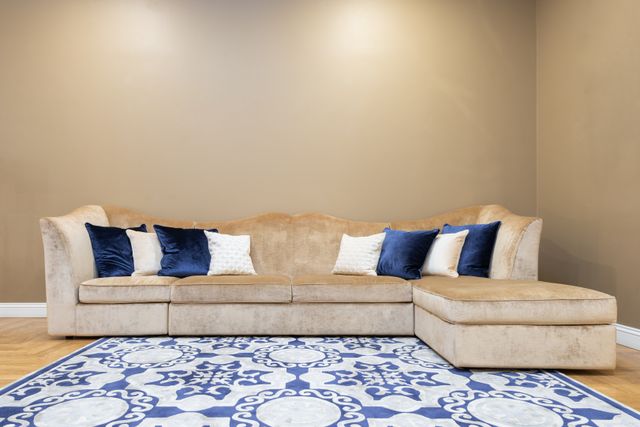
A neutral living room works when it feels warm, calm and lived in, rather than plain or cold. The secret is not the colour on its own. It is the combination of warm undertones, layered texture and enough contrast to give the room depth. Choose beiges, creams and soft taupes with a warm base, mix materials such as linen, wool, wood and rattan, and repeat those tones in different shades across the walls, sofa, rug and cushions. Done well, these neutral living room ideas create a timeless space that is easy to refresh.
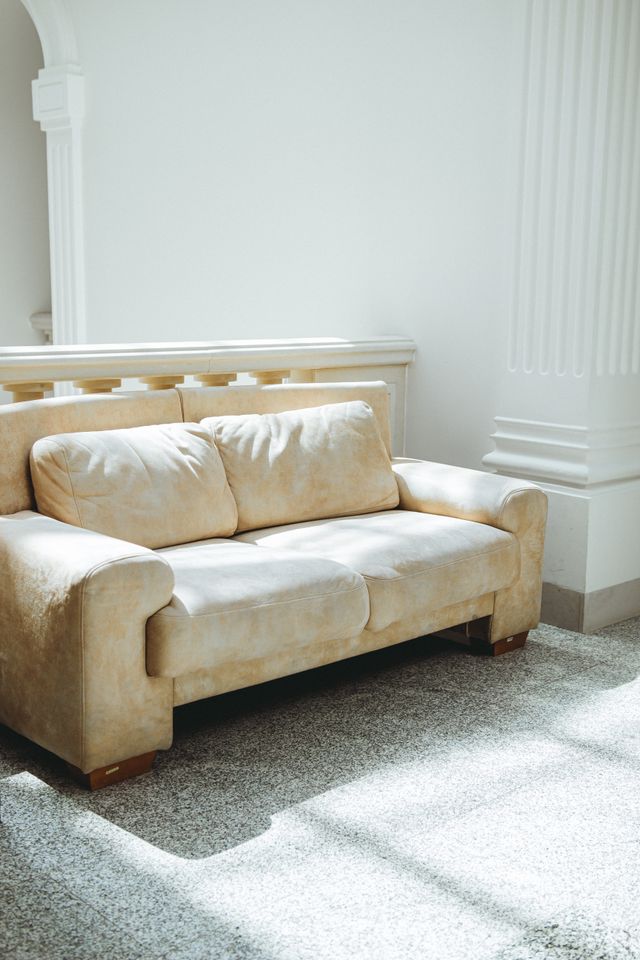
What Makes A Neutral Living Room Work
A neutral palette is a range of colours, not a single shade. It includes white, cream, beige, taupe, greige and soft grey, and each of these can lean warm or cool. Warm neutrals carry yellow, pink or red undertones, while cool neutrals lean towards blue or green.
In most UK homes, warm neutrals are the safer choice. British daylight is often soft and grey, especially in north-facing rooms, and a cool grey can turn flat and cold under that light. A warm cream or beige holds its glow even on a dull afternoon.
The second thing that makes a neutral room work is contrast. A room in one shade of beige, with a beige sofa, rug and cushions, will look washed out. The eye needs something to rest on: a darker wood floor against pale walls, a deep taupe armchair beside a cream sofa, or black picture frames on a light wall.
Choose Your Warm Neutral Base
Start with the walls, because they set the tone for everything else. Warm whites and creams are the most forgiving choice: they brighten the room without the starkness of brilliant white, and they make other neutral tones look richer. Dulux suggests shades such as Fine Cream and Almond White, and deeper warm hues like Natural Calico for a cosier feel. You can explore the range in Dulux’s guide to modern neutral living room ideas.
Before committing to a colour, test it properly. Paint a large swatch, at least the size of an A3 sheet, on the wall you look at most, and live with it for a few days. If you are choosing between two shades, the one that looks slightly too warm on the chart is usually right, because paint tends to read cooler once it covers a large area.
Greige, the blend of grey and beige, is worth considering if you like grey but worry about it feeling cold. A warm greige such as Pebble Shore or Perfectly Taupe, both named in Dulux’s neutral guidance, brings the calm of grey with the warmth of beige.
Layer Texture To Stop The Room Feeling Flat
Texture is the single most important tool in a neutral living room. It is what separates a room that looks like a showroom from one that feels like home. Colour normally gives a room its interest, so when colour is restrained, texture has to do that job instead.
Start With Soft Furnishings
Cushions and throws are the easiest place to add texture, and the cheapest to change. Mix a chunky knit throw with smooth linen cushions, a velvet cushion in a deep taupe, and a woven cotton cushion in a natural shade. Keep the colours close together so the mix looks deliberate.
The rug matters just as much. A flat, thin rug in the same tone as the floor will disappear, while a rug with a visible weave or a high pile anchors the seating area and adds warmth underfoot. Wool and jute are both good choices: wool feels soft and insulating, while jute adds a rougher, natural texture.
Add Natural Materials
Wood, rattan, stone and ceramics bring a natural variation that painted surfaces cannot. A light oak coffee table, a rattan basket for throws or a set of handmade ceramic vases all add small shifts in tone and surface that keep the eye moving.
Build Depth With Tonal Layering
Tonal layering means using several shades of the same colour family, from pale to deep, instead of one shade repeated everywhere. It is the simplest way to give a neutral room depth without adding colour. Use the lightest tones on the walls and sofa, mid-tones on the rug and curtains, and the deepest tones, such as chocolate brown or charcoal, on cushions and books.
Curtains are an often overlooked part of this layering. Floor-length curtains in a warm linen or cotton, hung from a pole set high above the window, soften the walls and add a tall vertical layer of texture.
more ways to use colour in the living room
Choose Furniture In Neutral Tones
The sofa is the biggest investment in the room and the hardest to change, so choose its colour carefully. A cream or light beige sofa is the classic neutral choice, but it shows marks more easily, which matters in a busy family home. A mid-tone oatmeal, taupe or warm grey is more forgiving and still reads as neutral.
If you already have a sofa in a colour that does not fit the scheme, you do not necessarily need to replace it. A throw in a warm neutral, a set of cushions in the palette, and a rug that ties the sofa to the rest of the room can bring a grey or even a dark sofa into a neutral scheme.
Get The Lighting Right
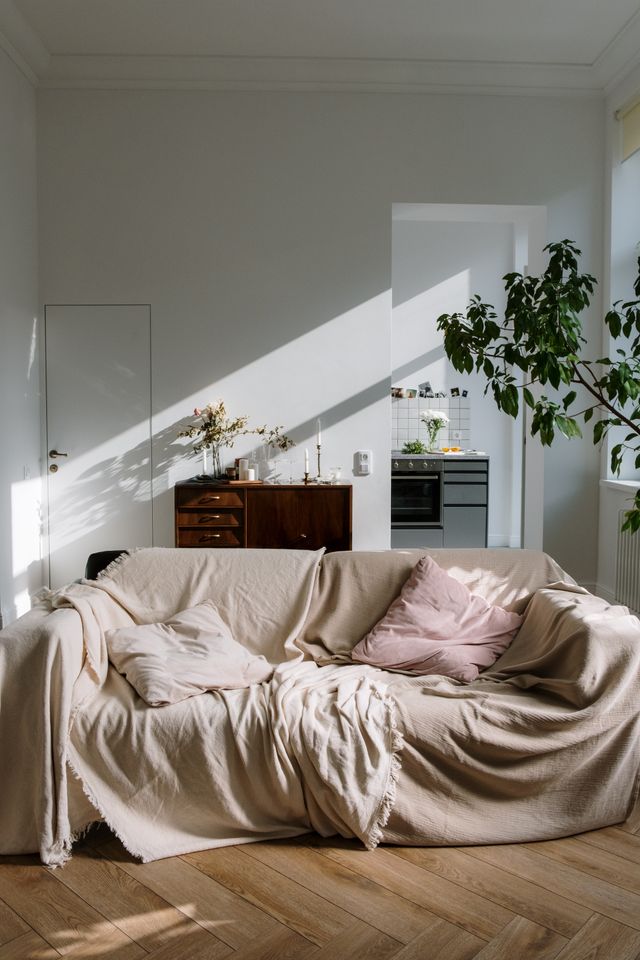
Lighting can make or break a neutral living room, because it controls how warm the palette actually looks. Cool white bulbs will drain the warmth from beige and cream, leaving the room looking grey and flat. Warm white bulbs, around 2700K, flatter warm neutrals and make wood tones glow.
Layer the light the same way you layer texture. A ceiling light on its own creates a flat, even wash with no atmosphere. Add a floor lamp beside the sofa for reading, a table lamp on a sideboard for a pool of warm light in the evening, and candles for a low glow.
Add Warmth With Wood, Metal And Plants
Small accents are where a neutral room gains its personality. Warm metals such as brass, aged bronze and copper add a quiet gleam that lifts beige and cream without introducing colour. Use them sparingly: a brass floor lamp, bronze picture frames, or a copper vase is enough.
Plants are the easiest way to stop a neutral room feeling sterile. Green reads as a natural neutral in this context, and a large olive tree, a potted palm or a trailing plant on a shelf adds life and a soft organic shape. Put them in pots that fit the palette: terracotta, stone, woven baskets or plain cream ceramic.
relaxed styling ideas for the whole living space
Use A Small Accent Colour Sparingly
A neutral living room does not have to be entirely free of colour. A small, controlled accent often makes the neutrals look better, because it gives the eye a point of contrast and makes the pale tones feel deliberate.
Soft sage green is a natural partner for warm neutrals, because it echoes the plants in the room and sits comfortably beside beige and cream. Terracotta adds warmth and works well in cushions or a single piece of pottery. Keep the accent to around a tenth of the room’s visible colour, and make it easy to change with cushion covers, a throw or a framed print.
Mistakes That Make Neutral Rooms Look Flat
- One shade everywhere: Using a single beige on the walls, sofa, rug and cushions removes all contrast.
- No texture: Smooth surfaces on every item make the room look flat. Add wool, linen, rattan, wood and boucle.
- Cool lighting: Bright white bulbs make warm neutrals look grey. Switch to warm white bulbs.
- Furniture pushed against the walls: Pulling the sofa slightly into the room creates a more sociable layout.
- Too many small objects: A neutral room needs breathing space. Remove half the ornaments.
- Ignoring the floor: A bare pale floor under pale furniture washes the room out.
Frequently Asked Questions
What Is The Best Neutral Colour For A Living Room?
Warm beige, cream and greige are the most reliable choices for UK living rooms, because they hold their warmth under soft British daylight. Dulux shades such as Egyptian Cotton, Natural Calico and Perfectly Taupe are good starting points, but always test a large swatch first.
How Do You Stop A Neutral Living Room Looking Boring?
Layer texture and tone. Mix at least three shades from the same colour family, combine materials such as linen, wool, wood and rattan, and add contrast with a darker rug or deep-toned cushions. A small accent colour, repeated in two or three places, also helps. You can find more guidance in Dulux’s living room paint and decor ideas.
Can A Neutral Living Room Work With Children Or Pets?
Yes, with practical choices. Choose a mid-tone sofa rather than pale cream, look for washable cushion covers and stain-resistant fabric, and pick a rug that can be cleaned easily. A slightly deeper, warmer palette hides marks better than a very pale one.
Do Neutral Colours Work In A Small Living Room?
Yes, they are often the best choice, because pale tones reflect light and make the space feel larger. Choose a sofa with slim arms and visible legs, keep the palette to two or three tones, and use one large rug rather than several small ones.
How Often Should You Refresh A Neutral Living Room?
The base can stay the same for years, which is one of the strengths of a neutral scheme. Refresh the small things seasonally: swap cushion covers and throws, change the accent colour, or add fresh flowers or greenery. A full redecoration is rarely needed.
carry the calm palette into the bedroom
Conclusion
A neutral living room is not the absence of design. It is a deliberate choice to let warmth, texture and light do the work that bold colour normally does. Start with a warm base on the walls, layer in three or four tones of the same family, mix linen, wool, wood and rattan, and finish with warm lighting and a small, controlled accent.
Leave a Reply