
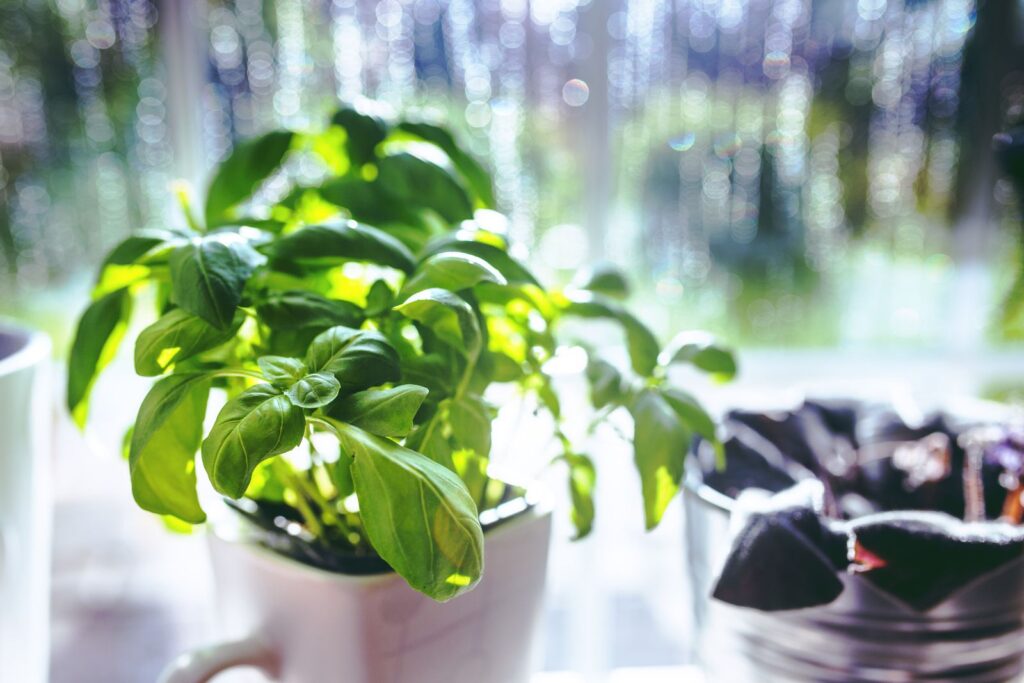
Learning how to grow herbs indoors is easier than most people expect. Culinary herbs such as basil, mint, rosemary, thyme, parsley and chives grow well in pots on a sunny windowsill, as long as they get enough light, a container with drainage, and regular harvesting. Most herbs need around six hours of direct sunlight a day, so a bright south-facing window is the ideal home for them.
Fresh herbs change everyday cooking. A few basil leaves lift a tomato dish, chives finish a baked potato, and rosemary gives roasted vegetables real flavour. Growing them indoors means a small supply is always within reach of the kitchen. This guide explains which herbs suit indoor growing, how to give them the right light, pots, soil and water, and how to harvest them so the plants keep producing.
Which Herbs Grow Well Indoors
Not every herb enjoys life indoors, but the six most useful kitchen herbs all manage well in pots.
Basil
Basil is the classic indoor herb, with soft, fragrant leaves that suit pasta, salads and tomato dishes. The Royal Horticultural Society (RHS) notes that basil likes rich, light, well-drained soil in sun, and that pinching out the growing tips encourages bushy growth and delays flowering. Basil is tender, so it needs warmth: Penn State Extension advises that basil cannot survive temperatures lower than 50°F (10°C) and should not be kept on windowsills during winter months in cold climates. In a heated home, a bright warm spot away from cold glass in winter keeps it happier.
Mint
Mint grows vigorously and is best kept in its own pot, because it spreads quickly. The RHS notes that mint likes rich, moist soil in sun or part shade and can become invasive in open ground, so a container is the sensible choice indoors as well. Mint tolerates slightly lower light than some herbs, which makes it forgiving on a less sunny sill. Regular picking keeps it bushy.
Rosemary
Rosemary is a woody Mediterranean herb that needs strong light and sharp drainage. The RHS advises well-drained, ideally neutral to alkaline soil in full sun, with shelter in cold areas, because rosemary rarely survives prolonged freezing. Indoors, it does best on the sunniest sill available, in a pot that drains freely, watered only when the compost has dried a little.
Thyme
Thyme is a small, tough herb that suits indoor pots well. The RHS notes that thyme prefers well-drained, even stony or poor soil in sun, with neutral to alkaline conditions suiting most types. Like rosemary, it dislikes sitting in wet compost, so light watering and good drainage matter more than feeding.
Parsley
Parsley is a leafy herb that needs steady moisture and good light. The RHS advises rich, well-drained neutral to alkaline soil in sun or part shade. Parsley can be slow to germinate from seed, so many indoor growers start with a young plant. Picking the outer stems first keeps the centre growing.
Chives
Chives are among the easiest herbs to grow indoors. Penn State Extension lists chives among herbs that tolerate lower light, needing two to six hours of direct sunlight. The RHS advises rich, well-drained soil in full sun, and cutting plants down after flowering to produce fresh leaves. Snipping leaves a little at a time gives a steady supply for salads, eggs and potatoes.
Light: The Most Important Ingredient
Light decides success more than anything else. Penn State Extension advises that most herbs need six hours of direct sunlight, from a sunny southern-exposure window or a suitable artificial light set-up. Rosemary and thyme are among the herbs that do best in direct sunlight, while chives tolerate lower light levels.
When light is too weak, herbs grow thin and spindly, with smaller leaves and reduced aroma. Turning pots often helps plants grow evenly instead of leaning towards the glass. In the darkest winter weeks, moving herbs to the brightest available window, and keeping the glass clean, makes a real difference. If a home has very little natural light, a simple grow light above the pots can supply what the window cannot.
Pots, Compost And Drainage
Every herb pot needs a drainage hole. Penn State Extension advises containers with a drainage hole and a potting mix that aids drainage, because herbs dislike roots sitting in water. A saucer under the pot protects the windowsill and lets excess water be tipped away after watering.
The RHS advises that young herb plants or plugs should be potted into cell trays or 9cm pots and grown somewhere warm and well lit, such as a windowsill, until the roots fill the container without overcrowding it. Herbs generally grow best in light, well-drained, moisture-retentive soil with organic matter. Ordinary peat-free multi-purpose compost suits most indoor herbs, with extra grit or perlite mixed in for rosemary and thyme, which prefer sharper drainage.
Watering Indoor Herbs Correctly
Watering needs differ by herb, and getting them right prevents most indoor herb problems.
- Basil: keep the compost evenly moist. Penn State Extension advises that basil potting mix should never be allowed to dry out completely.
- Mint: likes moist compost and wilts quickly when dry, though it usually recovers after watering.
- Parsley and chives: prefer steady moisture without sitting in water.
- Rosemary and thyme: allow the compost to dry out slightly between waterings.
Watering from the top until a little water runs from the drainage hole, then emptying the saucer, gives roots moisture without waterlogging. In winter, when growth slows, herbs need less water than in summer. Drooping leaves, yellowing lower leaves and a sour smell from the compost usually point to too much water rather than too little.
Feeding, Temperature And Air Flow
Indoor herbs grow in a small volume of compost, so gentle feeding helps. Penn State Extension advises a low dose of water-soluble fertiliser every two weeks, and warns that fertilising more often may negatively affect aroma and taste. Herbs grown for flavour do not need rich feeding; steady, light feeding is enough.
Room temperature suits most herbs. Penn State Extension gives at least 65 to 70°F (about 18 to 21°C) during the day and 55 to 60°F (about 13 to 16°C) at night as suitable indoor conditions. Basil is the exception that needs the warmest spot, while rosemary and thyme are content a little cooler. Air movement also matters: the RHS notes that maintaining air movement and ventilation helps reduce fungal problems such as grey mould and damping off, so a windowsill with some air flow is better than a closed, stuffy corner.
Starting Herbs: Seeds, Plants And Cuttings
Indoor herbs can be started in three simple ways. Seeds suit basil, chives and parsley: the RHS gives sowing basil, chives and parsley under glass, with or without heat, from January to early April. A warm, bright windowsill serves the same purpose indoors.
Young plants from a garden centre or supermarket give a faster start and suit every herb in this guide. Cuttings work well for rosemary and thyme, which the RHS advises taking from late summer to early autumn. Mint and thyme can also be divided in spring or after flowering in late summer, which is an easy way to refresh a tired pot.
Supermarket herb pots deserve a mention. They are grown for quick use and are often crowded, so splitting a pot into two or three pots with fresh compost gives the plants room to keep growing. With light and regular picking, a supermarket basil or parsley plant can produce for much longer than expected.
Harvesting So Plants Keep Producing
Regular harvesting is what keeps indoor herbs productive. Picking encourages new growth, while plants left unpicked become leggy or run to flower.
- Basil: pinch the growing tips regularly to encourage bushiness and delay flowering.
- Mint: snip stems often; frequent picking keeps the plant compact.
- Parsley: take the outer stems first and leave the centre to grow.
- Chives: cut leaves near the base; the RHS advises cutting down after flowering to produce fresh leaves.
- Rosemary: snip sprig tips as needed, and prune after flowering; remove dead or weak growth in spring.
- Thyme: trim lightly after flowering and pick small sprigs as needed.
Leaves should always be washed before use, especially if the plant has been treated with anything. Penn State Extension notes that soft insecticides are not typically recommended for herbs because the leaves are regularly harvested and eaten fresh, so washing is a sensible habit.
Common Problems And Simple Fixes
- Leggy, pale growth: usually a light problem. Move the pot to a brighter window and turn it often.
- Wilting with wet compost: roots may be waterlogged. Check drainage, empty saucers, and water less often.
- Fungus gnats: small flies around the compost are best managed with yellow sticky traps and proper watering, as Penn State Extension advises.
- Aphids: trim off infested stems and dispose of them, rather than spraying leaves that will be eaten.
- Grey mould: improve air flow and avoid wetting the leaves when watering.
Repotting also helps. Penn State Extension advises repotting when roots grow through the drainage hole, preferably in early spring. A pot one size larger with fresh compost gives the plant room and nutrients for another season. For general indoor plant skills that support herb growing, our guide on how to care for houseplants covers watering and light basics, while our tiny garden ideas show how small spaces can hold more plants.
Taking Herbs Outdoors In Summer
Indoor herbs can spend summer outside. Penn State Extension advises acclimating plants gradually when moving them outdoors in late spring or summer, starting in partial shade before full sun. A sheltered patio spot near the kitchen door keeps herbs handy for cooking, and our small outdoor kitchen ideas show how outdoor cooking spaces and herbs work together. Tender basil should come back inside before cold nights return.
Frequently Asked Questions
Which Herbs Are Easiest To Grow Indoors?
Chives, mint and parsley are forgiving and tolerate slightly lower light. Basil grows quickly in warm, bright conditions. Rosemary and thyme are easy once drainage and strong light are provided.
How Much Light Do Indoor Herbs Need?
Most herbs need about six hours of direct sunlight a day. A sunny south-facing window is ideal, and pots should be turned often for even growth.
Can Herbs Grow Indoors Without Direct Sunlight?
Some herbs, such as chives and mint, tolerate lower light, but most become thin and lose flavour without enough light. A grow light can make up the difference in darker homes.
How Often Should Indoor Herbs Be Watered?
Basil, mint, parsley and chives like evenly moist compost, while rosemary and thyme should dry out slightly between waterings. Pots must drain freely, and saucers should be emptied after watering.
Why Is Basil Dying Indoors In Winter?
Basil is tender and cannot survive temperatures below 50°F (10°C). Cold windowsill glass in winter, low light and overwatering are common causes. A warm, bright spot away from cold glass helps.
Conclusion
Learning how to grow herbs indoors comes down to light, drainage and regular picking. A sunny windowsill, pots with drainage holes, watering matched to each herb, and gentle feeding every two weeks keep basil, mint, rosemary, thyme, parsley and chives producing fresh leaves for the kitchen. Start with one or two easy herbs, and the windowsill quickly becomes the most useful corner of the home. For more detail, the RHS guide to growing and harvesting herbs and Penn State Extension’s guide to growing herbs indoors are both excellent references.

Leave a Reply