
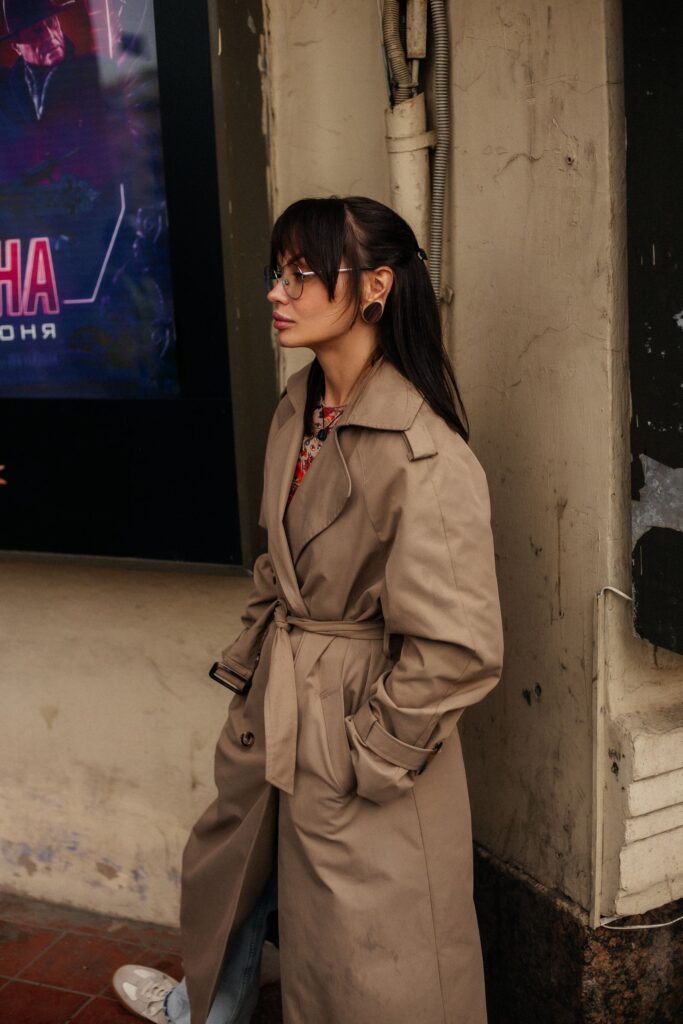
A trench coat is the hardest-working piece of outerwear you can own. It keeps the rain off, pulls any outfit together, and suits almost every occasion, from a school run to a smart lunch. Yet many trench coats sit unworn in wardrobes because their owners are not sure how to style them. The good news is that a trench coat is far more flexible than it looks. With a few simple choices about fit, layering, colour and the belt, one coat can give you a classic look, a modern look, a casual look and a smart look. This guide explains how to style a trench coat for real life.
A Short History Of The Trench Coat
The trench coat began as practical military outerwear. It grew out of the weatherproof coats worn by British Army officers in the First World War, and it takes its name from the trenches. Both Burberry and Aquascutum claim a part in its story, and the question of who made the first one is still disputed. What is not disputed is the fabric: Thomas Burberry invented gabardine in 1879, a tightly woven cotton cloth that was waterproofed before weaving, so it kept rain out while still letting the fabric breathe. The Victoria and Albert Museum traces how the coat moved from the battlefield into civilian life, becoming fashionable after the First World War when returning soldiers kept wearing their coats in towns and cities.
The classic design has barely changed since then: a double-breasted front, wide lapels, a storm flap across the shoulder, cuff straps, epaulettes and a belted waist with D-rings. Those details were practical once — the storm flap kept rain from running inside and the D-rings held map cases and other kit. Today they are part of the coat’s look, and they are what make a trench coat recognisable at a glance.
Choosing The Right Trench Coat
Before styling comes choosing. The fit of a trench coat matters more than the brand. The shoulders should sit neatly at the edge of your own shoulders, not droop down the arm, and you should be able to close the coat comfortably over a jumper without it pulling. The length is a matter of taste, but a coat that ends just above or just below the knee is the most useful: it covers a dress or a skirt and looks smart. Shorter trench styles that end at the hip feel more casual and suit a petite frame, while a longer coat that ends mid-calf looks dramatic and works well if you are tall.
The classic colour is a warm beige or stone, often called camel or honey, and it goes with almost everything. Black is the smartest choice and suits evening outfits, while navy is a softer alternative that works well with jeans. If you want colour, olive, khaki and chocolate brown are practical autumn choices. When you buy, check the fabric: a cotton gabardine or a cotton blend with a water-resistant finish will cope with UK rain, while a very light, unlined trench is best kept for dry spring days.
The Classic Trench Coat Look
The classic way to wear a trench coat is belted, with the collar turned up slightly and the outfit underneath kept simple. Start with a plain base: a white shirt or a fine roll-neck, straight-leg trousers or a dark skirt, and smart shoes. Tie the belt at the front in a neat knot rather than a bow, and let the coat fall straight. This is the look that works for work, for a smart lunch and for any occasion where you want to look polished without trying hard.
For a classic outfit, pair a beige trench with a Breton stripe top, dark straight jeans and ballet flats or loafers. It is a simple combination, but the clean lines of the coat make it look considered. A silk scarf at the neck adds a touch of colour. The classic trench look is about restraint — the coat is the statement, so everything else stays quiet.
Modern Ways To Style A Trench Coat
A trench coat can also look completely modern. The easiest way to update it is to wear it open, like a long jacket, rather than belted. An open trench over a hoodie, straight jeans and trainers is a relaxed, current look that works for weekends and the school run. The contrast between the smart coat and the casual layers underneath is what makes the outfit feel modern rather than old-fashioned.
Another modern approach is to play with proportion. Wear an oversized trench over a slim outfit — skinny jeans or a fitted midi dress — so the coat provides the volume and the outfit underneath stays neat. Or try a cropped trench, which ends at the hip, with wide-leg trousers and a tucked-in top. A leather-look trench or one in a bold colour such as burgundy or forest green also feels modern. The key is to keep one element modern and the rest simple: if the coat is oversized, keep the outfit underneath slim; if the coat is a bold colour, keep the rest of the outfit neutral.
How To Belt A Trench Coat
The belt is the detail that changes the shape of a trench coat more than anything else, and it is worth learning the options. The classic way is to tie the belt at the front in a simple knot, pulled in at the waist. This gives the coat its familiar hourglass shape and works best with dresses, skirts and smart trousers. Tie it at the front, not at the back, if you want the waist definition to show.
For a more relaxed look, tie the belt loosely at the back and wear the coat open at the front. This shows the outfit underneath while the coat still gives you shape from behind, and it suits casual outfits with jeans. Another option is to knot the belt at the side, which gives a softer, less formal shape. You can also remove the belt entirely and wear the coat open, which suits an oversized trench and a layered outfit underneath. Whichever way you tie it, make sure the belt sits at your natural waist, not at your hips, or the coat will lose its shape.
Layering Under A Trench Coat
A trench coat is a layering piece, and what you wear underneath decides whether the outfit works in cold weather. In autumn, a fine-knit jumper or a roll-neck under a trench is usually enough, with a scarf for extra warmth. A blazer under a trench adds structure and is a good choice for work: the blazer gives the outfit shape, and the trench protects it from the weather. Make sure the blazer is slim enough to fit under the coat without bunching at the shoulders.
In winter, a trench coat on its own is not warm enough for very cold days, so layer properly. A thermal top under your jumper, a chunky knit, and a scarf make a real difference. A long coat over a trench is too bulky, so instead, add warmth underneath rather than on top. Our guide to winter dressing and layering explains the three-layer system in detail: a warm base layer, an insulating middle layer, and the trench as your weatherproof outer layer. In spring, the trench comes into its own: a light jumper or a shirt underneath is enough, and you can carry the coat over your arm when the sun comes out.
Trench Coat Colours And What To Wear With Them
Beige and stone trenches are the easiest to style because they go with every colour. They look good with black, navy, white, denim, grey and most autumn colours. A beige trench with a black outfit underneath is a classic combination, while a beige trench over cream or white feels fresh in spring. Black trenches suit monochrome outfits and evening looks, and they pair well with a bright scarf or bag for contrast.
Navy trenches work well with jeans, grey trousers and cream knitwear, and they are a good choice if black feels too harsh against your skin. Olive and khaki trenches suit the autumn palette — burgundy, mustard, chocolate brown and forest green — and they look good with denim and tan accessories. If your trench is a bold colour, keep the rest of the outfit in neutrals so the coat stays the focus. For more on seasonal colour choices, see our guide to autumn fashion colours and trends for the UK.
Casual Vs Smart Trench Coat Outfits
The same trench coat can be casual or smart depending on what you wear with it. For a casual day, wear the trench open over a T-shirt or a hoodie, straight-leg jeans and white trainers. Add a cross-body bag and sunglasses, and the outfit is comfortable and practical.
For a smart outfit, wear the trench belted over a dress or tailored trousers, with heeled ankle boots or court shoes. A blouse or a fine-knit top underneath keeps the look polished, and a structured bag adds to the smart feeling. A trench over a suit is a classic work combination, and it works because the coat’s clean lines echo the tailoring underneath. The difference between casual and smart is mostly in the shoes and the layers: trainers and a hoodie make it casual, heels and tailoring make it smart, and the coat itself stays the same.
Conclusion
A trench coat earns its place in a wardrobe because it does so many jobs at once: it keeps you dry, it finishes an outfit, and it works for almost every occasion. The styling is simpler than it looks. Choose a coat that fits well in the shoulders, wear it belted for a classic look or open for a modern one, layer underneath rather than on top in cold weather, and let the belt sit at your natural waist. Start with the classic beige, learn which combinations you reach for most, and then try a modern twist — an open coat over a hoodie, or a bold colour with neutral layers. For more advice on choosing outerwear that lasts, see our guide to building an autumn wardrobe. Once you know how to style a trench coat, it becomes the piece you reach for on any uncertain-weather day, and in the UK, that is most days.
Frequently Asked Questions
Can You Wear A Trench Coat In Winter?
Yes, with proper layering. A trench coat on its own is not warm enough for very cold days, so wear a thermal base layer, a chunky knit jumper and a scarf underneath, with warm trousers and boots. The trench works as your weatherproof outer layer over warm layers.
What Do You Wear Under A Trench Coat?
Almost anything, as long as it fits neatly underneath. A shirt, a fine roll-neck or a slim blazer works for smart outfits, while a T-shirt, a hoodie or a jumper suits casual days. Avoid very bulky layers that bunch at the shoulders.
Should A Trench Coat Be Belted Or Worn Open?
Both work. Belted at the front gives the classic, polished shape and suits smart outfits and dresses. Worn open, with the belt tied at the back, gives a relaxed, modern look and shows the outfit underneath.
What Colour Trench Coat Is Most Useful?
A warm beige or stone trench is the most useful because it goes with almost every colour, from black and navy to denim and autumn shades. Black is the smartest choice, navy is a softer alternative, and olive or chocolate brown are practical autumn options.
Can You Wear A Trench Coat With Trainers?
Yes. An open trench coat over a T-shirt or hoodie, straight jeans and white trainers is a modern, casual outfit that works well for weekends and everyday wear. The contrast between the smart coat and the relaxed layers is what makes the combination look current.


Leave a Reply