
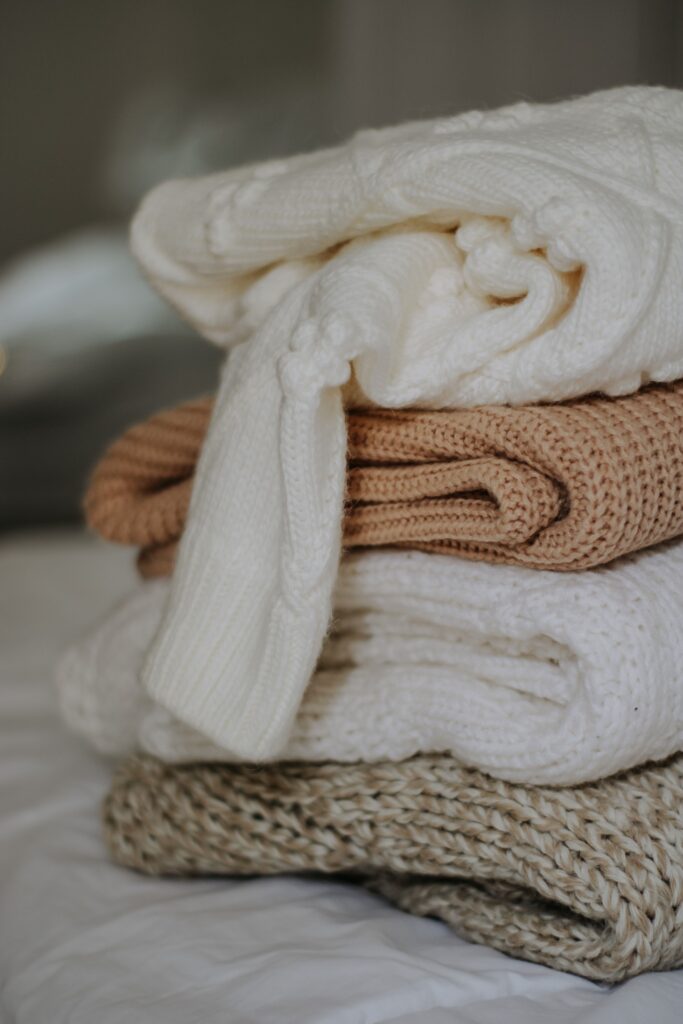
Knitwear is one of the hardest-working parts of any wardrobe. A good jumper keeps you warm on a cold morning, layers neatly under a coat, and looks just as right at a family lunch as it does on a winter walk. Yet knitwear is also one of the most misunderstood categories in fashion. Shoppers often buy by colour or price alone, then wonder why a jumper pills after a month, loses its shape, or feels scratchy against the skin. The difference between knitwear you love for years and knitwear you stop wearing by February usually comes down to three things: the type of knit, the fibre it is made from, and how you look after it.
What Is Knitwear And Why It Matters
Knitwear is clothing made by knitting yarn into interlocking loops, rather than weaving threads together. That looped structure gives knitted fabric its stretch, softness, and warmth. Jumpers, cardigans, knit dresses, scarves, and hats all count as knitwear, and the same basic technique produces everything from a fine, smooth layering jumper to a thick, chunky cable knit. Because the loops trap air, knitted fabric insulates well, which is why knitwear has been a cold-weather staple for centuries. In the UK, where autumn and winter bring damp, changeable weather, knitwear is a practical necessity as much as a fashion choice.
The Main Types Of Knitwear
Crew Neck Jumpers
The crew neck is the classic round-necked jumper and the most versatile piece of knitwear most people own. It works over a shirt, under a jacket, or on its own with jeans or a skirt. If you buy one jumper, a crew neck in a neutral colour is the safest starting point.
V-Neck Jumpers
A V-neck jumper dips into a V shape at the front. It looks smart layered over a collared shirt or blouse, because the collar sits neatly in the opening. V-necks suit office outfits and smarter occasions, although they are less useful as a casual standalone piece than a crew neck.
Turtleneck And Roll Neck Jumpers
Turtlenecks and roll necks have a high collar that covers part or all of the neck. They are among the warmest styles, because they remove the need for a scarf, and they look polished on their own or under a blazer or coat.
Cardigans
A cardigan opens at the front, with buttons, a zip, or no fastening at all. It is the most flexible piece of knitwear, because you can wear it open as a light layer or buttoned up as a top.
Cable Knit And Chunky Knit
Cable knit features raised, rope-like patterns that look like twisted cables, traditionally associated with fishermen’s jumpers from the British Isles. Chunky knit is a broader term for any thick, heavy knit, often with a visible stitch. Both styles feel cosy and look relaxed, which makes them ideal for weekends and country walks.
Fine Gauge And Lightweight Knits
Fine-gauge knitwear uses thin yarn and small stitches, producing a smooth, light fabric. These pieces layer under blazers and coats without adding bulk, and they suit smart and office outfits.
Knitwear Fabrics Explained
The fibre is the biggest factor in how knitwear feels, how warm it is, and how much care it needs.
Wool
Wool usually means the fleece of sheep. It is naturally warm, breathable, and long-lasting, because the fibres trap air and can absorb moisture without feeling damp. Regular wool can feel scratchy on sensitive skin, but finer wools are much softer.
Merino Wool
Merino is wool from Merino sheep, a breed known for very fine fibres. Fine merino feels smooth and soft against the skin, regulates temperature well, and works for both everyday jumpers and base layers. It is more resilient than cashmere, and many merino knits are machine-washable, although you should always check the care label first.
Lambswool
Lambswool comes from a sheep’s first shearing, rather than from a particular breed. It often has a fuller, springier feel than fine merino and makes warm, comfortable jumpers with a slightly more textured finish. It needs similar care to merino: cool water, gentle handling, and no wringing.
Cashmere
Cashmere comes from the soft undercoat of the cashmere goat, not from sheep. It is very fine, light, and warm without bulk, which is why it feels luxurious. Cashmere is also delicate: it pills with friction, can felt if washed in hot water with agitation, and is attractive to moths.
Cotton And Linen Knits
Cotton knits are lighter and cooler than wool, which makes them useful for spring, summer, and layering in heated rooms. They are generally easier to wash than wool, but they can stretch when wet and should be dried flat. Linen knits are even lighter and breathable, with a relaxed, textured look, although linen creases easily. Both are good choices if wool irritates your skin.
Acrylic And Blended Fabrics
Acrylic is a synthetic fibre that is cheap, light, and machine-washable. Pure acrylic jumpers are less breathable than natural fibres and tend to pill more, but blends can work well: a wool-acrylic blend may be warmer than pure acrylic and easier to care for than pure wool. For any blend, follow the care instructions for the most delicate fibre in it.
How To Choose Knitwear That Fits And Lasts
Start with the purpose: a fine jumper for layering under a jacket needs a different weight from a chunky knit for weekends outdoors. Then look at the fit. A jumper should sit neatly on the shoulders, with the shoulder seam at the edge of your shoulder, and the body should skim rather than cling or billow. Sleeves should reach the wrist bone when your arms hang naturally. Read the label, not just the price tag: the fibre content tells you how warm, soft, and easy-care the piece will be, and the care symbols tell you whether it needs hand-washing or dry cleaning. Look at the construction too. Neat, even stitching, firmly attached buttons, and ribbed cuffs and hems that spring back when stretched are signs of better quality.
How To Style Knitwear
Knitwear is easy to style once you think in layers. A fine-gauge crew neck works under a blazer for a smart look, over a shirt with the collar showing for a classic outfit, or tucked into high-waisted trousers for a neat silhouette. A chunky knit looks best as the star of the outfit, paired with simple bottoms such as straight-leg jeans, a plain skirt, or tailored trousers, so the texture does the talking. Cardigans soften a structured outfit: wear a long cardigan over a dress, or a short fitted cardigan over a blouse. Colour matters too. Neutral shades such as navy, charcoal, cream, camel, and grey go with almost everything and are the best investment for a first set of knits. For texture contrast, pair a smooth fine knit with denim, and a chunky knit with something smooth underneath, such as a cotton shirt.
How To Care For Knitwear So It Lasts
Most knitwear damage comes from washing too often or drying the wrong way. Start with the care label, because the fibre name alone cannot tell you whether a garment suits machine washing, hand-washing, or dry cleaning. When hand-washing is allowed, fill a clean basin with cool or lukewarm water, never hot, and add a small amount of wool detergent. Turn the garment inside out, submerge it, and gently squeeze the water through. Do not rub, scrub, or twist the fabric, and rinse with cool water at the same temperature, because sudden temperature changes can cause wool fibres to felt. Press out water gently, roll the garment in a clean towel to absorb moisture, then reshape it and dry it flat, away from direct heat. Never hang a wet knit: the weight of the water will stretch the body and sleeves out of shape. Store knitwear clean and folded, rather than on hangers, which can mark the shoulders of heavier knits. Deal with pilling, the small balls that form through friction, with a fabric shaver or a knit comb.
Common Knitwear Mistakes To Avoid
A few habits cause most knitwear problems, and all of them are easy to fix. Avoid these:
- Washing knitwear after every wear, which wears fibres out faster than necessary.
- Using hot water or a long, hot machine cycle on wool or cashmere, which can shrink and felt the fabric.
- Wringing out a wet jumper, which distorts its shape.
- Hanging wet or heavy knits, which stretches the shoulders and lengthens the body.
- Storing knitwear damp or dirty, which invites mildew, odour, and moth damage.
Conclusion
Knitwear rewards a little knowledge. Once you can tell merino from lambswool, cashmere from a blend, and a fine gauge from a chunky knit, shopping becomes simpler and the pieces you buy last longer. Choose the right type for the occasion, the right fibre for your skin and your routine, and a fit that works with the rest of your wardrobe. A small collection of good knitwear will carry you through autumn and winter for years, keeping you warm, comfortable, and well dressed without fuss.
FAQs
What Is The Best Knitwear Fabric For Everyday Wear?
Merino wool is the best all-round choice for most people. It is soft, warm, breathable, and more durable than cashmere, and many merino knits are machine-washable. Cotton knits suit warmer days and people who find wool irritating.
How Often Should You Wash Knitwear?
Less often than you might think. Air knitwear between wears and wash it only when it is actually dirty or smells. A jumper worn over a base layer usually needs washing after five to seven wears, while one worn directly against the skin may need washing after two to three wears.
Can You Machine Wash Wool And Cashmere?
Only if the care label allows it. Some merino and wool knits are machine-washable on a gentle or wool cycle with cold water, a mesh laundry bag, and a wool-safe detergent. Cashmere usually needs hand-washing or dry cleaning.
Why Does Knitwear Pill And How Do You Stop It?
Pilling happens when loose fibres rub together and form small balls, usually where there is friction, such as under the arms or where a bag strap sits. It is common on soft and blended knits and does not mean the garment is ruined.
How Should You Store Knitwear?
Store knitwear clean, dry, and folded in a drawer or on a shelf, never hanging heavy knits, which can stretch the shoulders.
Leave a Reply