

An outfit for a wedding guest should look polished, feel comfortable, and respect the couple’s day. The best choice is rarely the most dramatic dress or the sharpest suit you own. It is the one that fits the dress code on the invitation, suits the venue and the season, and lets you sit, stand, eat, and dance from the ceremony to the last song without thinking about it.
Start with the invitation, not the shops. The dress code, the time of day, and the venue tell you almost everything you need to know. A church ceremony asks for something different from a beach wedding or an evening party in a city hotel.
Key Takeaways
- Read the dress code on the invitation first, then let the venue, time of day, and season guide the rest of your choices.
- Avoid white, ivory, and cream, which are traditionally reserved for the bride.
- Choose a fit and fabric you can sit, stand, eat, and dance in for hours, and test your shoes before the wedding.
- When in doubt, dress one step more formal than you think you need.
Start With The Dress Code On The Invitation
The dress code is the couple’s clearest instruction about what to wear, so treat it as your starting point. Common codes include black tie, formal, cocktail, semi-formal, and casual, and each one sets a level of formality for the whole day. If the invitation names a code, follow it. If it adds a theme, such as a garden party or a colour palette, follow that too. Debrett’s, the British authority on etiquette, advises guests to follow the dress code and to comply willingly with what the hosts ask, because your behaviour as a guest, including how you dress, is part of the day. For a full breakdown of what each UK code means, see Everleigh House’s guide to what to wear to a wedding in the UK.
When no dress code is given, read the other clues on the invitation instead. The venue, the time of day, and the style of the invitation itself all say something. A ballroom in the evening points to formal dress, while a barn, a garden, or a beach in the afternoon points to something lighter and more relaxed. If you are still unsure, ask a member of the wedding party rather than guessing. It is always safer to be slightly overdressed than underdressed.
Choose A Colour That Works For The Day
Colour is where many wedding guests go wrong, so keep the rules simple. The one firm rule is to leave white, ivory, and cream to the bride. Debrett’s warns women against head-to-toe outfits in white or cream, and the same care applies to very pale shades that read as white in photographs.
Beyond that rule, choose colours that suit you and the season. Jewel tones such as emerald, burgundy, and navy work well for autumn and winter weddings, while pastels, soft florals, and lighter shades suit spring and summer. Black is widely accepted at modern weddings, especially for evening and formal celebrations, but soften it with colourful accessories for a daytime wedding, or choose a dark alternative such as navy. Our guide to outfits for women has more ideas for colours and outfits that flatter you.
Find A Fit And Fabric You Can Wear All Day
A wedding is a long day, so fit matters as much as style. A dress or suit that looks perfect in the mirror but pulls when you sit, rides up when you dance, or needs constant adjusting will make the day harder than it should be. Try your outfit on at home and sit, walk, and raise your arms in it. If you need to tug it back into place, choose something else. Midi and maxi dresses look elegant and move well, while a well-fitted suit or a tailored jumpsuit works for anyone who prefers trousers.
Fabric makes a real difference to comfort. Chiffon, crepe, silk, and fine wool drape well and photograph nicely, while heavy fabrics can feel hot and stiff by the afternoon. Linen blends and lighter weaves suit warm weather, and velvet or heavier crepe suits cold weather. The goal is an outfit that still looks good at the last dance, not only in the first photograph.
Match Your Outfit To The Venue
The venue shapes practical choices that style alone cannot fix. A church ceremony calls for a little more coverage, so bring a wrap, shawl, or jacket if your dress is sleeveless. A garden or lawn ceremony calls for block heels, wedges, or elegant flats, because thin stiletto heels sink into grass. A beach wedding calls for lighter fabrics, flat or low shoes, and an outfit that can cope with wind and sand.
Think about the whole day, not just the ceremony. Many weddings move between places, from a church to a garden for photographs, then indoors for dinner and dancing. A light layer you can add or remove is useful for that, and a small bag that holds only the essentials keeps your hands free. Check the wedding website for venue details, especially if the celebration is outdoors.

Dress For The Season
Season changes everything about a wedding guest outfit, from fabric to colour to footwear. Dressing for the weather keeps you comfortable and stops you from spending the day too hot, too cold, or wishing you had brought a layer.
- Spring: Choose light layers and soft colours or florals, and bring a jacket or wrap for cool mornings and evenings.
- Summer: Choose breathable fabrics such as chiffon, linen blends, or light crepe, and lighter colours that stay cool in the sun. A hat or sunglasses can help at an outdoor ceremony.
- Autumn: Choose richer colours such as burgundy, rust, and forest green, with heavier fabrics and a smart coat or jacket.
- Winter: Choose long sleeves, heavier fabrics such as velvet or wool crepe, and a proper coat. Closed-toe shoes and tights or lined trousers help with cold venues and evening photographs outside.
Check the forecast the day before and pack a layer even if the morning looks fine. Comfort in the weather is part of looking good, because nobody looks relaxed while shivering or overheating.
Shoes, Bags And Accessories That Finish The Look
Accessories should complete your outfit, not compete with it. Shoes deserve the most thought, because you will be on your feet for hours. Choose shoes you have worn before, or break new shoes in at home first. Block heels, wedges, and elegant flats are practical and comfortable, while a small heel is easier to manage than a very high one.
Keep your bag small. A clutch or a small cross-body bag that holds your phone, keys, lipstick, and a tissue is enough, and it keeps you from carrying a large bag through photographs. Jewellery should be simple: one statement piece, such as earrings or a necklace, with the rest kept quiet. A hat or fascinator suits a formal daytime wedding, but keep it small enough that it does not block the view of guests behind you. Our guide to hairstyles for women has ideas that work with hats and long days.
What To Avoid As A Wedding Guest
Most wedding outfit mistakes come from a short list of well-known errors, and all of them are easy to avoid once you know them.
- White, ivory, and cream: Leave these to the bride, including pale dresses that photograph as white.
- Anything too revealing: Very short hemlines, deep necklines, and sheer panels can feel out of place at a family celebration and a religious ceremony.
- Jeans, trainers, and very casual clothes: Even at a casual wedding, smart trousers and a proper shirt or blouse are a better choice.
- Matching the wedding party: If you know the bridesmaids’ colour, avoid an identical shade, so you are not mistaken for part of the party.
- New, untested shoes: Blisters ruin a day faster than almost anything else, so never wear brand-new shoes to a wedding.
- Too much sparkle or drama: The couple should be the centre of attention, so keep your outfit elegant rather than show-stopping.
Some ceremonies ask guests to cover their shoulders or remove their shoes, so check the invitation or wedding website for guidance. Respect for the setting is part of being a good guest.
Simple Outfit Formulas That Always Work
If you are short on time, a simple formula takes the guesswork out of choosing. For women, a midi dress in a jewel tone or soft floral, with block heels, a small clutch, and simple jewellery, works for most weddings. A tailored jumpsuit in a plain colour is a smart alternative, especially for an evening celebration, and a smart trouser suit works well for a formal or city wedding. For men, a navy or charcoal suit with a white or light blue shirt, a tie, and polished shoes is a safe choice for most weddings, while a lighter grey or blue suit suits a summer daytime wedding.
Building a small set of versatile pieces makes this easier every time. A capsule wardrobe approach, with a few well-chosen dresses or suits, good shoes, and simple accessories that mix and match, means you are rarely starting from nothing when an invitation arrives.
A Final Check Before You Leave The House
Try the full outfit on, including shoes and accessories, and look at yourself in daylight. Check the hem, the fit when you sit, and whether anything needs ironing. Pack plasters, a safety pin, and tissues, and bring a layer for the evening. Silence your phone for the ceremony and arrive before the couple. Then relax, because the best wedding guest outfit is one you forget you are wearing.
Frequently Asked Questions
Can I Wear Black To A Wedding?
Yes, black is widely accepted at modern weddings, especially for evening and formal celebrations. For a daytime wedding, soften black with colourful accessories, or choose navy instead.
Can I Wear White Or Cream To A Wedding?
No, unless the couple has specifically asked guests to wear white. White, ivory, and cream are traditionally reserved for the bride, and Debrett’s advises guests to avoid head-to-toe outfits in white or cream. Very pale shades can also read as white in photographs.
What Should I Wear To A Summer Wedding?
Choose a light, breathable fabric such as chiffon, linen, or light crepe, in a lighter colour or a soft floral print. Midi dresses, jumpsuits, and light suits all work well. Wear comfortable shoes for grass if the ceremony is outdoors, and bring a light layer for the evening.
What Should I Wear To A Winter Wedding?
Choose long sleeves and heavier fabrics such as velvet, wool crepe, or satin, in richer colours such as burgundy, emerald, or navy. Add a smart coat, wear closed-toe shoes, and consider tights or lined trousers.
Can I Wear A Jumpsuit Or Trousers Instead Of A Dress?
Yes, a tailored jumpsuit or a smart trouser suit is a perfectly good choice for a wedding guest, and many guests prefer it. Choose a polished fabric, a good fit, and smart shoes. Avoid casual fabrics such as denim or jersey.
How Formal Should I Dress If No Dress Code Is Given?
When no dress code is given, dress for the venue and the time of day, and aim slightly more formal than you think you need. A midi dress or a suit with a tie is a safe middle ground. If you are still unsure, ask a member of the wedding party.
Sources
- Debrett’s — How to be a great wedding guest — Follow the dress code; women should avoid head-to-toe outfits in white or cream.
- Everleigh House — What to wear to a wedding UK: every dress code — UK dress code meanings, colours to avoid, and guidance for when no code is given.
- Pexels — Elegantly dressed wedding guests at an indoor ceremony. Photo by Trung Nguyen on Pexels.
- Pexels — Well-dressed guests in suits talking at an outdoor wedding reception. Photo by Rene Terp on Pexels.
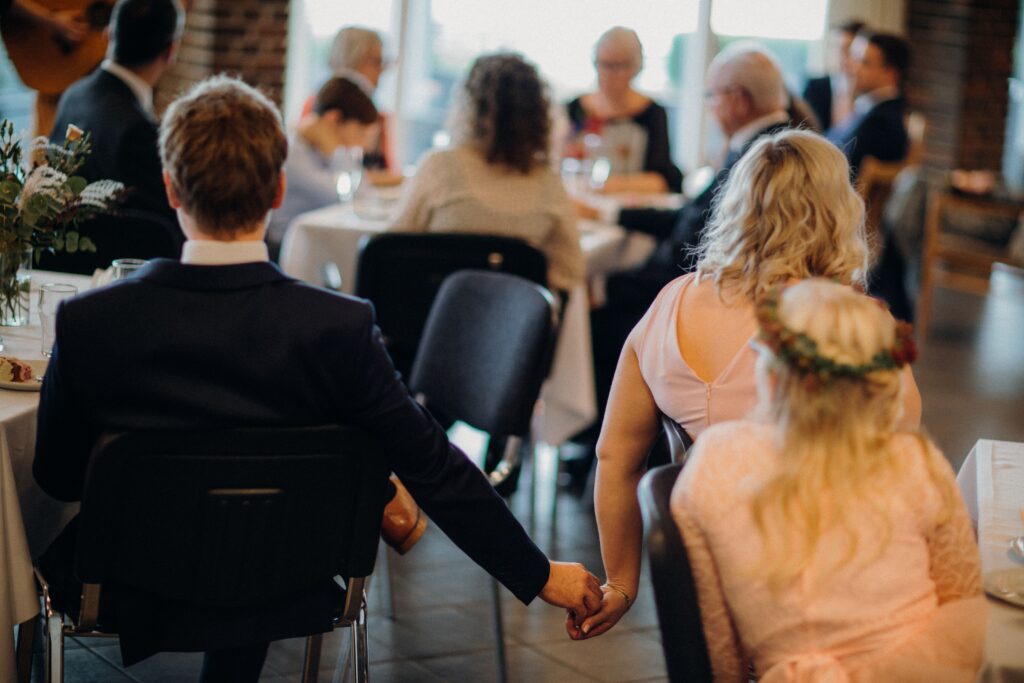
- Pexels — A couple holding hands at a wedding reception. Photo by Rene Terp on Pexels.
Image credits (plain text): Featured image — Photo by Trung Nguyen on Pexels. Body image 1 — Photo by Rene Terp on Pexels. Body image 2 — Photo by Rene Terp on Pexels.
Leave a Reply