
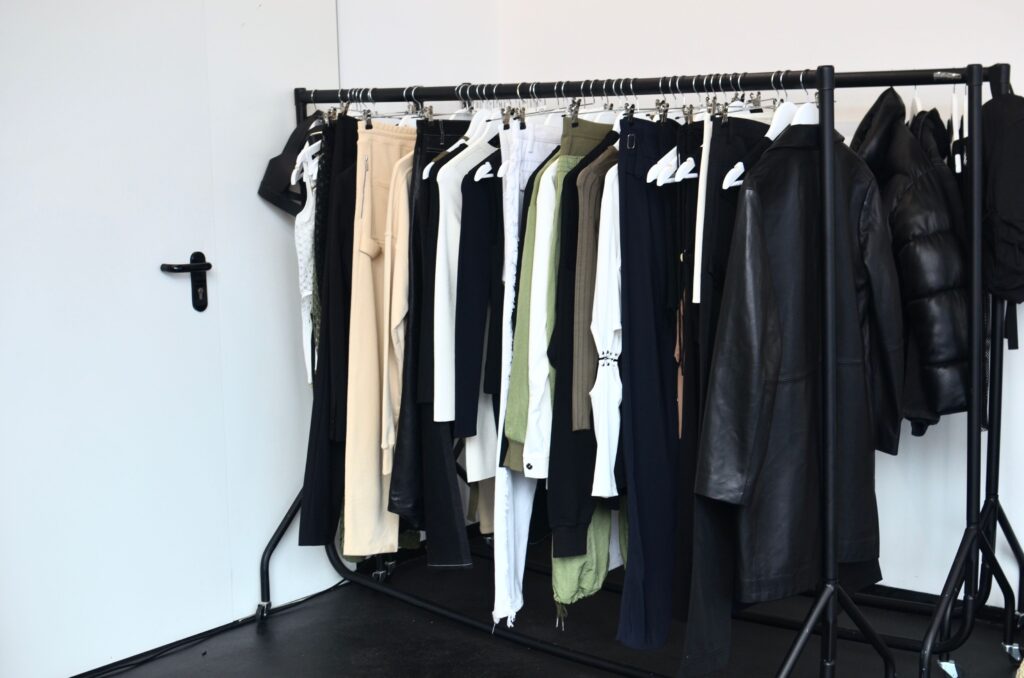
A capsule wardrobe is a small, carefully chosen collection of clothes that all work well together, so you can create many different outfits from a limited number of pieces. Instead of a wardrobe full of clothes you rarely wear, it focuses on versatile, good-quality essentials in colours that coordinate, with a few seasonal pieces added when the weather changes. The idea is simple: own less, but wear everything you own, and always have something suitable to put on without standing in front of a crowded rail feeling stuck.
Most capsule wardrobes are built around neutral colours such as black, white, navy, grey, beige and camel, because those shades mix easily with each other. A few accent colours can be added to reflect your personal taste, but the core principle stays the same: every piece should work with several other pieces. A white shirt, for example, is a classic capsule item because it can be worn with jeans, tailored trousers or a skirt, and it suits both casual days and smarter occasions.
What Is A Capsule Wardrobe?
A capsule wardrobe is a deliberately edited collection of clothing and accessories that covers your everyday needs for a season or for your lifestyle as a whole. Rather than buying clothes on impulse or following every new trend, you choose each piece with a purpose, thinking about how it fits with what you already own.
The pieces are usually timeless rather than fashionable in the short-term sense. A well-cut blazer, straight-leg jeans, a plain white T-shirt, a simple knit jumper and comfortable shoes look right year after year. They do not date quickly, and because they are chosen for fit and quality, they tend to last longer than cheaper, trend-led alternatives. A small number of accessories completes the picture: a versatile bag, a scarf and a few pieces of jewellery can change the feel of an outfit without adding bulk.
A Short History Of The Capsule Wardrobe
The term “capsule wardrobe” was coined in the 1970s by Susie Faux, the owner of a London boutique called Wardrobe. Faux believed that women were buying too many poorly made clothes that did not fit properly and would be out of fashion within a year. Her answer was a collection of a few essential, timeless items that would not go out of fashion, such as skirts, trousers, coats and knitwear, which could then be updated with seasonal pieces.
The concept became widely known in 1985, when the American designer Donna Karan released her “Seven Easy Pieces” collection. Karan showed seven interchangeable workwear pieces, including a bodysuit, a skirt, a tailored jacket and trousers, which could be combined in different ways to create a full working wardrobe for professional women. Since then the idea has returned again and again, most recently as part of the wider interest in minimalism and more sustainable shopping. You can read more about the background on Wikipedia’s capsule wardrobe page.
Why A Capsule Wardrobe Works
The most obvious benefit is that getting dressed becomes easier. When everything in your wardrobe works together, you spend less time deciding what to wear and less time trying on combinations that do not work. Mornings become simpler, and you are less likely to buy something new simply because you feel you have nothing to wear.
A capsule wardrobe can also save money over time. Buying fewer, better-quality pieces usually costs less in the long run than repeatedly buying cheap items that wear out quickly or sit unworn. Think about cost per wear: a coat you wear a hundred times is better value than a top you wear twice, even if the coat cost more to begin with. There is a practical benefit too. A smaller wardrobe is easier to store, keep tidy and pack for a trip.
How Many Pieces Should A Capsule Wardrobe Have?
There is no rule that fixes the size of a capsule wardrobe. The right size depends on your lifestyle, your climate and how often you do laundry. An office worker needs different pieces from someone who works from home, and a winter capsule looks different from a summer one.
As a starting point, many guides suggest around thirty to forty pieces per season, not counting underwear, sleepwear, gym clothes or accessories.
How To Build A Capsule Wardrobe Step By Step
Building a capsule wardrobe takes a little time, but it does not need to be done all at once. Work through these steps in order, over a weekend or a few evenings.
Step 1: Look At Your Lifestyle Honestly
Before you choose a single item, think about how you actually spend your time. Do you need smart clothes for work, or go out socially often? A wardrobe built for the life you wish you had will not serve you as well as one built for the life you actually live. Remember the British weather too: layers matter for rain and changeable temperatures.
Step 2: Empty Your Wardrobe And Sort Everything
Take everything out and sort it into three piles: keep, maybe and let go. The keep pile is for clothes you wear regularly and feel good in. The let-go pile is for clothes that no longer fit, are worn out, or you never wear. Be honest: if you have not worn something in the past year, it probably does not fit, does not suit you, or does not go with anything else you own.
Step 3: Find Your Colour Palette
Look at your keep pile and notice which colours appear most often. Neutrals make mixing and matching easy, while accent colours stop the wardrobe feeling dull. Choose accent colours you genuinely love and that suit you, rather than colours that happen to be fashionable this season.
Step 4: Identify The Gaps
Once you know what you own and which colours you are working with, it becomes clear what is missing. Perhaps you have plenty of tops but no trousers that fit well, or a good coat but no smart shoes. Write a short list of the missing pieces, and be specific: not just “a jacket” but “a navy blazer that fits over a jumper and works with jeans and tailored trousers”. This list is your shopping list, and it stops you buying things you do not need.
Step 5: Choose Quality Over Quantity
When you buy new pieces, choose the best quality you can afford. Check the fabric, the stitching and the fit before you buy. Natural fabrics such as cotton, wool, linen and denim tend to last well, while well-finished seams and sturdy buttons are signs that a garment has been made to last. Try everything on, and sit down in it as well as standing up. If a piece does not feel right in the shop, it will not feel right at home either.
Step 6: Build Outfits, Not Just A Collection
Spend some time putting outfits together. Lay out combinations on your bed or hang them on a rail, and take photographs of the ones you like. This gives you ready-made outfits for busy mornings, and it shows you straight away if any piece does not work with the rest of your wardrobe. Aim for each item to work in at least three different outfits.
A Simple Example Capsule Wardrobe
Here is an example capsule for everyday life in the UK. Adapt it to your own lifestyle, but notice how a modest number of pieces covers a wide range of occasions.
- 2 pairs of jeans in different washes, one dark and one mid-blue
- 1 pair of tailored black trousers and 1 pair of wide-leg trousers in a neutral shade
- 2 plain T-shirts, one white and one black, plus 1 white button-down shirt
- 1 striped Breton-style top and 2 knit jumpers, one fine knit and one chunky knit
- 1 blazer in navy or black, 1 trench coat or waterproof jacket, and 1 warm winter coat
- 1 simple day dress that can be dressed up or down
- 1 pair of white trainers, 1 pair of smart flat shoes or loafers, and 1 pair of ankle boots
- 1 versatile everyday bag and 1 small cross-body bag
From these pieces alone, you can build outfits for work, weekends, evenings out and travel. For a smart-casual workday, try tailored black trousers with a white shirt and a navy blazer. For a relaxed weekend, dark jeans with a striped top and white trainers rarely looks wrong. For an evening out, the day dress can be dressed up with the blazer and smart flat shoes.
Common Mistakes To Avoid
The most common mistake is buying everything at once. A capsule wardrobe built in a single shopping trip is rarely a good one, because it has not been tested against your real life. Build it gradually. Another mistake is choosing pieces because they look good on someone else: a beautiful item that does not fit properly will sit unworn, however fashionable it is. A third mistake is forgetting about the seasons. In the UK you will need to swap lighter pieces for warmer ones as autumn arrives, so store out-of-season items somewhere accessible. Finally, avoid buying cheap versions of everything. A capsule wardrobe works because each piece is worn often, so quality matters more than in a large wardrobe where each item is worn rarely.
Frequently Asked Questions
How Long Does It Take To Build A Capsule Wardrobe?
Most people can put together a first capsule in a weekend of sorting and planning, followed by a few weeks of filling gaps. There is no need to rush. A capsule that grows gradually, with each new piece chosen carefully, usually works better than one bought in a single day.
Can A Capsule Wardrobe Include Colour And Pattern?
Yes, absolutely. Neutrals make mixing and matching easier, but a capsule wardrobe does not have to be entirely black, white and grey. One or two accent colours and a pattern you love, such as stripes, can be part of your capsule as long as the pieces coordinate with the rest of your wardrobe.
How Often Should I Update My Capsule Wardrobe?
Most people review their capsule at the start of each season, which in the UK usually means four times a year. That is a good moment to store out-of-season pieces, check what has worn out, and add anything missing. Smaller updates, such as replacing worn-out shoes, can happen whenever they are needed.
Is A Capsule Wardrobe Suitable For Work?
Yes, and it can be particularly useful for work, because it removes the daily decision about what to wear and ensures you always have smart, well-fitting clothes ready. Include a blazer, tailored trousers and a smart pair of shoes.
What Should I Do With Clothes That Do Not Fit My Capsule?
Clothes that no longer fit, are damaged or you simply do not wear can be donated to a charity shop, passed on to friends or family, or recycled through a clothing collection point.
Conclusion
A capsule wardrobe is not about owning as little as possible or following a strict set of rules. It is about choosing clothes with intention, so that everything you own works together, suits your life and makes getting dressed simple. The idea has lasted since Susie Faux first described it in her London boutique in the 1970s, and Donna Karan showed how powerful it could be in 1985, because it solves a problem that has not gone away: too many clothes, and too little to wear. Start with what you already own, be honest about your lifestyle, and build slowly. Choose a colour palette you love, fill the gaps one piece at a time, and check that every new item works in at least three outfits.
Leave a Reply