
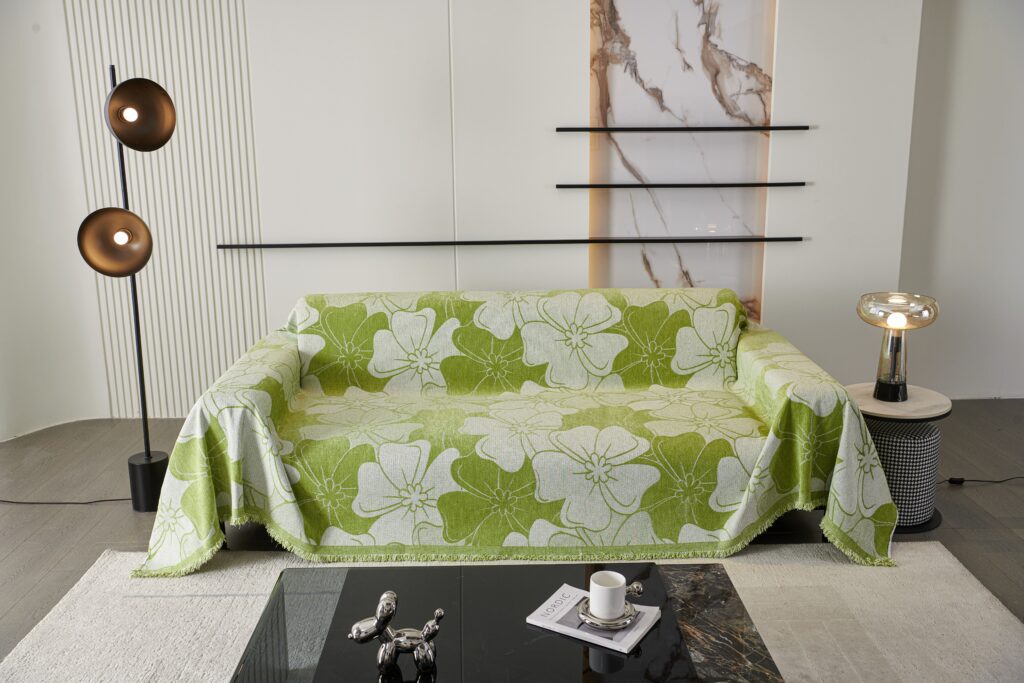
A sofa throw is a smaller, decorative blanket designed to be draped over a sofa, folded across its back or arms, or kept close at hand for extra warmth. Unlike a full bed blanket, it is made to be seen as well as used, which is why it sits at the meeting point of comfort and home styling. The right throw can soften a leather sofa, add colour to a plain room, protect upholstery from everyday wear, and make a living room feel finished without a large expense or a room makeover.
Choosing well comes down to a few practical decisions rather than a long list of rules. Size matters, because a throw that is too small will slip and look lost, while one that is too large can overwhelm a compact sofa. Material matters, because it decides how warm the throw feels, how it drapes, and how easy it is to wash. Colour and pattern matter, because a throw is one of the easiest ways to change the mood of a room. This guide works through each of those choices in turn, with styling ideas for different sofa shapes, seasonal advice, and care guidance that will help a throw last.
Key Takeaways
- Measure your sofa and think about how the throw will be used before you buy.
- A standard throw of around 130 x 180 cm suits most two- and three-seater sofas.
- Cotton and linen suit warmer months, while wool and chunky knits suit colder months.
- One contrasting colour or texture usually looks better than several competing patterns.
- Always check the care label before washing, especially for wool and blended fibres.
What Is A Sofa Throw And How Is It Different From A Blanket?
A throw is generally lighter and smaller than a bed blanket and is designed for a single person or for draping rather than for covering a whole bed. It is also more decorative: throws are sold in a wide range of textures, fringes, tassels, and woven patterns precisely because they are meant to be on display. A blanket, by contrast, is usually bought mainly for warmth and is often kept folded away or on a bed.
That distinction is useful when shopping. If you want something purely for warmth on cold evenings, weight and fibre matter most. If you want something that will live on the sofa all day, drape and appearance matter just as much, because a stiff or bulky throw will be folded away rather than used. The best sofa throws manage both: they look inviting when draped and feel comfortable when actually wrapped around you.
Throws can also protect a sofa. Draped over the arms or seat cushions most used by children or pets, a washable throw takes the daily wear instead of the upholstery underneath. It is far easier, and usually far cheaper, to wash or replace a throw than to clean or re-cover a sofa.
How To Choose The Right Size For Your Sofa
Size is the decision most people get wrong, usually by buying too small. A throw should be long enough to drape attractively and to cover a seated person from lap to feet, or at least from waist to knees, depending on how it is placed.
Standard Sizes And What They Suit
Throws are commonly sold in sizes around 130 x 180 cm (roughly 50 x 70 inches), with smaller options near 130 x 160 cm and oversized options around 150 x 200 cm or larger. These are typical retail sizes rather than a fixed standard, so it is always worth checking the measurements on the product listing rather than relying on labels such as “standard” or “large” alone.
As a practical starting point:
- Loveseat or two-seater sofa: A throw around 130 x 180 cm drapes well over one arm or across the back without trailing on the floor.
- Three-seater sofa: The same size works for a single drape, while an oversized throw near 150 x 200 cm gives fuller coverage if two people will share it.
- Corner or sectional sofa: A larger throw, or two matching throws, usually works better than one small one, because a single small throw can look lost across a long run of seating.
- Armchair: A smaller throw is usually enough, since there is less sofa to cover and less fabric to manage.
A Simple Measuring Trick Before You Buy
If you are unsure, lay an old sheet or blanket over your sofa in the style you plan to use — folded over the back, draped over one arm, or spread across the seat — and note how much fabric that style actually uses. Then measure the fabric. This gives you a real size to shop for, rather than a guess, and it takes less than five minutes. It is also worth checking the drop: a throw that hangs too close to the floor can be a trip hazard in a busy walkway and will collect dust and pet hair more quickly.
Sofa Throw Materials Explained: Cotton, Wool, Linen, Fleece And More
Material decides warmth, weight, drape, and washing. There is no single best material, only the best match for your home, your climate, and how often the throw will be washed.
Cotton Throws
Cotton is breathable, generally easy to wash, and available in a wide range of weaves, from smooth flat weaves to waffle and chunky knits. Cotton throws suit warmer homes and year-round use, and they are a sensible choice for households with children or pets because most can be machine washed. The trade-off is that cotton offers light to medium warmth rather than deep winter insulation, so it may not be enough on its own in a cold room.
Wool And Wool-Blend Throws
Wool is naturally warm and temperature-regulating, which means it can feel cosy without feeling heavy or clammy. Merino and lambswool are softer than coarse wool, while wool blends are often easier to care for and more affordable than pure wool. The main drawback is care: many wool throws need a gentle or wool cycle, cold water, and flat drying, and some are dry-clean only. If a throw will be washed weekly in a busy family home, check the label carefully before choosing wool.
Linen And Linen-Blend Throws
Linen is light, breathable, and naturally textured, which makes it a good summer throw and a good choice for a relaxed, informal room. It drapes beautifully but creases easily, which is part of its look rather than a fault. Linen blends, often mixed with cotton, can soften the texture and reduce creasing while keeping the breathability.
Fleece And Microfibre Throws
Fleece and microfibre throws are soft, lightweight, and warm for their weight, and most are machine washable and quick to dry. They are a practical choice for everyday family use and for homes where a throw will be washed often. The trade-off is appearance: fleece can look more casual than a woven cotton or wool throw, and it can attract static and pill over time, especially if washed at high heat.
Chunky Knit And Chenille Throws
Chunky knit throws add strong texture and a cosy, layered look, which makes them popular in autumn and winter styling. Chenille has a soft, velvety surface and drapes well. Both can be heavier and bulkier to wash and store, and loose knits can snag, so they suit living rooms where the throw is used gently rather than dragged around the house daily.
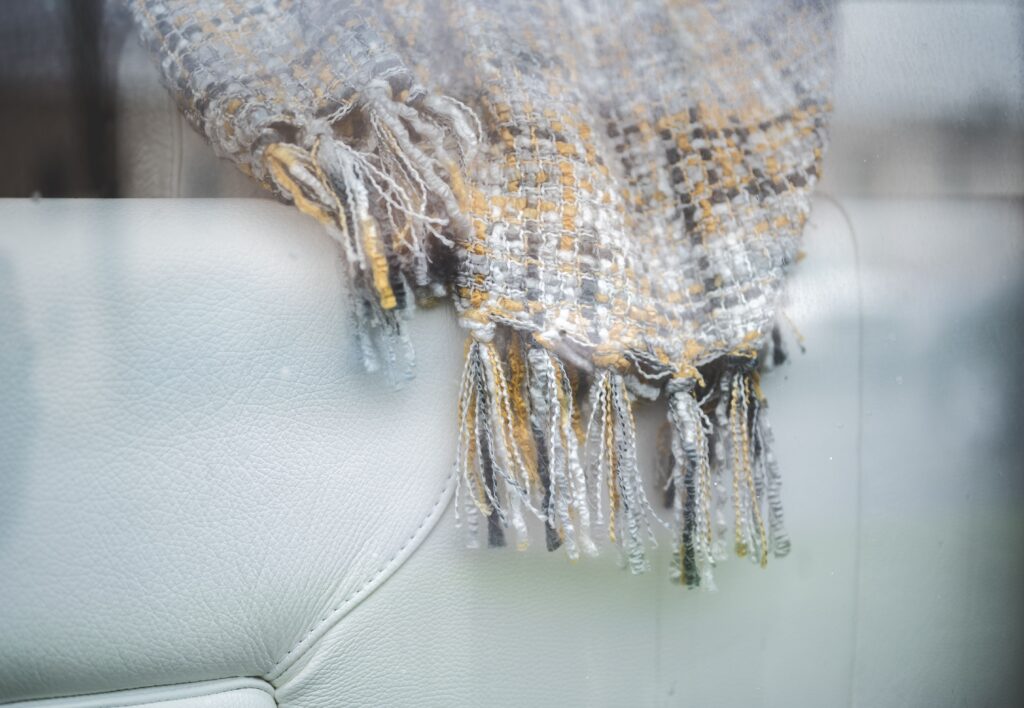
Photo by Chris F / Pexels
Choosing Colours And Patterns That Work With Your Room
Colour is where a throw earns its keep as a styling tool. A new throw can change a room’s accent colour in an afternoon, which makes it a low-risk way to try a colour you are unsure about.
Start With Your Sofa And Your Room
If your sofa is a neutral colour such as grey, beige, cream, or navy, almost any throw colour will work, so you can choose based on the mood you want: warm terracotta, mustard, or rust for warmth; sage green or dusty blue for calm; or a bold pattern for a focal point. If your sofa is already patterned or brightly coloured, a plain throw in a tone taken from the sofa or from your cushions usually looks more settled than another competing pattern.
One Focal Point Works Better Than Several
A common styling mistake is to combine a patterned throw, patterned cushions, a patterned rug, and patterned curtains all at once. The eye has nowhere to rest, and the room can feel busy rather than cosy. A simpler approach is to let one item lead — often the throw — and keep the rest calmer. For example, pair a patterned throw with plain cushions in one or two colours pulled from the pattern, rather than adding more prints.
Texture Counts As Colour
Texture changes how a colour reads in a room. A chunky knit in cream looks warmer and softer than a smooth cotton in the same shade, while a velvet or chenille throw can make a deep colour look richer. If your room already has a lot of smooth surfaces, such as leather and glass, a textured throw adds warmth. If your room is already full of texture, a smoother throw can bring balance.
How To Style A Throw On Different Sofa Shapes
There is no single correct way to place a throw, but a few reliable styles suit different sofas and moods.
The Casual Drape Over One Arm
Fold the throw lengthways and drape it over one arm of the sofa so that it hangs down the side and pools slightly on the seat. This is the easiest everyday style, it keeps the throw within reach, and it suits family rooms where the throw will actually be used. It works best on two- and three-seater sofas and on armchairs.
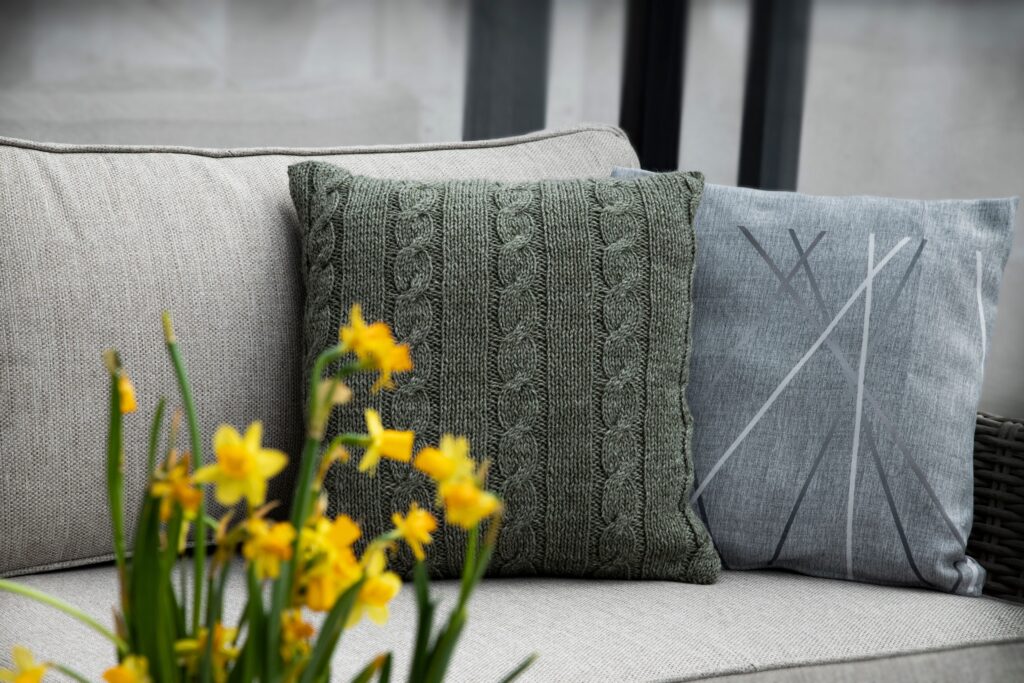
Photo by Baluc Photography / Pexels
The Neat Fold Across The Back
Fold the throw into a neat rectangle and lay it across the back of the sofa, centred or slightly to one side. This looks tidier and more formal, and it suits rooms where the sofa is a showpiece or where the throw is mainly decorative. A folded throw also shows off a woven pattern or fringe better than a loose drape.
The Layered Look For Corner Sofas
On a corner or sectional sofa, drape a larger throw over the corner section so that it cascades down the side, or use two throws to balance the two sides of the seating. This avoids the common problem of a corner sofa looking bare on one side and cluttered on the other. Keep the two throws in the same colour family or texture so that the arrangement looks intentional rather than accidental.
Styling With Cushions
Throws and cushions work best as a pair. A useful rule is to mix texture rather than pattern: combine a chunky knit throw with smooth linen cushions, or a smooth cotton throw with a velvet cushion. Vary the sizes of the cushions slightly, place the largest at the back, and let the throw sit in front of or beside them rather than burying it underneath. For more on keeping the wider home feeling calm and cared for, see FM Magazine’s guide, A Cleaner Home That Gives You Your Time Back.
Sofa Throws For Every Season
A throw does not have to be a winter-only item. Changing the throw with the seasons is one of the simplest seasonal updates a home can have.
In spring and summer, lighter fabrics such as cotton and linen in pale or bright colours suit warmer rooms and do not add unwanted warmth. A lightweight throw is still useful on cooler evenings and for air-conditioned rooms, and it keeps the sofa looking dressed without making the room feel heavy.
In autumn and winter, heavier fabrics such as wool, wool blends, and chunky knits in deeper colours — forest green, burgundy, charcoal, or warm rust — add visual and physical warmth. This is also the season when a throw is most likely to be used daily, so washability becomes more important. If winter is when your home faces cold snaps, it is worth preparing the wider home too; FM Magazine’s Freeze Warning: How to Prepare, Protect, and Stay Ahead of Sudden Temperature Drops covers the practical steps for the house as a whole.
If you only want to buy one throw, a medium-weight cotton or cotton-blend throw in a mid-tone colour is the most flexible choice, since it works across seasons and is usually easy to wash.
How To Wash And Care For A Sofa Throw
Care is where many good throws are ruined, usually by heat rather than by washing itself. The care label on your specific throw should always come first, because fibre blends vary, but the general guidance below applies to most throws.
General Washing Guidance
- Shake the throw outside before washing to remove dust and loose fibres.
- Pre-treat visible marks by blotting rather than rubbing, which can spread a stain and damage the weave.
- Use a gentle detergent and avoid fabric softener on fleece and microfibre, where it can flatten the fibres and reduce softness.
- Do not overload the machine: water needs to move freely through thick fabric for a proper clean.
- Use a mesh laundry bag for loose weaves, tassels, and fringes to prevent snagging.
- Dry the throw fully before folding it away. A thick throw that stays damp at the centre can develop a musty smell.
Care By Fabric Type
- Wool and cashmere blends: A wool or delicate cycle with cold water, followed by flat drying on a towel and reshaping while damp, helps prevent shrinking and felting.
- Cotton knits and waffle weaves: A gentle or normal cycle is usually fine; tumble drying on low heat or line drying helps protect colour and shape.
- Fleece and microfibre: A gentle, short cycle with cold or warm water, tumbled on low heat, helps avoid pilling. High heat is the main cause of damage.
- Acrylic and blended throws: A delicate cycle with cold water, then flat drying or low-heat tumble drying, is usually safest.
For a fuller fabric-by-fabric care table, the washing guide at Sofeminine sets out cycles, water temperatures, and drying methods for wool, cotton, fleece, and acrylic throws. Between washes, regular shaking and airing — hanging the throw over a chair near an open window for an hour — keeps it fresh without extra washing, which also helps the fabric last longer.
Common Sofa Throw Mistakes To Avoid
- Buying too small: A throw that barely covers a lap will slip constantly and look like an afterthought. Measure first.
- Matching everything exactly: A throw in exactly the same colour and fabric as the sofa can disappear. A contrast in colour or texture usually looks better.
- Too many patterns at once: Let the throw or the cushions lead, not both.
- Ignoring the care label: A beautiful wool throw that needs dry cleaning is a poor choice for a home where it will be washed weekly.
- Hanging it too close to the floor: A long drop collects dust, pet hair, and foot traffic. Fold or shorten it instead.
- Forgetting pets and children: If a throw will face muddy paws or spills, choose a machine-washable fabric in a forgiving colour rather than a delicate light shade.
Practical home improvements often work best as a set: if you are updating the living room, FM Magazine’s Smart Ways to Improve Comfort and Efficiency with Garage Door Insulation is a useful companion read on making the wider home more comfortable and efficient.
Conclusion
A sofa throw is a small purchase that does a surprising amount of work. It adds warmth on cold evenings, protects the sofa underneath, and gives a room an easy, affordable refresh whenever the season or your taste changes. The best choice is rarely the most expensive or the most fashionable option; it is the one that fits your sofa, suits your household, and can be washed as often as real life requires.
Start with size, choose a material that matches how the throw will be used, pick a colour or texture that adds something your room does not already have, and style it in a way that keeps it within reach rather than hidden away. Done that way, a throw stops being decoration and becomes one of the most-used items in the living room — which is exactly what it should be.
Frequently Asked Questions
What Size Throw Should I Buy For A Standard Three-Seater Sofa?
A throw around 130 x 180 cm suits most three-seater sofas for draping over an arm or across the back. If two people will share it regularly, or if you want fuller seat coverage, an oversized throw around 150 x 200 cm gives more fabric to work with. Always check the listed measurements, since size names vary between sellers.
Can A Throw Protect My Sofa From Pets And Children?
Yes, in practical terms. A washable throw placed over the most-used seat or arm takes spills, pet hair, and daily wear instead of the upholstery. It will not protect against everything, and it needs washing regularly to do the job well, but it is much easier to wash or replace a throw than to clean a sofa.
How Often Should I Wash A Sofa Throw?
It depends on use. A throw used daily in a family home may need washing every two to four weeks, while a mainly decorative throw can go longer between washes with regular shaking and airing. Wash sooner after illness, spills, or heavy pet use, and always follow the care label for temperature and drying.
Are Sofa Throws Only For Winter?
No. Lightweight cotton and linen throws suit spring and summer, adding a layer of texture without extra warmth, while wool and chunky knits suit autumn and winter. Many homes keep a light throw out all year and swap in a heavier one for the colder months.
Should My Throw Match My Cushions Exactly?
It does not need to. A throw that shares one colour with your cushions, or that contrasts with them in texture, usually looks more interesting than an exact match. Avoid combining several strong patterns at once, and let either the throw or the cushions be the main pattern in the arrangement.
Featured image: Light sofa with a beige throw draped over it in a bright living room. Photo by SlipcoverKAS.COM / Pexels
Leave a Reply